Why Carmakers Are Replacing Bigger NA Engines with Smaller Turbo Engines? Here's the Answer

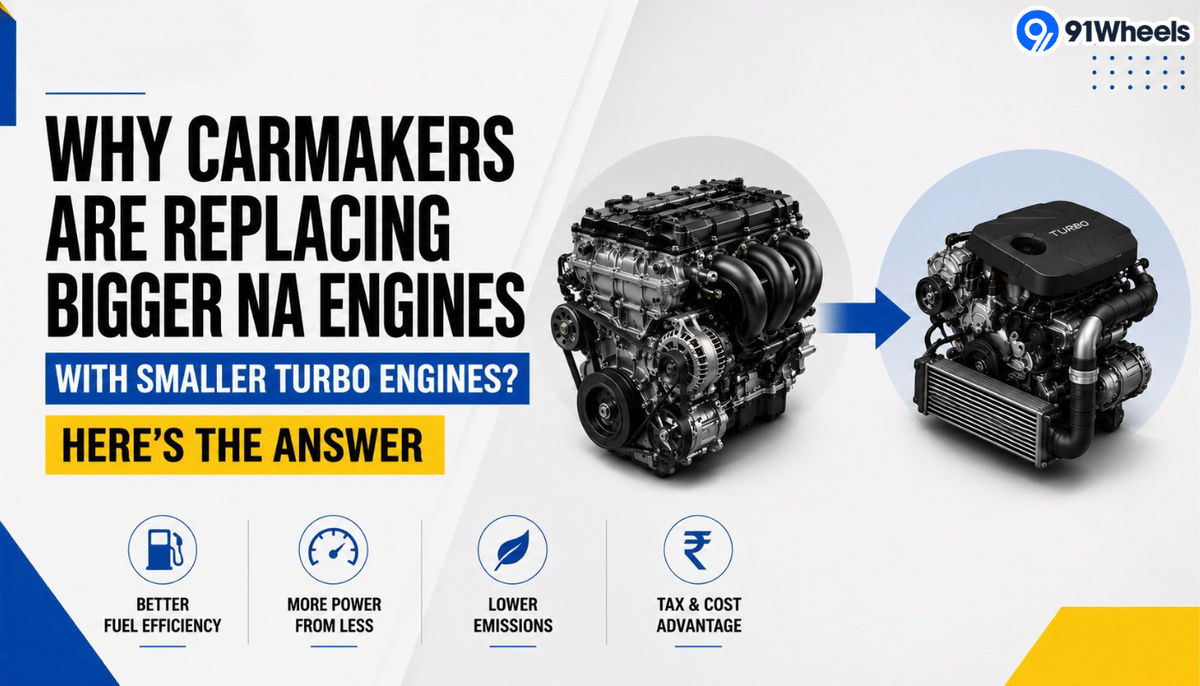
Pop the hood of a family SUV today and you might find a three-cylinder engine smaller than what used to power a hatchback a decade ago. Yet that same SUV probably weighs more, seats more people, and doesn't feel any slower than the model it replaced. This isn't an accident or a cost-cutting shortcut - it's the result of a deliberate, industry-wide shift called engine downsizing, and it's arguably one of the biggest changes to happen under the bonnet in the last twenty years. To understand why almost every major carmaker has walked away from big, naturally aspirated (NA) engines in favour of smaller turbocharged units, you have to look at physics, regulation, taxation, and changing customer expectations all at once - because no single reason explains it on its own.
The Basic Difference First
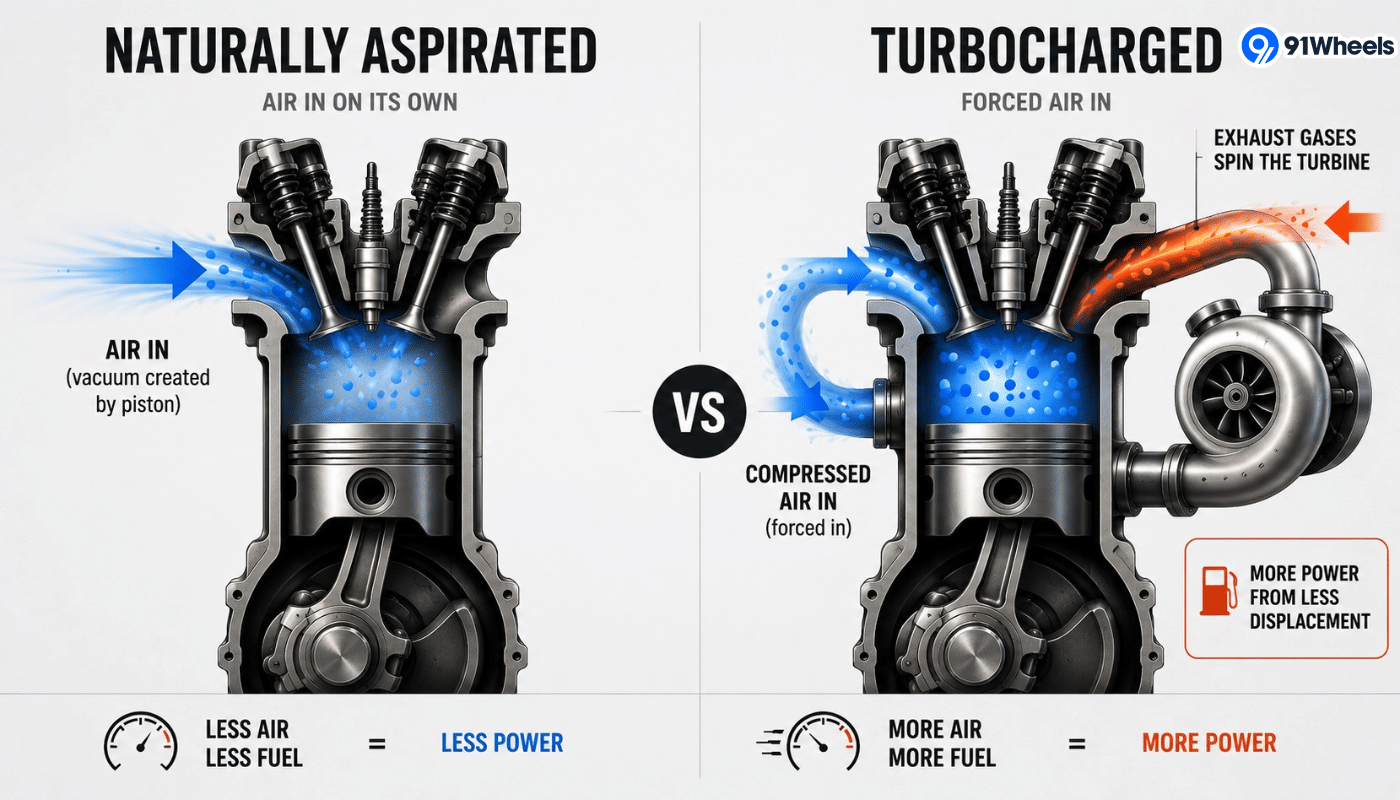
A naturally aspirated engine breathes on its own. Air enters the cylinders purely because of atmospheric pressure and the vacuum created by the pistons moving down - nothing forces extra air in. A turbocharged engine, on the other hand, uses a turbine spun by the engine's own exhaust gases to compress incoming air and cram more of it into the same cylinder. More air means more fuel can be burned in that same combustion chamber, which means more power from less displacement. That single mechanical trick is the foundation of everything else in this story.
Regulation Is the Real Trigger
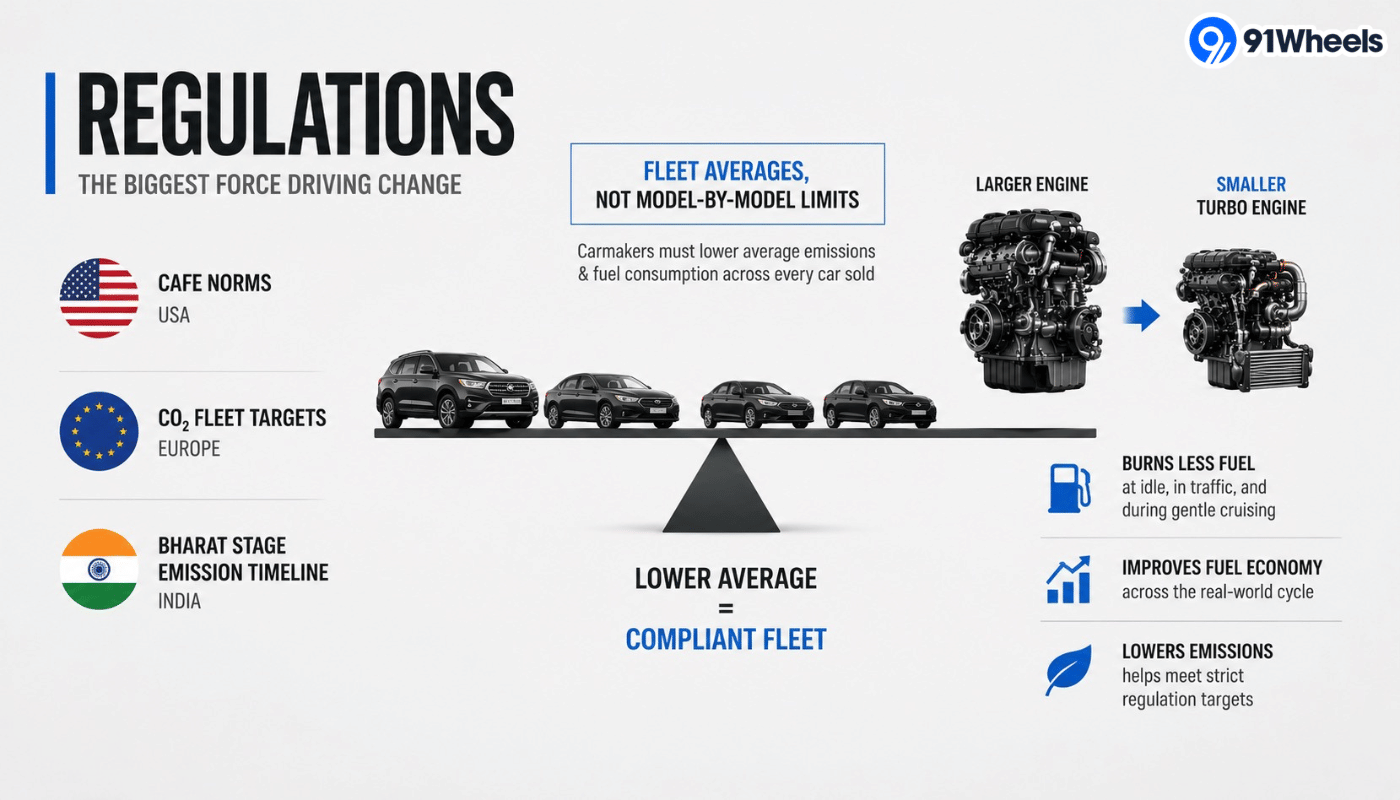
The single biggest force pushing this change isn't consumer demand - it's government regulation. Fuel economy and emission rules across the world, whether it's CAFE norms in the US, CO2 fleet targets in Europe, or India's own Bharat Stage emission timeline, are calculated as fleet averages rather than model-by-model limits. A carmaker selling a mix of large and small vehicles has to bring its average emissions and fuel consumption down across every car sold, not just the small ones. Shrinking the size of an engine while keeping (or improving) its output is one of the most effective ways to move that average in the right direction, because a smaller engine simply burns less fuel at idle, in traffic, and during gentle cruising which is where most of us actually spend our driving time.
The Thermodynamics Nobody Talks About
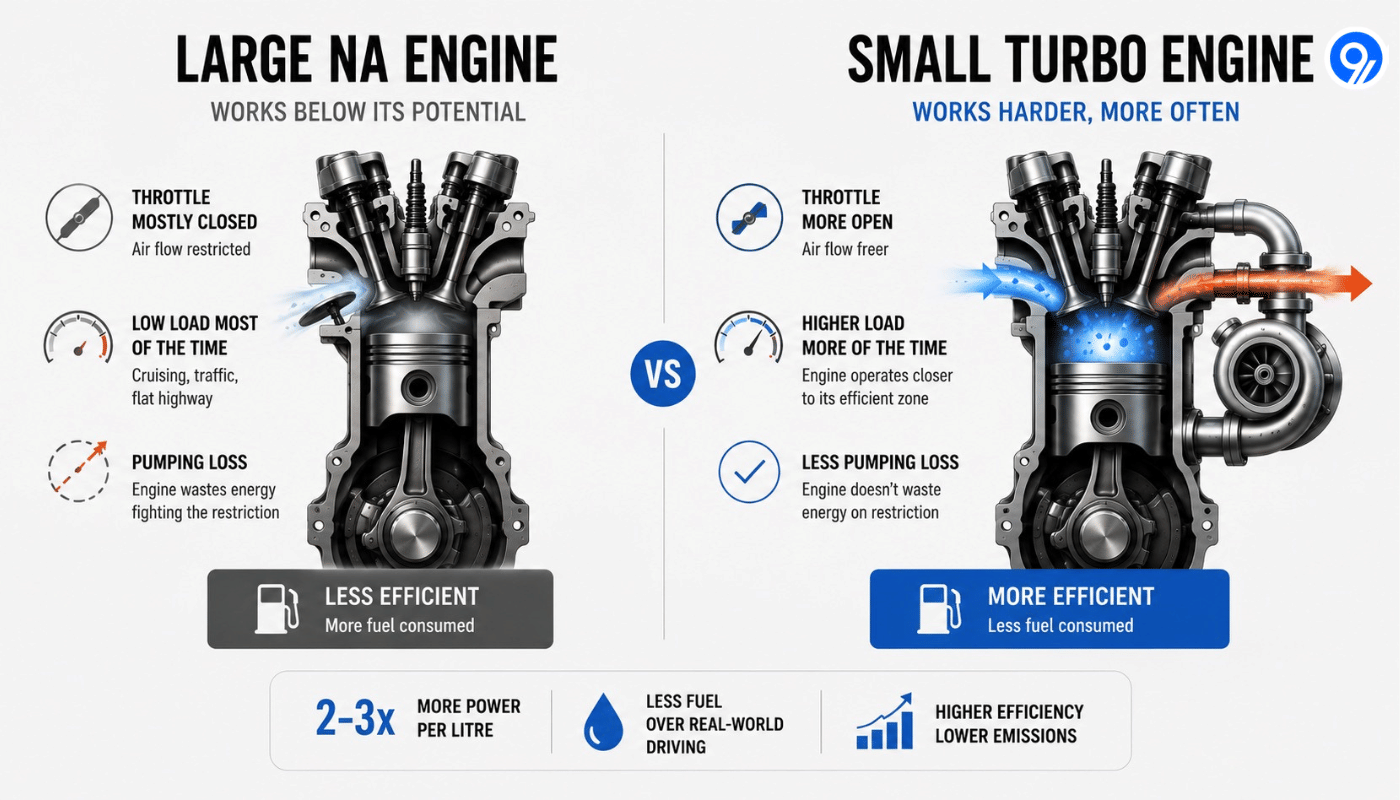
There's a genuinely technical reason downsized turbo engines save fuel, and it goes beyond "smaller engine, less fuel." A large NA engine spends most of its life working well below its potential - cruising at a traffic light or on a flat highway barely uses a fraction of a big engine's capacity. That means the throttle stays mostly closed, and the engine wastes energy fighting to pull air past that restriction - engineers call this a pumping loss. A smaller turbocharged engine, by contrast, has to work harder even during ordinary driving, so the throttle stays open more of the time and the engine runs closer to its efficient zone more often. Add in gasoline direct injection, which sprays fuel straight into the cylinder to cool the combustion chamber and resist knocking, and engineers can push compression and boost pressure higher without the engine damaging itself. The result: some modern downsized units extract more power per litre than an older NA design of similar model, while sipping noticeably less fuel over a full day of mixed driving.
Downspeeding: The Quiet Partner to Downsizing
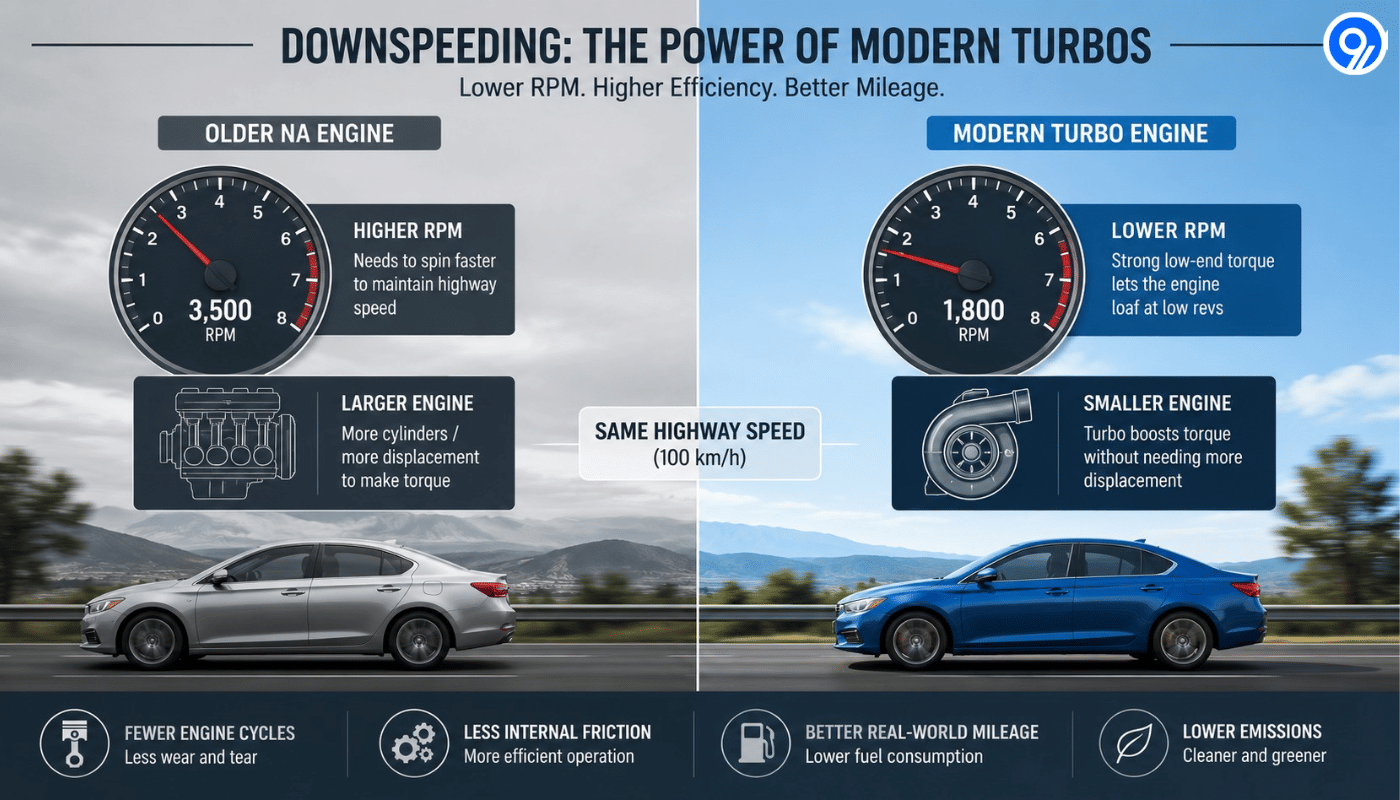
Alongside smaller engines, transmissions have also changed. Cars today are commonly geared to keep the engine loafing at very low RPM - sometimes as low as 1,500 to 2,000 revs at highway speed where an older NA engine would need to spin much faster to produce the same road speed. This "downspeeding" only works because a turbocharged engine can produce strong torque low in the rev range, something a large NA engine could only manage by using more cylinders or more displacement. Lower cruising RPM directly translates into fewer engine cycles, less internal friction, and better real-world mileage.
India's Own Reason: Taxes Built Around Engine Size
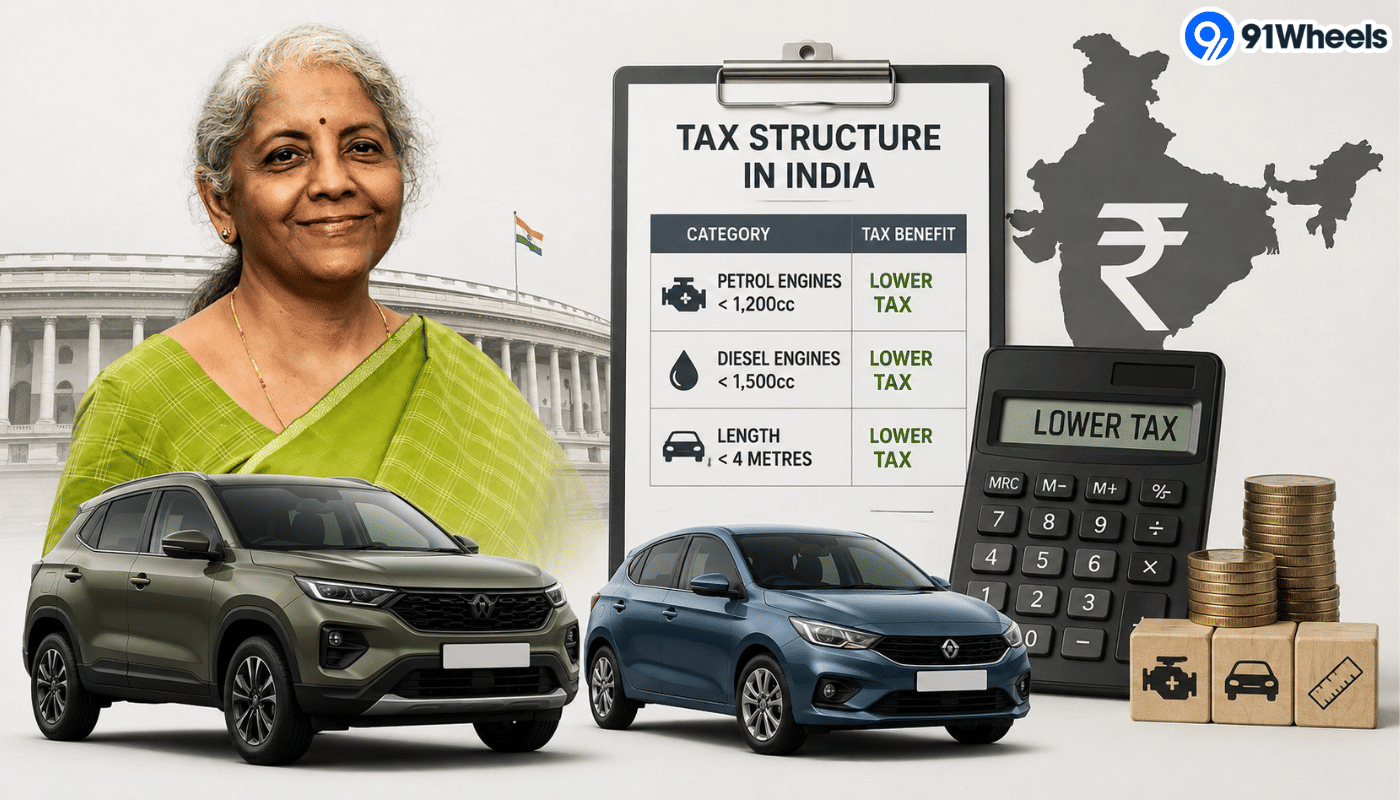
For the Indian market specifically, there's a factor that barely applies anywhere else in the world - taxation tied directly to engine capacity and vehicle length. India's tax structure has long rewarded petrol engines under roughly 1,200cc and diesel engines under 1,500cc paired with a sub-4-metre body, placing them in a friendlier tax bracket compared to larger-engined cars and SUVs. This is precisely why India has such a strong culture of compact turbo-petrol engines squeezed into sub-4-metre SUVs and sedans - carmakers aren't just chasing efficiency here, they're actively engineering around the tax slab. A turbocharged three-cylinder under the bonnet isn't only about emissions; in India, it can be the difference between a car qualifying for a lower tax bracket or a significantly higher one.
Turbo Lag Is No Longer the Dealbreaker It Once Was
Anyone who drove a turbocharged car in the 1990s remembers the delay - you'd press the accelerator and wait a beat before the power arrived, followed by a sudden surge. That lag came from the time it took exhaust gases to spin the turbine up to speed. Today's smaller, lighter turbines spool up dramatically faster, twin-scroll designs manage exhaust pulses more cleverly, and electrically assisted turbochargers are starting to eliminate lag altogether by spinning the compressor with a small electric motor before exhaust flow even builds up. This is a big reason downsizing became commercially viable - carmakers could finally offer small-engine efficiency without asking buyers to tolerate the annoying delay that plagued earlier turbo cars.
What Buyers Still Give Up
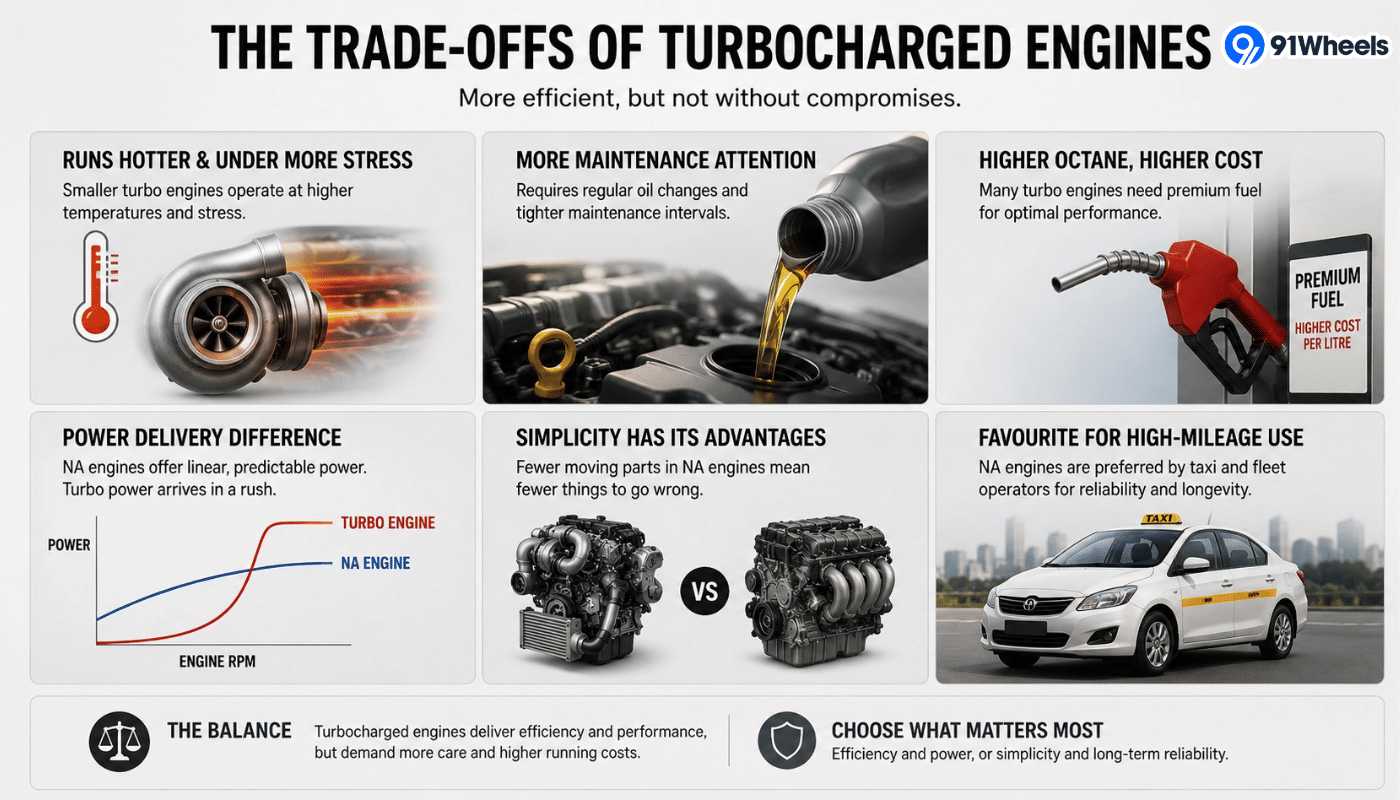
None of this comes entirely free. Smaller turbocharged engines typically run hotter and under more internal stress than a larger NA unit doing the same job, which places more importance on regular oil changes and can mean tighter maintenance intervals over the long run. Many turbocharged engines are also tuned to perform best on higher-octane fuel, so running them can cost a bit more at the pump per litre even as they use fewer litres overall. And while lag has shrunk, most enthusiasts will still say a good NA engine delivers a more linear, predictable feel - power builds smoothly with revs rather than arriving in a rush once boost kicks in. There's also a simplicity argument: fewer moving parts in an NA engine can mean fewer things to eventually go wrong, which is part of why some high-mileage taxi and fleet operators still favour naturally aspirated options where they're available.
Where This Trend Goes Next
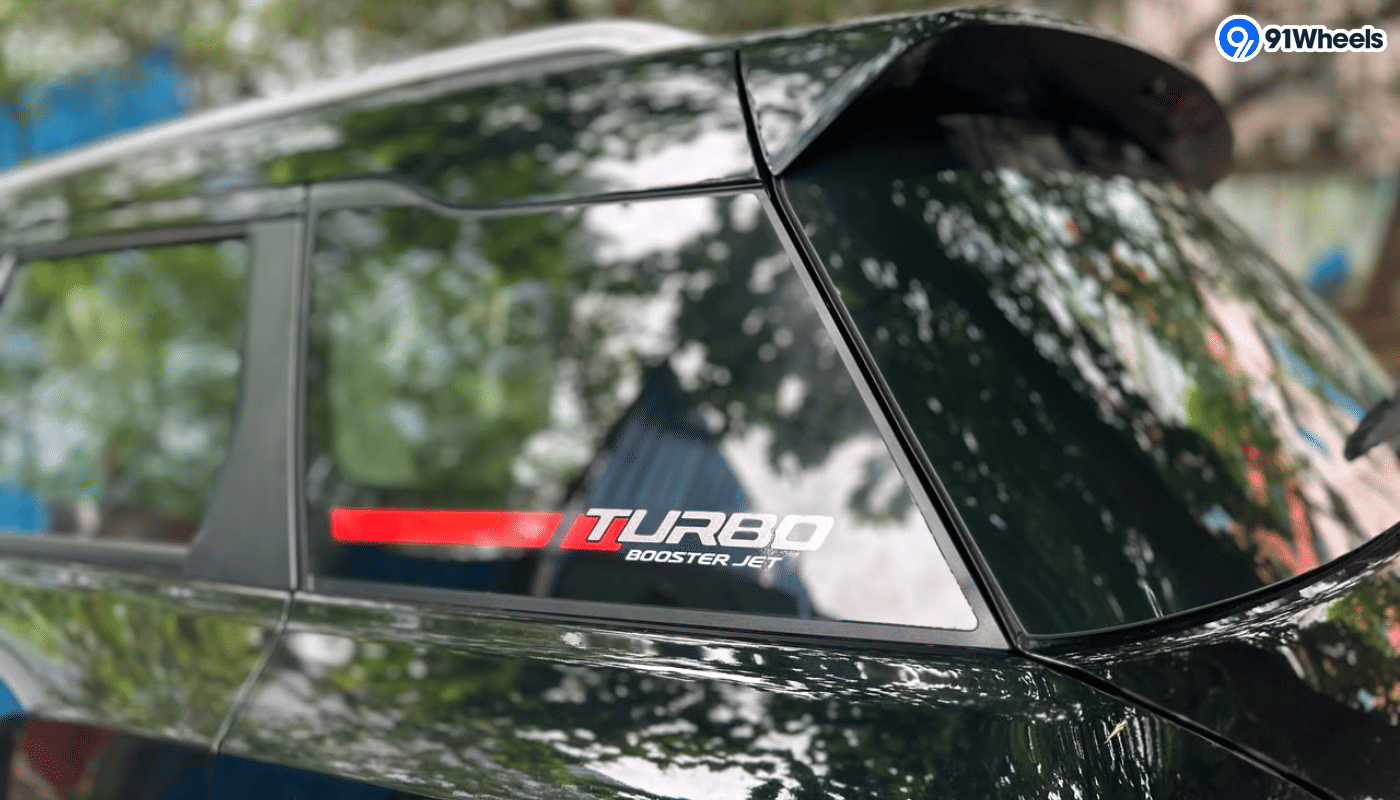
Engine downsizing isn't the final destination - it's a bridge technology. Many carmakers are now layering mild-hybrid and strong-hybrid systems on top of small turbo engines, using electric motors to fill in exactly the moments where a small engine would otherwise struggle, such as initial acceleration from a standstill. This combination - small turbo engine plus electric assistance is quickly becoming the default formula for everything from city hatchbacks to full-size SUVs, buying carmakers more time to meet ever-tightening emission targets while electric vehicles continue to scale up in the background. So the next time you notice a badge reading "1.0 Turbo" on a car that looks like it deserves a much bigger number, know that it isn't a case of carmakers cutting corners - it's the product of tax structures, tightening regulations, and two decades of clever engineering all pointing in the same direction.
Do you like this article?
Comments
No comments yet. Be the first to comment!