

KEY HIGHLIGHTS
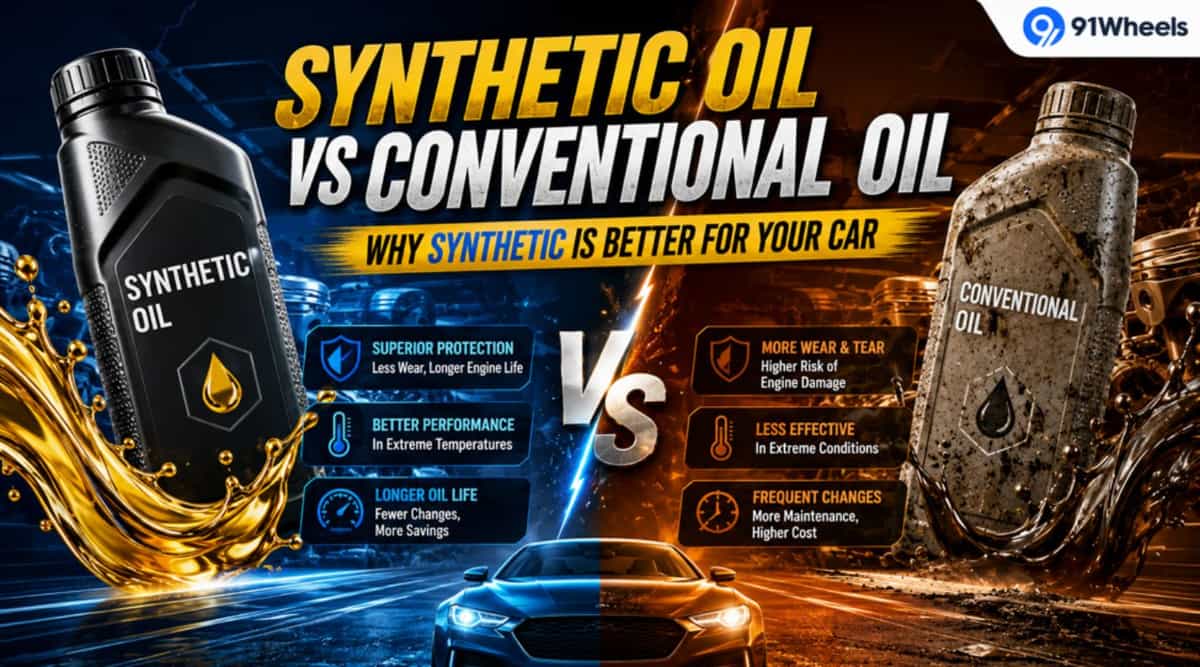
- Superior engine protection and reduced wear.
- Better performance in extreme temperatures.
- Longer oil life with cleaner engine operation.
Engine oil is often called the lifeblood of a vehicle, and choosing the right type can have a significant impact on performance, efficiency, and long-term reliability. While conventional engine oil has served motorists for decades, modern vehicles are increasingly designed to run on synthetic lubricants. But what exactly makes synthetic oil superior, and is it worth the extra cost? Let's break down the differences and understand why synthetic oil is becoming the preferred choice for car owners worldwide. But before that, make sure to join the 91wheels WhatsApp Community, specifically curated for petrolheads like us to keep up with the latest news and automotive updates.
Also Read- Diesel Vs Petrol Vs Hybrid Vs Electric in 2026: What Should You Buy?
What Is Conventional Oil?
Conventional oil is derived directly from crude oil and refined for use in automotive engines. While it provides adequate lubrication and protection, its molecular structure is less uniform, making it more susceptible to breakdown under extreme temperatures and demanding driving conditions. Conventional oil remains a cost-effective option for older vehicles and drivers with low annual mileage, but it typically requires more frequent oil changes and offers lower resistance to wear.
What Is Synthetic Oil?
Synthetic oil is chemically engineered to provide superior lubrication and consistency. Unlike conventional oil, synthetic lubricants are designed with uniform molecules that reduce friction, resist breakdown, and perform effectively across a wider temperature range. Modern synthetic oils also contain advanced additive packages that help keep engines cleaner and better protected over time.
Why Synthetic Oil Is Better For Your Car
1. Superior Engine Protection
Synthetic oil creates a stronger lubricating film between moving engine components, reducing metal-to-metal contact and wear. This is particularly beneficial during cold starts, when most engine wear occurs.
2. Better Performance In Extreme Temperatures
Whether you're driving through scorching summers or cold winter mornings, synthetic oil maintains its viscosity more effectively. It flows quickly at low temperatures and resists thinning when the engine gets hot.
3. Longer Oil Change Intervals
One of the biggest advantages of synthetic oil is its extended service life. Because it resists oxidation and thermal breakdown better than conventional oil, it can often remain effective for significantly longer intervals.
4. Improved Fuel Efficiency
Reduced internal friction allows the engine to operate more efficiently, which can contribute to marginal improvements in fuel economy over time.
5. Better Turbocharger Protection
Turbocharged engines operate at extremely high temperatures. Synthetic oil's superior heat resistance makes it particularly suitable for modern turbo-petrol and diesel engines.
Is Synthetic Oil Worth the Extra Cost?
Synthetic oil typically costs more than conventional oil during routine servicing. However, the benefits often outweigh the higher upfront expense. Better engine protection, longer service intervals, improved efficiency, and reduced wear can help lower maintenance costs in the long run. For modern cars equipped with turbocharged engines, start-stop systems, or advanced emissions technologies, synthetic oil is often the recommended and most effective choice.
While synthetic oil offers clear advantages, conventional oil can still be suitable for older vehicles with simpler engine designs, especially if the manufacturer permits its use. Budget-conscious owners with low annual mileage may also find conventional oil adequate for their needs. However, for most modern vehicles, synthetic oil delivers a noticeable improvement in engine protection and overall performance.
Verdict
If your goal is to maximize engine life, maintain peak performance, and reduce wear over the years, synthetic oil is the clear winner. Although it comes with a higher purchase price, its superior protection, better temperature stability, cleaner operation, and longer service intervals make it a smart investment for most car owners. As modern engines become increasingly complex and demanding, synthetic lubricants are no longer a luxury, but they're quickly becoming the standard.
Do you like this article?
Comments
No comments yet. Be the first to comment!