

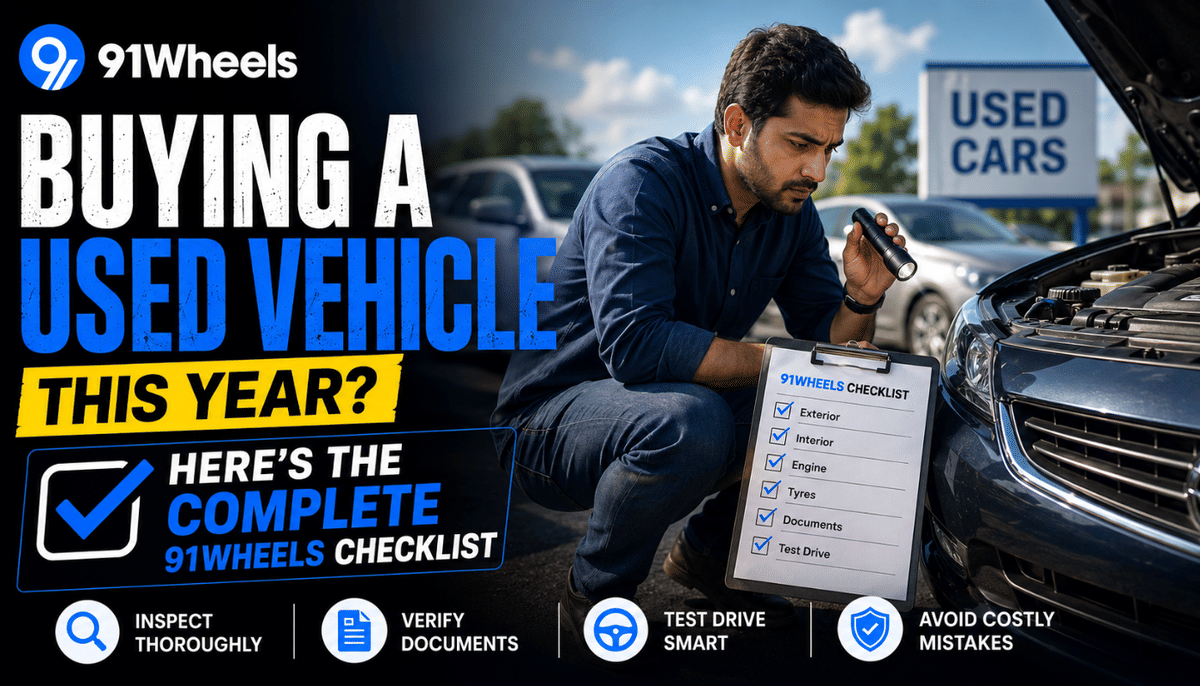
KEY HIGHLIGHTS
- Verify RC and ownership details carefully
- Check complete authorised service history records
- Inspect body panels for repaint or rust
- Match odometer reading with overall condition
- Test all electronics and cabin features
Buying a used vehicle brings several concerns into buyer's mind but thanks to online marketplaces, the process has become far less concerning than before. Nowadays there is a sense of security as buyers can rely on several conveniences such as certified pre-owned programs, digital ownership records, and even post-sale customer support. However, despite all these things the used-car market still carries a certain degree of risk. Problems like accidental vehicles, flood-damaged cars, tampered odometers, hidden mechanical faults, and fake service histories continue to trouble buyers even today.
So, if you are planning to buy a second-hand car, here are some most important things you should carefully inspect before finalising the deal. Meanwhile, make sure to join the 91Wheels WhatsApp Community to stay updated with the latest happenings from the automotive industry.
Also Read: Mahindra XUV400 Vs Tata Nexon EV - Battle of Electric SUVs
1. Registration Certificate (RC) Details

The very first thing a buyer should inspect is the car's Registration Certificate. Check and make sure that the chassis number mentioned in the engine bay matches the number mentioned on the RC. Moreover, buyers should also check the ownership details carefully because multiple ownership transfers can negatively affect resale value. Apart from that one should also check for any pending challan on the vehicle or any type of loan that is running. If there was a loan earlier, the seller should provide an official NOC from the bank.
2. Service History

Second and one of the most important things that should be checked before buying a second hand car is its service history. This reveals several details about the car and gives you a clear idea about how well the car was maintained by the previous owner. Buyers should ask for authorised service records, invoices, and repair bills.
That said, a complete service history can easily tell if the car had any accidental repairs, repeated mechanical failures, delayed servicing, or engine-related problems. One of the common myths that people fall for is buying a low-running car with missing records. However buyers should always go for a well-maintained car with every service record via authorised service center.
3. Exterior Body Condition

Now comes the visual aspect of the car. A vehicle's exterior should always be inspected carefully in proper lighting conditions or preferably during daylight, as artificial lighting can often hide minor scratches, dents, paint inconsistencies, and repaint work. Additionally, if possible, use a PTG (Paint Thickness Gauge), a tool designed to measure paint thickness across body panels. It can easily help identify repainted sections, repaired panels, or areas that may have undergone accident-related bodywork.
Additionally, buyers should inspect things:
- Panel gaps
- Paint mismatch
- Dents
- Rust spots
- Paint bubbles
- Welding marks
4. Engine Condition and Odometer Reading

The next step of inspection comes to the most expensive part of the car i.e. engine, which makes its inspection extremely important while buying a used vehicle. Buyers should check for oil leakage, coolant leakage, excessive vibrations, smoke from the exhaust, or unusual engine noise. A healthy engine should start smoothly without abnormal sounds.
Along with the engine, buyers should also carefully check the odometer reading because meter tampering is still quite common in the used-car market. A car showing low kilometres should also reflect similar wear levels inside the cabin. Excessively worn steering wheels, pedals, gear knobs, or seats can indicate that the actual running is much higher than displayed. Buyers should additionally cross-check service records to verify kilometre consistency over the years.
Tip: Drive the car a few kilometers before inspecting the engine in detail, as certain noises, vibrations, or performance-related issues may not appear while the car is stationary.
5. Underbody And Flood Damage Signs

One of the common frauds that buyers face is end up buying flood-damaged vehicles that often appear perfectly clean from outside but develop serious electrical and mechanical issues later. One of the easiest ways to identify such a vehicle is to check for rust formation around seat rails, under-dashboard wiring, door sills, and suspension mounts, as these areas usually reveal signs of previous water exposure. Apart from that, buyers should inspect the underbody for rust formation, corrosion marks, damaged wiring, or mud deposits in hidden areas.
6. Electrical Features and Electronics

Nowadays most of the cars heavily rely on electronics, that makes it important to check all the features very important while buying a used car. Buyers should check the following things:
- Touchscreen infotainment system
- AC cooling performance
- Reverse camera
- Parking sensors
- Power windows
- Sunroof operation
- Steering-mounted controls
- Digital instrument cluster
- Wireless charger
- Connected-car technology features
Also Read: Top 125cc Bikes Under Rs 1.5 lakh For A Hassle-Free Commute
Verdict
Buying a used car is not just about finding a good-looking vehicle or a tempting deal, but also about understanding its actual condition beyond the surface. While a well-maintained second-hand car can offer excellent value for money, ignoring basic checks can later lead to expensive repairs and unnecessary stress. A careful inspection, proper documentation, and a patient approach can ultimately help buyers make a smarter and safer purchase decision.
Do you like this article?
Comments
No comments yet. Be the first to comment!