KEY HIGHLIGHTS
- Tata Nexon EV offers futuristic design and premium tech
- Mahindra XUV400 delivers stronger performance and quicker acceleration
- Nexon EV gets larger touchscreen and panoramic sunroof
- XUV400 offers bigger dimensions and better rear-seat space
- Both EVs offer over 450 km claimed range
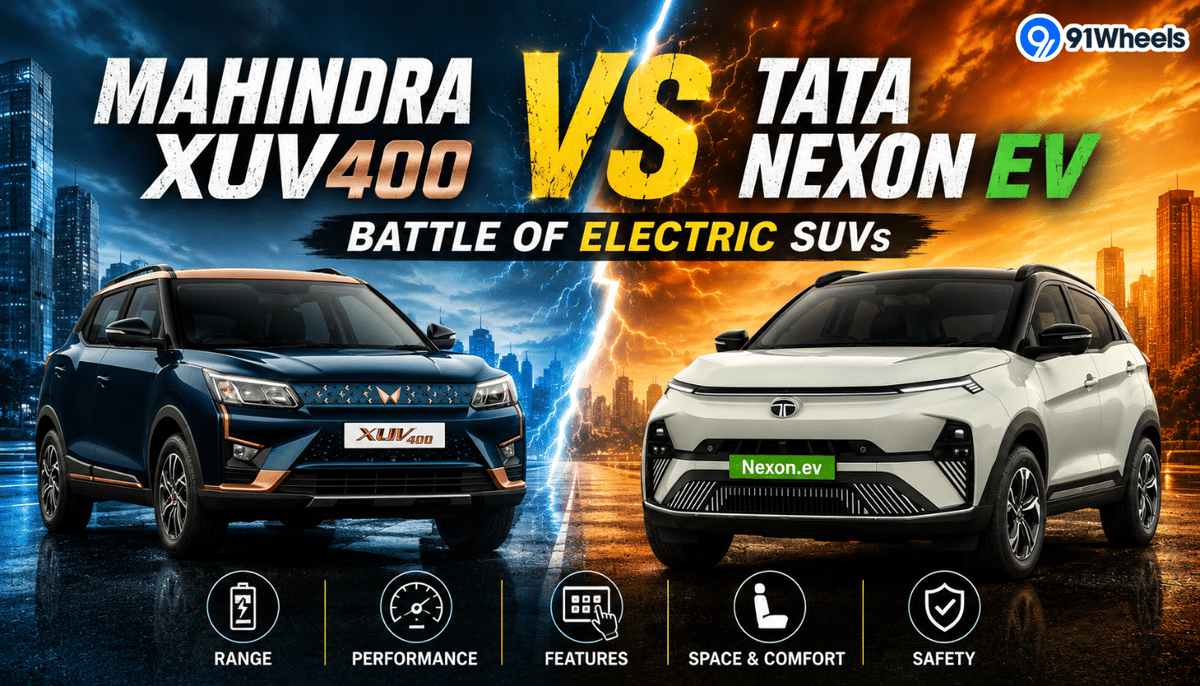
The electric SUV space in India has witnessed significant growth over the last few years and two electric SUVs that buyers often compare are the Tata Nexon EV and the Mahindra XUV400. While both EVs are aimed at families looking for a practical electric SUV, they offer very different personalities. The XUV400 is more about performance, space and the traditional SUV feel, whereas the Nexon EV is more futuristic in design, premium features and modern tech. So, if you are confused between these two electric SUVs, here is a detailed comparison of Tata Nexon EV vs Mahindra XUV400. But, before diving deep into the article make sure to join 91Wheels WhatsApp Community to get the latest updates from the Industry.
Also Read: Best Affordable 7-Seater MPVs In India Under Rs 15 Lakh
Exterior Design
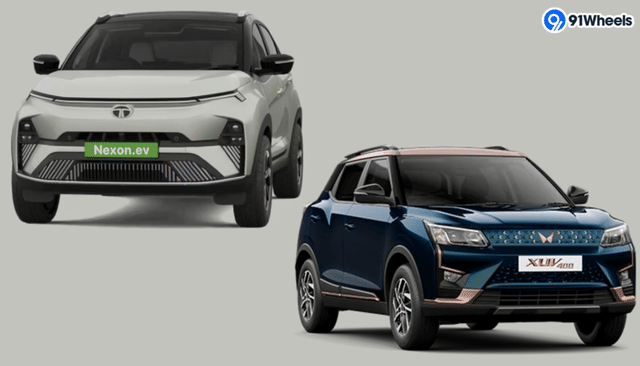
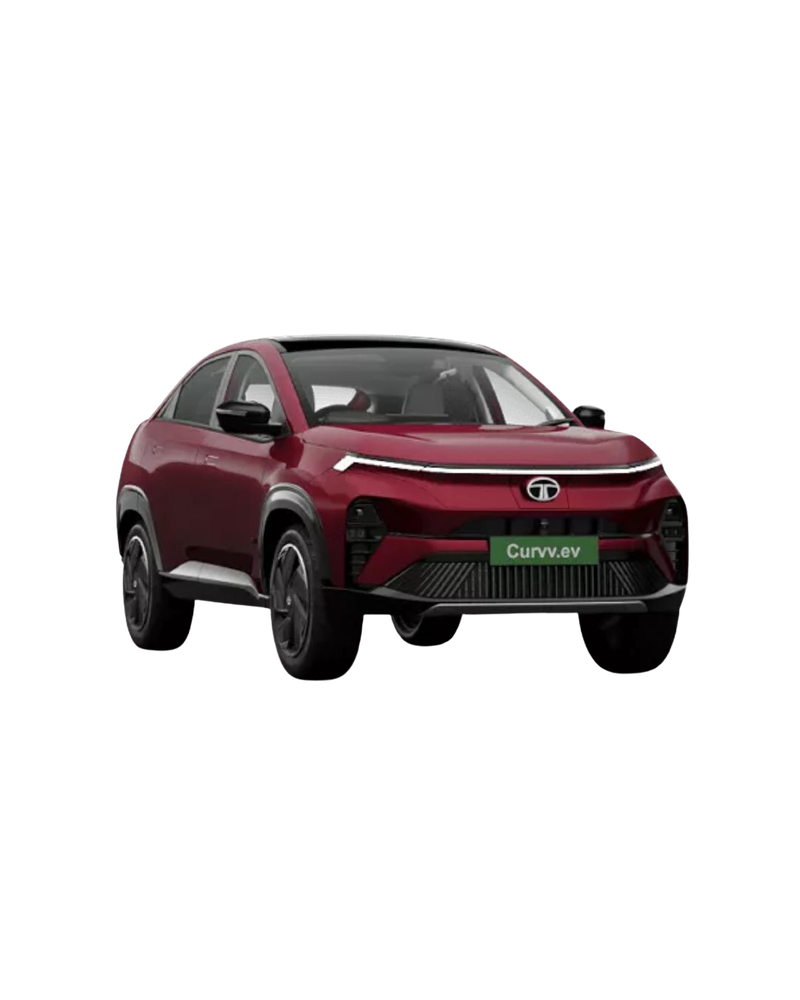
The Tata Nexon EV comes with futuristic and premium-looking design language. At front it features connected LED DRLs, a full-width front light bar, sharp triangular lighting elements, hidden rear wipers, aero-style alloy wheels, and a coupe-inspired rear profile. Tata has clearly pushed the Nexon EV towards a cleaner and more modern EV identity.
On the other hand the Mahindra XUV400 follows a more upright and conventional SUV design. It still gets projector headlamps with LED DRLs, copper-finished inserts, diamond-cut alloy wheels, roof rails, and muscular proportions. However, compared to the Nexon EV, the XUV400 now feels slightly more traditional in overall road presence.
Motor, Battery and Range
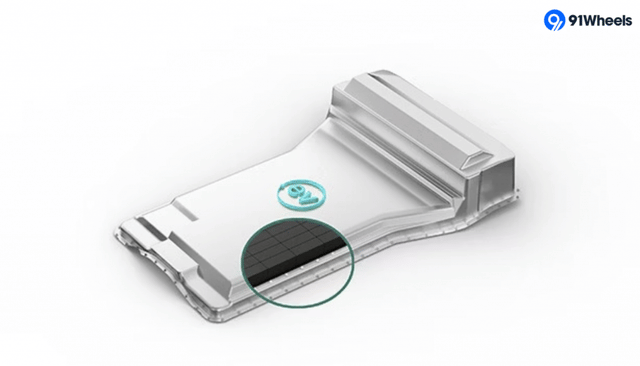
This is one area where both EVs show a noticeable difference, and it also becomes one of the most important deciding factors for buyers while choosing an electric vehicle.
The Tata Nexon EV comes with two battery configurations that includes a 30 kWh and a larger 45 kWh pack. The bigger battery version produces 106 kW power and 215 Nm torque, while offering a claimed range of up to 489 km on a single charge. Apart from that Tata also offers multiple regenerative braking levels, paddle shifters for regen control, IP67 battery protection, and a Gen-2 motor setup.
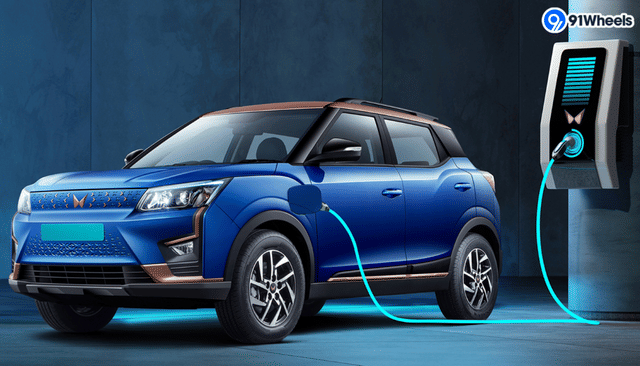
Meanwhile, the Mahindra XUV400 uses a 39.4 kWh battery pack paired with a front-mounted electric motor producing 150 PS and 310 Nm torque. The brand claims that with this setup the car can give a MIDC range of up to 456 km once fully charged. The XUV400 has a quick acceleration, and it can do 100 kmph from standstill in just 8.3 seconds. Additionally, it offers three drive modes along with adjustable regen levels.
Here the XUV400 clearly feels more performance-oriented compared to Nexon EV. The stronger torque delivery makes overtakes feel easier and the SUV feels gives it a more commanding road presence. However, the Nexon EV focuses more on smoothness, efficiency, and overall urban drivability.
| Specifications | Tata Nexon EV | Mahindra XUV400 |
| Battery Pack | 45 kWh | 39.4 kWh |
| Power Output | 106 kW | 150 PS |
| Torque | 215 Nm | 310 Nm |
| Claimed Range | 489 km | 456 km |
| 0-100 km/h | 8.9 sec | 8.3 sec |
| Fast Charging | 10-80% in 40 mins | 50 mins |
XUV400 Vs Tata Nexon EV: Interior
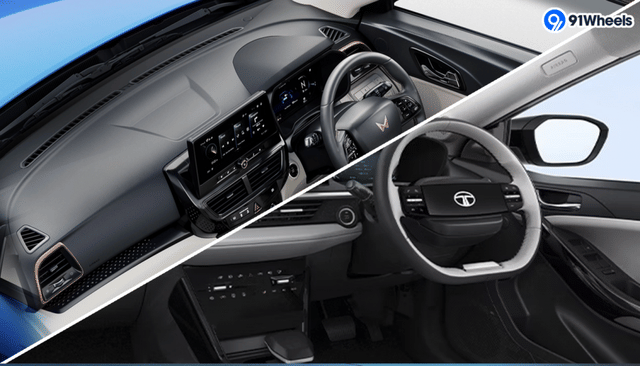
Inside the cabin, the Tata Nexon EV feels more premium and tech focused. It gets a modern dual-tone dashboard layout, a large 12.3-inch touchscreen infotainment system, touch-based HVAC controls, a digital cockpit, ambient lighting, ventilated seats, panoramic sunroof, JBL sound system, and a modern two-spoke illuminated steering wheel. The cabin overall feels more contemporary and feature loaded.
In contrast the Mahindra XUV400 focuses more on space and practicality. It features a dual-tone interior, 10.25 inches touchscreen infotainment system, digital instrument cluster, rear AC vents, single-pedal drive mode, leatherette seats, and an electric sunroof. While the dashboard now feels improved compared to before, the overall cabin still feels simpler than the Nexon EV.
| Cabin Highlights | Tata Nexon EV | Mahindra XUV400 |
| Touchscreen | 12.3-inch | 10.25-inch |
| Instrument Cluster | Fully digital | Fully digital |
| Sound System | JBL 9-speaker | Standard audio setup |
| Sunroof | Panoramic | Electric sunroof |
| Interior Feel | Premium and futuristic | Spacious and practical |
XUV400 Vs Tata Nexon EV: Features
On the feature front the Tata Nexon EV clearly takes the lead. It offers segment-first features like V2L and V2V charging capabilities, Arcade.ev app suite, OTA updates, ADAS functions, and a 360-degree camera. Mahindra XUV400, meanwhile, offers connected car technology, wireless charging, dual-zone climate control, cruise control, TPMS, rear camera, and connected features through AdrenoX. While the feature list is still strong, it feels more focused on practicality than gimmicks.
| Features | Tata Nexon EV | Mahindra XUV400 |
| Panoramic Sunroof | Yes | No |
| Ventilated Seats | Yes | No |
| 360-degree Camera | Yes | No |
| ADAS | Yes | No |
| V2L/V2V | Yes | No |
| OTA Updates | Yes | Limited |
| Air Purifier | Yes | No |
Dimensions
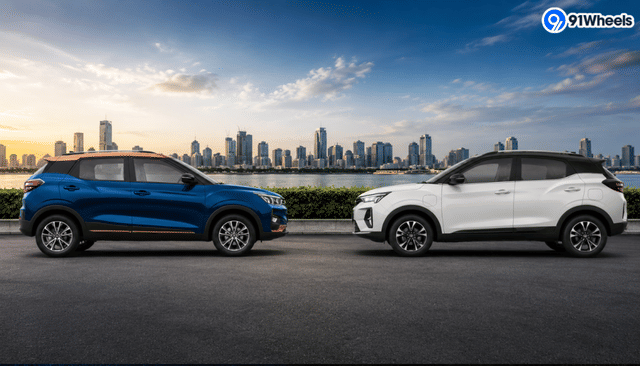
The Mahindra XUV400 is physically the larger SUV here. It offers a longer body, wider cabin, and longer wheelbase, which directly helps rear-seat comfort and overall cabin room.
The Tata Nexon EV, meanwhile, feels slightly more compact and city-friendly while still offering respectable cabin and boot space.
| Dimensions | Tata Nexon EV | Mahindra XUV400 |
| Length | 3995 mm | 4200 mm |
| Width | 1802 mm | 1821 mm |
| Height | 1625 mm | 1634 mm |
| Wheelbase | 2498 mm | 2600 mm |
| Ground Clearance | Up to 205 mm | 200 mm |
| Boot Space | 350 litres | 378 litres |
Also Read: KTM 390 ADV Vs RE Himalayan 450: Battle of Adventure Tourers
Verdict
The Tata Nexon EV currently feels like the more complete and modern electric SUV package. It offers a fresher design, significantly better technology, more premium features, stronger safety tech, and a more futuristic cabin experience. It is clearly targeted towards urban buyers looking for a feature-rich EV experience. Mahindra XUV400, meanwhile, still remains one of the better driver-focused EVs in this segment. Its stronger performance, larger dimensions, better rear-seat space, and highway-friendly nature continue to make it a strong option for buyers prioritising practicality and straight-line performance over flashy features.
Do you like this article?
Comments
No comments yet. Be the first to comment!