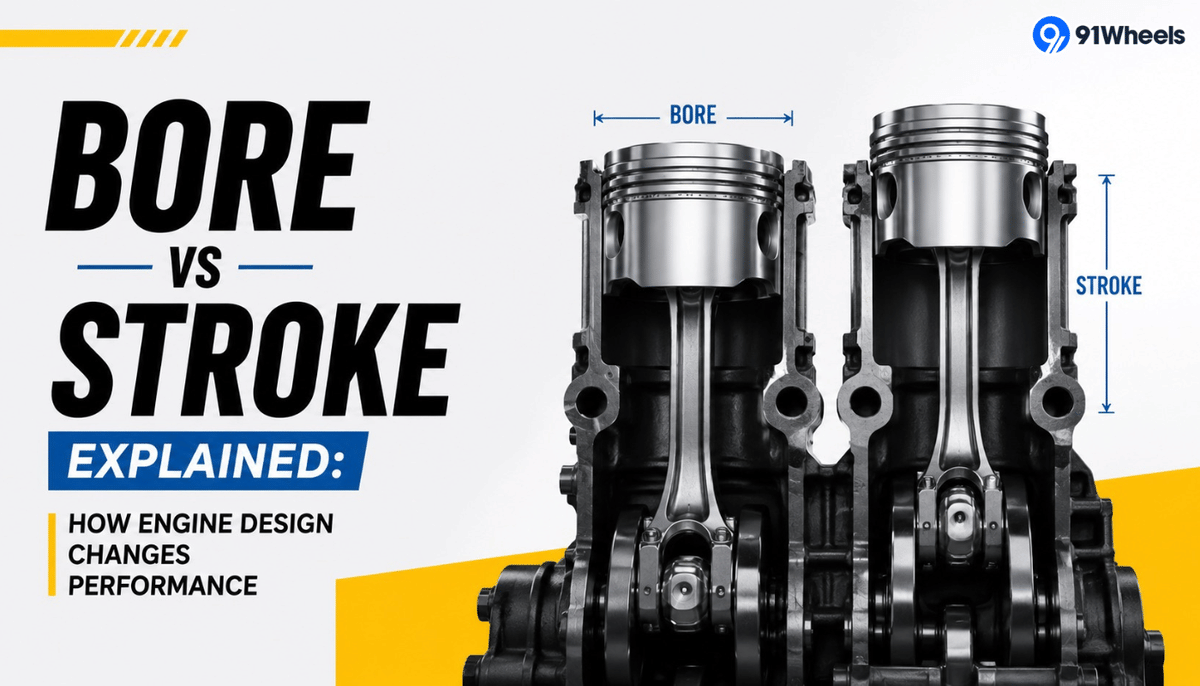
Bore vs Stroke Explained: Walk into any showroom conversation about a new bike or car, and sooner or later someone throws around numbers like "70mm bore" or "long-stroke engine" as if everyone in the room automatically knows what that means for how the vehicle will actually feel on the road. Most buyers nod along and move on to talking about mileage figures instead, because bore and stroke sound like factory-floor trivia rather than something that affects a Tuesday morning commute. That's a mistake, because these two dimensions quietly decide whether an engine loves revving hard or prefers pulling from low down, whether it sips fuel gently or drinks it eagerly when pushed, and even how long it's likely to last before it needs major work.
What Bore and Stroke Actually Are
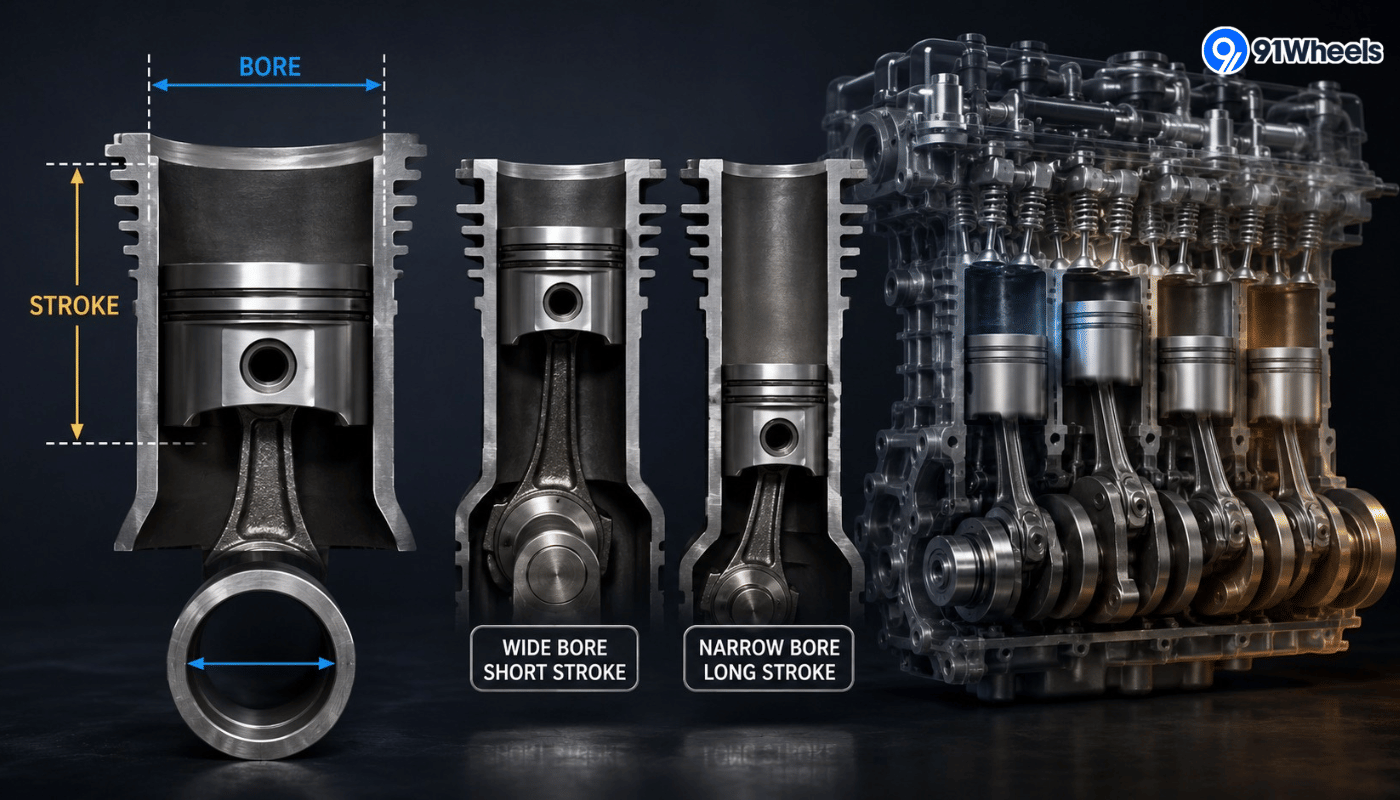
Inside every cylinder of a piston engine sits a piston that moves up and down. Bore is simply the diameter of that cylinder - how wide the tube is that the piston travels through. Stroke is the distance the piston covers as it moves from the very top of the cylinder to the very bottom. Together, these two measurements decide the swept volume of a single cylinder, and multiplying that across every cylinder in the engine gives you the total displacement figure that gets printed on spec sheets and badges.
What rarely gets explained is that two engines can share the exact same displacement - say, 150cc - while having completely different bore and stroke numbers, and completely different characters as a result. One manufacturer might build that 150cc engine with a wide bore and a short stroke. Another might build it with a narrower bore and a longer stroke. On paper, both are "150cc." On the road, they behave like different species.
The Short-Stroke, Wide-Bore Approach
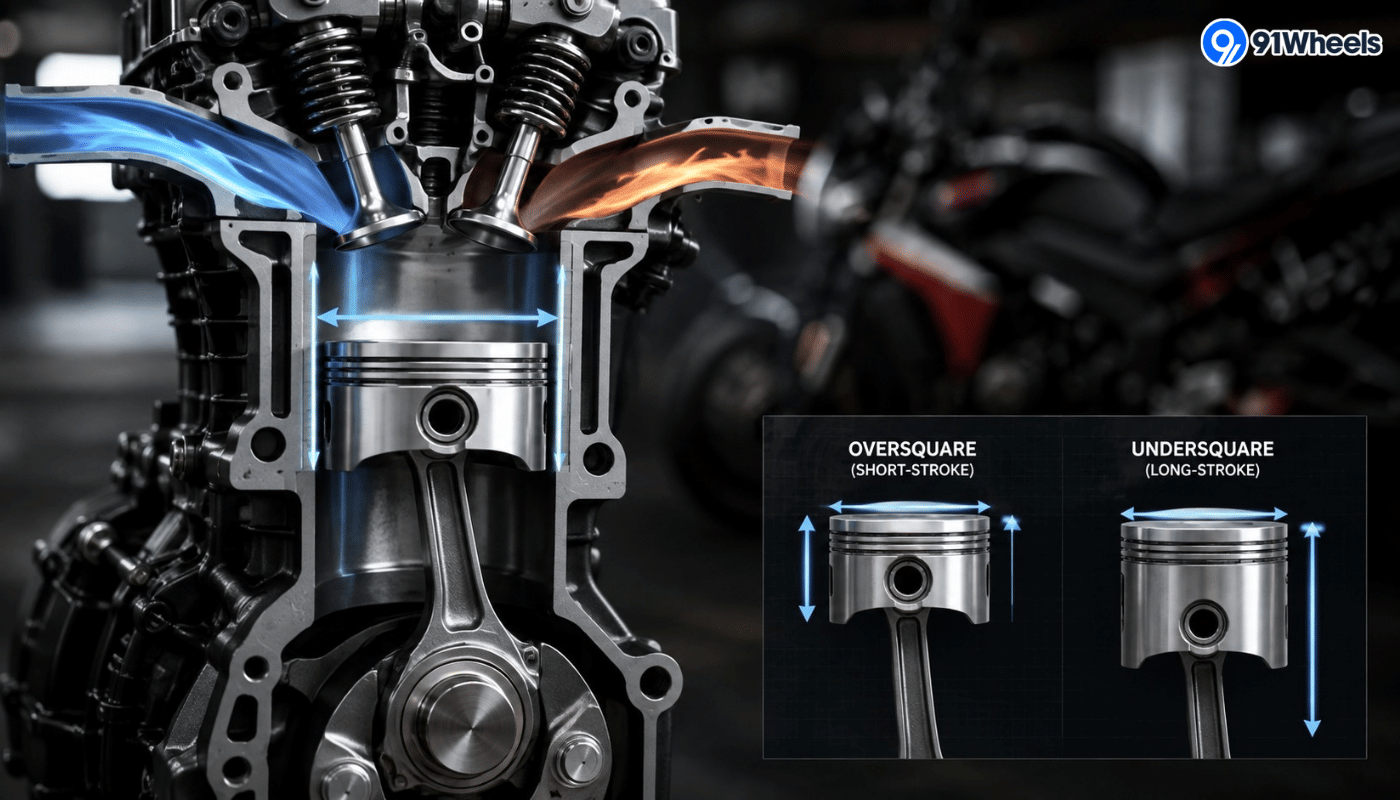
When engineers make the bore wider than the stroke, they're building what's usually called an oversquare or short-stroke engine. The piston doesn't have to travel far to complete each cycle, which means it can change direction more times per minute without the internal components experiencing punishing stress. That's why short-stroke engines are the natural choice whenever a brand wants an engine that feels happy spinning to high revs - think sporty hatchbacks, performance-oriented naked bikes, and anything marketed around the word "revvy."
The wider bore also creates room for larger valves, which lets the engine breathe in more air and fuel with every cycle at high RPM. This is part of why oversquare engines tend to make their peak power figures further up the rev range rather than down low. The trade-off is that low-end grunt - the kind of pulling power you feel when accelerating gently away from a signal in a higher gear - tends to be less immediate, because the engine is tuned to reward being revved rather than lugged.
The Long-Stroke, Narrow-Bore Approach
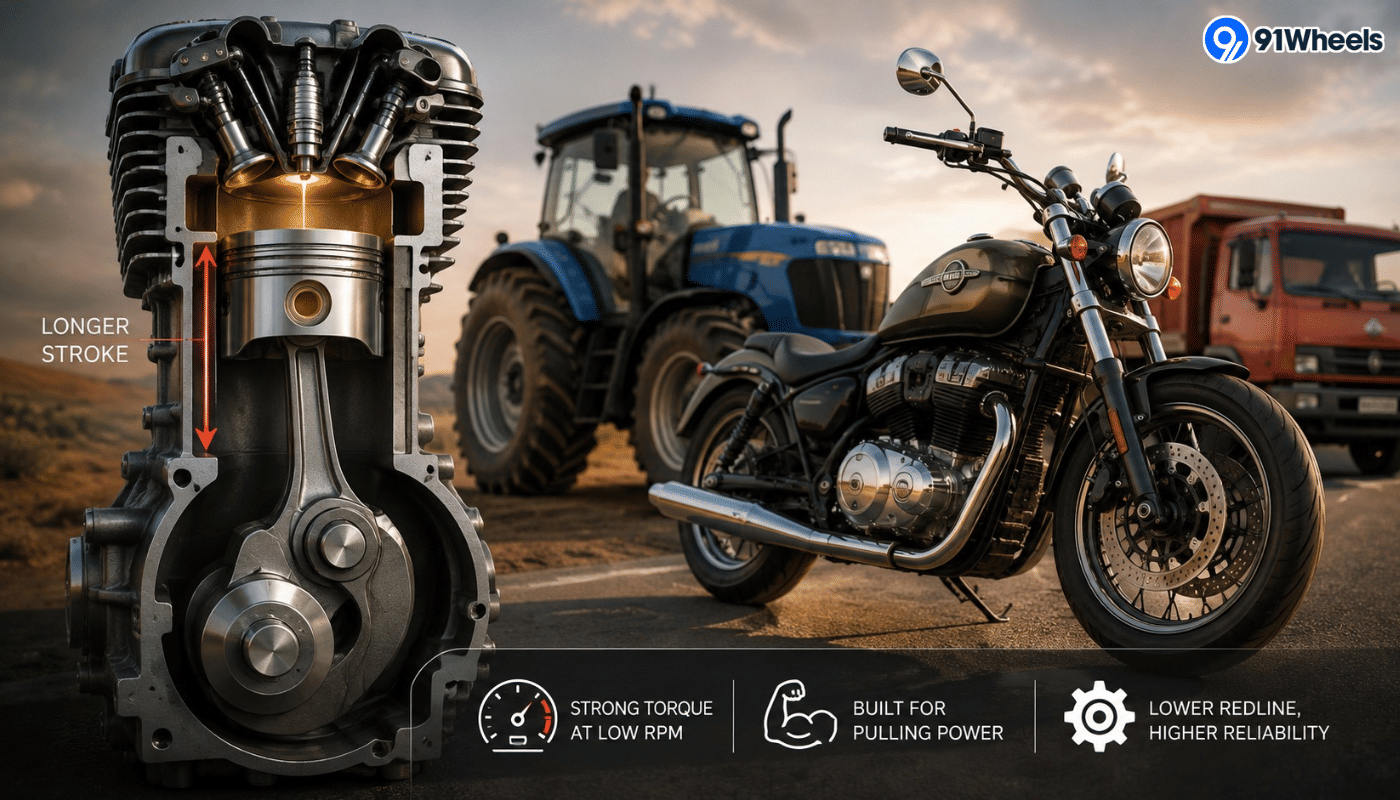
Flip the ratio around and you get an undersquare or long-stroke engine, where the piston travels a greater distance within a narrower cylinder. Because the piston has more leverage on the crankshaft during that longer stroke, these engines tend to generate strong torque at lower RPM. This is exactly why long-stroke configurations show up so often in cruiser motorcycles, tractors, and diesel engines built for hauling rather than sprinting. Riders and drivers get that sensation of relaxed, unhurried pulling power without needing to chase the redline.
The compromise here is mechanical. A longer stroke means the piston is moving faster within the cylinder at any given engine speed compared to a short-stroke design turning the same RPM, since it's covering more distance in the same amount of time. Push a long-stroke engine too hard toward high revs and internal stresses climb quickly, which is one reason these engines are usually tuned with a lower redline rather than being pushed to scream.
Where Square Engines Fit In
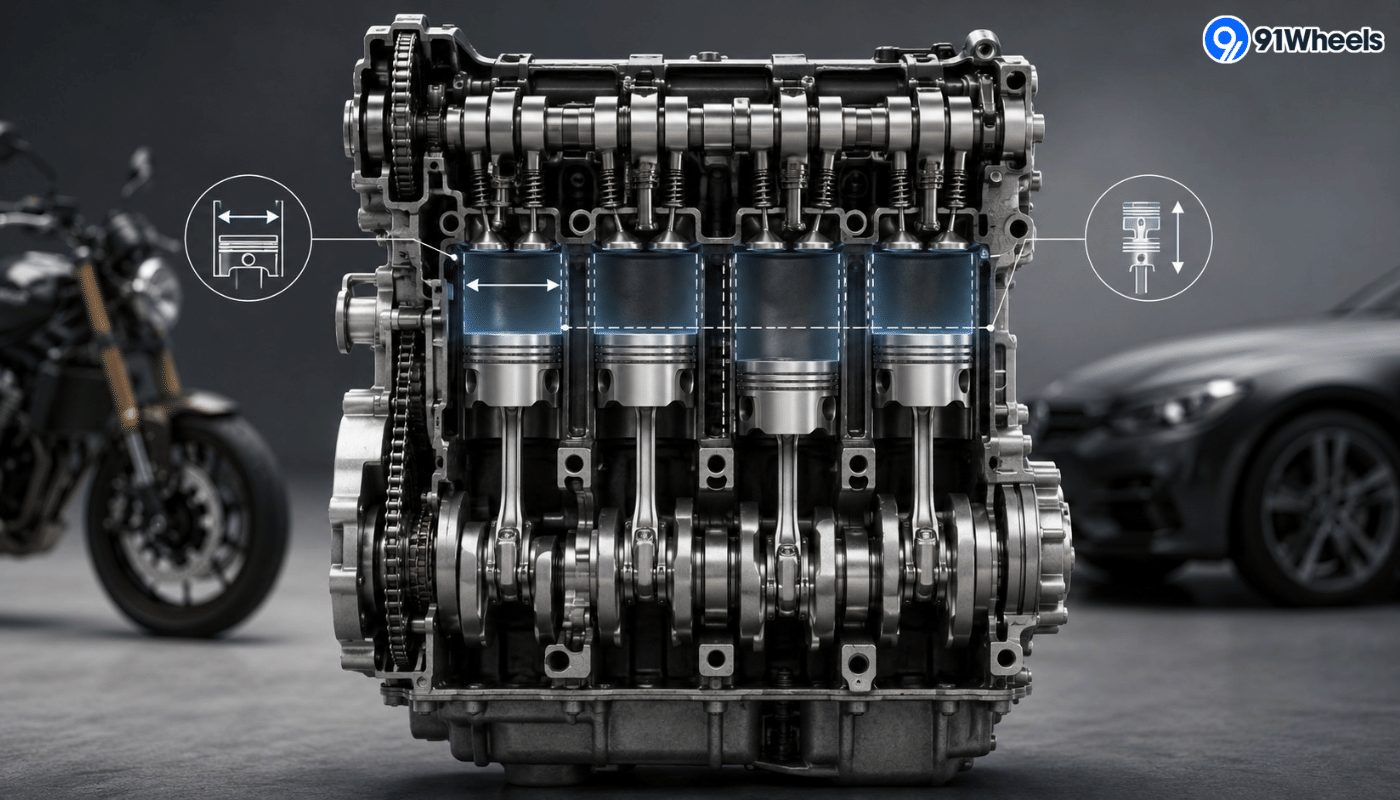
Some engines split the difference, with bore and stroke measurements that are equal or very close to each other. These "square" or "near-square" designs try to blend a bit of both worlds - reasonably strong low-end response along with a willingness to rev further than a true long-stroke unit would allow. A lot of modern mid-capacity motorcycle engines and everyday car engines fall into this category, precisely because manufacturers are chasing a balance that works for daily use rather than chasing either extreme.
Why This Should Matter to You as a Buyer
Spec sheets rarely spell out bore and stroke figures prominently, and even when they do, most buyers skip straight past them to look at peak power and torque numbers. But those peak figures only tell you what an engine can do at its best moment - they don't tell you how the power arrives. Two engines with identical peak horsepower can feel dramatically different to actually drive if one delivers that number through a wide, easy torque spread and the other only unlocks it near the redline.
If your daily reality involves stop-and-go traffic, overtaking on undivided highways, or carrying pillion and luggage regularly, an engine leaning toward the long-stroke side of the spectrum will generally feel more forgiving, because it doesn't demand you keep revs high just to access usable power. If you enjoy chasing revs, want a sharper throttle response, or are drawn to performance variants that reward spirited riding or driving, a short-stroke or oversquare engine will typically reward that style far more.
There's also a longevity angle worth keeping in mind. Long-stroke engines, run within their intended rev range, tend to experience gentler internal wear patterns over years of ownership, which partly explains why so many long-stroke commuter engines have reputations for going the distance with minimal fuss. Short-stroke engines built for performance, on the other hand, are engineered to handle high-rev stress by design, but they usually reward more attentive maintenance if that performance is going to be used often.
None of this means one layout is objectively better than the other - it means they're built for different jobs. The next time a spec sheet mentions bore and stroke figures, or a salesperson describes an engine as "revvy" or "torquey," you'll know exactly what's happening inside those cylinders to create that feeling, and you'll be able to match the engine's personality to the way you actually plan to ride or drive it.
Do you like this article?
Comments
No comments yet. Be the first to comment!