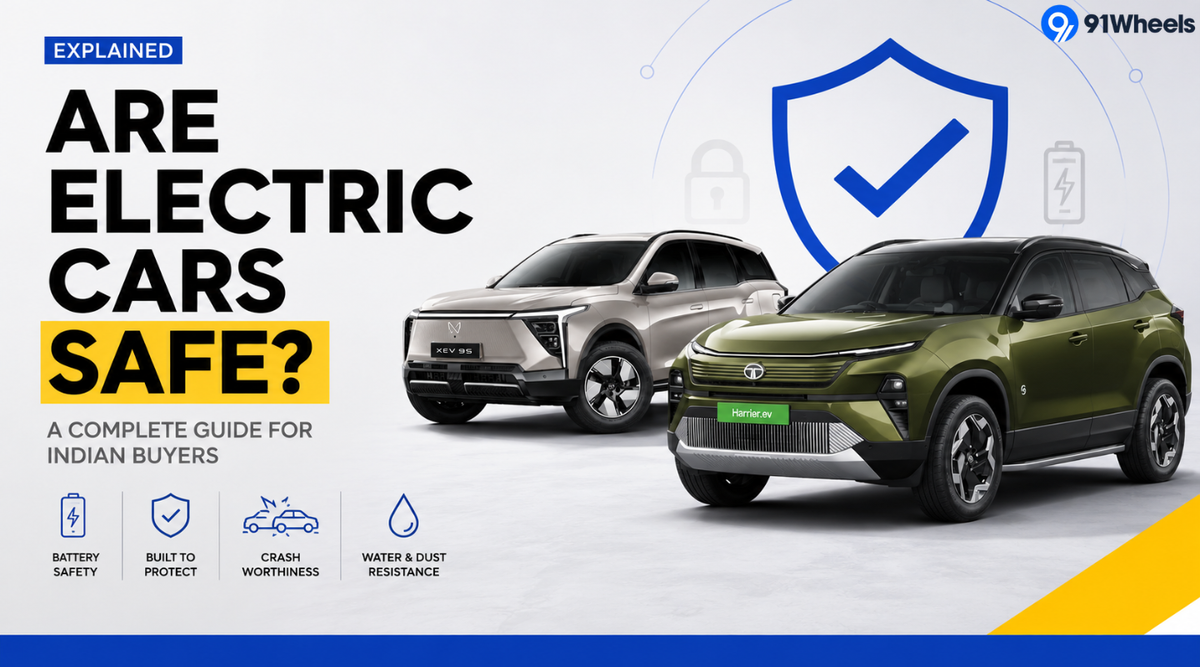
EV sales in India are climbing every year. In 2025, more than 1.76 lakh electric cars were sold in India. Almost every manufacturer in the business sells one, and several now list as many EV models as petrol or diesel ones in their portfolio. With that shift comes one question that shows up in every buyer's mind and every Google search bar: are electric cars safe?
The short answer is yes, when the vehicle is bought from a certified manufacturer and used correctly. The longer answer needs some context, because "safety" for an EV covers three separate things: crash protection, battery fire risk and everyday electrical safety. This guide covers all three, with data relevant to Indian roads and Indian buying habits.
Are Electric Cars Safe In Crashes?
Crash safety for an EV works on the same principles as any other car. It depends on the structure of the body shell, the number of airbags, and whether the car has electronic stability control (ESC). The battery pack does not change this equation much. In fact, EVs often have an advantage here.
Most EVs place their battery pack low in the floor, between the axles. This lowers the car's centre of gravity, which reduces the chance of a rollover. It also adds weight to the lower structure, which some engineers argue improves stability during side impacts.
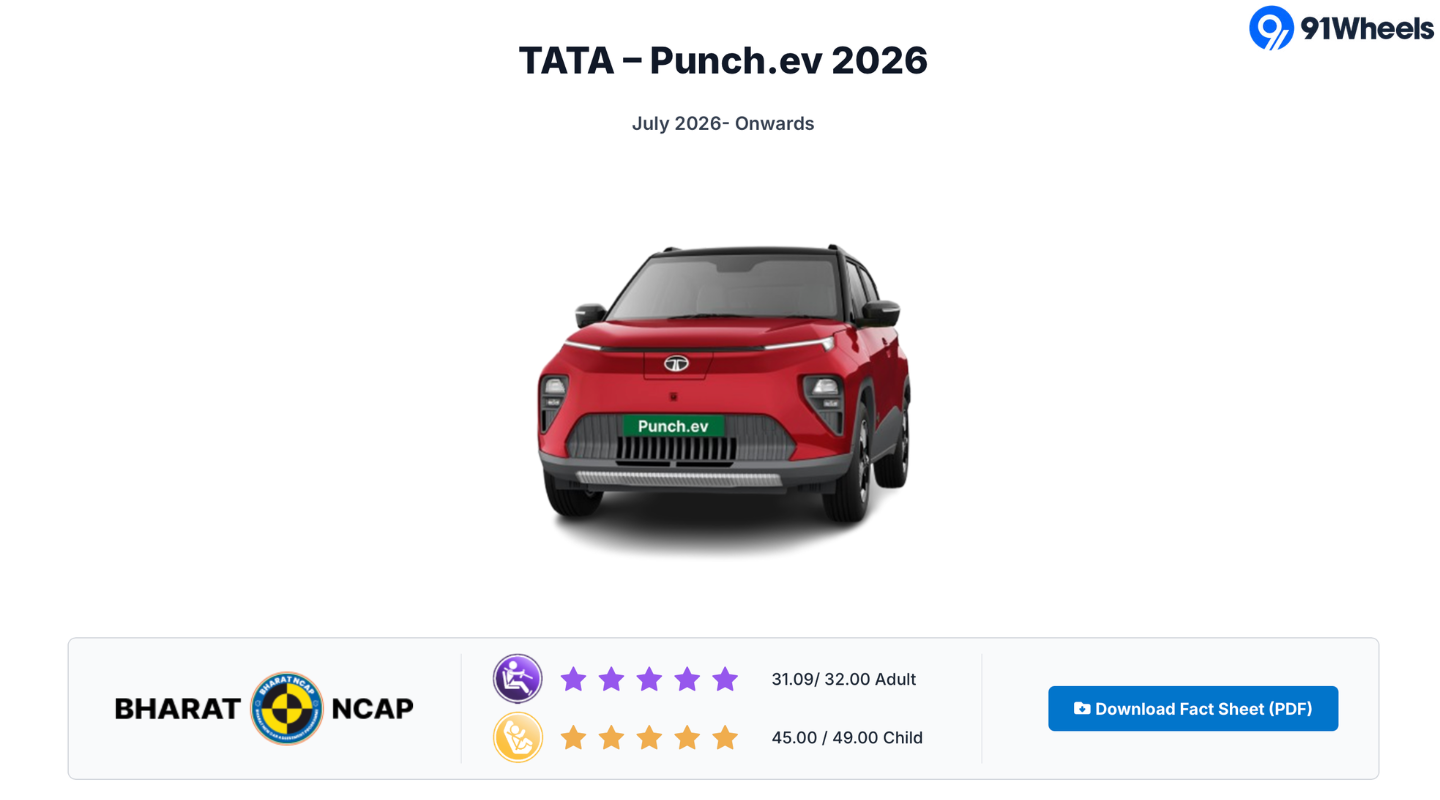
Bharat NCAP, India's own crash test programme, has already tested several electric models and awarded them the full five-star rating. The 2026 Tata Punch.ev is one example. It scored 31.09 out of 32 points for adult occupant protection and 45 out of 49 for child occupant protection, and the rating applies across the entire line-up regardless of battery size or variant. Standard safety kit on the car includes six airbags, electronic stability control, Isofix child seat mounts and seatbelt reminders for every occupant.
This is not an isolated case. Several EVs sold in India today, across brands like Tata, Hyundai, MG, Mahindra, and even Maruti Suzuki, carry five-star Bharat NCAP or Global NCAP ratings. The takeaway for a buyer is simple: crash safety on an EV should be judged the same way as on a petrol or diesel car. Check the Bharat NCAP score, check the standard safety features, and do not assume an EV is automatically safer or riskier just because of its powertrain.
What About Battery Fires? The Real Numbers
This is the question that worries most Indian buyers, and for good reason. A handful of EV and e-scooter fires made national headlines a few years ago, and the images stuck. But headlines are not the same as statistics.
Government data tells a different story from public perception. The Ministry of Heavy Industries has cited figures from the official eDAR (Electronic Detailed Accident Report) database, showing India recorded 5,594 EV accidents with 8 fire incidents in 2023, 7,817 accidents with 9 fires in 2024, and 10,454 accidents with 9 fires in 2025. That works out to 26 fire incidents across three years, against a rapidly growing EV fleet that runs into several million vehicles once two-wheelers are counted.
Put simply, EV fires remain a rare event relative to the size of the fleet, not a common one. This lines up with international data too. Fire safety agencies in mature EV markets, including the US and Sweden, have repeatedly found that petrol and diesel vehicles catch fire more often per vehicle than EVs do, and that hybrids sometimes report higher fire rates than pure electric vehicles once the numbers are normalised by fleet size.
Why Do Electric Car Catches Fire?
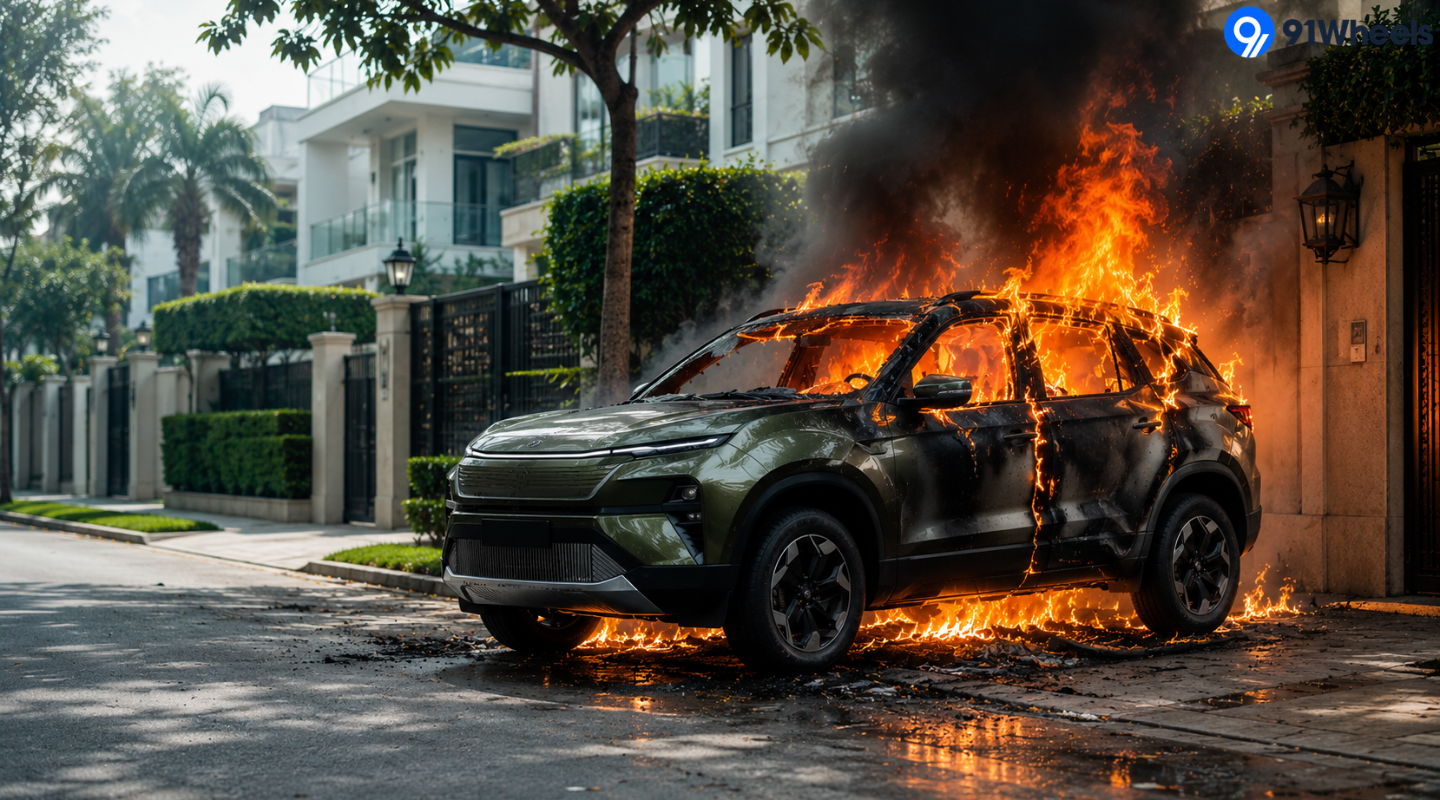
When an EV fire does occur, it is almost always linked to a condition engineers call thermal runaway, where a battery cell overheats and triggers a chain reaction in nearby cells. The common triggers are:
- Severe physical damage to the battery pack, usually from a high-speed crash
- An internal short circuit caused by a manufacturing defect
- Charging in extreme heat without proper thermal management
- Unauthorised repairs or battery modifications by unlicensed mechanics
None of these are everyday risks for an owner who buys from an authorised dealer, charges with the equipment supplied, and services the car at an authorised centre.
Bharat's Battery Safety Standards: AIS-156
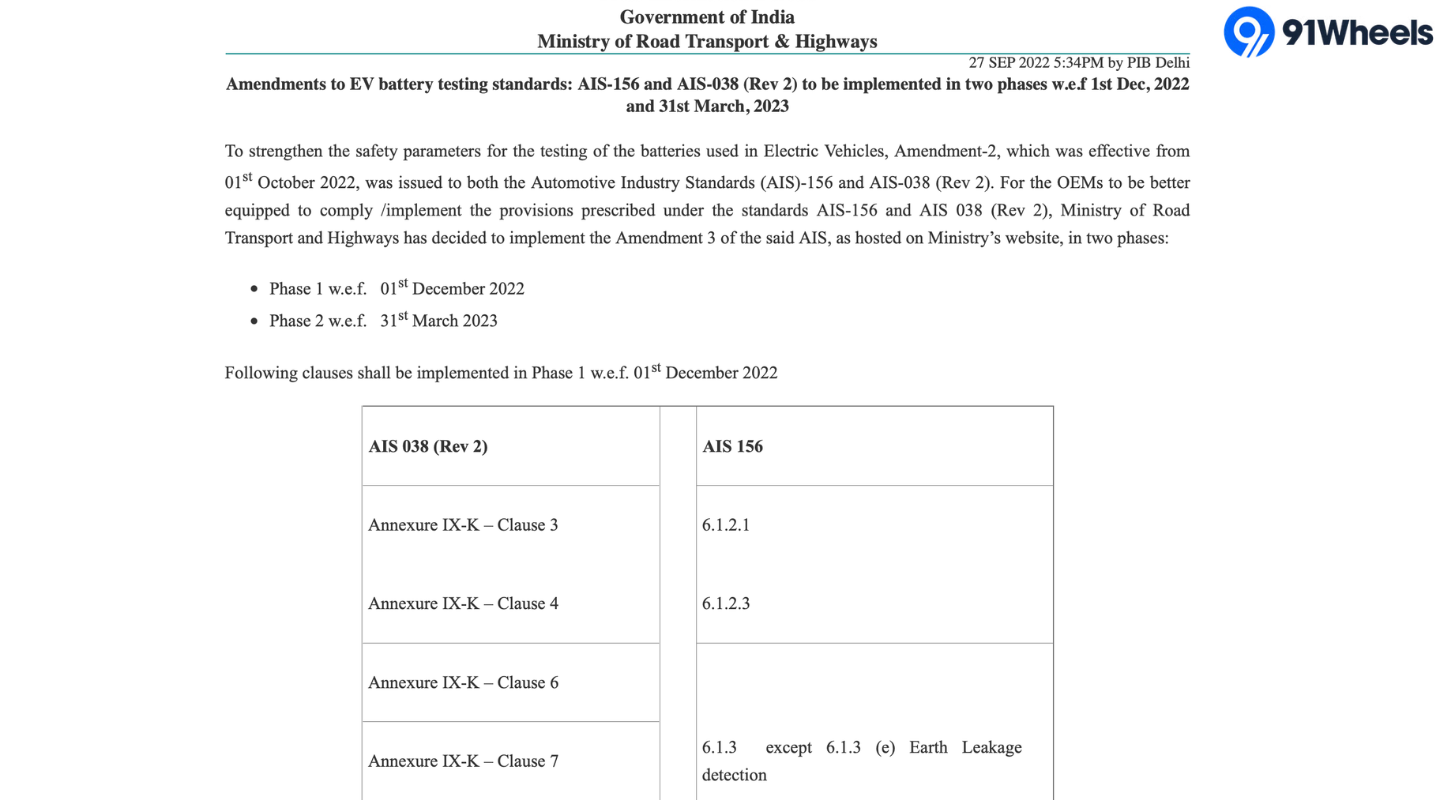
India tightened its battery safety rulebook after the fire incidents of 2022. The result is AIS-156, a set of technical standards every EV battery pack must meet before it can be sold in the country. It was rolled out in two phases.
Note: The 2022 incidents refer to a string of electric scooter fires between March and May that year. Scooters from Ola Electric, Okinawa, Pure EV and Jitendra EV caught fire, and two people died in these incidents. The government set up a team led by DRDO to find out why. They found the problem was in the battery cells and the way the batteries were built. This led the government to bring in AIS-156 sooner than planned.
Phase 1, effective from December 2022, made traceable battery packs, an additional safety fuse and a microprocessor-based Battery Management System (BMS) mandatory. Phase 2, effective from March 2023, added tougher requirements including thermal propagation testing to stop a single cell fire from spreading, and IP67 or IPX7 waterproofing so the battery survives monsoon flooding.
By 2026, these standards have matured further. Manufacturers now use active parallel circuits, essentially micro-fuses that isolate a faulty string of cells instantly, and many budget EVs have shifted to Lithium Iron Phosphate (LFP) battery chemistry, which is significantly more heat-stable than the older nickel-based chemistries. A new traceability system, sometimes called the Battery Pack Aadhaar, also lets every pack be tracked from production to end of life.
For a buyer, this means any EV legally sold in India today, from a scooter to a full-size SUV, has already cleared a strict certification process before it reaches a showroom.
Are EVs Safer Than Petrol Or Diesel Cars?
There is no universal answer here, because each fuel type carries a different kind of risk.
Petrol and diesel cars carry a tank of flammable fuel. Fires from this fuel are rare, but they have been a known risk for as long as these cars have existed. EVs remove that risk completely. Instead, they carry high-voltage batteries and wiring, which bring a different kind of risk, mainly around charging and crash damage.
What the data does support is this: EV fires are not more frequent than ICE vehicle fires when measured against the number of vehicles on the road. The perception gap exists mainly because EV fires are newer, visually dramatic, and harder for a regular fire extinguisher to put out, which makes them more newsworthy. Online discourse around EVs also tends to amplify any bad incident, since the technology is still newer and more contested than the ICE cars readers have grown up with. A petrol car catching fire rarely makes it to the front page anymore. An EV fire usually does.
Everyday Safety Tips For EV Owners In India
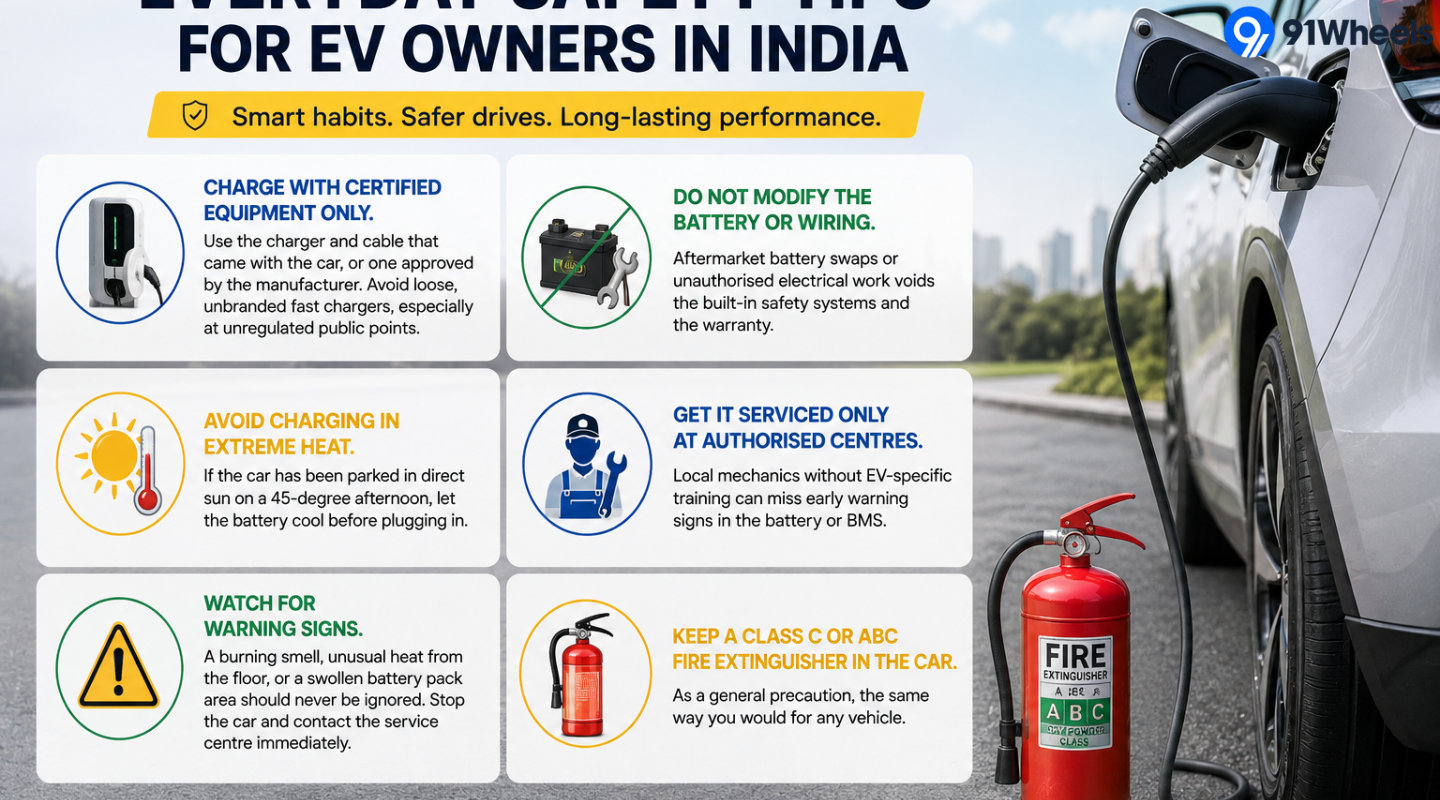
A well-built EV is only as safe as how it is used. These habits matter more in India's climate and road conditions than in most markets:
- Charge with certified equipment only. Use the charger and cable that came with the car, or one approved by the manufacturer. Avoid loose, unbranded fast chargers, especially at unregulated public points.
- Avoid charging in extreme heat. If the car has been parked in direct sun on a 45-degree afternoon, let the battery cool before plugging in.
- Do not modify the battery or wiring. Aftermarket battery swaps or unauthorised electrical work voids the built-in safety systems and the warranty.
- Get it serviced only at authorised centres. Local mechanics without EV-specific training can miss early warning signs in the battery or BMS.
- Watch for warning signs. A burning smell, unusual heat from the floor, or a swollen battery pack area should never be ignored. Stop the car and contact the service centre immediately.
- Keep a Class C or ABC fire extinguisher in the car, as a general precaution, the same way you would for any vehicle.
Frequently Asked Questions
Is it safe to buy an electric car in India in 2026? Yes. EVs sold in India must meet AIS-156 battery safety norms and are increasingly tested by Bharat NCAP for crash safety. Buying from an established manufacturer and using certified charging equipment covers most of the real-world risk.
Do electric cars catch fire more often than petrol cars? No. Government data shows EV fire incidents remain a small fraction of the total EV fleet in India, and international fire safety data shows ICE vehicles have historically had higher fire rates per vehicle than EVs.
Are EV batteries safe during monsoon flooding? EV batteries sold in India must meet IP67 or IPX7 waterproofing standards under AIS-156, meaning they are tested to withstand water immersion. Avoid driving through deep waterlogged stretches regardless of fuel type, as a precaution.
Which is the safest electric car in India right now? Several EVs carry a five-star Bharat NCAP rating, including the Tata Punch EV. The safest choice depends on the segment and budget, but a five-star Bharat NCAP or Global NCAP rating is the first thing to check.
Can an EV battery explode? A true explosion is extremely rare. What can happen under severe stress is thermal runaway, where the battery catches fire and burns, rather than exploding like a bomb. Modern BMS and thermal propagation safeguards are designed specifically to prevent this from spreading.
End Note
Electric cars sold in India today go through the same crash testing as petrol and diesel cars, and their batteries go through additional certification that ICE vehicles never had to face. Fire incidents, while they do happen, remain rare relative to the size of the EV fleet on Indian roads. The real safety factors that matter to a buyer are the same ones that mattered before EVs existed: buy from a manufacturer with a strong crash test rating, use the equipment the manufacturer supplies, and get the car serviced at an authorised centre. Do that, and an EV is a safe, sensible choice for Indian roads in 2026.
Do you like this article?
Comments
No comments yet. Be the first to comment!