KEY HIGHLIGHTS
- Connected LED headlamps in front.
- New honeycomb grille.
- Ventilated seats and 360-camera.
- Aggressive looks with sportier bumper.
- Strong hybrid powertrain for fuel efficiency.
Honda Cars India is finally ready to pull the wraps off the updated 2026 Honda City, and the facelift brings a series of noticeable cosmetic and feature upgrades to keep the sedan relevant in an SUV-dominated market. While the overall silhouette and mechanical package remain familiar, Honda has worked on sharpening the City's road presence and adding features that buyers have long been asking for. Here's a detailed look at how the new Honda City facelift differs from the outgoing model.
Exterior Design: Sharper, Sportier And More Modern
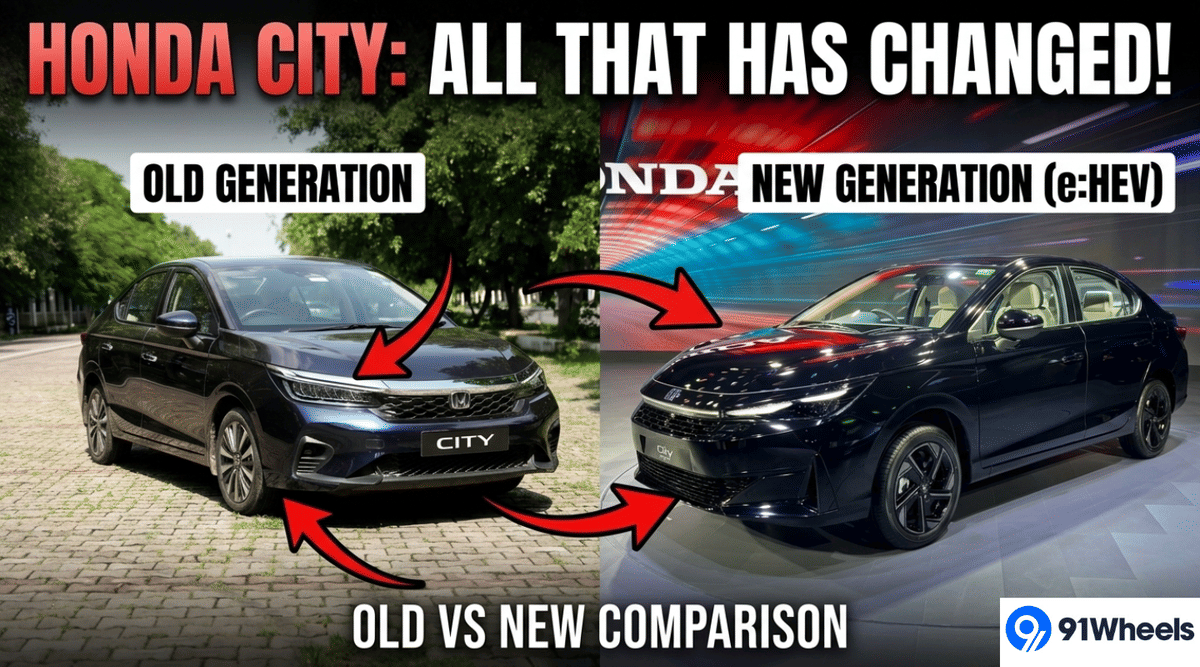
The biggest changes on the updated Honda City can be seen at the front. Compared to the current model, the facelift adopts a more aggressive and futuristic design language.
The outgoing City featured a chrome-heavy grille design with conventional LED DRLs integrated into the headlamp cluster. In comparison, the facelifted model introduces a slimmer front fascia with a fresh honeycomb-pattern grille and smoked LED headlamps that appear much sleeker.

One of the most noticeable additions is the connected LED light bar stretching across the front, giving the sedan a more premium and contemporary appearance. The bumper has also been redesigned with sharper cuts and sportier detailing. Another visible upgrade is the addition of a front-mounted camera below the Honda badge, hinting at the inclusion of a 360-degree camera system and enhanced ADAS functionality.
Side Profile
From the side, Honda has retained the familiar silhouette of the current-generation City. However, subtle changes help differentiate the facelift:
- Newly designed diamond-cut alloy wheels
- Camera units integrated into the ORVMs
- Blacked-out exterior accents replacing chrome elements
The updated black treatment around the grille and window line gives the sedan a cleaner and slightly sportier stance than before.
Rear Design
At the rear, the changes are evolutionary rather than revolutionary. The facelift gets:
- Smoked-effect LED taillamps
- Revised rear bumper design
- Sportier reflector treatment
- A sharper-looking bootlid spoiler
These updates collectively make the new City appear more dynamic and premium compared to the outgoing version.
Interior Changes: Familiar Cabin With New Technology
Inside the cabin, Honda has chosen to retain the overall dashboard layout of the existing City. However, the facelift introduces several important feature additions and usability upgrades.
The biggest update is expected to be a larger free-standing touchscreen infotainment system, replacing the current 8-inch display. The updated unit is likely to feature improved software, smoother graphics and better connectivity functions.
The new model is also expected to receive:
- Ventilated front seats
- 360-degree camera
- Type-C charging ports
- Updated connected car technology
Meanwhile, familiar elements such as the semi-digital instrument cluster, rotary AC controls and three-spoke steering wheel have been retained.
Honda is also expected to continue offering the black-and-beige interior theme alongside a possible new cabin finish for select variants.
Features: More Premium Than Before
The current Honda City already offers a strong feature list, but the facelift aims to close the gap further against rivals like the Hyundai Verna and Volkswagen Virtus.
New Features On The Facelift
- 360-degree camera
- Larger infotainment system
- Ventilated front seats
- Updated ADAS integration
- Type-C charging ports
Features Carried Forward
- Wireless Android Auto and Apple CarPlay
- Electric sunroof
- Wireless charger
- Rear AC vents
- Connected car technology
- 8-speaker audio system
- Keyless entry with push-button start
Safety Features
Honda is expected to continue offering a comprehensive safety package with the facelifted City.
Safety features likely to be offered include:
- 6 airbags
- Electronic Stability Control (ESC)
- Hill Start Assist
- Tyre Pressure Monitoring System (TPMS)
- ISOFIX child seat mounts
- Rear parking sensors
- Blind spot monitoring
- Level-2 ADAS suite
The addition of a 360-degree camera could make the new City easier to manoeuvre in urban traffic conditions.
Engine Options: No Mechanical Changes Expected
Under the hood, the facelifted Honda City is expected to remain mechanically unchanged. Honda is likely to continue offering both petrol and strong-hybrid powertrains.
| Engine | Power | Torque | Gearbox |
|---|---|---|---|
| 1.5-litre NA Petrol | 121 PS | 145 Nm | 6-speed MT / CVT |
| 1.5-litre Strong Hybrid | 126 PS | 127 Nm | e-CVT |
The naturally aspirated petrol engine will continue targeting buyers looking for refinement and reliability, while the e:HEV strong-hybrid variant will remain focused on fuel efficiency.
Expected Price Difference
With the addition of new technology and cosmetic upgrades, Honda is expected to increase prices slightly over the outgoing model. Currently, the Honda City petrol range starts from around Rs 12 lakh and goes up to Rs 16.07 lakh (ex-showroom), while the hybrid version is priced significantly higher.
The facelift could command a premium of approximately Rs 20,000 to Rs 60,000 depending on the variant and powertrain.
Old Vs New Honda City: What's The Real Difference?
While the facelift does not completely reinvent the Honda City, it successfully modernises the sedan where it mattered most. The older model focused heavily on elegance and comfort, whereas the updated version adds a sportier design language, more premium tech and features that buyers now expect in this segment.
For buyers considering a midsize sedan in 2026, the new Honda City appears better equipped to fight rivals like the Hyundai Verna, Volkswagen Virtus and Skoda Slavia while retaining the comfort, refinement and reliability that the City badge has always been known for.
Do you like this article?
Comments
No comments yet. Be the first to comment!