Triumph Tracker 400 Vs Speed 400: Which one is a more sensible choice for you

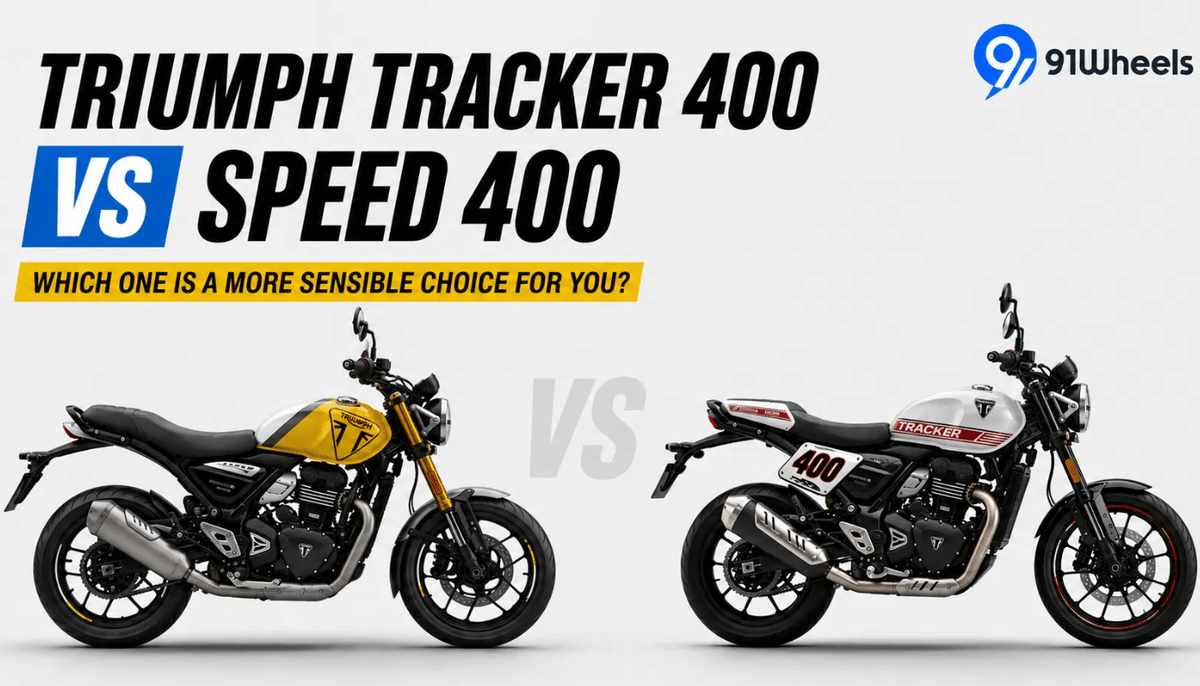
Triumph has added a new machine to its portfolio, the Tracker 400, a motorcycle that takes its styling cues from American flat-track dirt bikes. At the same time, the brand has revised the Speed 400 with a smaller-capacity engine. While both motorcycles share the same family lineage, they cater to slightly different audiences, making for an interesting comparison. Both the motorcycles wear the '400' badge, but they get power from a new 350cc engine. The Tracker 400 caters to enthusiasts looking for a fun, flat-track-inspired motorcycle with a sporty character, while the Speed 400 is designed to deliver a balanced blend of comfort, practicality, and everyday usability. Let’s look at a detailed comparison between these two machines and find out which one comes as a more sensible choice for you.
Design and Road Presence
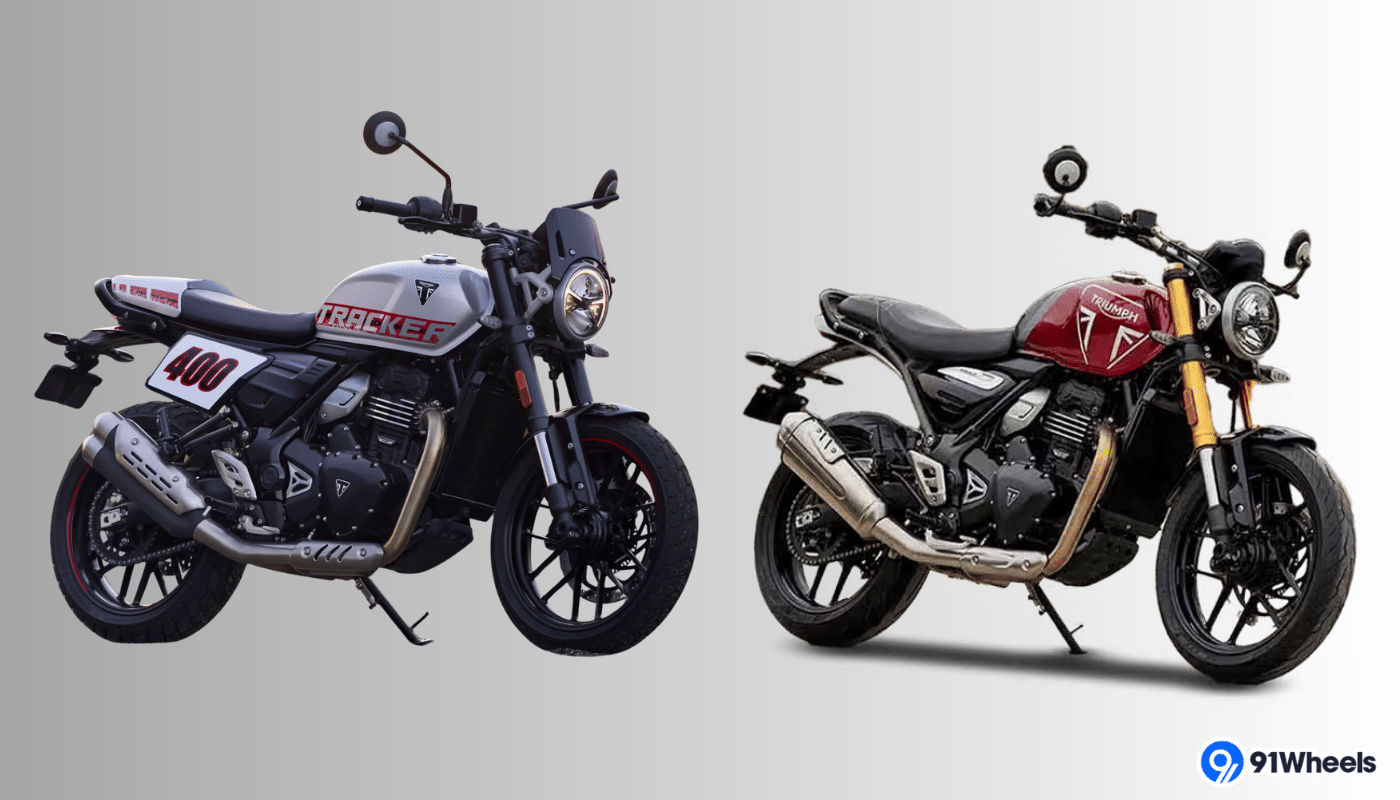
The Tracker 400 has a flat-track-inspired design, featuring minimalist bodywork, number-board-style side panels, round LED headlamp, rectangular tank and a compact tail section. It has wide handlebars that complement the riding stance, while premium hardware includes USD front forks, a rear monoshock, disc brakes at both ends and alloy wheels. The exposed engine and upswept exhaust, similar to those on the Scrambler 400 X further enhance its rugged, race-inspired character.
On the other hand, the Speed 400(350cc) follows Triumph's modern-classic design philosophy. At the front, it features a round LED headlamp, rectangular fuel tank, a compact tail section and upswept style brushed-metal exhaust. The golden USD forks give the motorcycle a premium appearance and overall, it looks clean, keeping the focus on practicality.
Overall, the Tracker 400 comes across as an approachable motorcycle with a strong visual appeal. Its flat-track-inspired styling gives it a distinctive road presence, ensuring it stands out wherever it goes and is likely to attract plenty of attention while you ride. In contrast, the Speed 400 adopts a more understated yet thoughtful design, striking an effective balance between everyday practicality and the ability to deliver an engaging riding experience on weekend getaways.
Engine and Performance
.png)
Although both motorcycles share the same 349cc engine platform, the Tracker 400 is tuned to produce 40PS and 32Nm. Power comes from a liquid-cooled, single-cylinder engine that is paired with a six-speed gearbox. On the other hand, Speed 400 generates 37 PS and 32 Nm of power and torque respectively. Apart from that both motorcycles get slipper and assist clutch, which helps reduce clutch effort and enables smoother, more effortless gear shifts.
Interestingly, both the motorcycles are powered by engines with the same displacement, but there is a difference of 3PS in power output that highlights their distinct character and the way each engine delivers performance.
Parameter | Triumph Tracker 400 | Triumph Speed 400 |
|---|---|---|
Engine | 349cc, Liquid-Cooled, Single-Cylinder | 349cc, Liquid-Cooled, Single-Cylinder |
Power | 40 PS | 37 PS |
Torque | 32 Nm | 32 Nm |
Gearbox | 6-Speed | 6-Speed |
That said, the Tracker 400's power delivery is linear, with strong low-end torque that allows you to ride comfortably in higher gears at lower speeds with minimal throttle input. The mid-range, up to around 6,500 rpm, delivers the engaging and playful character expected from a flat-track-inspired motorcycle. However, as you push closer to the redline, the engine responds with a stronger surge of power, providing the performance and excitement that perfectly matches the bike's sporty personality.
On the other hand, the Speed 400 delivers a powerband that feels largely similar to the Tracker 400. However, the missing 3 PS becomes noticeable once the engine climbs past 7,000 rpm, where the Tracker feels slightly more eager. Since both motorcycles share the same platform, the gearbox, tractability and shift quality remain nearly identical, offering a smooth and familiar riding experience across both machines. Overall, the difference between the two motorcycles is subtle and is primarily noticeable in the way they deliver power, particularly when riding at higher speeds and revs.
Tracker 400 Vs Speed 400: Features
Both motorcycles come equipped with a fairly decent set of practical features. The table below highlights the features offered on the Tracker 400 and the Speed 400.
Feature | Triumph Tracker 400 | Triumph Speed 400 |
|---|---|---|
Full LED Lighting | ✓ | ✓ |
Semi-Digital Instrument Cluster | ✓ | ✓ |
Ride-by-Wire Throttle | ✓ | ✓ |
Slipper & Assist Clutch | ✓ | ✓ |
Dual-Channel ABS | ✓ | ✓ |
Switchable Traction Control | ✓ | ✓ |
USB-C Charging Port | ✓ | ✓ |
Switchable Rear ABS | ✓ | ✗ |
As the table shows, both motorcycles offer a largely similar feature set. However, for a prospective Tracker 400 buyer, the primary deciding factor is likely to be its distinctive design and flat-track-inspired appeal. On the other hand, buyers considering the Speed 400 are often looking for a more balanced package, where design is just one part of the equation alongside features, performance, and overall riding dynamics.
Tracker 400 Vs Speed 400: Dimension
.png)
The Tracker 400 and Speed 400 may share the same platform, but they have been designed with different purposes in mind. The Tracker 400 is a flat-track-inspired motorcycle, while the Speed 400 is a modern-retro roadster. These differing objectives are also reflected in their dimensions and ergonomics. Here's a closer look at how the two motorcycles differ across key parameters.
Dimension | Triumph Tracker 400 | Triumph Speed 400 |
|---|---|---|
Handlebar Width | 857 mm | 829 mm |
Height (Without Mirrors) | 1048 mm | 1096 mm |
Seat Height | 805 mm | 803 mm |
Wheelbase | 1367 mm | 1386 mm |
Rake | 24.5° | 25.1° |
Wet Weight | 181 kg | 179 kg |
Fuel Tank Capacity | 13 L | 13 L |
Pricing Difference
The Speed 400 makes a stronger value proposition, offering most of what rider's need at a significantly lower price point. The Tracker 400, meanwhile, justifies its higher price with a more distinctive design and a characterful riding experience. Ultimately, the choice comes down to whether you prioritise everyday practicality or exclusivity and style.
Model | Price (Ex-Showroom) | Difference |
|---|---|---|
Speed 400 | Rs 2.40 lakh | Rs 35,000 less |
Tracker 400 | Rs 2.75 lakh | Rs 35,000 more |
Expert Verdict
The Triumph Tracker 400 and Speed 400 are built on the same foundation, but their personalities are quite different. The Tracker 400 is aimed at riders who want something distinctive, offering flat-track-inspired styling, a wider handlebar and a slightly more engaging performance character. It feels special and is likely to appeal to enthusiasts who value uniqueness and road presence.
The Speed 400, however, remains the more sensible choice for the majority of buyers. It offers nearly the same level of performance, features and refinement while costing Rs 35,000 less. Its comfortable ergonomics and versatile nature make it better suited for daily commuting as well as weekend rides.
Unless the Tracker 400's styling particularly appeals to you, the Speed 400 delivers the stronger overall value proposition.
Do you like this article?
Comments
No comments yet. Be the first to comment!