2026 Bajaj Pulsar N160SS Review - Big Upgrade?
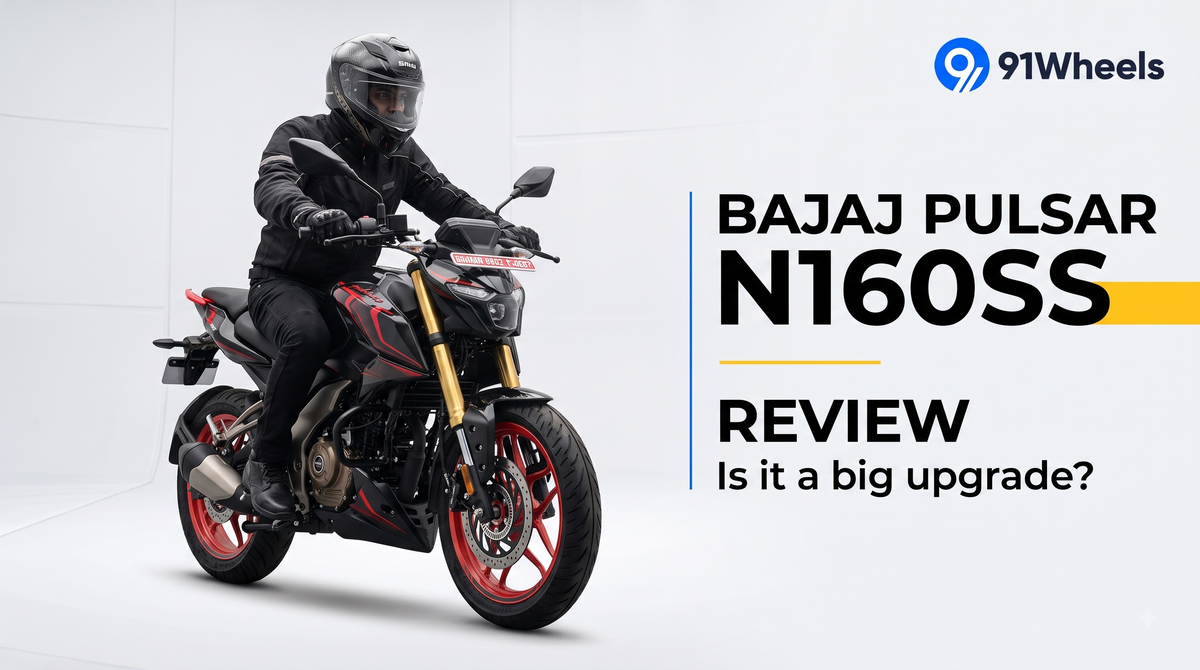
The 150-180cc sporty commuter segment has been seeing some fierce competition since quite a while now. With bikes like the Xtreme 160R 4V and the Apache 160 4V, the current Pulsar N160 was looking a bit outdated in terms of tech and features on offer. To finally address this, Bajaj has brought in the Pulsar N160SS to take the competition head-on, and here are my first impressions from the time I spent with the bike.
Before doing a deep dive on this review of the Pulsar N160SS, it is important to note that this series of the Pulsar N160S and N160SS is an addition to the overall N160 lineup, with the standard N160 continuing. This is pretty much similar to the strategy employed by TVS, which has been selling the 2V and 4V models of the Apache 160 side by side.
Also read: Bajaj Pulsar N160 4V vs Hero Xtreme 160R 4V: Which 160cc Streetfighter Should You Buy?
Design
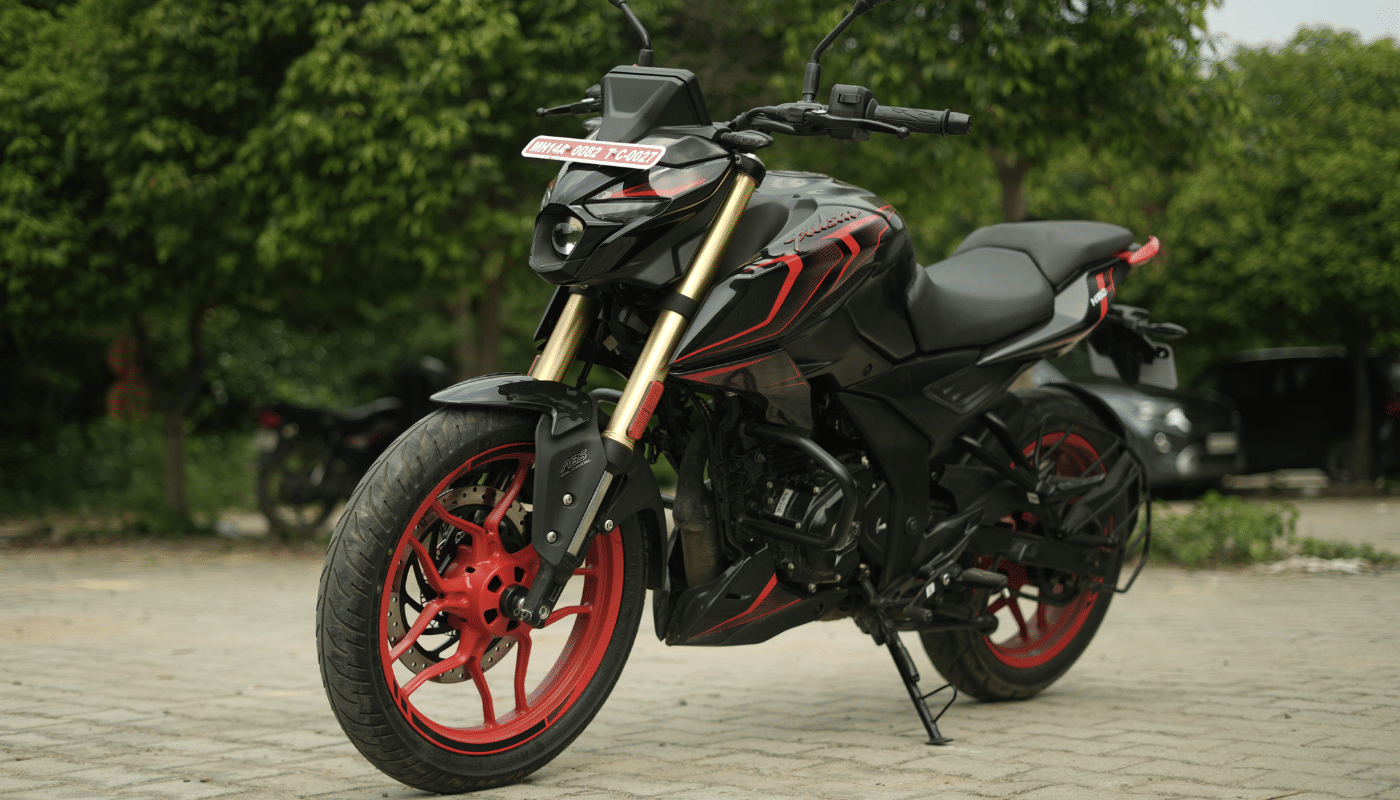
In terms of design, the Pulsar N160SS doesn’t look too different from the standard variant. The only visual differences that one could notice were the red colour alloys and the chunkier 37 mm USD fork setup. Apart from these two elements, the N160SS looks similar to the standard 2V variants. This isn’t necessarily a bad thing as the Pulsar N160 has always been a very neutral-looking bike. And given the fact that a lot of design cues are similar to the bigger Pulsar N250, prospective customers would appreciate the road presence of this model as well. One observation that I wanted to share is that the Pulsar N series (N160 and N250 especially) bears a very uncanny resemblance to the Yamaha MT15 as well.
A change of heart?
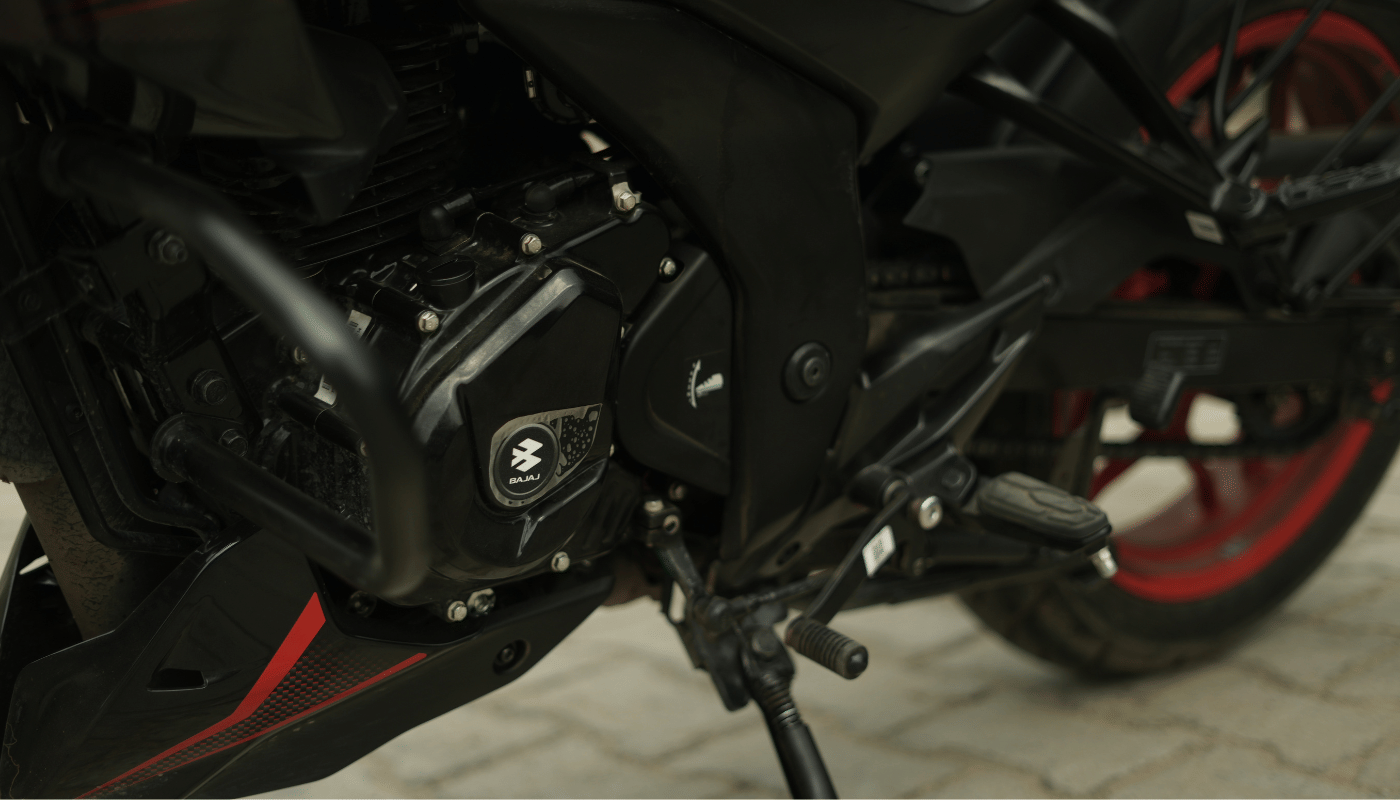
Quite literally, there has been a change of heart on this 2026 Pulsar N160SS. Not only does this bike come with a 4-valve setup, but it is now an oil-cooled unit as opposed to the air-cooled unit on the standard models on sale. Another major change that has happened is that this new unit features a bigger bore than stroke, which is again quite the opposite of the standard variant.
All of this means that the N160S and the N160SS now make 18.5 PS of power at 9500 RPM and 14.4 Nm of Torque at 8000 RPM. Compared to standard models, these 4V models make 2.5 BHP more but 0.25 Nm of torque less, albeit at a significantly higher level in the rev range.
But despite what the numbers on paper suggested, during my time with the bike I did not find any issues with the tractability of the motor. Even if there were instances where I was in a higher gear while being at a lower speed, there was absolutely zero feel of the engine lugging around or feeling dead. And even from the get-go, power delivery was very linear and predictable, which made it very easy to get used to in a very short amount of time.
What I sorely missed on this bike was the lack of a 6th gear. While this 5-speed gearbox is very smooth and the quality of shifts is very good, this bike feels restricted for longer distances solely due to the fact that there is no 6th gear. Currently, this bike would feel the best at 85 kmph in the 5th gear, which would probably go up to 93-95 kmph in the 6th gear, which would aid in better cruising abilities.
Ride Quality, Handling And Braking
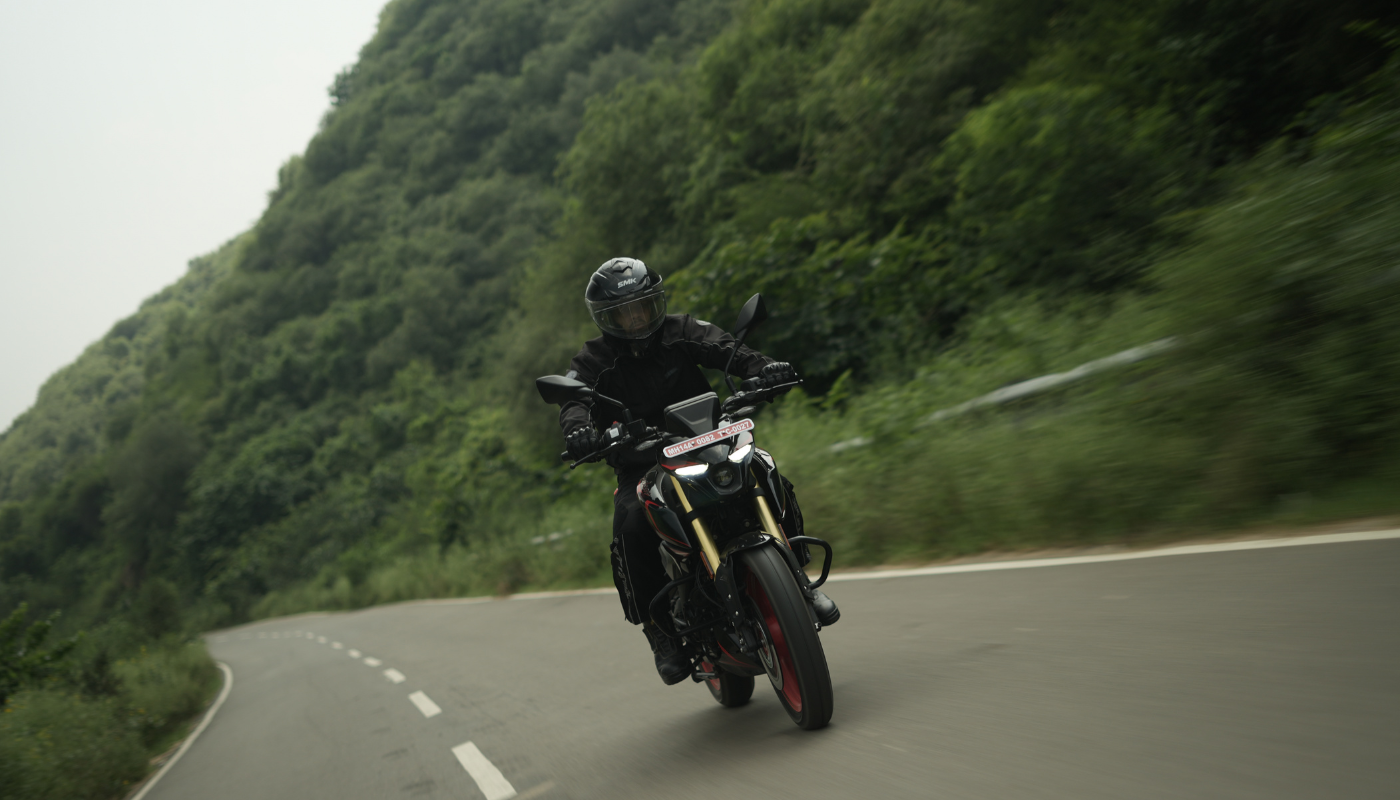
Bajaj has not only worked on the engine front but also on the suspension and brakes front. The front of the bike is now flanked by a 37mm USD fork setup as opposed to a 33 mm setup on the standard N160. This difference is not only on paper but is also noticeable in the real world. I happened to take the bike through quite a few potholes throughout the day during the ride, and not even once did I feel that there was any kind of jarring or that the bike was feeling unsettled.
The brakes on this too deserve a special mention for how good they were. I am someone who has a tendency to use the rear brakes while riding, and in most cases the rear brakes tend to be weaker than the front ones. That was not the case here. Also, even during panic braking situations, I never felt like I was losing control of the bike. The 300 mm disc in the front and 230 mm disc in the rear indeed are class-leading given the way they performed during the time I rode the bike.
What else did I observe
As per Bajaj, the Pulsar N160SS gets a crawl mode feature as well. This basically prevents the bike from stalling in stop-and-go traffic. And while I was aware of being in the proper gear as per the speed, on the odd occasion here or there when I was at a higher gear, I did not notice the bike lugging around. So this system, if it was at work, it was so in a very seamless manner.
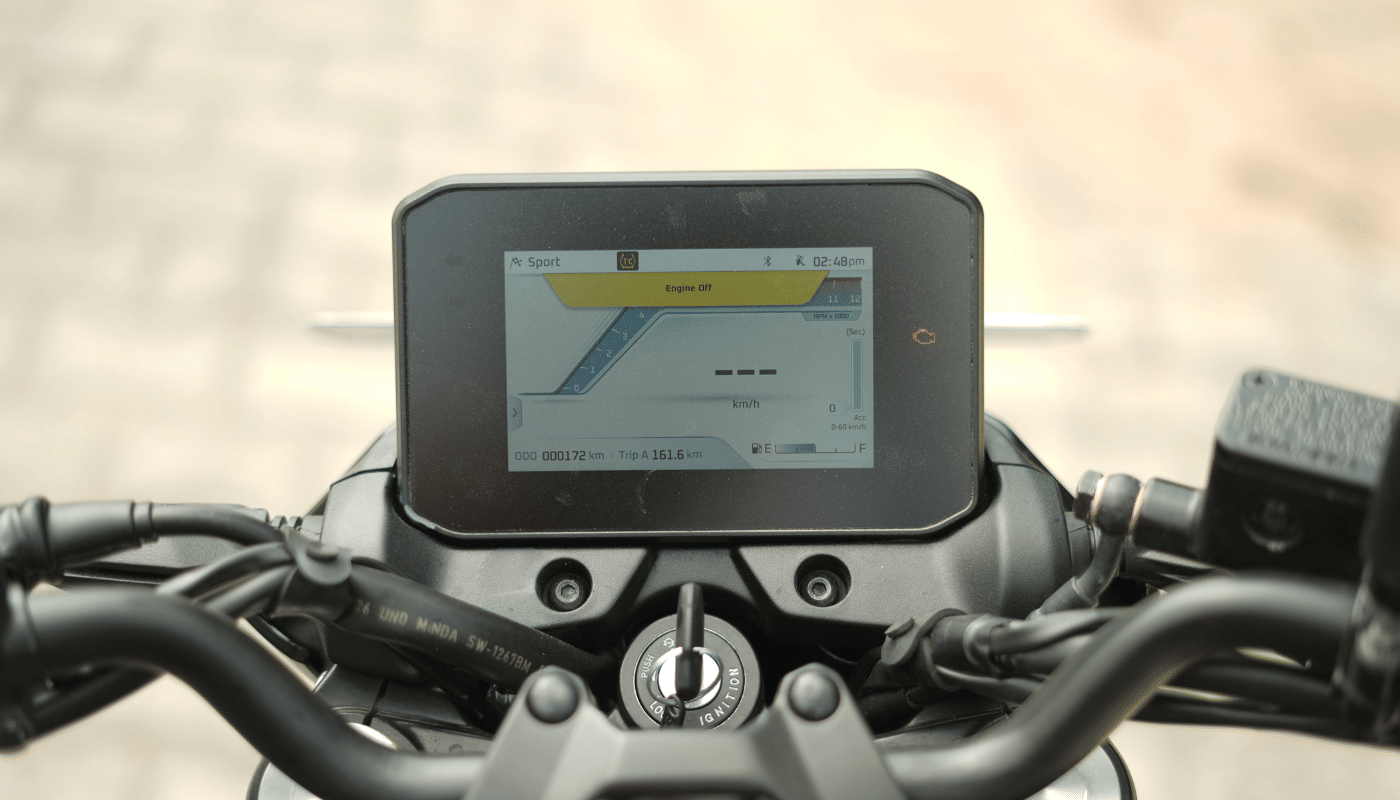
Another very neat implementation that I could observe was that of the TFT screen. I had started riding the bike at 12 noon, and that is when the sun was right at the top of our heads, and all the readouts on the screen were very legible. There was no issue whatsoever in terms of keeping track of your speed while riding.
What could have been improved?
That said, there were a few things that could have been improved as well. One was definitely some vibrations creeping post 5500 rpm. This is a bit of a concern considering the fact that peak torque and power come in post 8000 rpm, so one would actually be experiencing quite a few of those vibes, especially on the seat and handle. The other bit that could have been improved is the quality of plastic that acts as the underbelly protection.
Also read: Bajaj Pulsar N160 S And N160 SS: Key Features You Need To Know
Verdict and Target audience for the bike
The 2026 Pulsar NS160SS is definitely a winner for Bajaj in my opinion. It comes very close to being a very well-rounded product considering the price point and the features that it is offering.
As far as the target audience is concerned, this bike will really appeal to people who are just starting their jobs and want something that will not only help them commute from home to work but also be a great companion for weekend rides. This bike will also appeal to many people who want to upgrade from a scooter or a 100cc-segment bike and are a bit hesitant to go all the way to a 200cc motorcycle.
Do you like this article?
Comments
No comments yet. Be the first to comment!