.png?w=1200&q=50 "Suzuki e-Access Ride Review: The Good, The Bad, and What It Costs You")
Every scooter promises to be great on paper, but the real test is what happens once you've actually lived with one, day in, day out, through traffic, through the dark, through every pothole that catches you off guard. I've spent the last few weeks doing exactly that with the Suzuki e-Access, riding it through peak traffic, taking it out after dark, pushing it into corners it wasn't always comfortable with, basically putting it through everything a daily scooter actually goes through. And through all of that, one thing became clear pretty quickly: this scooter has a personality of its own, one that doesn't need to shout to make itself known. Here's exactly how that experience played out.
A Face That Plays It Safe, and Wins Because of It
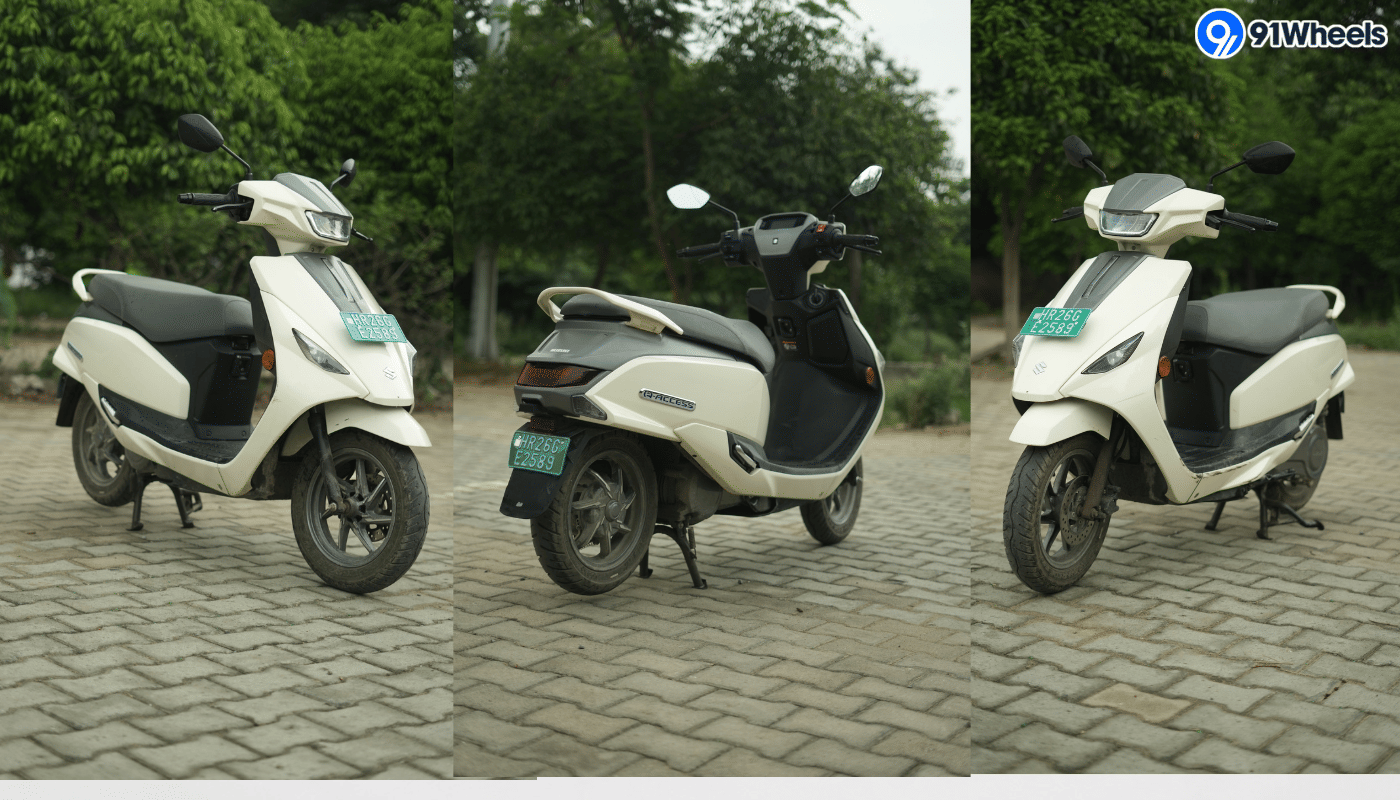
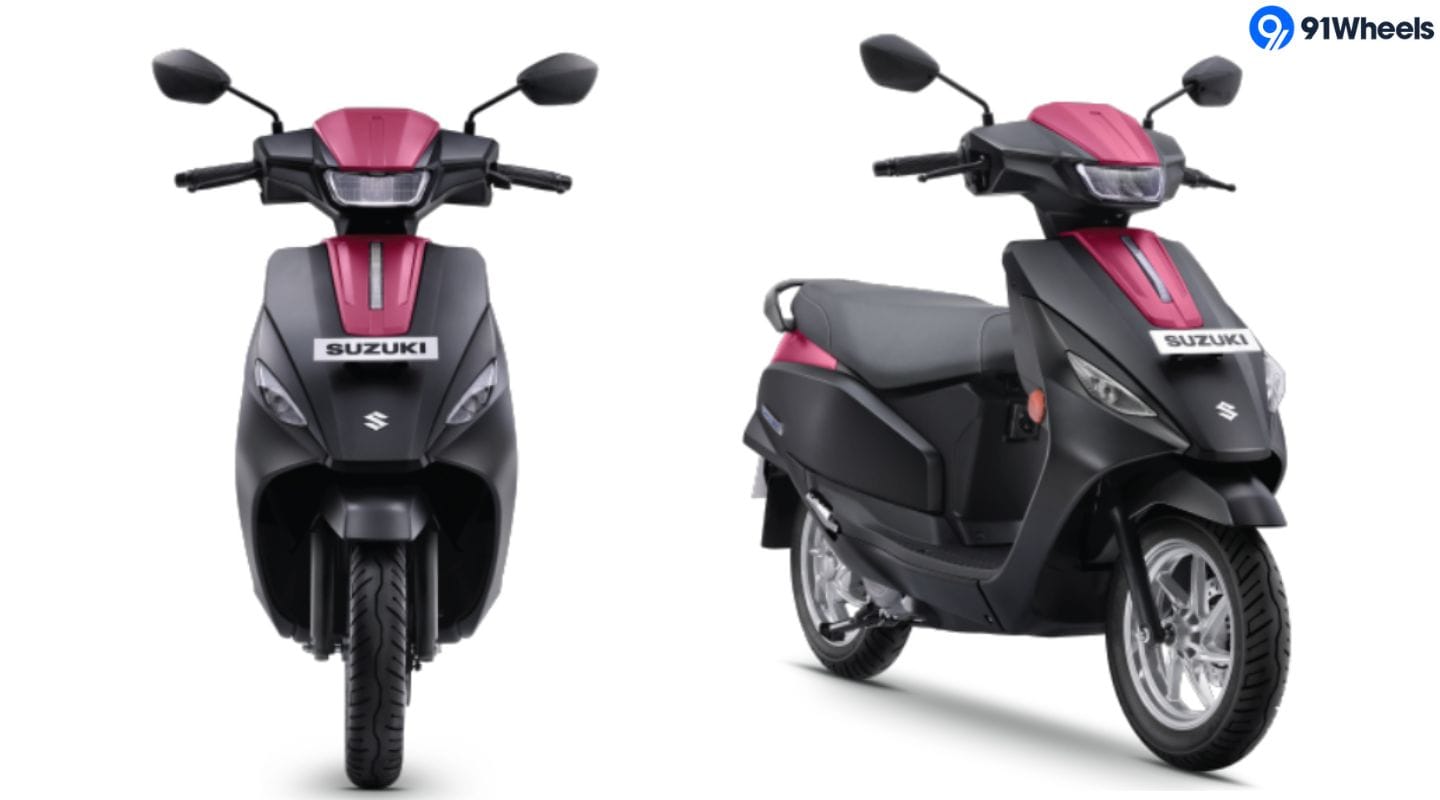
The e-Access's design isn't Suzuki trying to reinvent anything or chase attention with loud styling. It keeps things simple and modern, nothing fussy or overdecorated, and honestly, that restraint works in its favour. Up front, a duck-inspired face is anchored by vertically stacked LED DRLs, with the headlamp neatly tucked into the cowl. Overall, it is current and well finished without ever trying too hard to stand out.
The sides carry that same restraint forward, clean body panelling with an e-Access badge lifted in chrome, enough to catch a bit of light without looking gimmicky. Round at the back, the scooter stays compact, wrapped up with a full LED setup. All in all, it's a scooter that looks properly current without trying too hard to prove it.
LFP Over NMC: Suzuki's Quiet Bet on Longevity
.png)
Powering the e-Access is a 3.07 kWh battery, and in this area Suzuki has adopted a different approach by choosing an LFP battery. Now, what that matters, because most of the rivals use NMC are many differences between these two. NMC batteries typically pack more energy into a smaller space, but LFP has its own goods such that it holds up better against heat, degrades more slowly with repeated charge cycles, and is inherently more stable. So it might be giving up on density and space; it's banking on the e-Access still delivering a usable claimed range of 95 km on a single charge. Moreover, real-life range also lands somewhere around that number; in my time with e-Access, it has given me 85-90 km of range.
.png)
The motor puts out 4.1 kW and 15 Nm of torque, offering ample performance for everyday city use. Charging is where Suzuki gives owners real flexibility. On the fast charger, 0 to 100 percent takes about 2 hours 12 minutes, and if time is tight, 0 to 80 percent is done in roughly 1 hour 12 minutes. There's also a portable charger for when a fast-charging point isn't around, taking closer to 6 hours 20 minutes for a full charge, or 4 hours 30 minutes to 80 percent. Between the two, home charging overnight or a quick top-up on the go are both realistically covered.
Agile in Traffic, Slightly Uneasy in Corners
When it comes to maneuverability, the e-Access genuinely does a pretty good job there. In stop-and-go city traffic, it's light, reactive, and slots through gaps without any drama, exactly what a daily commuter scooter needs to get right. However, it has an issue mid-corner. At a bit of speed, the scooter doesn't feel entirely planted; there's a slight sense of unsettled weight transfer that doesn't quite match the composure it shows everywhere else. In my experience, I've felt this quite a few times while tracking a line, riding at night, and through some sharper corners, but it's the kind of thing that makes you back off rather than lean in through a bend
.png)
Power delivery runs through Suzuki's SDMS-e system, offering three ride modes plus a dedicated reverse mode. Eco caps things at 40 kmph but stretches range out to nearly 90-95 km. Ride A bumps the top speed to 70 kmph, with range settling around 85-90 km. Ride B is the quickest at 80 kmph, though range drops further to about 75-80 km.
One little detail that needs to be mentioned here: switching between Eco and Ride A is completely seamless; no need to even let go of the throttle. Ride B works differently, though: you have to come to a halt and hold the mode button, and once selected, the scooter locks into an Eco and Ride B combination only. It's a small learning curve, but one that's easy to adapt to. Moreover, Reverse mode carries its own quirk too. It's activated through the red button on the right switch cluster but engaging it requires rolling the throttle backward rather than forward.
A Seat That Overdelivers, and Footpegs That Undersell It
.png)
Ergonomics on the Suzuki e-Access: it wins here too; seat comfort turned out to be a genuine highlight. Despite the e-Access looking fairly compact from the outside, the seat itself is long and wide, comfortable for both rider and pillion. What sets it apart from most rivals is that the front of the seat is noticeably wider too, offering real thigh support, a small but appreciable thing that genuinely helps on longer rides. Riding posture stays neutral throughout, no complaints there.
Further enhancing your riding posture are two positions to rest your feet, but the upper one feels like it was carved in without much real-world testing. At a UK 8 shoe size, it's already a squeeze; anyone with bigger feet is going to struggle to place them properly.
Practicality Takes a Hit
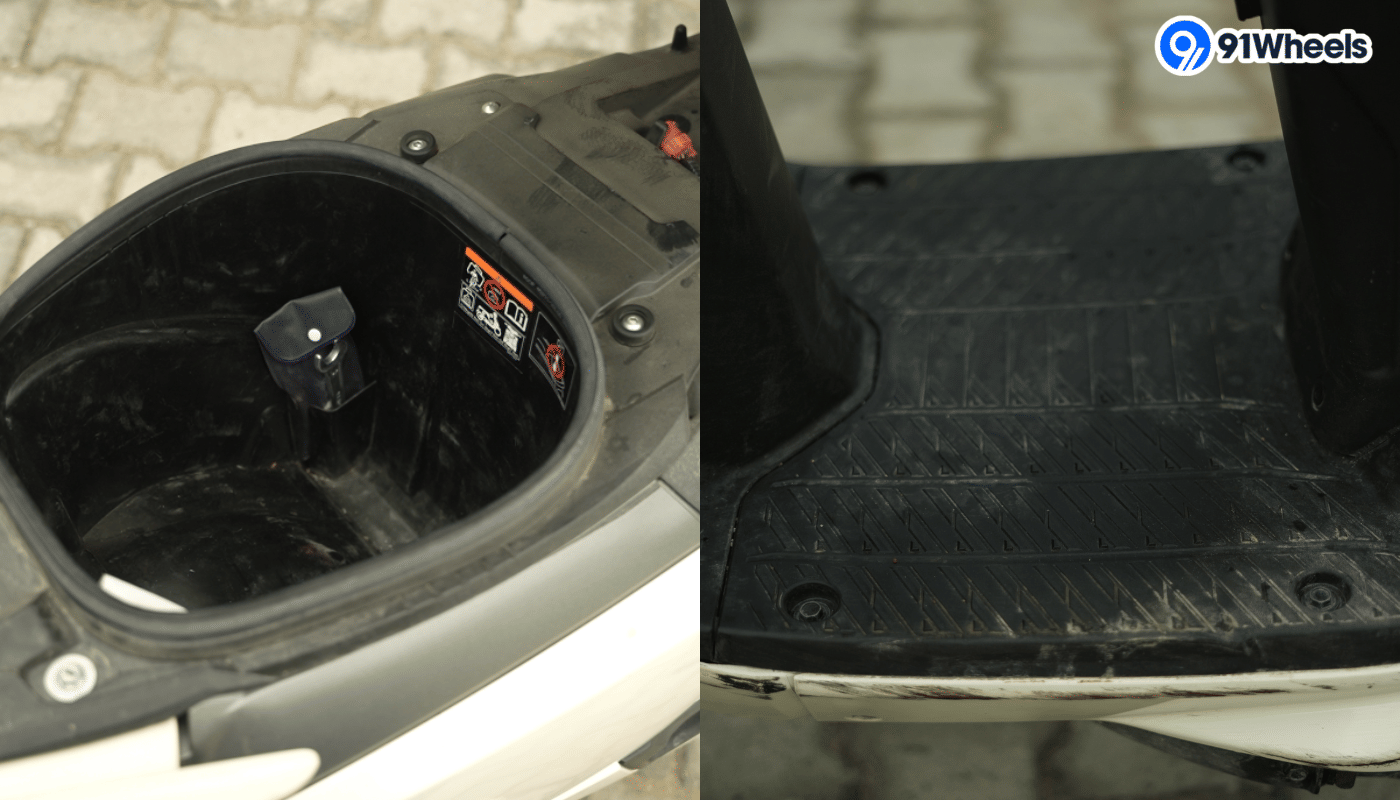
Practicality is an area that is questionable on e-Access. Underseat storage comes in at just 17 litres, and the floorboard isn't particularly generous either. Suzuki does offer two utility hooks alongside the usual underseat helmet hooks, useful for hanging small bags or pouches, but that doesn't solve the problem here. For anyone prioritising storage, the e-Access falls short of what rivals in this segment typically offer.
Braking and Suspension
.png)
The braking setup pairs a front disc with a rear drum, tied together by a combined braking system that engages when the rear brake lever is used. Rear braking has been consistent throughout, and it has handled its duty well. The front disc brings good bite too, having done a few hard braking attempts, and the overall setup inspires genuine trust at speed.
The suspension part is a mixed bag. The rear does a solid job with a pillion onboard, offering a genuinely plush ride, but feels noticeably less settled riding solo. Up front, the telescopic forks handle regular city speeds just fine, but pick up pace and hit a pothole, and it gives an unwanted, slightly harsh noise from the front end that's concerning enough to notice every time. Though it's not a dealbreaker, it's something Suzuki should look to iron out.
The Price Question
.png)
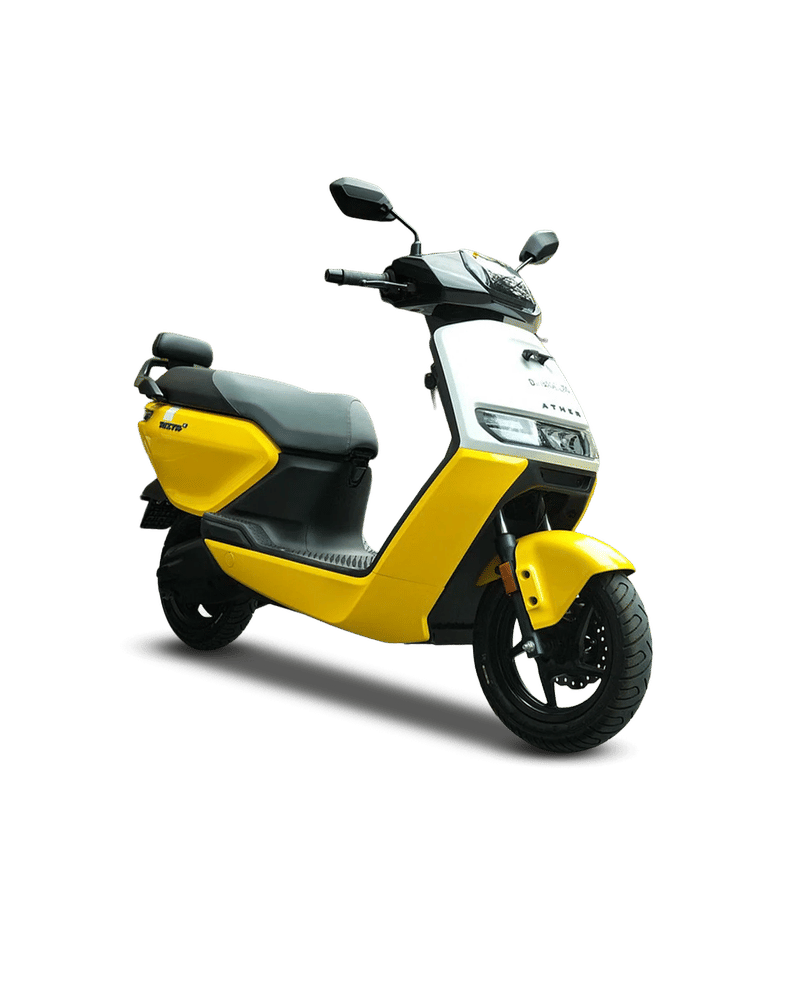
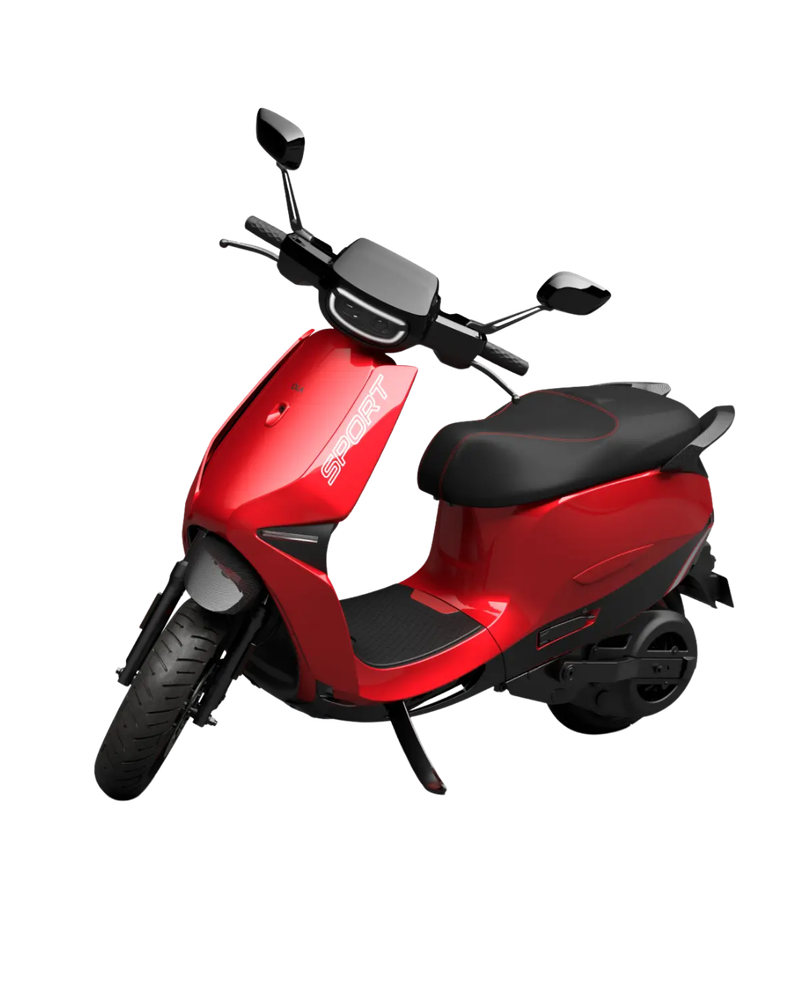
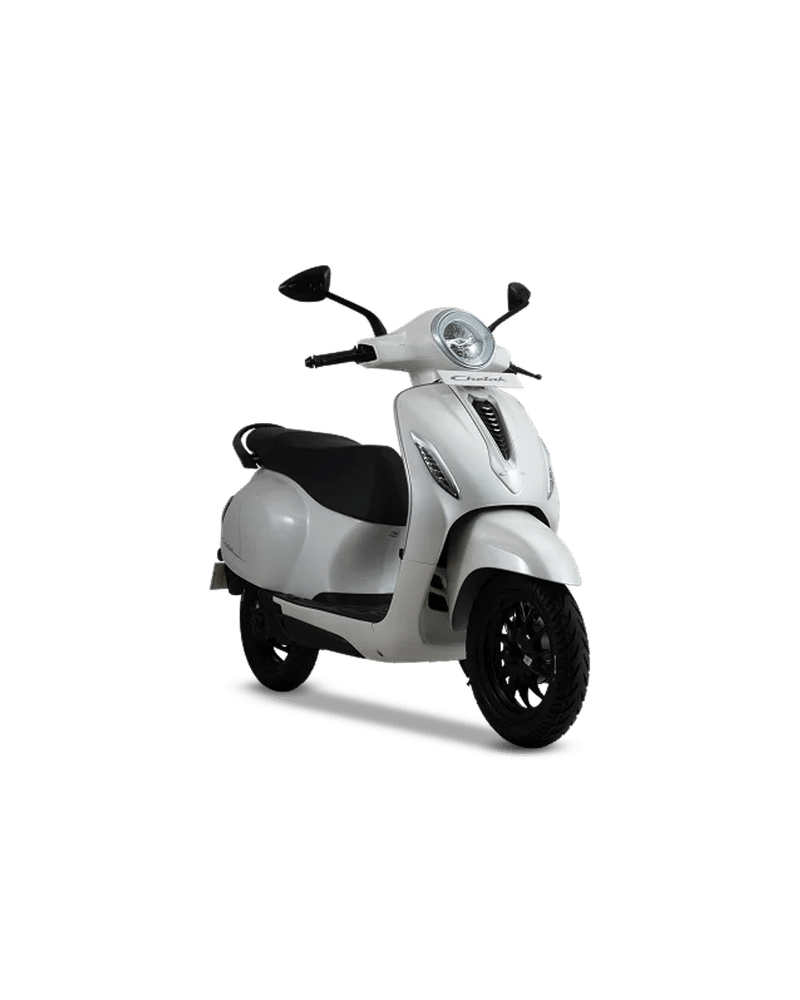
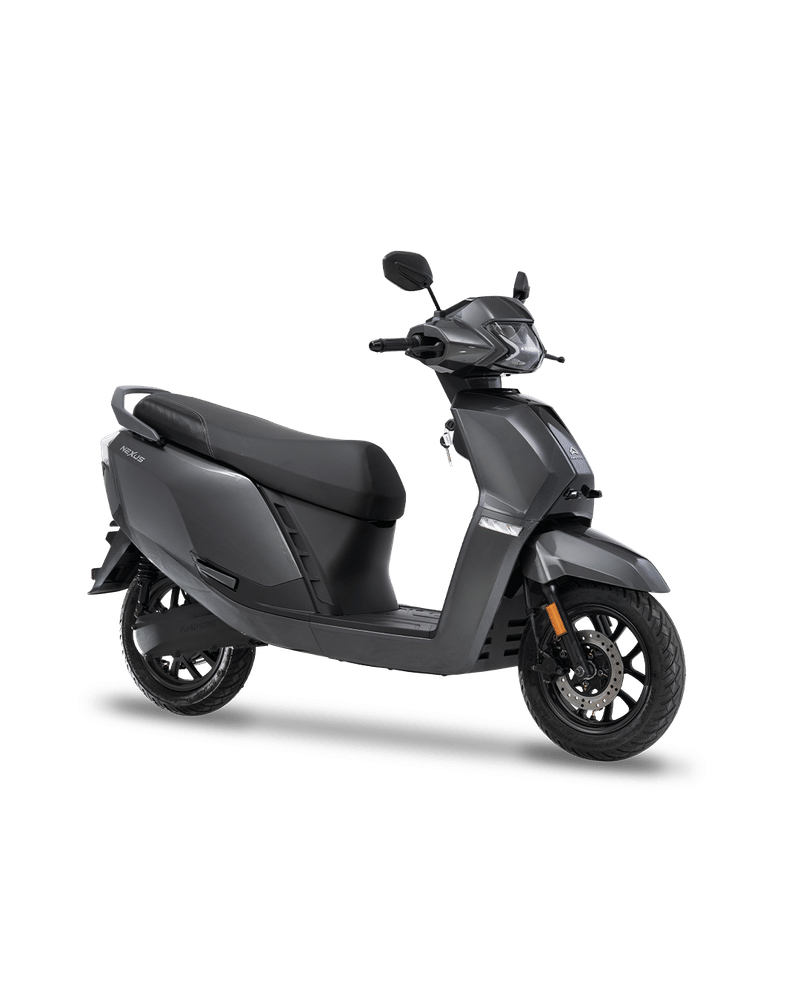
Honestly, price is the biggest con with the e-Access, like you have to pay 1.88 lakh (ex-showroom). As an established brand with decades of experience, pricing could have been more competitive. This isn't a segment where a legacy badge alone justifies a premium; rivals like the TVS iQube, Ola S1, and Bajaj Chetak are fighting hard for the same buyer, often undercutting on price while matching, or in some areas exceeding, what the e-Access brings to the table.
Our Verdict
The Suzuki e-Access gets the fundamentals right where it counts most, ride quality in the city, seat comfort, and braking confidence. But it falls short on the things that genuinely matter for daily use, cornering composure, underseat storage, and a price tag that doesn't quite justify itself against the competition. It's a scooter that plays it safe in nearly every direction, and while that restraint works in its favour on design, it works against it on value. For buyers who prioritise brand trust and ride comfort over outright practicality, the e-Access still makes a reasonable case for itself.
Do you like this article?
Comments
No comments yet. Be the first to comment!