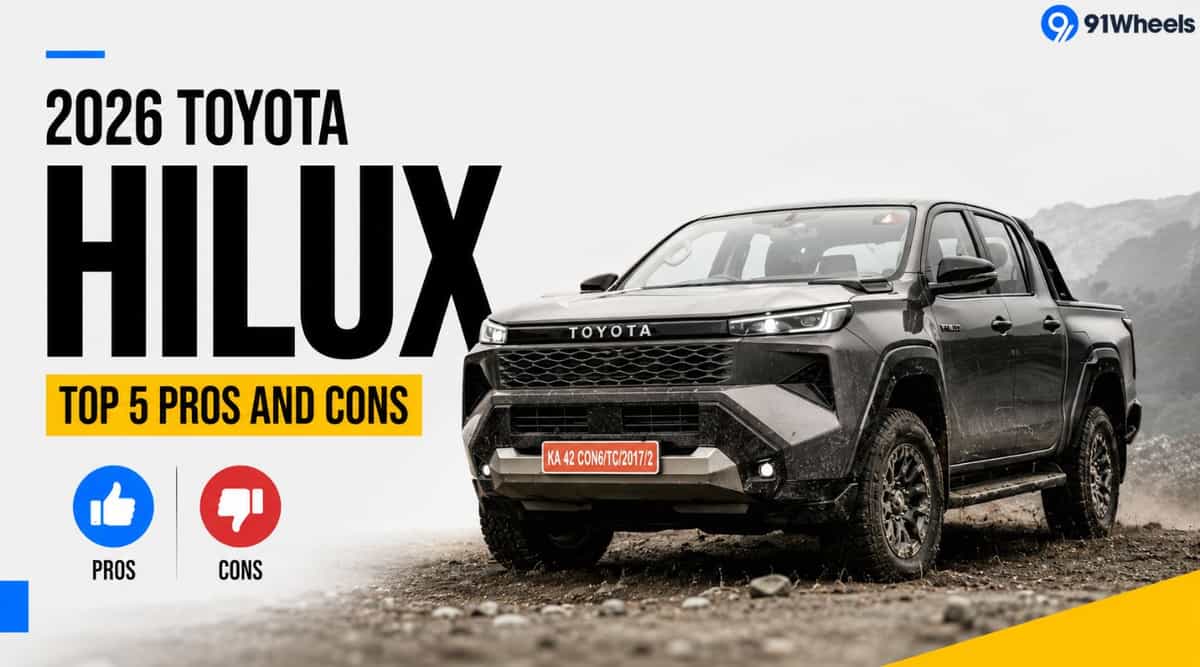
Toyota Hilux, the ultimate off-road toy, has been recently launched in India. It is the ninth generation worldwide, and for India, it's the second generation. With every new generation update or facelift, customers expect a few things from the upcoming version of the vehicle. In this article, we will discuss the new things that Toyota's pickup has got, and highlight the things that still leave room for improvement.
Pros
A Design That Finally Looks Modern
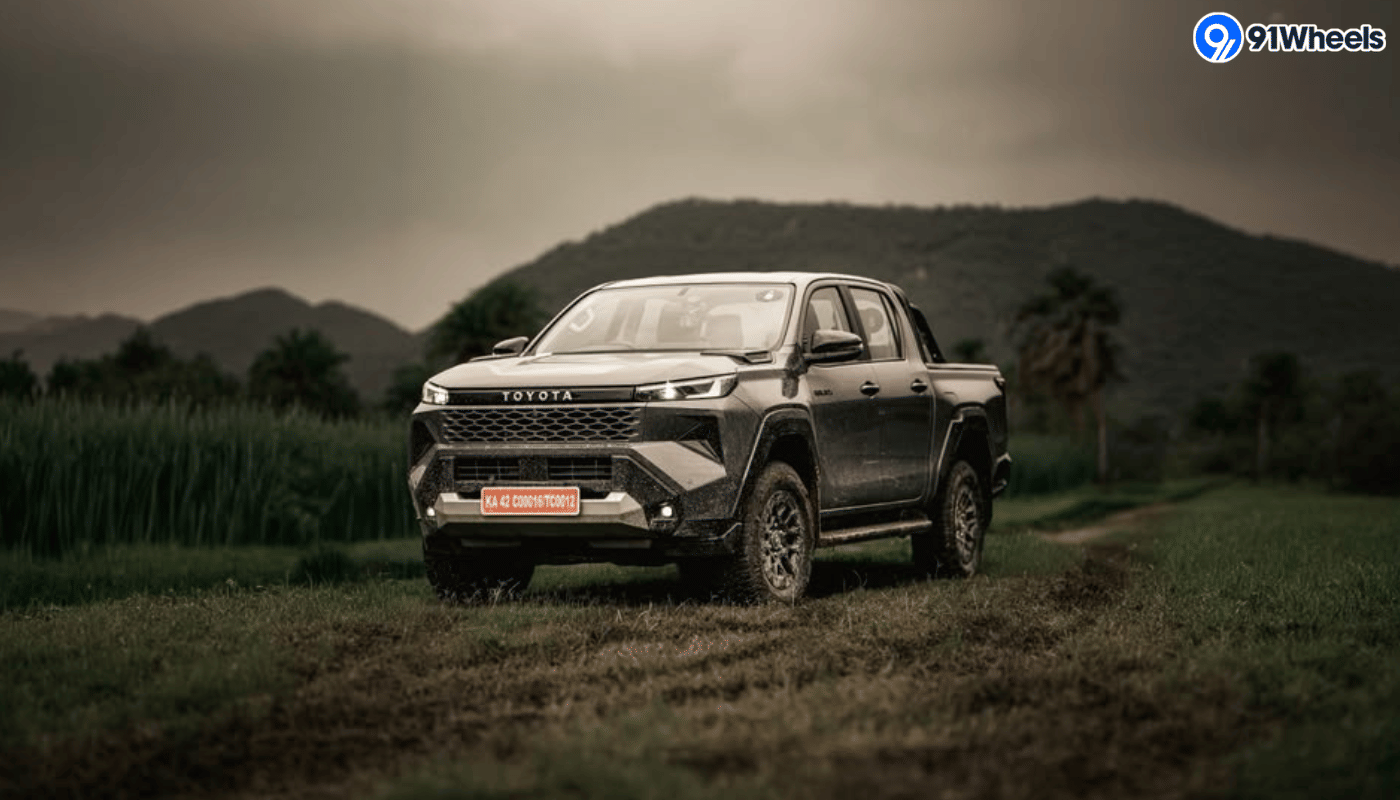
The 2026 Hilux gets its biggest visual overhaul since the nameplate arrived in India. The front end is now more upright, with slim LED headlamps, a bold honeycomb-pattern grille and large 'TOYOTA' lettering replacing the badge, while the cabin gets an all-new dashboard layout. It's a design that manages to look refreshed, purposeful character, but still not the soul of old Hilux known for. It looks muscular and modern now, and it should age well too, instead of looking dated in a couple of years.
A Long, Genuine Feature List With Fewer Gimmicks
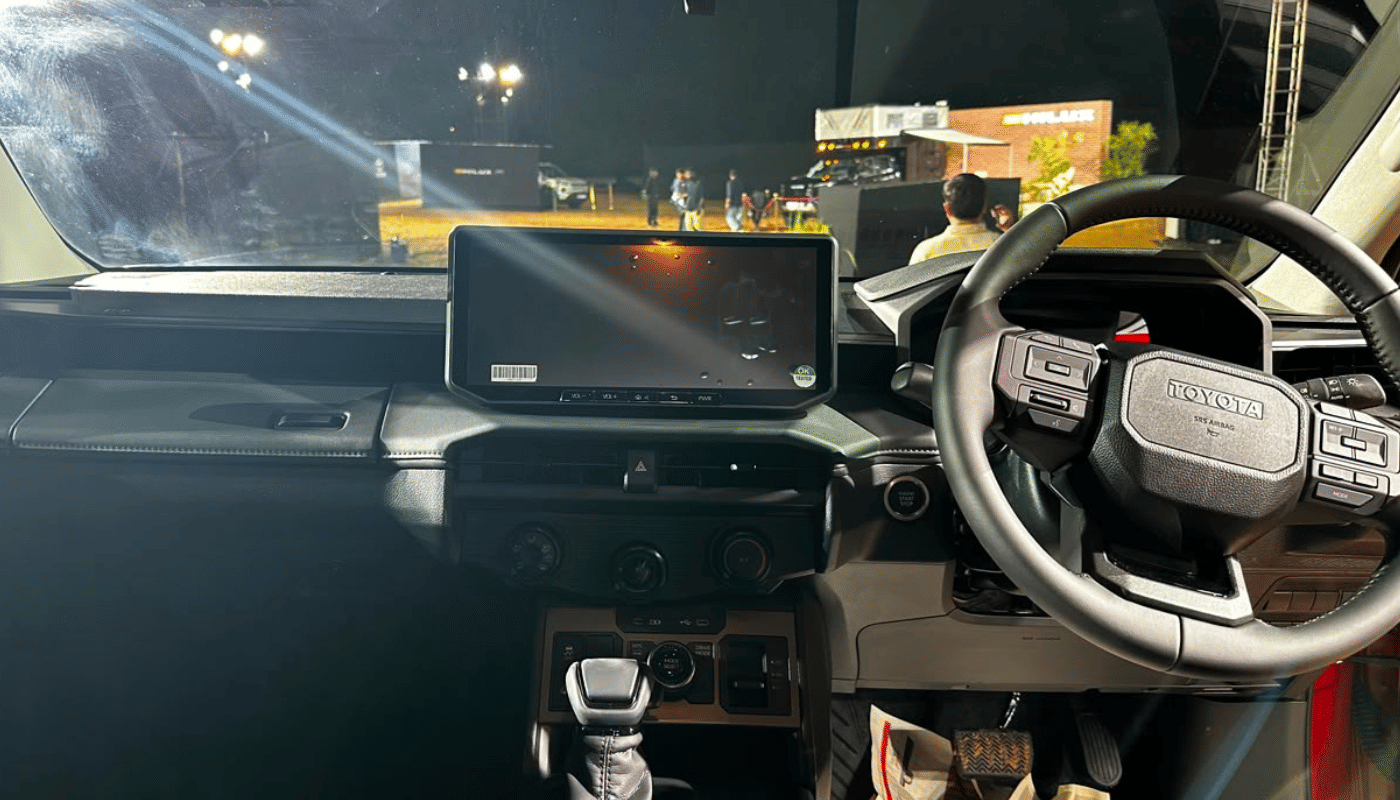
Inside, the new Hilux brings in a 12.3-inch touchscreen infotainment system alongside a 7-inch digital instrument cluster, wireless Apple CarPlay and Android Auto, a wireless charger, connected car tech, cruise control, an 8-speaker audio setup and a 360-degree camera. What stands out though is how much of the cabin still relies on physical buttons and knobs for everyday functions. It keeps the ownership experience simple and no-nonsense, which is exactly what a workhorse pickup buyer wants, rather than a cabin overloaded with screens and touch-sensitive switches just for the sake of it.
A Trusted, Powerful Engine Backed By Toyota Reliability
The Hilux continues with the tried-and-tested 2.8-litre diesel engine, that puts out 204PS and 500Nm of torque, paired exclusively with a 6-speed torque converter automatic gearbox. It's a familiar unit, and that's the whole point. Toyota isn't experimenting with something new here, it's doubling down on an engine with a strong reputation for durability. Add to that the brand's track record of body-on-frame vehicles routinely crossing several lakh kilometres with minimal fuss, and it gives buyers real peace of mind that most rivals simply can't match.
Strong Off-Road Capability
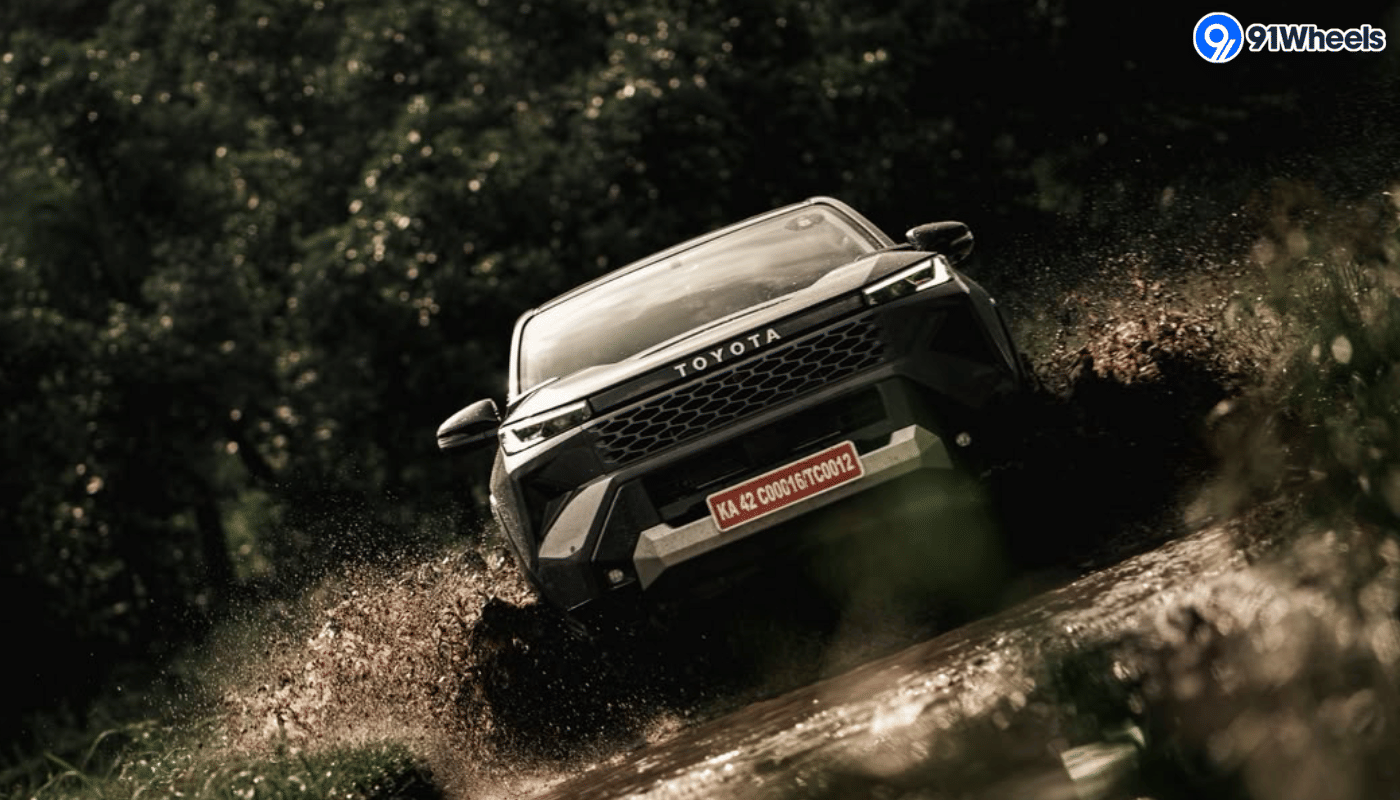
Underneath, the Hilux retains its rugged IMV body-on-frame platform, along with an independent double-wishbone front suspension and a rigid rear axle. The 4x4 variants get 4-Low gearing, an electronic differential lock and selectable terrain modes, and the pickup feels genuinely sure-footed over loose gravel, large rocks and deep potholes on the trail. Even in the tricky sections, 4x4 mode is easy to engage and inspires real confidence, which is a reminder that off-roading remains the Hilux's core strength, not an afterthought.
Cons
Noticeably Fewer Features Than the Global-Spec Version
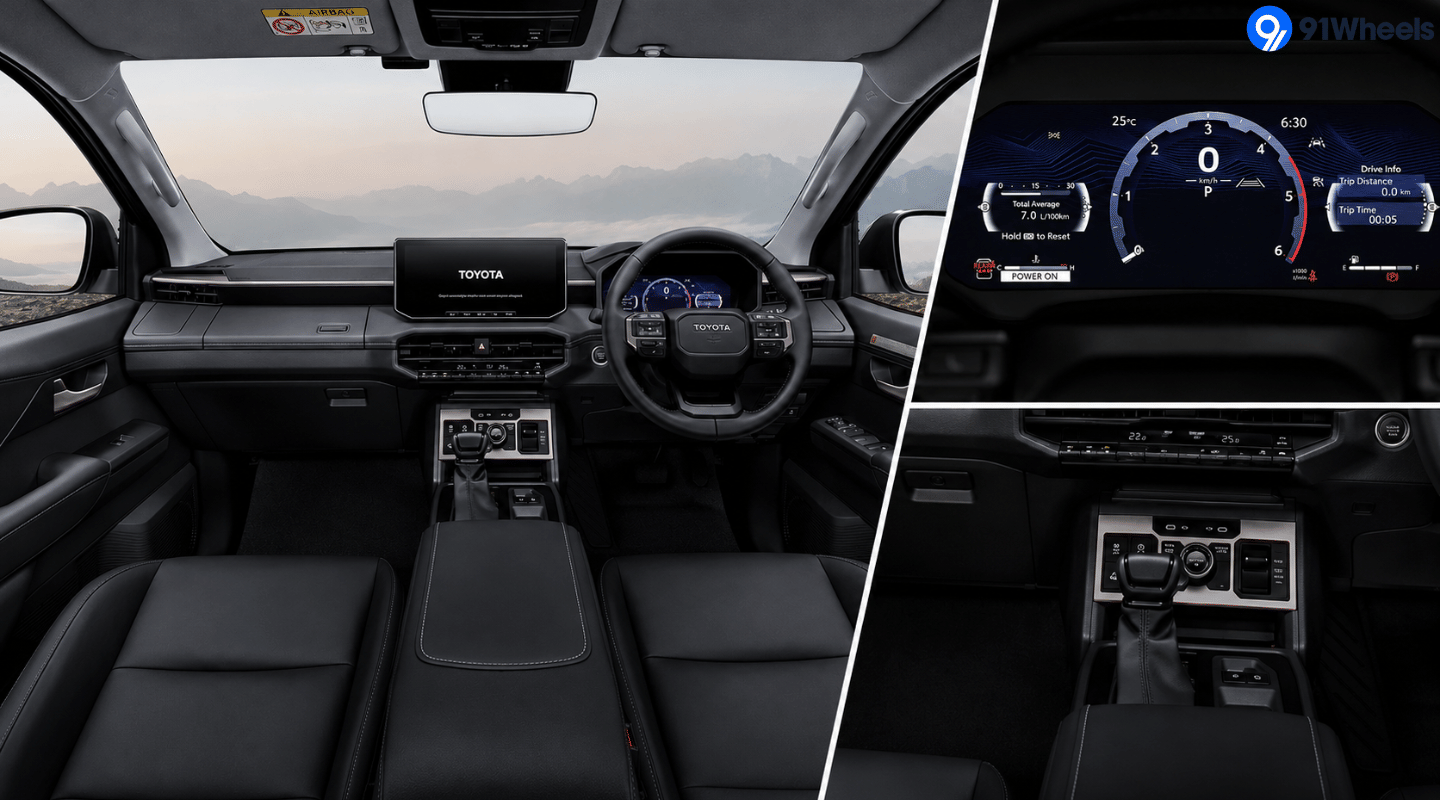
While the India-spec Hilux looks feature-rich on paper, it misses out on quite a bit compared to the global model. Dual-zone climate control or automatic climate control is gone (India gets manual AC only), along with rear AC vents, powered and ventilated front seats, leatherette upholstery (swapped for fabric), an auto-dimming inside rear-view mirror, 18-inch alloy wheels replaced with 17-inch alloy wheels and the Level-2 ADAS suite offered abroad. For a pickup that's positioned above 30 lakhs as a premium lifestyle vehicle, leaving out this much convenience kit is hard to justify.
No Manual Transmission on Offer
The 6-speed manual gearbox that used to be available on the outgoing Hilux has been dropped entirely. Every variant, including the more affordable 4x2, now comes only with the 6-speed torque converter automatic. For buyers who preferred a manual, either for the driving involvement or the lower entry price, that option simply isn't there anymore.
Rear Seat Comfort and Ride Quality Still Need Work
.jpg)
The rigid rear axle with leaf-spring suspension continues to be the Hilux's weak spot. The reworked setup handles big hits like potholes and rocks reasonably well, but it turns jittery and bouncy over smaller bumps and broken patches, especially with the load bed empty. Rear seat comfort takes the hit as a result, with limited legroom and a ride that feels closer to a workhorse than a family SUV. Buyers coming from a regular passenger vehicle may find the back seat experience a bit underwhelming.
Pricing Has Gone Up Despite Fewer Features
Price | Old Hilux | 2026 Hilux |
|---|---|---|
Starting Price (Ex-showroom) | ₹28.50 lakh | ₹31.99 lakh |
Top-end Price (Ex-showroom) | ₹36.00 lakh | ₹36.69 lakh |
The outgoing Hilux was priced between roughly Rs 28.5 lakh and Rs 36 lakh (ex-showroom). The 2026 model now starts higher at Rs 31.99 lakh and tops out at Rs 36.69 lakh (ex-showroom) for the range-topping VX 4x4 AT. So the entry price has climbed by a noticeable margin, and yet the cabin has actually lost a few features compared to before. That combination is likely to raise eyebrows among buyers weighing value for money.
Verdict
The Toyota Hilux 2026 is a substantial visual and technological update over its predecessor, backed by the same dependable diesel engine and genuine off-road ability that have always been its calling cards. That said, the loss of the manual gearbox, a feature list that falls short of the global-spec truck, and a rear seat experience that's still firmly workhorse-like mean it's best suited to buyers who care more about ruggedness and reliability than outright comfort and equipment. For that kind of buyer, the Hilux is still hard to beat. For everyone else, the higher asking price makes it a tougher sell than before.
Do you like this article?
Comments
No comments yet. Be the first to comment!