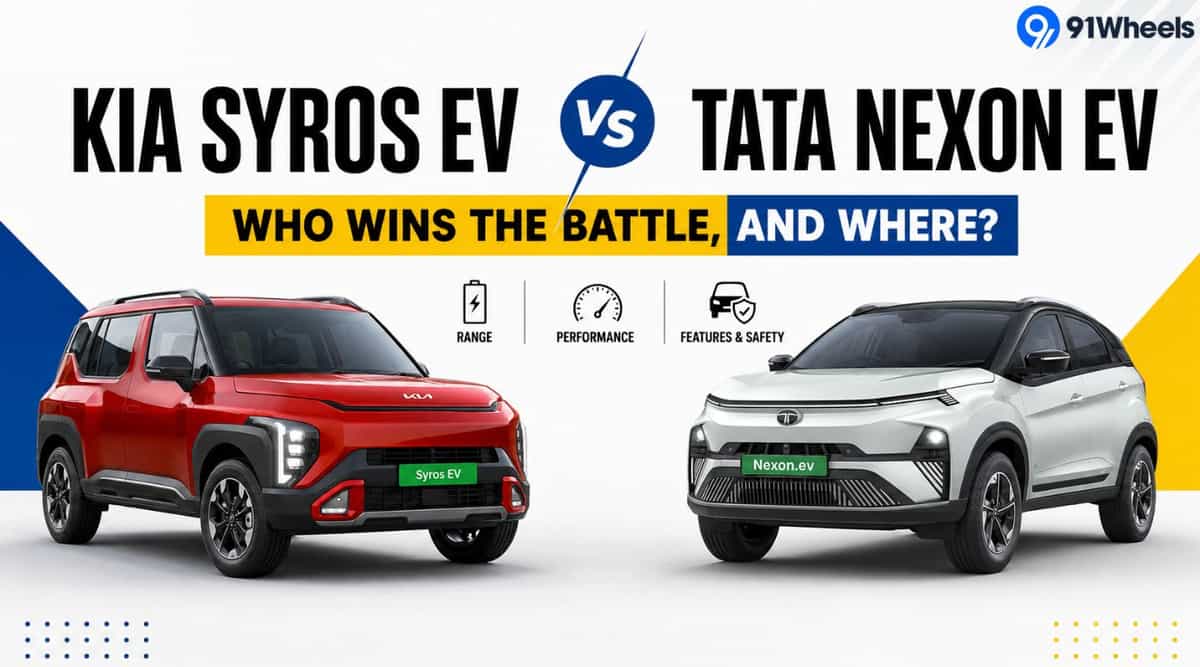
Kia has officially unveiled the Syros EV, positioning it as the most affordable EV in its India lineup. While prices are yet to be announced, they're expected by the end of July, and the company has already revealed the specifications. Based on what we've seen so far, the Syros EV appears to have been developed with one clear rival in mind: the Tata Nexon EV, a long-standing leader in this segment.
So, how does the newcomer stack up against the incumbent? Let's compare them section by section.
Design and Exterior
.jpg)
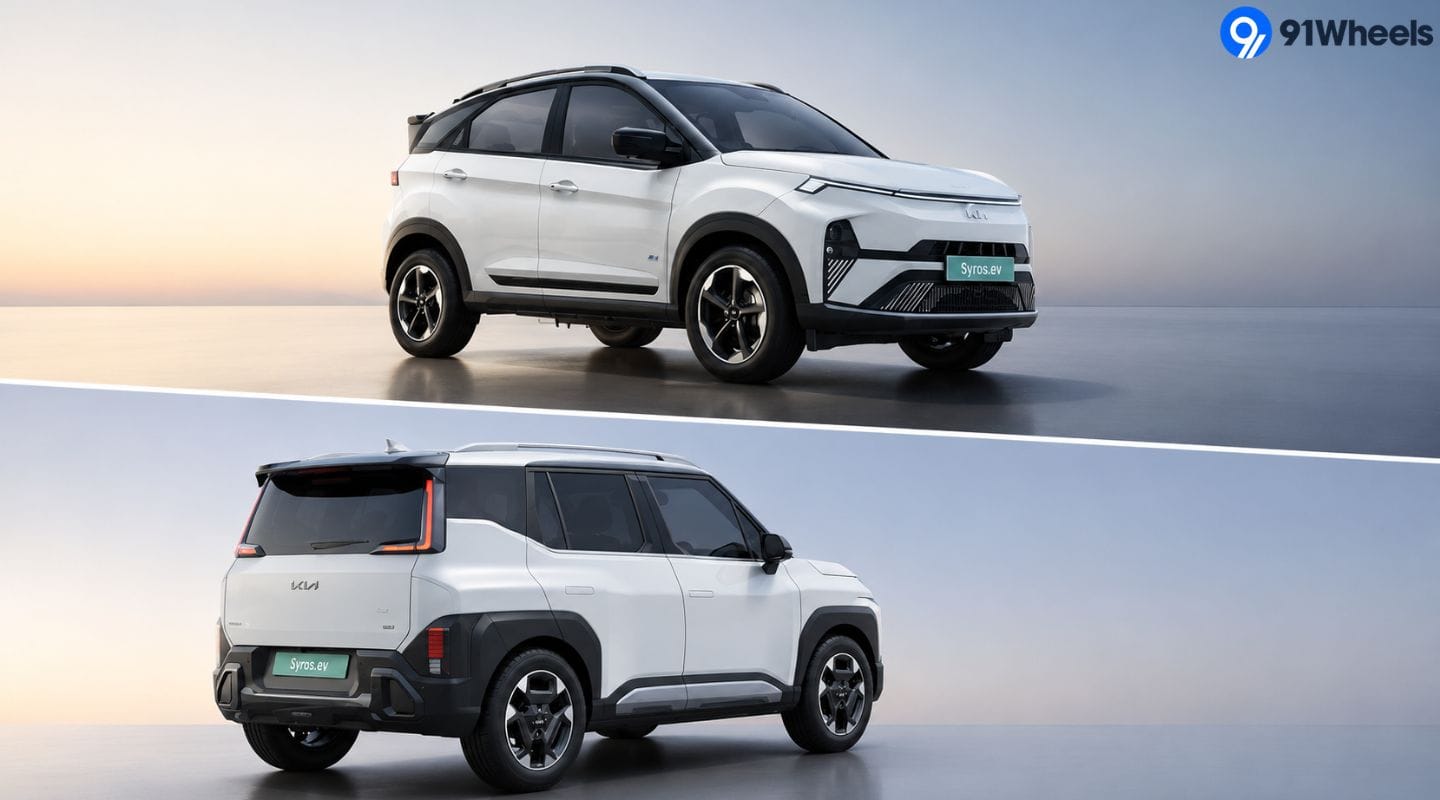
The Syros EV features Kia's signature Tiger Face design, complete with full-LED headlamps and taillamps, LED DRLs with integrated turn indicators, flush door handles, and 17-inch alloy wheels. It also gets gloss-black front and rear skid plates, aero inserts, roof rails, and distinctive side garnishing that gives it a bold road presence.
The Nexon EV takes a different approach with Tata's Digital Design language. It features connected LED DRLs with welcome and goodbye animations, the signature X-factor lighting element at the front, and a hidden rear wiper that lends the rear profile a cleaner look. It rides on 16-inch alloy wheels and continues the digital theme inside with ambient lighting, a backlit steering wheel, and a fully digital cockpit.
Both SUVs have strong visual appeal. The Syros EV looks more rugged with its larger wheels and prominent cladding, while the Nexon EV relies on its modern lighting signature and cleaner styling.
Interior and Comfort
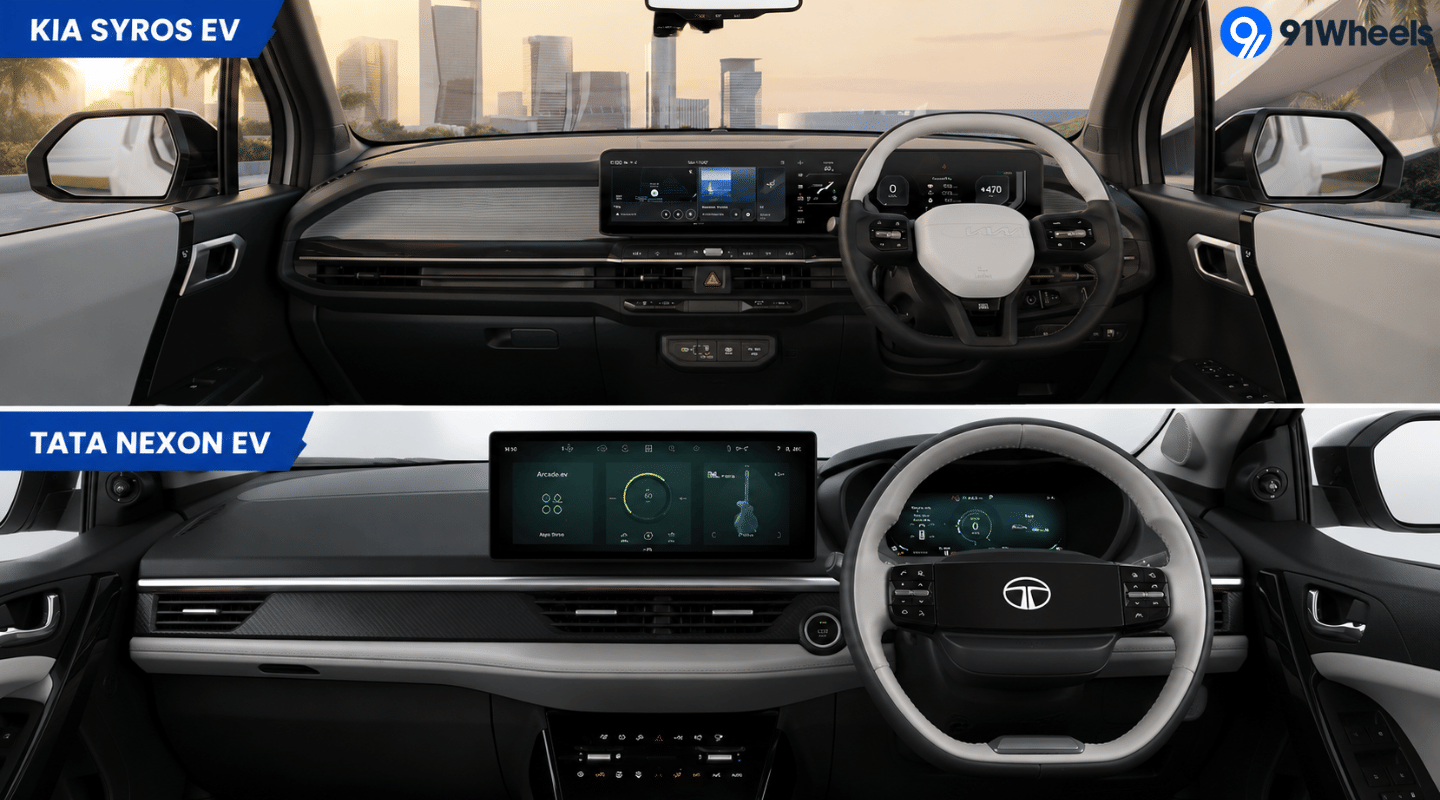
The Syros EV offers a spacious cabin with three interior themes: Cloud Blue & Grey, Onyx Black & Off-White, and an exclusive Onyx Black & Hunter Green combination. It comes with a 4-way powered driver's seat, ventilated front seats, and sliding and reclining 60:40 split rear seats for added flexibility.
The Nexon EV isn't far behind. It gets ventilated seats, rear AC vents, a cooled glovebox, rear sunshades, and a voice-assisted panoramic sunroof. It also includes an 11.6-litre frunk, although it's smaller than the one in the Syros EV.
Motor, Battery, and Range
This is where the Syros EV makes a strong impression. It is offered with two battery pack options:
Specification | Kia Syros EV | Tata Nexon EV 45 |
|---|---|---|
Battery Pack Options | 42 kWh & 51.4 kWh | 30 kWh & 45 kWh |
Claimed Range (ARAI) | 443 km & 526 km | 489 km |
Range Advantage | Up to 526 km, first in segment to cross 500 km mark | 489 km |
0-100 kmph | 8.1 seconds | 8.9 seconds |
The base variant gets a 42 kWh battery pack with a claimed ARAI range of 443 km, while the higher-spec version comes with a larger 51.4 kWh battery pack that delivers a claimed ARAI range of 526 km. With this, the Syros EV becomes the first model in its segment to cross the 500 km range milestone.
The larger battery produces 171 PS and enables a claimed 0-100 kmph time of 8.1 seconds. It uses NMC battery chemistry, features liquid cooling, and carries an IP67 rating for water and dust resistance.
The Nexon EV 45 comes with a 45 kWh battery pack delivering a claimed range of 489 km. It produces 106 kW (144 PS) and 215 Nm of torque, with a claimed 0-100 kmph time of 8.9 seconds. It is also offered in a medium range model as well, paired with a 30 kWh battery pack giving a range of 275 km. It produces power of 95 kW (129 PS) and same torque of 215 Nm. It uses Tata's Gen-2 liquid-cooled motor, features an IP67-rated battery pack, multi-level regenerative braking with paddle shifters, and Eco, City, and Sport drive modes.
On paper, the Syros EV has the advantage with higher power, longer range, and quicker acceleration.
Charging
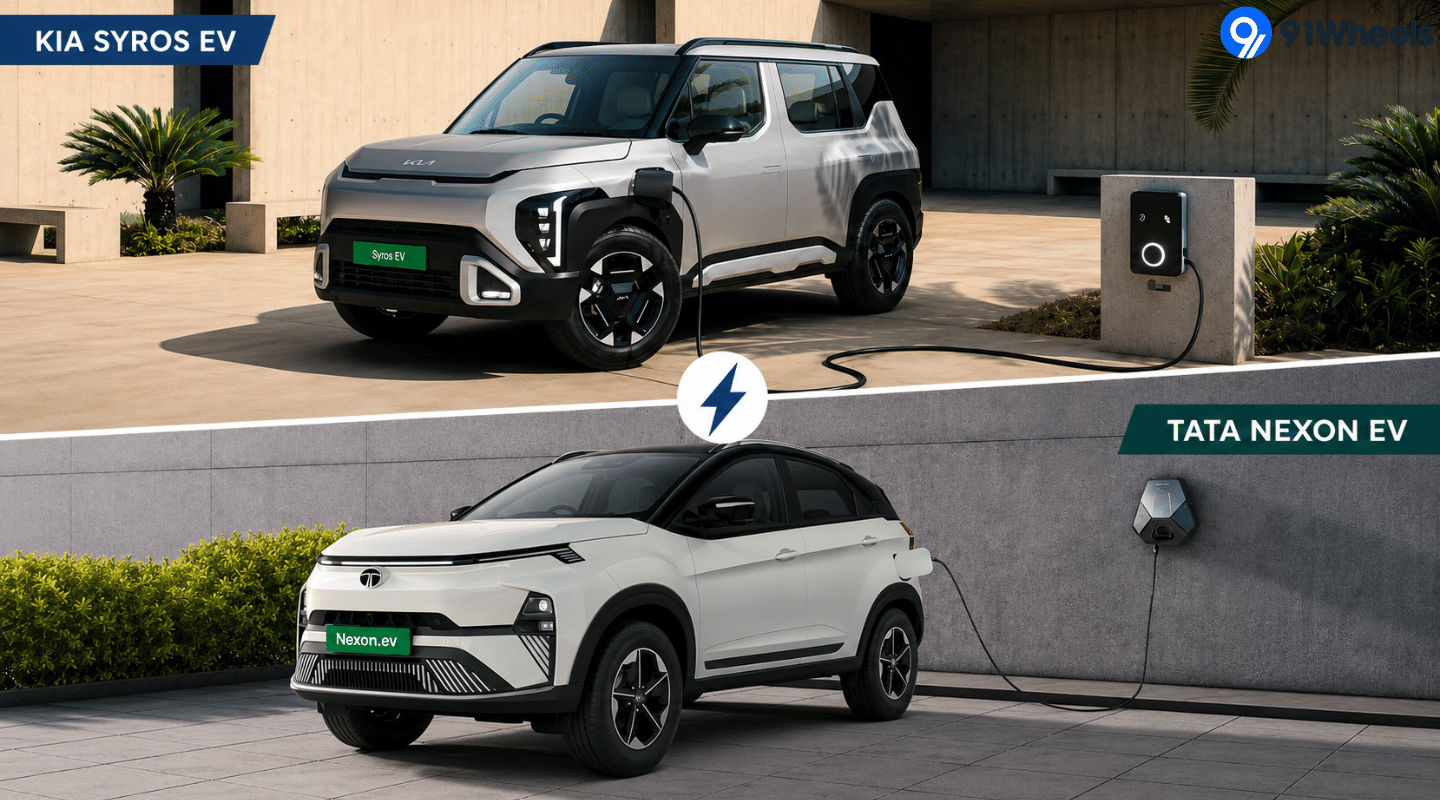
The Syros EV supports 100 kW DC fast charging, allowing the battery to charge from 10-80% in around 39 minutes. It also supports 10.8 kW AC charging and includes battery conditioning for improved fast-charging performance. Kia's K-Charge network provides access to over 20,300 charging points across 23 operators, along with 129+ dealerships equipped with DC fast chargers.
The Nexon EV supports 60 kW DC fast charging, taking around 40 minutes for a 10-80% charge. It also comes with a 7.2 kW AC home wall box and a 15A portable charger. Tata currently offers access to over 26,000 charging stations across India, along with 24x7 emergency charging support in select cities.
While Kia offers faster charging hardware, real-world charging times are nearly identical. Tata's larger and more established charging network remains its key advantage.
Ownership: Warranty and Buyback
Both manufacturers have taken steps to reduce ownership concerns around EV batteries.
Kia offers a lifetime high-voltage battery warranty, an Assured Buyback programme, and a Battery-as-a-Service (BaaS) option that helps reduce the initial purchase cost.
Tata also offers a Lifetime High Voltage Battery Warranty (valid for 15 years with unlimited kilometres) on the Nexon EV 45. Additionally, the company claims owners can save around Rs. 8-9 lakh in running costs over ten years compared to an equivalent petrol vehicle.
Overall, both brands offer strong ownership benefits, making this category evenly matched.
Features and Technology
The Syros EV comes equipped with dual 12.3-inch display for the infotainment system and instrument cluster, along with a 5-inch climate control display. Other highlights include Kia Connect 2.0 with 95+ connected features, OTA updates, wireless Android Auto and Apple CarPlay, an 8-speaker Harman Kardon audio system, 64-colour ambient lighting, a dual-camera dashcam, rear sunshade curtains, a 100W USB-C charging port, and a 16-litre frunk.
The Nexon EV features a 12.3-inch HARMAN touchscreen, a 10.25-inch digital instrument cluster, Alexa support and other voice assistants, a 9-speaker JBL audio system with subwoofer, OTA updates, wireless smartphone connectivity, wireless charging, and an air purifier. It also offers Vehicle-to-Load (V2L) and Vehicle-to-Vehicle (V2V) charging capabilities.
The Syros EV offers a more premium cabin experience, while the Nexon EV stands out with its V2L and V2V charging functions.
Safety
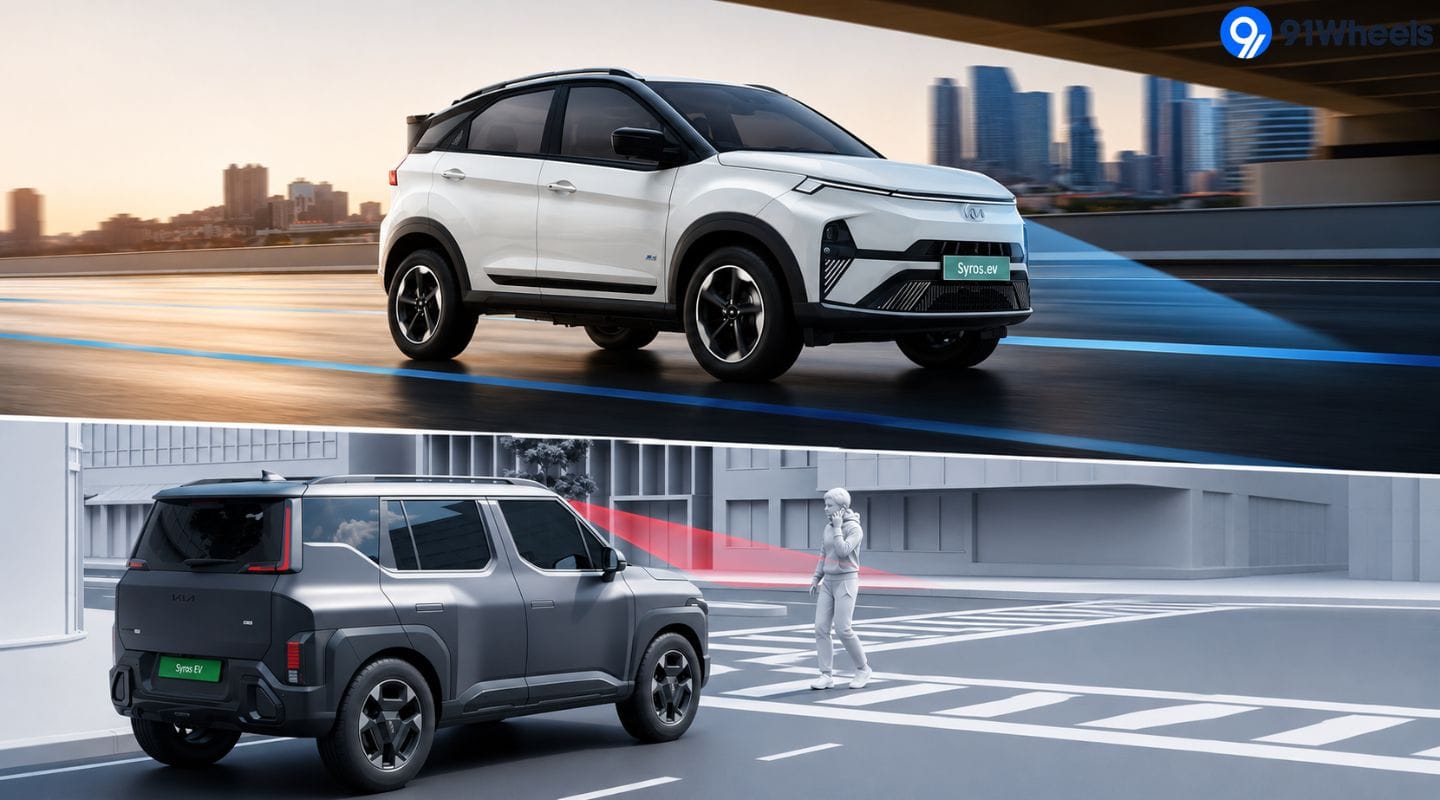
The Syros EV comes equipped with a 16-function Level 2 ADAS suite, including Forward Collision Avoidance Assist, Smart Cruise Control with Stop & Go, Lane Keep Assist, Lane Following Assist, Driver Attention Warning, High Beam Assist, a 360-degree camera, Blind View Monitor, and front and rear parking sensors. Standard safety features also include six airbags, ESC, Hill Start Assist, TPMS, ISOFIX child-seat mounts, and Auto Hold.
The Nexon EV also offers Level 2 ADAS, a 360-degree camera, Blind Spot View Monitor, six airbags, ESP, Hill Ascent and Descent Control, all-disc brakes, and an SOS emergency call function. More importantly, it has achieved a 5-star Bharat NCAP crash safety rating, scoring 29.86/32 for adult occupant protection and 44.95/49 for child occupant protection.
While the Syros EV offers a more extensive ADAS feature list, the Nexon EV holds the advantage with an independently verified 5-star crash safety rating.
Variants and Colours
The Syros EV will be available in seven variants: HTK, HTK+, HTX, HTK+ ER, HTX ER, HTX+ ER & X-Line ER. It will also be offered in nine exterior colours, including an exclusive dual-tone finish for the X-Line ER.
The Tata Nexon EV is offered in five exterior colour options: Daytona Grey, Ocean Blue, Pure Grey, Empowered Oxide, and Pristine White.
So, Who Actually Wins?
The answer depends on what matters most to you.
If you're looking purely at the specifications, including range, performance, and charging capability, the Kia Syros EV appears to have the upper hand. It offers a longer claimed range, higher power output, and faster charging hardware.
However, the Tata Nexon EV continues to hold several important advantages. It has a proven ownership record, a more extensive charging network, and a verified 5-star Bharat NCAP safety rating.
The final verdict will ultimately depend on pricing. If Kia launches the Syros EV at a significantly lower price than the Nexon EV, it could become one of the strongest contenders in the segment. However, if pricing is similar, Tata's established reputation, safety credentials, and charging ecosystem will remain compelling reasons to choose the Nexon EV.
For now, the Tata Nexon EV remains a safer and more proven choice, while the Kia Syros EV is shaping up to be one of the most exciting new electric SUVs in the market.
Do you like this article?
Comments
No comments yet. Be the first to comment!