Renault Duster 1.0-Litre Techno Variant Review - Is It The Most VFM Variant?

KEY HIGHLIGHTS
- The Renault Duster Techno variant is priced at Rs 13.49 lakh (Ex-showroom)
- Available with both 1.0-litre turbo and 1.3-litre turbo petrol engines
- Offer features like panoramic sunroof, electric tailgate, wireless charging, and more
Renault India has brought back the Duster, and its new-generation avatar has already become popular. The brand has launched the SUV with an all-new design, an updated feature list, a more modern appearance, and new engine options. Along with its new identity, the Duster also gets a revised variant nomenclature and pricing structure. The new Duster is priced between Rs 10.49 lakh and Rs 18.89 lakh (ex-showroom). Available in six variants, it is offered exclusively with two turbo-petrol engine options. In this article, we'll take a closer look at the Techno variant, the mid-spec trim in the lineup, to find out whether it is worth buying and if it offers the best value for money in the range. Meanwhile, join the 91wheels WhatsApp Community, specifically curated for petrolheads like us to keep up with the latest news and automotive updates.
Also Read: 2026 Honda City Facelift First Drive Review: Familiar Soul, Fresh Look
Renault Duster Techno - Engine Options & Pricing
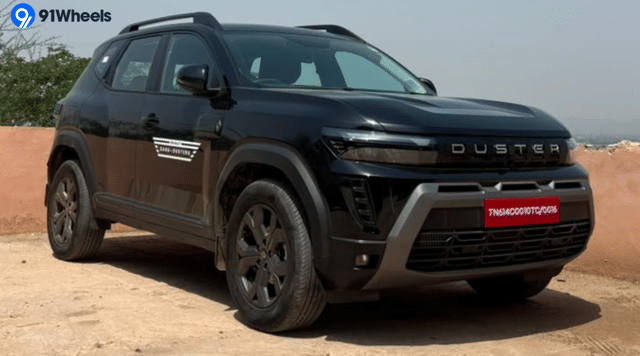
The new Duster Techno variant comes with a starting price of Rs 13.49 lakh (ex-showroom) and goes up to Rs 15.89 lakh (ex-showroom). This variant comes with 2 engine options as of now, a 1.0-litre turbo petrol engine and a 1.3-litre turbo petrol engine. Moreover, this is the only variant in the lineup that comes with both these engine options.
| Engine Options | Transmission Options | Specifications | ARAI Mieage Figures | Ex-Showroom Price |
| 1.0-litre Turbo Petrol Engine | 6-Speed Manual | Power - 100 PS Torque - 160 Nm | 19.41 Km/L | Rs 13.49 Lakh |
| 1.3-litre Turbo Petrol Engine | 6-Speed Manual / 6-Speed DCT | Power - 163 PS Torque - 280 Nm | 17.75 Km/L MT 18.45 Km/L DCT | Rs 14.49 Lakh Rs 15.89 Lakh |
Exterior
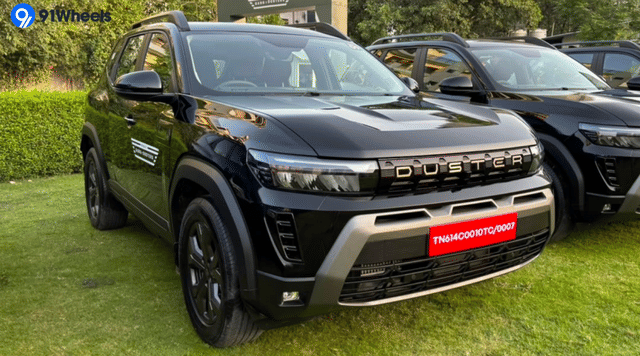
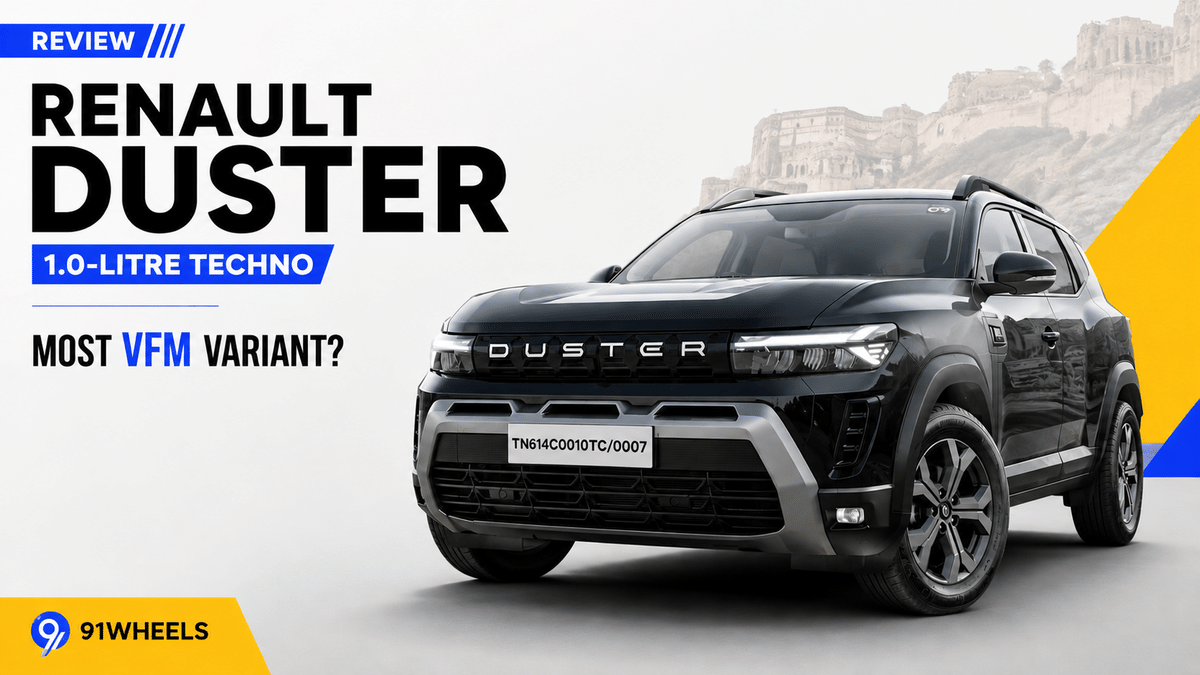
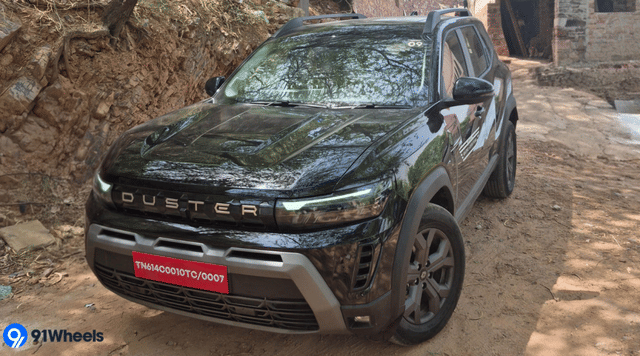
The exterior of the Techno variant doesn't feel like a mid-spec trim, as it offers several design elements similar to those found in the top-spec version. The front profile features LED headlamps with LED DRLs and integrated LED turn indicators, a rugged-looking fascia with a matte grey bumper, and Duster badging on the grille. On the sides, it gets 17-inch matte grey alloy wheels, Duster badging on the front doors, and body-coloured door handles. At the rear, it features connected LED tail lamps along with a rear wiper, washer, and defogger. Buyers won't be missing out on much by opting for the Techno variant; however, it does miss out on some feel-good features such as front parking sensors and a 360-degree camera.
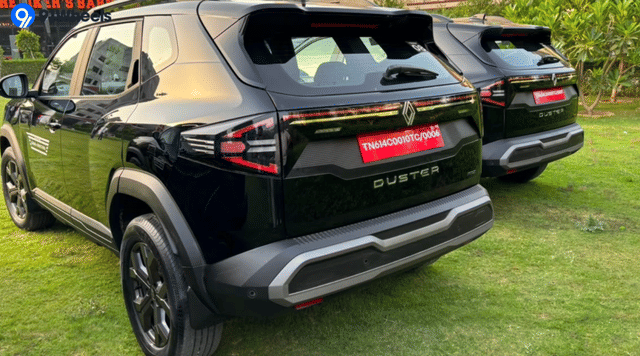
The exterior feels muscular, thanks to its sculpted bonnet design and the bold front grille featuring prominent Duster badging. The dual-tone bumper with a matte finish further enhances its rugged appeal. Overall, the styling remains tough and purposeful, while the well-proportioned dimensions give the SUV a strong road presence.
Interior & Features
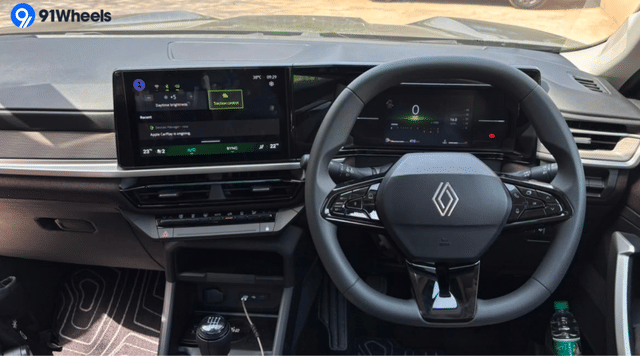
Renault hasn't held back when it comes to offering features in the mid-spec Techno variant. It comes loaded with several convenience and safety features aimed at enhancing the overall ownership experience. In fact, Renault has equipped it with features that some rivals do not offer even in their top-spec variants. Some of the key highlights of the Techno variant are as follows:
| Panoramic Sunroof |
| Powered Tailgate |
| Dual-Zone Climate Control |
| Wireless Charging |
| 10.1-inch Infotainment Display |
| Wireless Apple CarPlay & Android Auto |
| 7-inch Digital Instrument Console |
| All-LED Lighting |
| Rear Connected LED Lightbar |
| Auto-Dimming IRVM |
| Electric Parking Brake (DCT only) |
Apart from these highlight features, the Duster also gets auto-folding ORVMs, connected car technology, Type-C charging ports, paddle shifters (DCT only), and vanity mirrors on the sun visors, among other features. The cabin feels well-equipped and offers all the essential features you would need for your daily drives. Additionally, everything remains within the driver's reach, and the cabin is designed keeping the controls driver-centric. The seats are comfortable and provide good space for rear passengers as well. The cabin feels airy, but one feature that rivals such as the Kia Seltos offer in their mid-spec variants is missing in the Duster: rear window sunblinds.

If we talk about safety, this particular variant gets 6 6-airbags, ABS with EBD, ISOFIX child seat mounts, all 5 3-point seatbelts, TPMS, emergency stop signal, rear parking sensors, rear parking camera, automatic headlamps, rear wiper, washer, and defogger, among other features.
Also Read: Renault Duster 1.0 Turbo Mileage Revealed; Delivers Over 19 kmpl
How Is It To Drive?
The Duster Techno variant is available with two engine options. The version I drove was powered by the 1.0-litre turbo-petrol engine paired with a 6-speed manual transmission. While this is the same engine found in the Kiger, Renault has retuned the gear ratios and slightly increased the torque output to better suit the Duster's character. In this application, the engine produces 100 PS of power and 166 Nm of peak torque.
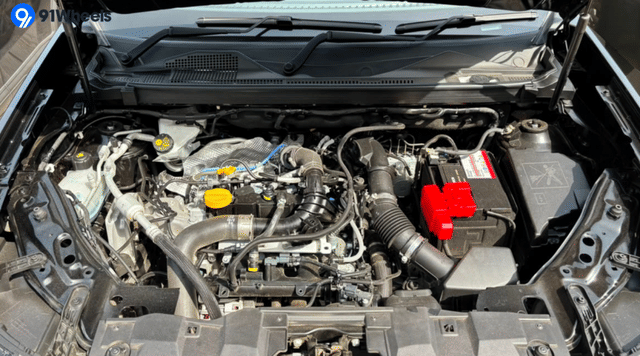
When it comes to performance, Renault has done a good job tuning this engine to suit the Duster's character. Power builds up progressively, while a good amount of torque is available from around 1,000 rpm, with peak torque arriving at 2,000 rpm. The low-end response is particularly well-suited to Indian driving conditions. Leave the clutch, and the Duster starts crawling forward without any fuss, ensuring you never feel a lack of low-end grunt in city traffic.
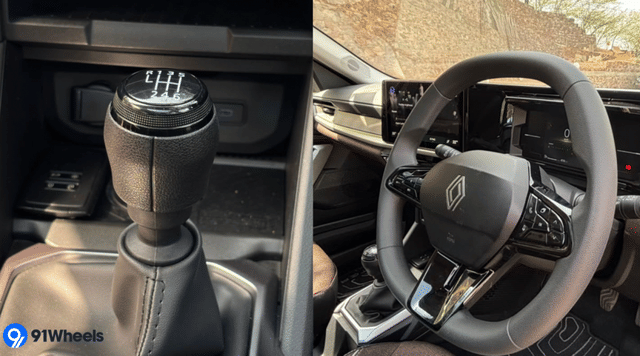
The engine remains in its sweet spot up to around 4,500 rpm, with both the low and mid-range performance being strong enough to keep most drivers satisfied. However, the top-end performance is not its strongest suit. Once speeds climb beyond 100-120 kmph, the engine begins to feel less enthusiastic, and power delivery becomes noticeably more lethargic. As a result, it feels more comfortable cruising at highway speeds than chasing outright performance.

Unlike many small-capacity turbo-petrol engines, this unit offers impressive drivability in the city and is also capable enough for occasional highway runs. The gear shifts are not the smoothest and feel slightly notchy, but they are noticeably better than those of the Kiger, which uses a similar setup. The retuning is clearly visible, as the engine comfortably accepts a shift into third gear at speeds as low as 20 kmph without any hesitation.
Ride & Handling
The ride quality of the Duster is something that takes it to the top of the mid-size SUV segment. It handles well, and the steering feels butch and offers good feedback to the driver. Moreover, it remains light at lower speeds and weighs up nicely as the vehicle gains speed.
The suspension setup tackles bad roads and potholes with ease at lower speeds, while on highways, it offers good comfort to both the driver and rear-seat occupants. The 17-inch tyre setup also plays a role in enhancing the overall ride quality. The Duster's ride and handling package shines equally well on city roads and highways.
NVH levels are well managed, and engine noise is kept under control. However, some tyre noise does seep into the cabin, especially at higher speeds.
Also Read: Upcoming Next-Gen Kia Sonet: Everything We Know So Far
Verdict
At Rs 13.49 lakh (ex-showroom), the Renault Duster Techno variant stands out as the most value-for-money variant in the lineup, in my opinion. It offers a capable 1.0-litre turbo-petrol engine that can deliver good fuel-efficiency figures while providing adequate performance for both city and highway use. The cabin is well laid out and comes equipped with a good number of convenience and safety features.
However, the interesting part is the price difference between the 1.0-litre turbo-petrol and the 1.3-litre turbo-petrol engine options. The 1.3-litre engine in the Techno variant is priced just Rs 1 lakh higher at Rs 14.49 lakh (ex-showroom). For that additional amount, buyers get more power, more torque, and a larger engine. This pricing strategy could make the decision between the 1.0-litre and 1.3-litre turbo-petrol variants a bit tricky for prospective buyers.
In my opinion, the 1.0-litre turbo-petrol is a sensible choice for those on a strict budget. However, if you can stretch your budget by another Rs 1 lakh, the 1.3-litre turbo-petrol with the manual transmission becomes a no-brainer as you get a significant performance gains on offer.
Do you like this article?
Comments
No comments yet. Be the first to comment!