Delhi Has 21 Months To Pull Off An EV Revolution, Here's What Stands In The Way

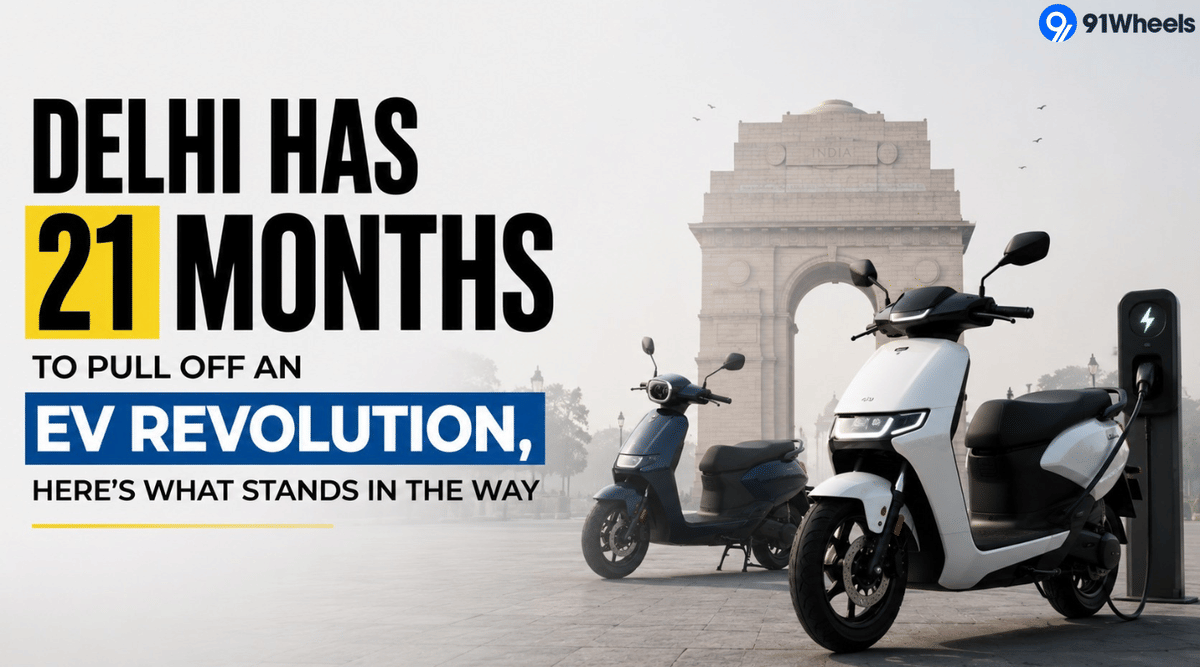
21 Months. That's all the time left before petrol-powered two-wheelers stop being sold in Delhi, for good. After that, the electric revolution arrives in full force, and the Indian automotive industry will never look the same. The Delhi Cabinet just approved a Rs 15,000 crore four-year plan to make EVs the only option, with a target of 95 percent EV registrations by 2027. Delhites are still digesting what that actually means. But every other city in India should be watching closely, because they are next.
Also Read: No New ICE Two-Wheelers From 2028, EV 4Ws Go Tax-Free; Delhi's New EV Policy Explained
Why This Policy in the First Place?
The answer is straightforward. Electric vehicles produce zero tailpipe emissions, and Delhi has run out of reasons to delay making them the default. But the more interesting question is why the government has started with two-wheelers specifically, and not cars.
The logic is sound. Two-wheelers are where the volume is. India sold over 2.02 crore two-wheelers in 2025 alone, making them by far the largest vehicle segment in the country. They are also the most accessible, affordable enough that a first-time buyer can take the leap without it being a life-altering financial decision. If an EV revolution is coming to India, it will arrive on two wheels before it arrives on four. The Delhi government took note of this, and designed the policy accordingly.
Then there is the pollution problem, which in Delhi needs no introduction. The capital regularly records AQI levels crossing 500 to 600 during winter months, figures that place it among the most polluted cities in the world. With over 1.04 crore registered two-wheelers on Delhi roads, the contribution of this segment to particulate matter and carbon emissions is significant. Targeting new registrations in this category is one of the most direct levers available to any city government on air quality.
And if it works, Delhi will not just be a cleaner city. It will be the blueprint every other state government can look at when designing their own EV policy. Starting from the National Capital is not just symbolic, it is strategic.
Paramount Reasons for Delhi to Adapt EV Policy First:
- Delhi has a pollution crisis that can't wait.
- The National Capital sets the precedent.
- Two-wheelers drive the volume.
The Optimistic Case
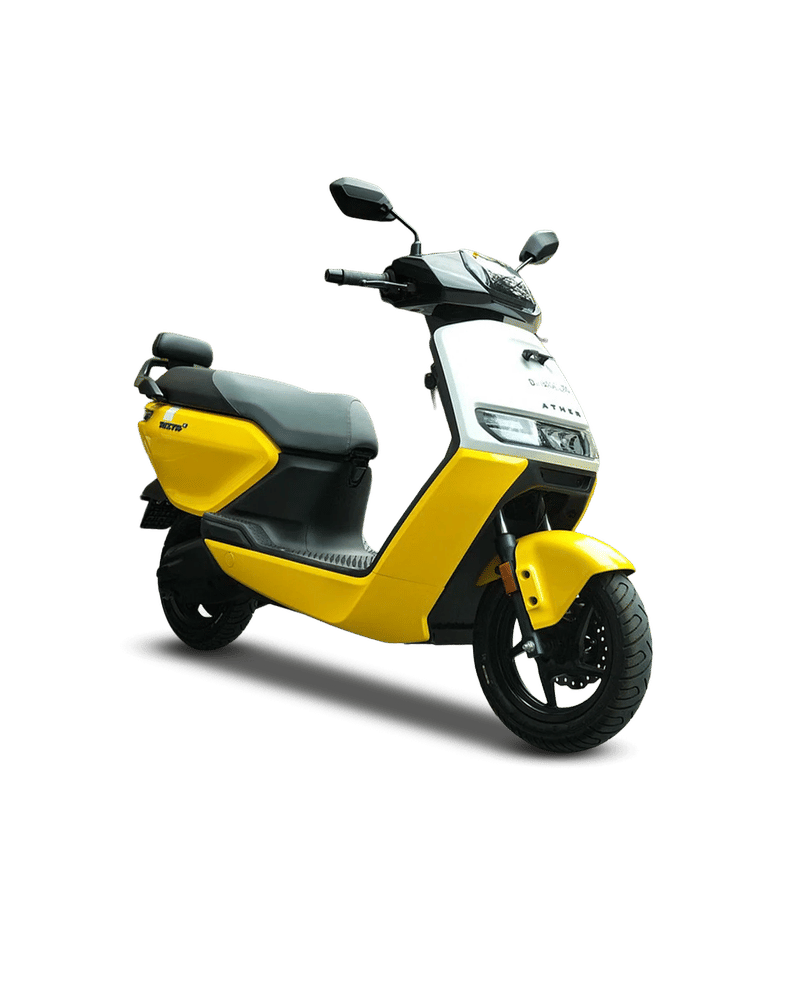
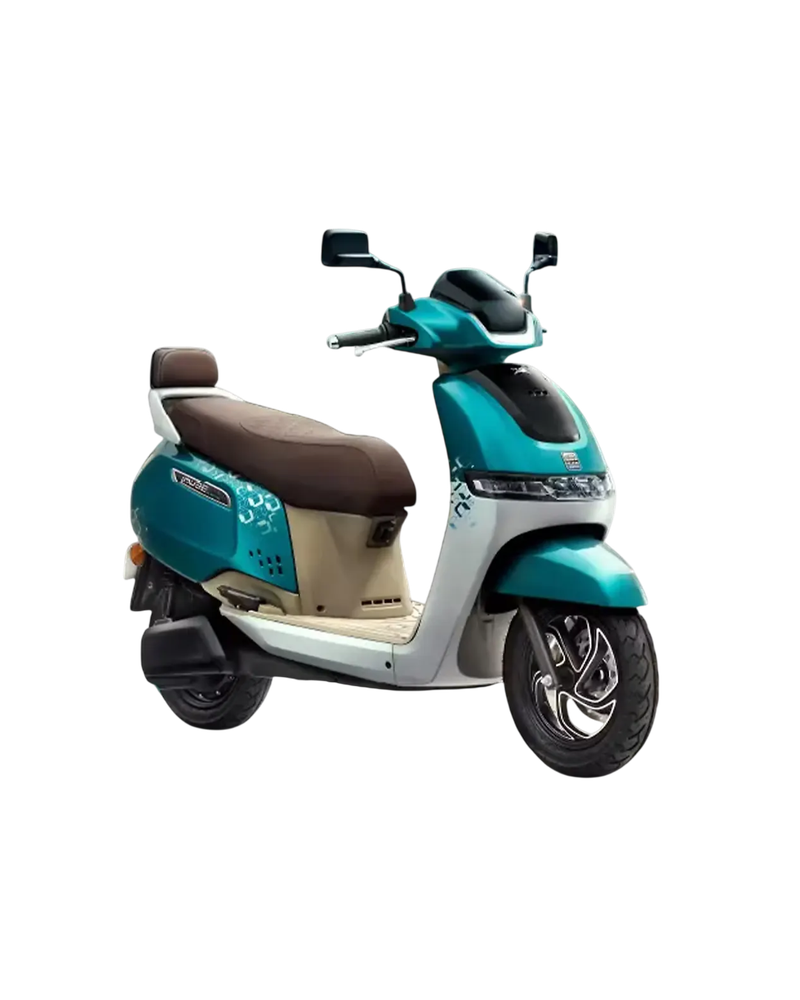
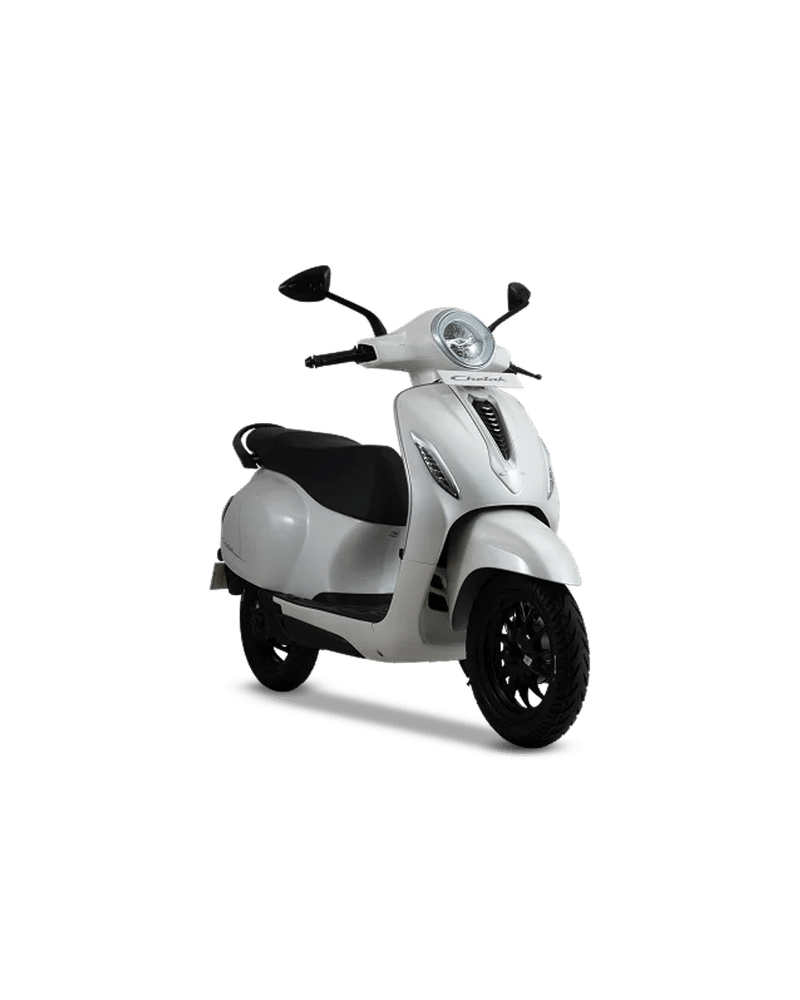
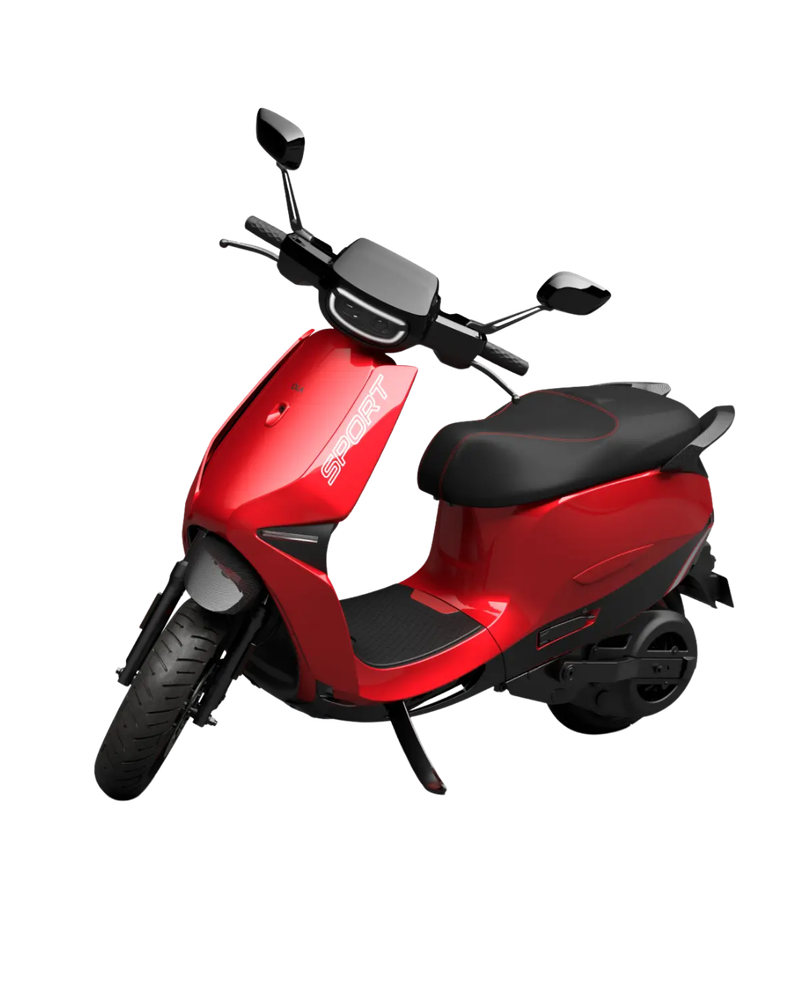
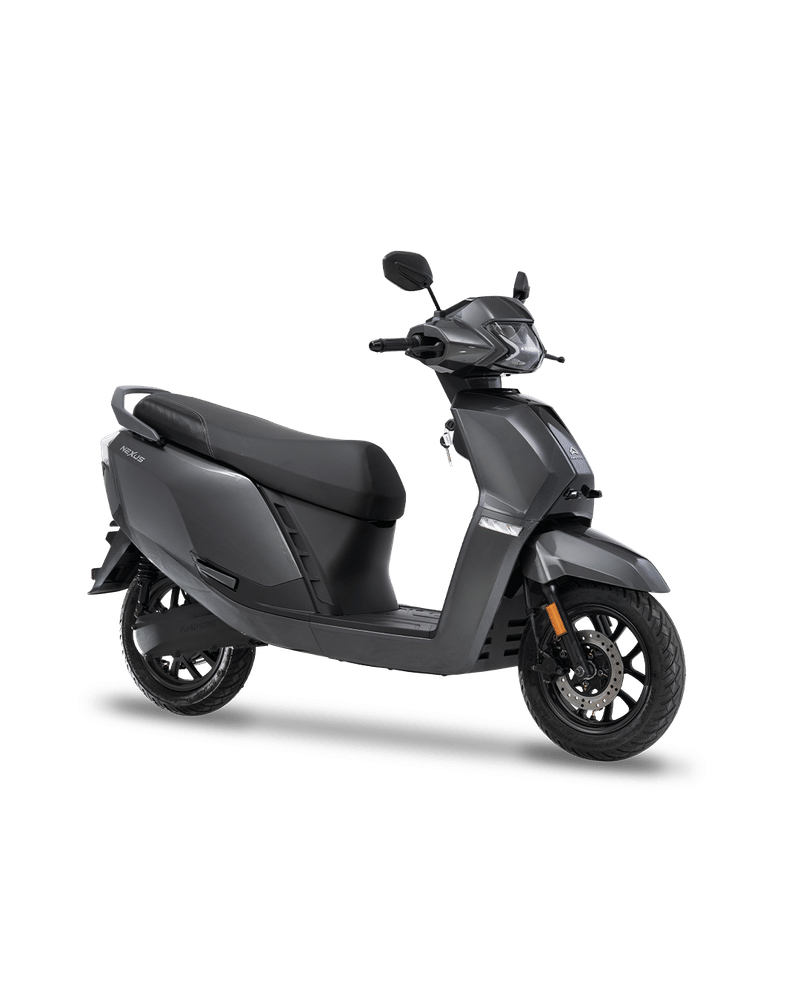
Skip the jargon, and the picture is actually quite encouraging. Over the past three years, India's electric two-wheeler industry has quietly matured. Homegrown brands like Ola Electric, Ather Energy, and TVS Motor have led the charge with competitive products backed by expanding service networks. Beyond them, manufacturers such as Bajaj (Chetak), Ampere, Lectrix, and Okinawa now offer electric scooters across nearly every price segment, giving buyers more choice than ever before.
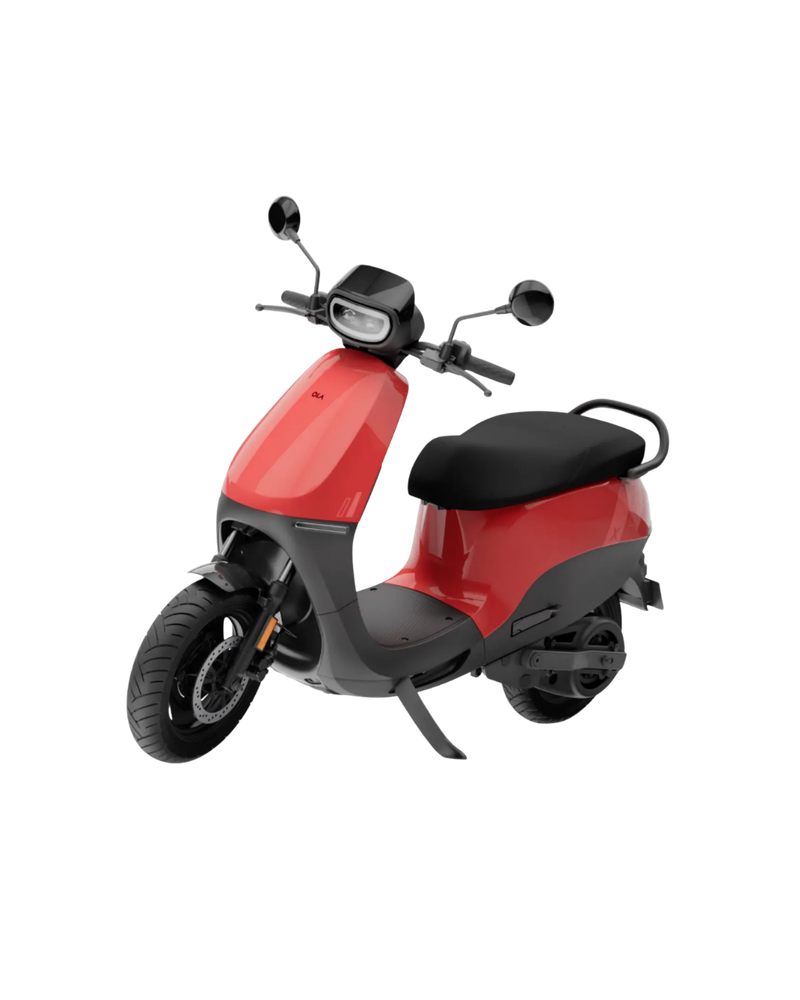
The misconception that electric scooters are unaffordable doesn't hold up against the actual numbers. Entry-level options from Ampere, Zelio, and Lectrix start at around Rs 56,000, and once you stack Delhi's Rs 30,000 subsidy on top of PM E-DRIVE incentives, that number comes down significantly. Mainstream options follow close behind: Ola’s S1 X sits at Rs 69,999, with TVS iQube and Bajaj Chetak not far above it.
There are options available for buyers who want more than just a basic electric two wheeler. Ather's Rizta is a proper family scooter with top-notch build quality, reliable real-world range, and features like cruise control, navigation, and crash detection built in. For the performance-minded, the Ather 450 Apex makes a strong case. These are not compromises. These are genuinely good products.
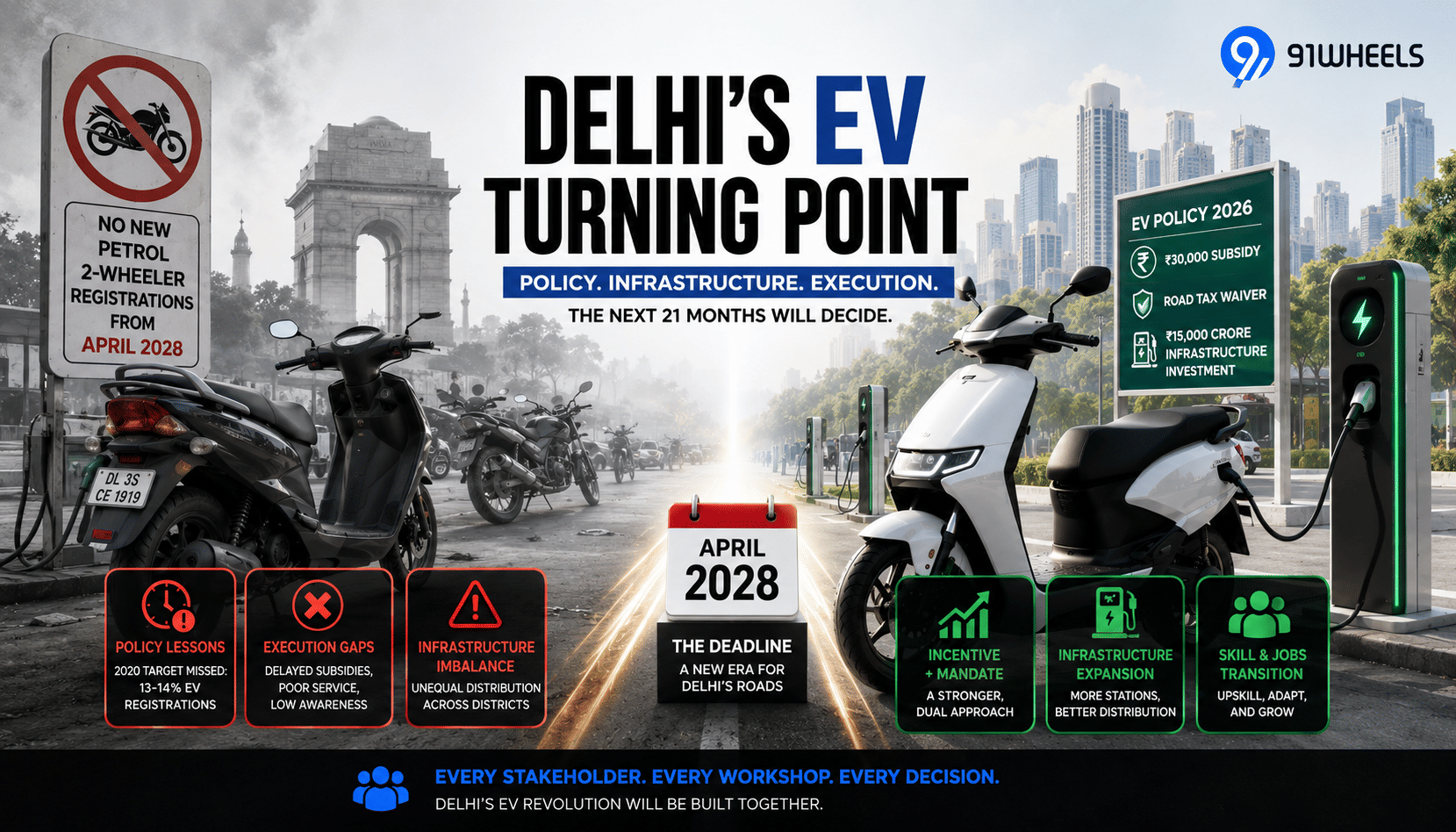
The policy design backs this up. Unlike earlier attempts that relied purely on subsidies and hoped for the best, Delhi's EV Policy 2.0 combines financial incentives, a phased registration mandate, and a dedicated infrastructure push simultaneously. Ather's own CEO pointed out that this combination is what separates it from every half-measure that came before.
On charging, Delhi is already ahead of most Indian cities in terms of public charging availability. The Rs 15,000 crore outlay has infrastructure as a core pillar, not an afterthought. The gaps are real, particularly in outer Delhi, but they are closable within 21 months if the spending lands in the right places.
And then there is the domino effect. If Delhi hits even 70 to 80 percent of its EV registration target, it becomes very difficult for any other state government to argue that a mandate is premature. What succeeds in the National Capital gets replicated. That upstream impact on national policy could end up being far larger than anything that happens within Delhi's own borders.
The industry is ready. The products exist. The question now is execution.
Infrastructure Reality vs Policy Accountability
This isn't Delhi's first attempt. In 2020, the city launched an EV policy with a clear goal: 25 percent of all new registrations to be electric by 2024, with road tax waivers and subsidies to back it up, but, it didn't work. By 2024, the real number was sitting at 13 to 14 percent. Subsidies were delayed, charging infrastructure didn't keep up, and Ola Electric, which was supposed to lead the revolution, ended up becoming notorious for service failures and quality issues that pushed buyers away. The policy got extended, then quietly wound down. Nothing concrete came out of it.
This time the approach is fundamentally different. The 2020 policy relied purely on incentives and hoped the market would follow. The 2026 version does both: it offers Rs 30,000 in subsidies on electric two-wheelers in the first year, continues the road tax waiver, and simultaneously sets a hard deadline that closes the door on new petrol two-wheeler registrations by April 2028. Incentive plus mandate. That combination is what the 2020 policy was missing, and it deserves acknowledgement.
Number of Charging Stations In New Delhi
Charging Stations | 1919 |
|---|---|
Charging Points | 2452 |
Battery Swapping Stations | 232 |
As per official Delhi Government data, the national capital currently has 1,919 charging stations, 2,452 charging points, and 232 battery-swapping stations. For a city planning an all-electric future, those headline numbers appear encouraging. Dig a little deeper, however, and the distribution tells a different story.
South Delhi leads with 157 charging stations and 218 charging points. At the other end of the spectrum, North East Delhi, one of the capital's most densely populated districts, has just 14 charging stations and 14 charging points, while North Delhi has 24 stations and West Delhi 60. These are not outlying areas; they are home to a large share of Delhi's daily two-wheeler commuters.
The data also highlights a striking imbalance. While South Delhi has only five battery-swapping stations, West Delhi has 68 and North West Delhi 58. That suggests these districts currently rely far more on battery swapping than conventional charging infrastructure.
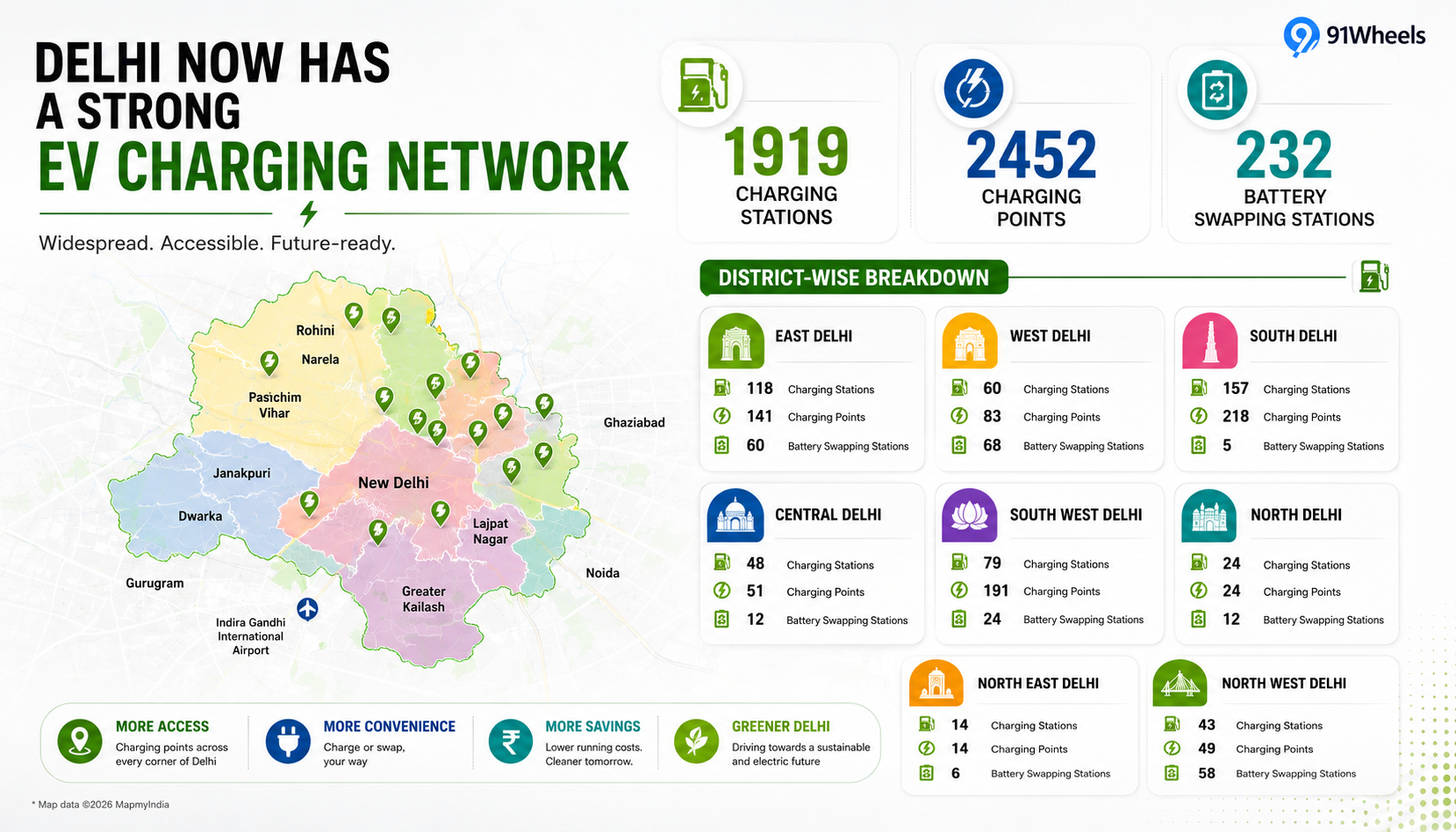
Source: Delhi.gov.in
These numbers look promising, but they hide a problem. Delhi Government's count of 1,919 charging stations and 2,452 charging points doesn't specify how many actually serve two-wheelers versus four-wheelers. This matters because around 95 percent of them serve only four-wheelers. If this policy is meant to push two-wheeler adoption, that's exactly where the infrastructure focus should be. Instead, there's a real gap in clarity.
The government needs to put a meaningful share of the Rs 15,000 crore toward fixing this, building more two-wheeler-compatible charging points and battery swapping stations. That's especially urgent given roughly half of the city's existing battery swapping stations aren't functional.
Execution Gaps
- Delhi's Charging Stations On Paper vs On Ground - This is the biggest red flag in the entire policy. A large share of Delhi's Government existing charging stations and battery swapping units simply don't work. You don't need a government report to see this. Open any EV charging app and check for yourself. We tried the eDrive BPCL app, and the picture wasn't pretty: almost 50-60 percent of the listed charging stations showed up as dead or inactive. And Delhi isn't even the worst of it. The reality across the rest of the country is worse still. This isn't a Delhi-specific problem. It's a nationwide charging infrastructure crisis that needs serious work, starting now.
- The Charging Ecosystem Is Locked By Brand - Ather and Hero's Vida aren't competitors on charging, they're partners. Since a 2023 interoperability deal, both brands' scooters can charge on either network, running on the shared LECCS connector. Between them, that's over 6,000 Ather Grid points plus 5,300+ Vida points across 430+ cities. No other brand gets access. If you don't ride an Ather or a Vida, none of those points are usable.Battery swapping has the same problem. Honda runs its own e:Swap network for the Activa e, built with fuel retailers like HPCL. Hero has a separate swapping tie-up with Gogoro. Neither network takes the other's batteries.So while Delhi's policy assumes charging infrastructure will just expand, what's actually happening is more fragmented, brands building private networks for their own customers, while everyone else depends on the unreliable public network covered earlier.
- Service network depth - Lectrix, Ampere, and Zelio exist at the right price points, but none of them have anything close to the workshop density that Hero and Honda have built over 30 years. The ball is now in two courts: legacy players need to seriously consider launching electric scooters under Rs 60,000, while newer brands need to aggressively expand into the neighbourhoods where their target buyers actually live, backed by marketing that builds awareness and trust. The buyer who needs an affordable EV often doesn't even consider these brands, not because of price, but because of fear: fear of poor after-sales, unfamiliar service centres, and brands they've never heard of. One bad experience with downtime travels fast and puts the next ten buyers off.
- Subsidy disbursement - Subsidies need to actually reach buyers on time. The 2020 policy's biggest practical failure was delayed disbursements. Buyers were promised money that took months to arrive. If that happens again, the momentum dies the same way. A Rs 30,000 subsidy on paper means nothing to a buyer standing in a showroom who can't claim it for six months.
The intent this time is serious. But so was the intent in 2020. April 2028 will give the real answer.
What About The Current Fleet?
The April 2028 ban applies only to new petrol two-wheeler registrations. It does nothing about the millions of petrol-powered scooters and motorcycles already on Delhi's roads. A two-wheeler bought in 2027 can legally remain on the road until 2042 under Delhi’s 15 year rule. And when these vehicles age out, they are rarely scrapped. Instead, many are sold at throwaway prices in neighbouring states such as Uttar Pradesh, Haryana, and Madhya Pradesh. Delhi's air may get cleaner on paper, but much of the pollution simply shifts elsewhere.
The full environmental benefit of this policy is, therefore, a 10 to 15 year story. The transition is real, but the impact will unfold gradually rather than overnight
The Skill Set That Doesn't Transfer
Nobody would have thought a Royal Enfield Classic 350 would be banned in Delhi. But come April 2028, that is exactly what will happen. This is arguably the boldest policy any State government has put forward to bring carbon emissions down, and for that intent alone, the government deserves credit.
The 21-month deadline is real and it is tight. Time moves faster than anyone expects, and executing this will require every person in the automotive industry to have a double espresso shot every morning just to keep up. No delays, no extended timelines, no quietly pushing deadlines.
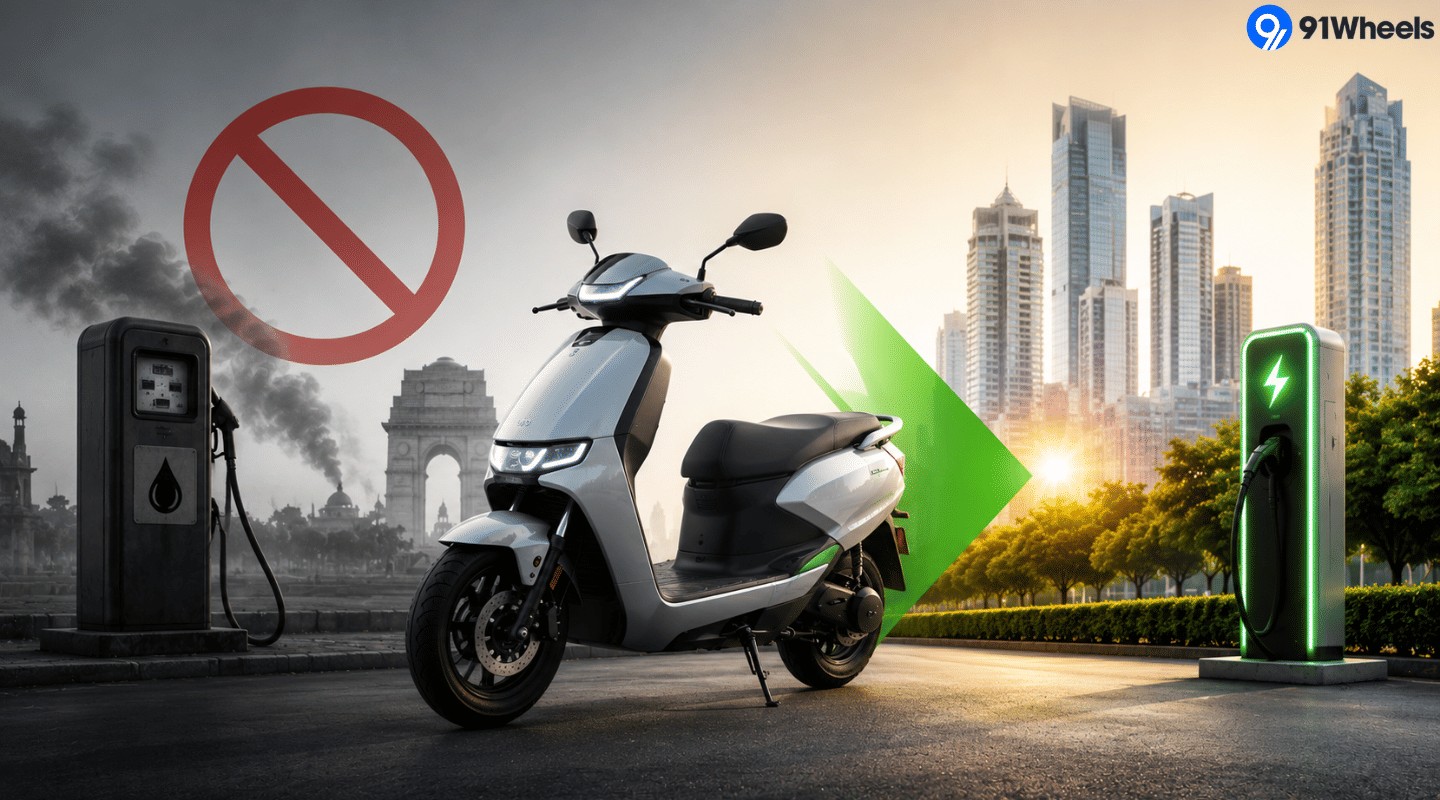
And when we say every person, we mean every person. This policy doesn't just disrupt showrooms and manufacturers. It walks straight into every mechanic shop in Karol Bagh, Kashmere Gate, and every other two-wheeler repair hub Delhi is known for. These are legacy businesses built entirely around internal combustion engines, and an electric two-wheeler doesn't speak that language. EVs don't need oil changes or carburetors. They need battery diagnostics run on a laptop, and technicians trained to read them. That's a fundamentally different skill set, and it doesn't come from 20 years of wrenching on Activas and Pulsars.
The jobs will come, but only for those who adapt. The ones who don't will find their workshops increasingly empty five years from now as the new fleet on Delhi roads slowly stops needing what they know how to fix.
Final Word
This policy will be judged on EV registration numbers. But its real impact will show up quietly, in the workshops that upgraded and the ones that didn't.
Everybody is watching. The industry is about to change. And Delhi, for better or worse, is leading the way.
Do you like this article?
Comments
No comments yet. Be the first to comment!