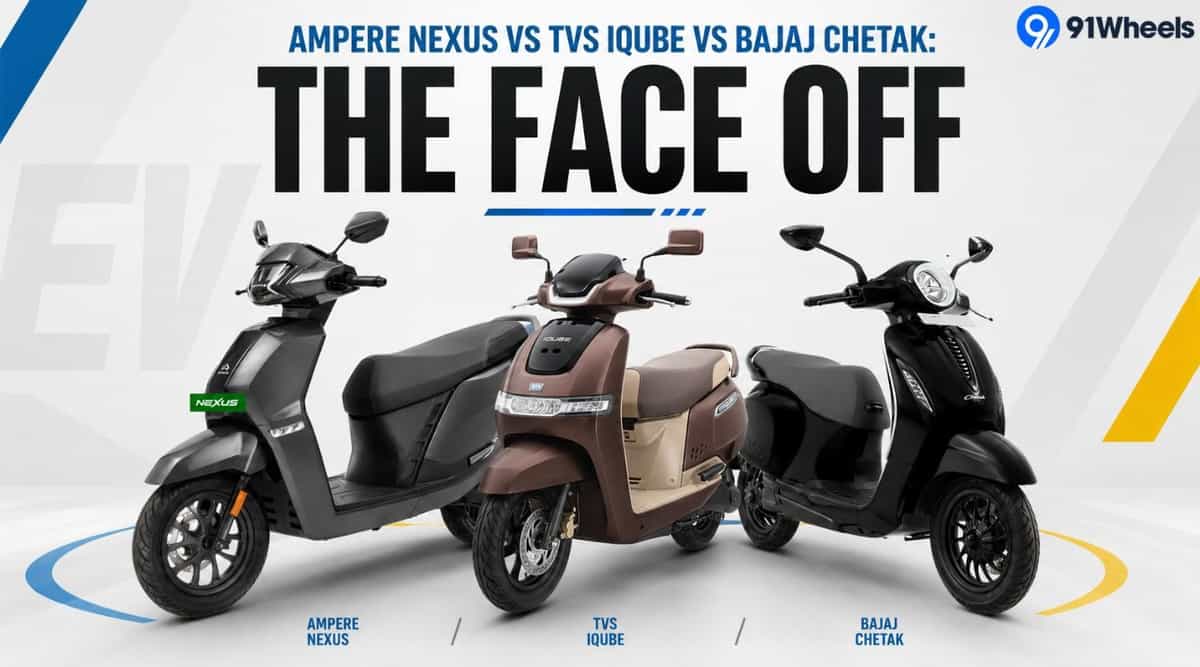
India has picked up the electric scooter race seriously. There are old players bidding in, then there are new start ups entering the race. However, among this race, there are three strong contenders duking it out below the two lakh mark: the Ampere Nexus, the TVS iQube, and the Bajaj Chetak. Each takes a different approach to the same problem, getting you to work and back without a drop of petrol. Let’s deep dive and check how they actually stack up.
Design
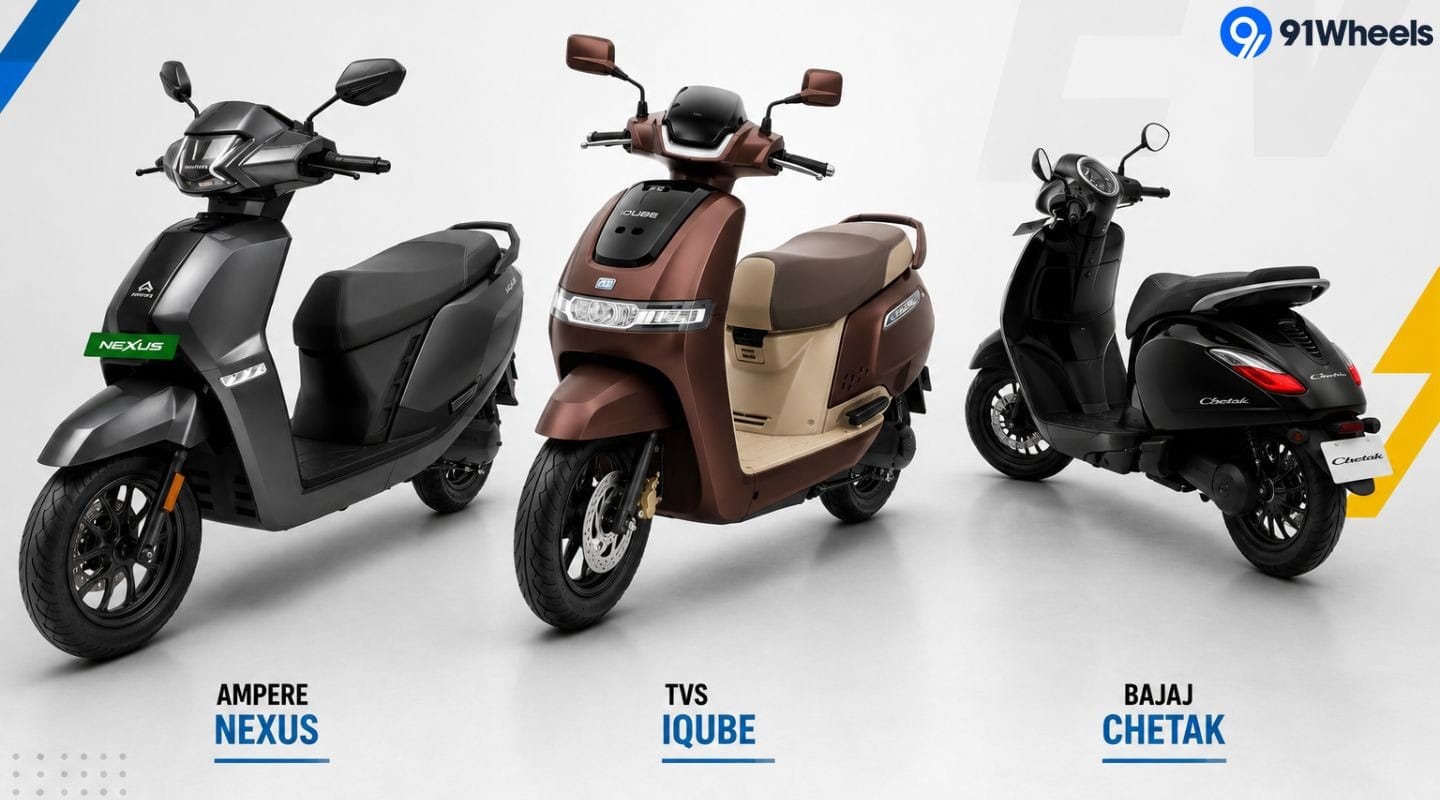
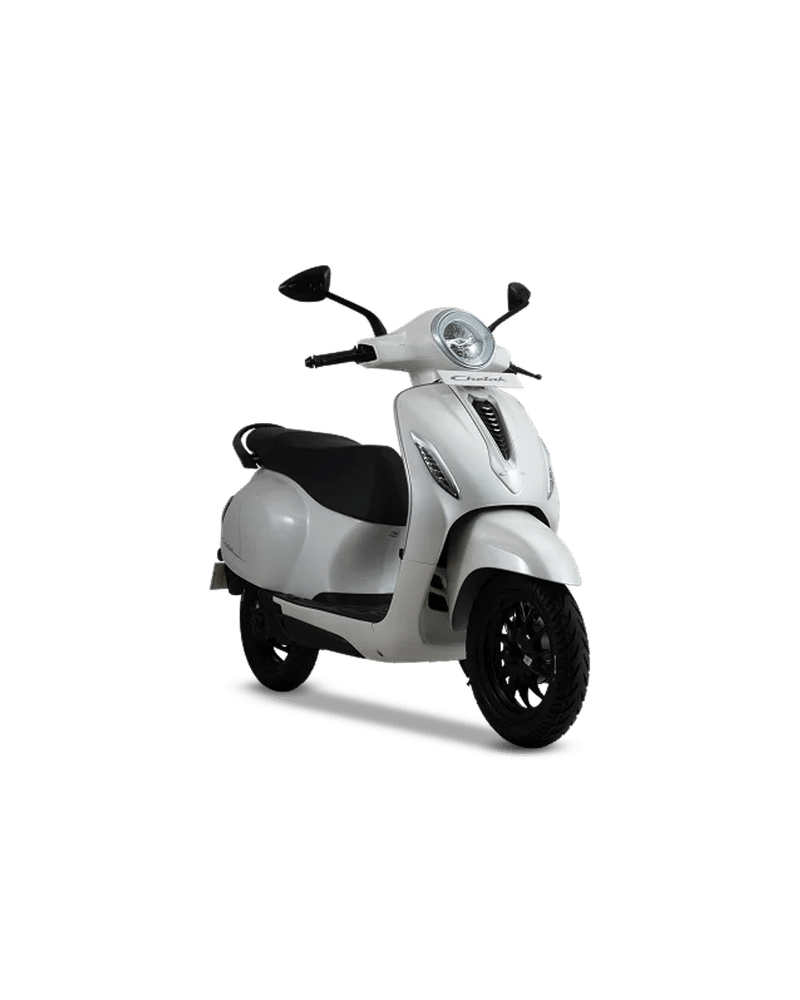
The Bajaj Chetak leans hardest into nostalgia. It uses an all metal body panel construction, a rarity in this class where most rivals use plastic, and this gives it a noticeably solid, premium feel along with the classic rounded silhouette the Chetak name is known for.
The TVS iQube goes the simple design direction with a conventional scooter shape, a large touchscreen dashboard on the ST variant, and a broad seat aimed at everyday practicality rather than retro charm.
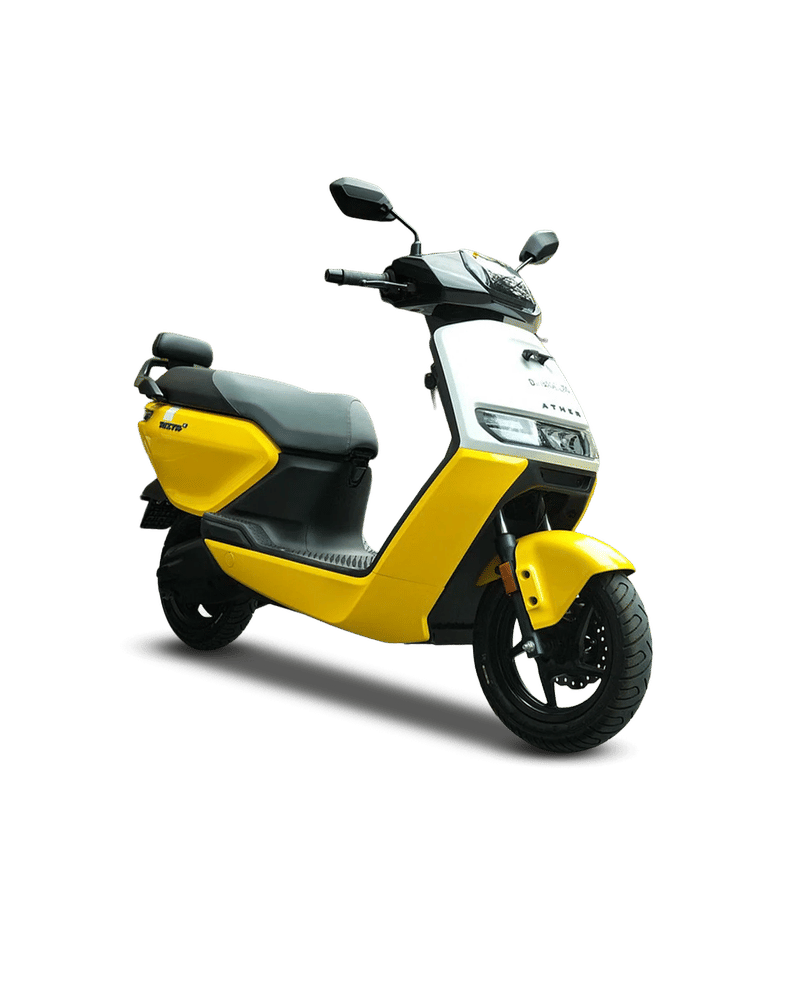
The Ampere Nexus sits in between the two, with clean, sporty styling, good fit and finish, a spacious underseat storage area, and a large front cubby hole makes it practical and best choice for everyday usage.
Looks are subjective, and could vary from the buyer's perspective. However, among these, all three look mature enough for daily use, and the choice here really comes down to your usage whether you want retro metal, modern tech, or a simple sporty middle ground.
Performance & Handling
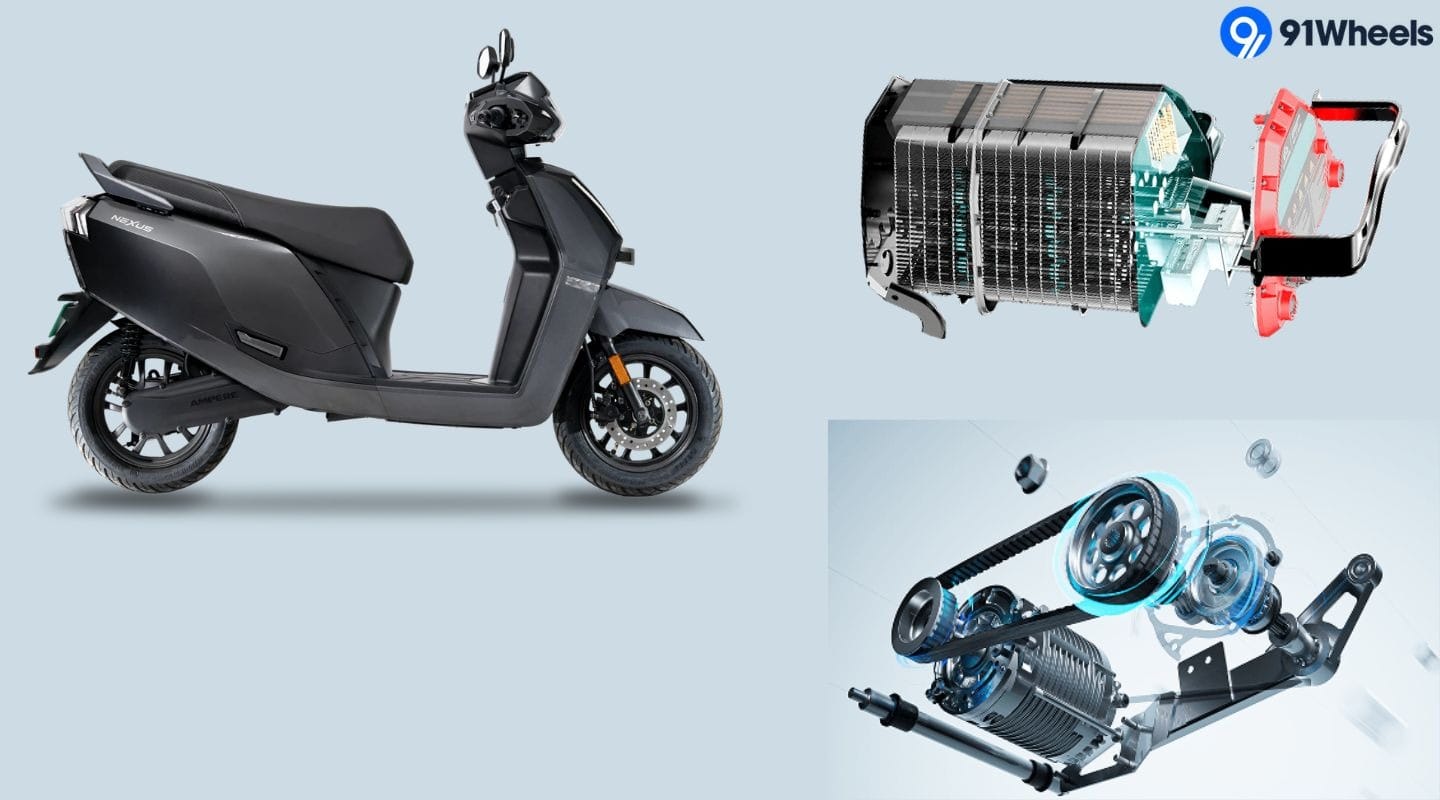
The Chetak's BLDC motor delivers a power of 3.0 kW and a top speed of roughly 70 kmph depending on the variant, and reviewers consistently note it as heavier and less quick off the line than rivals, though its build quality and ride comfort are widely praised.
The iQube offers a broader spread across its six variants, with power outputs from roughly 3 kW to 4.4 kW and a top speed around 82 kmph, plus a Q-park assist feature that lets you reverse or nudge the scooter forward at walking pace without engaging the motor properly, handy in tight parking.
The Nexus is the quickest, with a claimed top speed of 93 kmph and a powerful 5kW motor, making it feel peppier in daily traffic. It also has ride modes as well; Power, City, Eco, Limp House, and Reverse.
Range & Battery
Real world range depends heavily on riding mode, load, and battery variant chosen, so treat these as indicative rather than absolute.
Scooter | Battery Capacity | Claimed/ARAI Range | Charging Time |
|---|---|---|---|
Ampere Nexus | 3.0 kWh | 136 km | 2.55 hrs (0-80%) |
TVS iQube | 3.1 kWh | 123 km | 4.03 hrs (0-80%) |
Bajaj Chetak | 3.0 kWh | 131 Km | 2 hrs 55 min |
The Ampere Nexus stands out where range matters most. Its 136 km claimed figure beats both the Bajaj Chetak's 131 km and the TVS iQube's 123 km by a clear margin, giving riders more confidence on longer commutes without hunting for a charging point. Backed by a 3 kWh battery and a competitive 0-80% charge time of under 3 hours, the Nexus makes a strong case as the most range-friendly option in this comparison.
Warranty
Bajaj offers a standard 3 year or 50,000 km battery warranty on the Chetak. TVS covers the iQube's battery, motor, controller, and charger for 3 years or 50,000 km. Ampere goes furthest of the three, backing the Nexus with a 5 year or 75,000 km battery warranty, the longest standard cover in this segment and a genuine edge for buyers thinking long term about battery costs. Ampere's dealership network is growing rapidly compared to the more established brands, and on warranty terms, it's worth buying Nexus and it sets the benchmark here.
Features
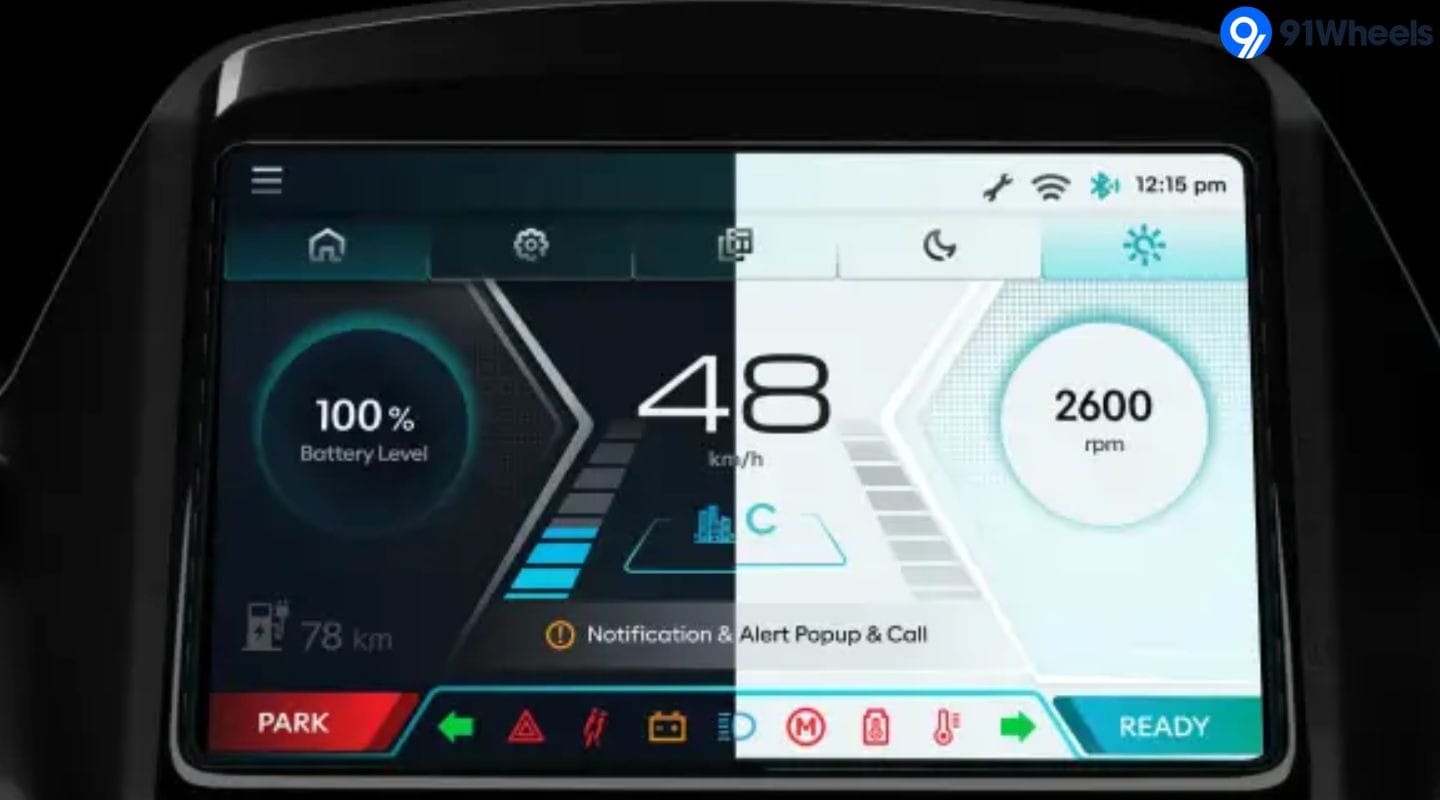
Beyond design and performance, it's the everyday features that decide how a scooter fits into your routine, and here each of the three brings its own flavour to the table.
The Bajaj Chetak keeps things fairly minimal but functional, with a digital instrument cluster, Bluetooth connectivity with music playback, a USB charging port, and full LED lighting across the headlamp, tail lamp, and indicators. Other notable features are hill hold assist and the IP67-rated battery adds peace of mind against water and dust.
The TVS iQube leans hardest into connectivity, powered by its SmartXonnect platform that unlocks over 118 connected features, including voice assist with Alexa skillset, geo-fencing, crash and anti-theft alerts, and a distance-to-empty indicator. It also gets incoming call and SMS alerts on the dashboard, regenerative braking, and OTA updates, making it feel the most feature-dense of the three on paper.
The Ampere Nexus rounds things off with its own connected ecosystem, Nex.IO, paired with the Ampere Connect app for tracking battery health and ride stats. Its standout is Map Mirroring technology, offering full-screen turn-by-turn navigation on the 7-inch TFT display with ETA and distance-to-next-turn, alongside call notifications, integrated music control, and Ampere Care Connectivity for safety alerts and service reminders.
All said, each scooter brings something genuinely useful to the table. But if we're being honest, the Nexus quietly sneaks ahead here too, map mirroring, music on the move, and a companion app that actually feels built for someone who rides to work every day, not just someone who wants a fancy dashboard to look at.
Price
Scooter | Price Range (Ex-showroom) |
|---|---|
Ampere Nexus | Rs. 1.30 lakh |
TVS iQube | Rs. 1.24 lakh |
Bajaj Chetak | Rs. 1.14 lakh |
Bajaj Chetak leads on affordability at Rs. 1.14 lakh, giving budget-conscious buyers an easy entry point. The TVS iQube sits mid-pack at Rs. 1.24 lakh, while the Ampere Nexus tops the trio at Rs. 1.30 lakh, justified by its superior range and warranty.
Closing Note
Choosing between these three ultimately boils down to what you value most. Pick the Chetak for old-school metal build and comfort at the lowest price, the iQube for a tech-forward, practical package with a proven service network, or the Nexus if range, performance, and warranty coverage matter more than the extra few thousand rupees in a complete package. Whichever you choose, all three prove electric scooters in India have finally grown up; no compromises, just choices.
Do you like this article?
Comments
No comments yet. Be the first to comment!