Hub Motor vs Mid-Drive Motor in Electric Two-Wheelers: A Detailed Guide

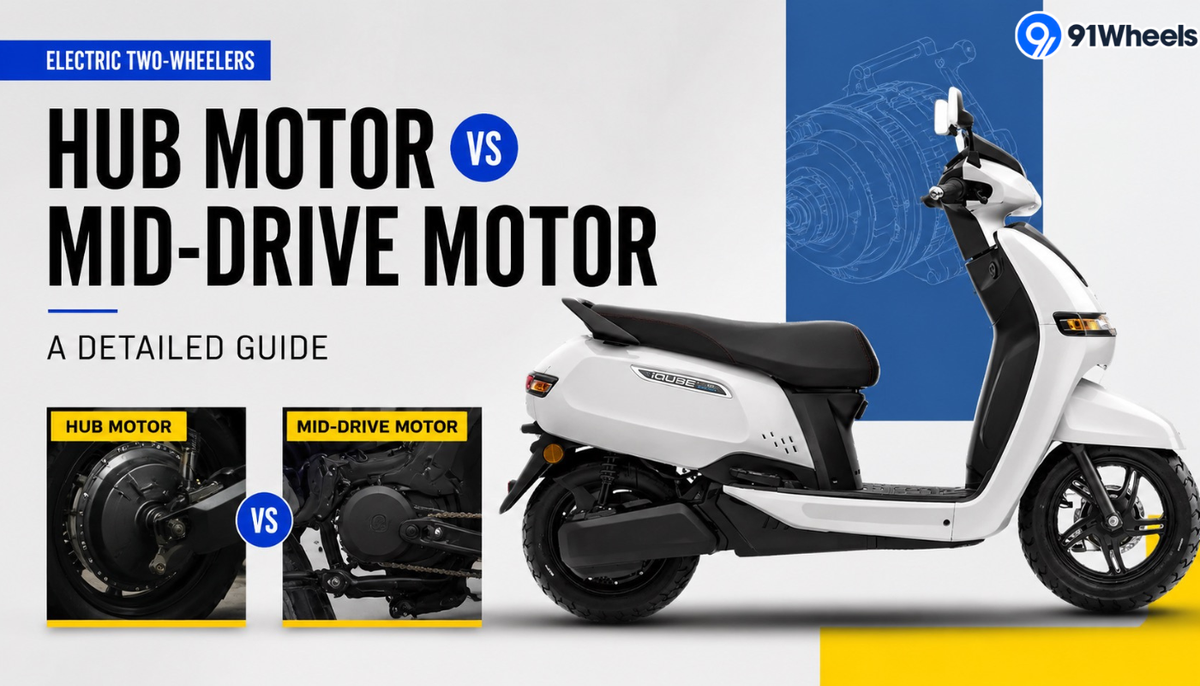
Walk into any electric scooter or e-bike showroom today, and you'll hear two terms thrown around constantly: Sir, this one gets a hub motor, and this one comes with a mid-drive motor. But as a customer who's just there to buy a practical two-wheeler that meets his/her daily requirements, understanding such terms gets a bit difficult. Salespeople rarely explain the actual difference beyond vague claims about "better performance," and you end up choosing based on price or brand rather than understanding what's actually driving their vehicle. Yet this single component decision affects how the vehicle rides, how it climbs, how it feels over years of use, and even where the weight sits on the frame. This guide breaks down what separates the two, without the jargon-heavy explanations that leave most riders more confused than when they started.
Read more: When Should You Replace Tyres: A Detailed Guide
Where the Motor Actually Sits Changes Everything
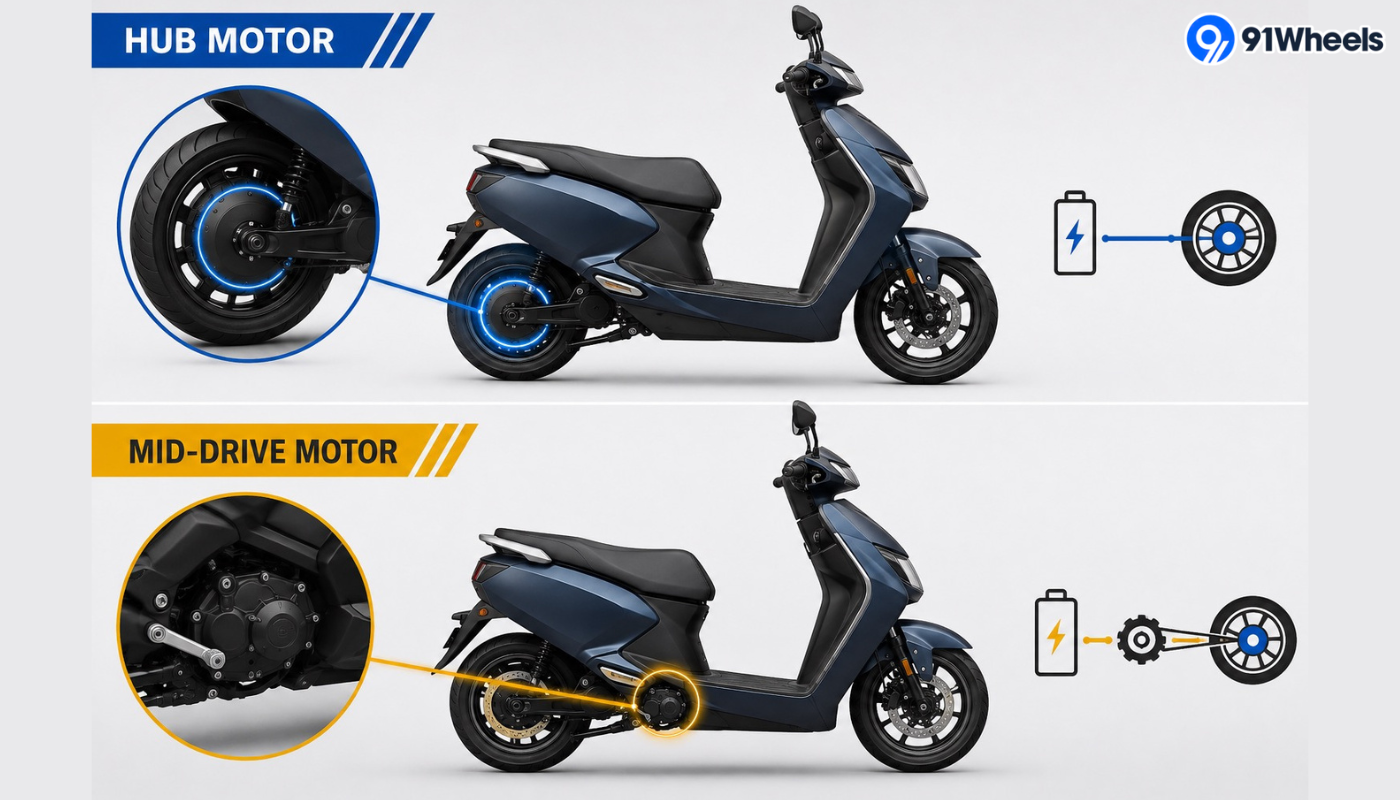
The names themselves describe the placement, and that placement is the root of every other difference between the two systems.
A hub motor is built directly into the wheel itself, usually the rear wheel, though front-hub setups exist too. The motor housing effectively replaces the hub, and power goes straight from the motor to the wheel with no chain, belt, or gear system carrying that final drive. It's a self-contained unit.
A mid-drive motor sits at the centre of the vehicle, roughly where a pedal crank or engine would sit on a conventional two-wheeler. Instead of driving the wheel directly, it sends power through the existing chain or belt drivetrain, the same path a conventional geared vehicle would use to get power to the rear wheel.
That single positional difference cascades into nearly everything else worth knowing.
Power Delivery and Real-World Riding Feel
Hub motors deliver power in a fairly direct, linear way. Because there's no intermediary drivetrain, there's very little mechanical loss between the motor spinning and the wheel turning. This tends to produce a smooth, predictable, almost effortless feeling at moderate speeds - pleasant for city commuting and stop-start traffic, which describes the majority of urban riding in India.
Mid-drive motors, by contrast, work through the drivetrain, which means they benefit from mechanical leverage the same way a geared vehicle does. This allows the motor itself to be smaller and lighter while still producing strong torque, because the gearing does part of the work. The result is often better performance on inclines and steeper gradients, since the system can effectively "shift" torque delivery rather than relying purely on raw motor output.
If most of your riding happens on flat city roads, this difference may barely register. If you regularly deal with steep flyovers, hilly terrain, or need consistent torque under load carrying a passenger, cargo, or riding two-up regularly, the mid-drive's mechanical advantage becomes noticeably more relevant.
Weight Distribution and Handling
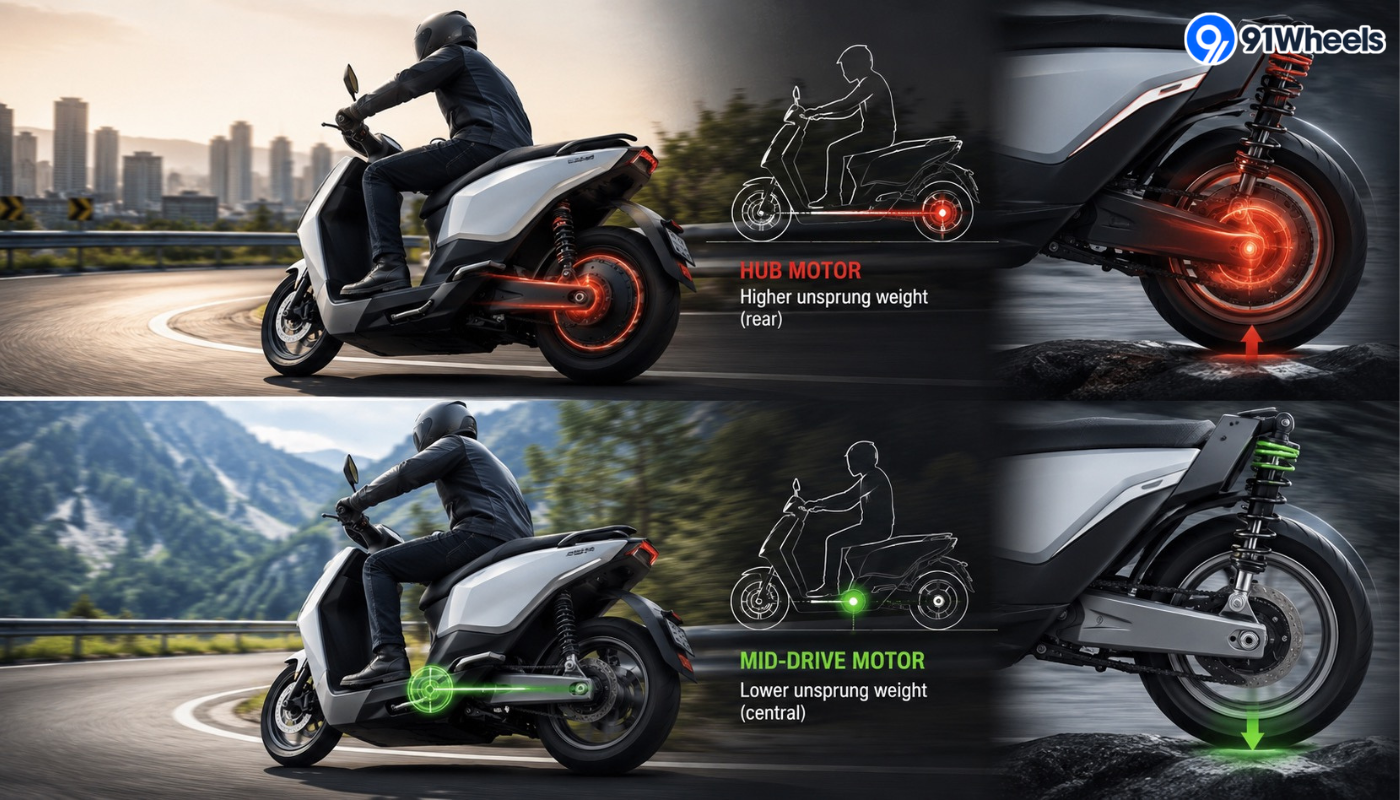
This is one of the most underrated differences between the two layouts. A hub motor sits at the end of the vehicle, out at the wheel, which means the rotating mass is positioned away from the centre of gravity. This is known as unsprung weight (mass that isn't supported by the suspension), and higher unsprung weight can make the suspension work harder to keep the wheel in contact with the road over bumps and uneven surfaces.
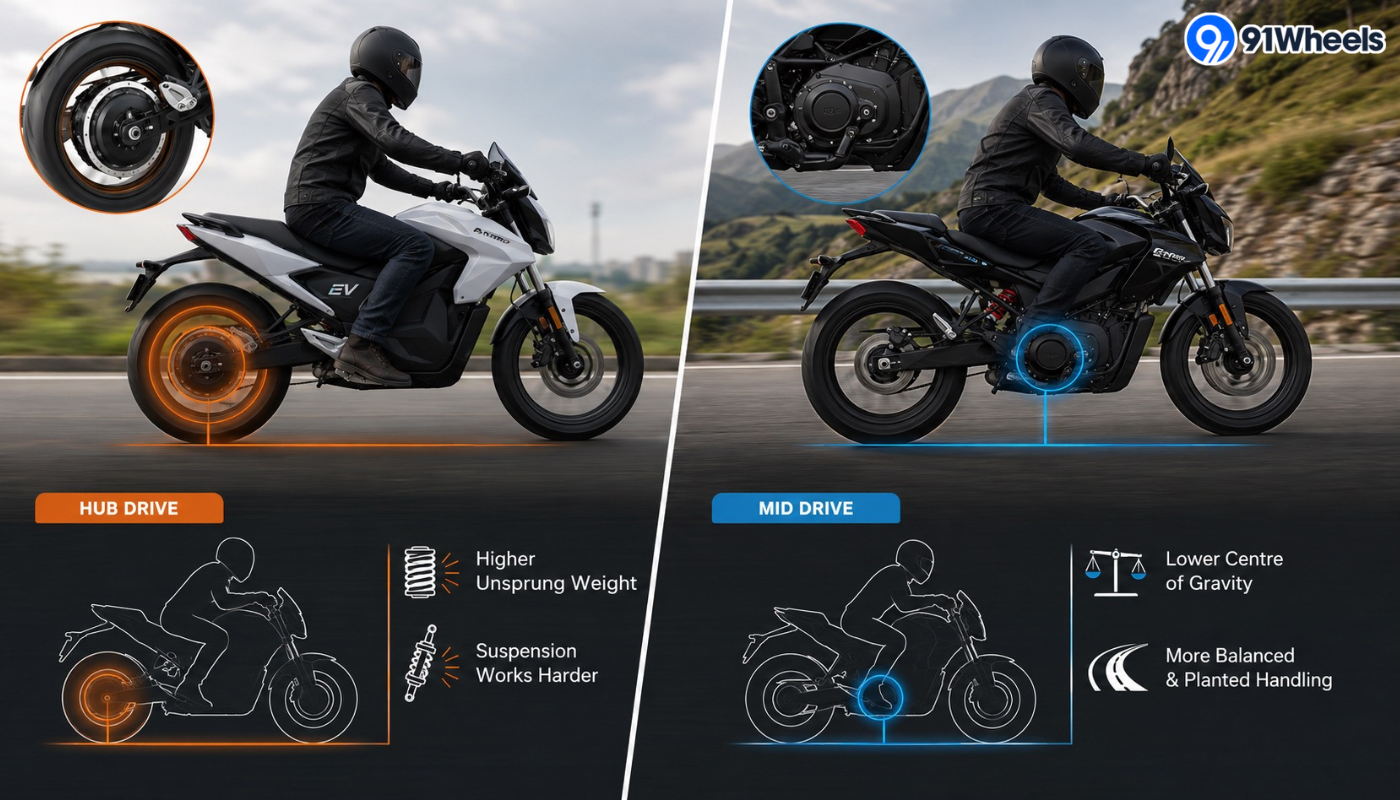
A mid-drive motor sits centrally, low and close to the vehicle's centre of gravity. This tends to produce more balanced, planted handling, particularly noticeable when cornering or riding on rougher roads. Riders who've spent time on both layouts back-to-back often describe mid-drive vehicles as feeling more "connected" to the road, while hub-drive vehicles can feel slightly heavier at the rear when manoeuvring at low speeds, like during tight U-turns or parking.
Maintenance and Long-Term Reliability
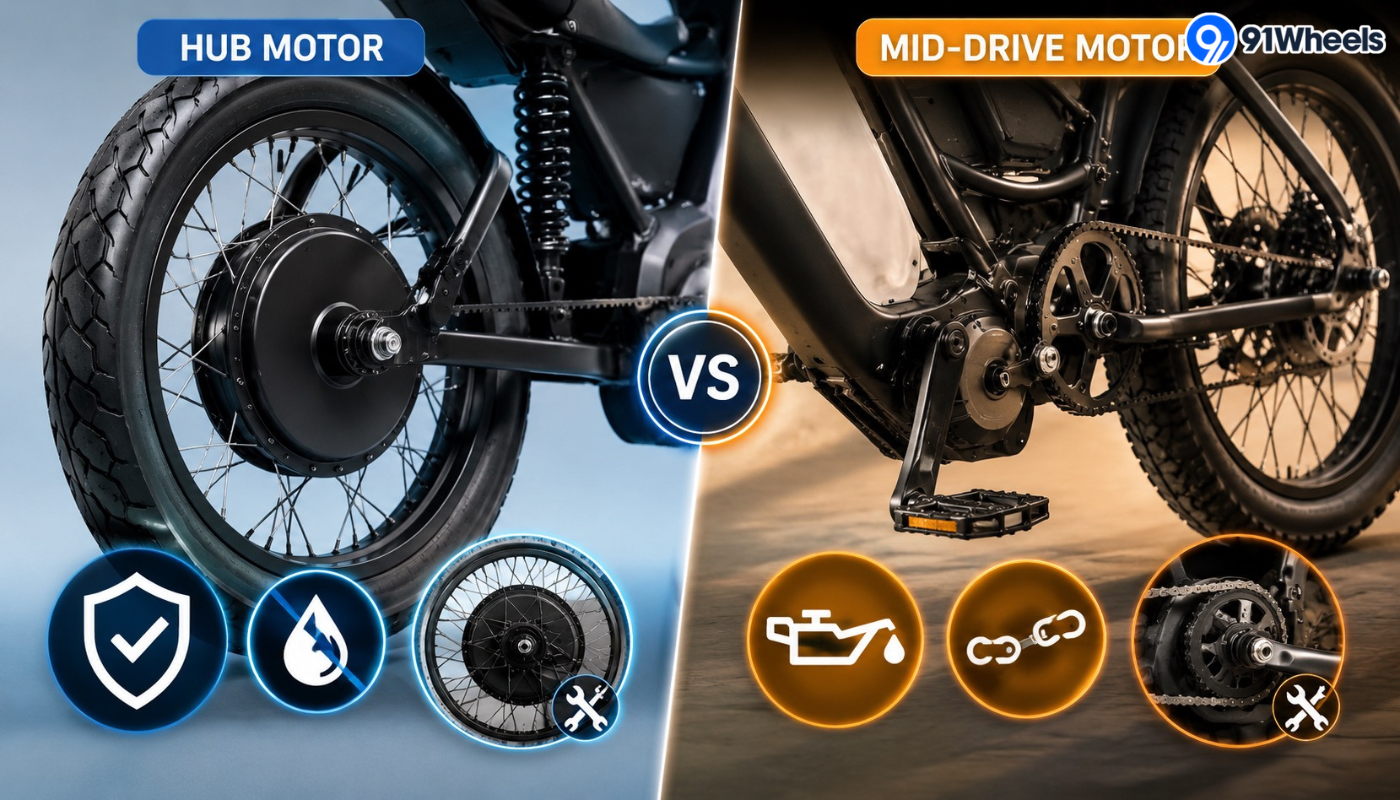
Hub motors have a genuine advantage in mechanical simplicity. With no chain or belt to maintain, there's less to wear out, lubricate, or replace over the vehicle's life. This appeals strongly to buyers who want a low-maintenance ownership experience and don't want to think about drivetrain servicing at all. The trade-off is that if the motor itself develops an internal fault, repairing it usually means dealing with the wheel as a complete unit, which can be a more involved and costlier job than servicing an external motor.
Mid-drive motors keep the existing chain or belt drivetrain, which means that component still needs periodic lubrication, tensioning, and eventual replacement, familiar maintenance if you've owned any geared two-wheeler before. In exchange, if the drivetrain wears out, it's a comparatively simple and inexpensive part to replace, and the motor itself is more accessible for servicing since it isn't sealed inside a wheel.
Regenerative Braking Differences
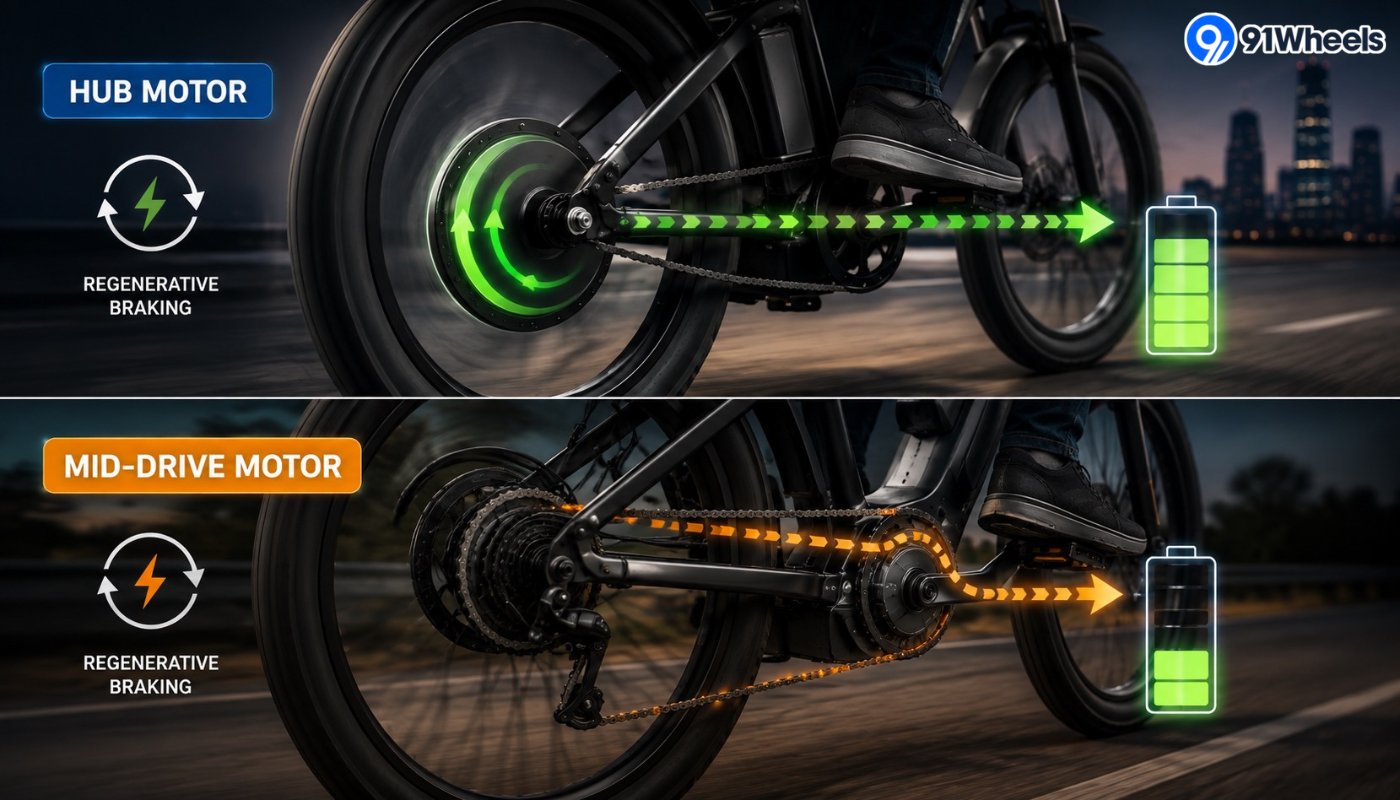
Both layouts can support regenerative braking (the system that recovers some energy back into the battery while slowing down), but hub motors tend to do this more efficiently and predictably, since the motor is directly coupled to the wheel with nothing in between to introduce slack or mechanical loss. Mid-drive systems can offer regen too, but the drivetrain in the loop can make the effect feel slightly less immediate.
For riders who value squeezing extra range out of daily commutes through regenerative braking, this is a small but real point in the hub motor's favour.
Cost and Availability in the Indian Market
Hub motors remain considerably more common in mass-market electric scooters sold in India, largely because they're simpler and cheaper to manufacture and integrate. If you're shopping in the mainstream commuter segment, chances are the vehicle in front of you uses a hub motor by default.
Mid-drive systems tend to show up more often in performance-oriented or premium electric two-wheelers, where the additional manufacturing complexity is justified by the handling and torque benefits they bring. If you're buying primarily on budget, you'll naturally gravitate toward hub-driven options; if performance and handling matter more than price, it's worth actively seeking out a mid-drive model rather than assuming your local showroom carries one.
Read more: Bore vs Stroke Explained: How Engine Design Changes Performance
Which One Should You Actually Choose?
There's no universally correct answer here; it depends entirely on how and where you ride. If your daily use is flat-road city commuting, minimal maintenance is a priority, and you want a straightforward, low-fuss vehicle, a hub motor will serve you perfectly well and is very unlikely to disappoint. If you frequently tackle inclines, carry extra load, care about cornering feel, or simply want the more mechanically refined riding experience, a mid-drive motor is worth the extra research and often the extra cost to track down.
Before making a decision, it's worth taking a short test ride on both types if a dealership offers it. Specification sheets can tell you torque figures and power output, but they can't tell you how a vehicle feels underneath you on your actual daily route, and that's ultimately the difference that matters most.
Do you like this article?
Comments
No comments yet. Be the first to comment!