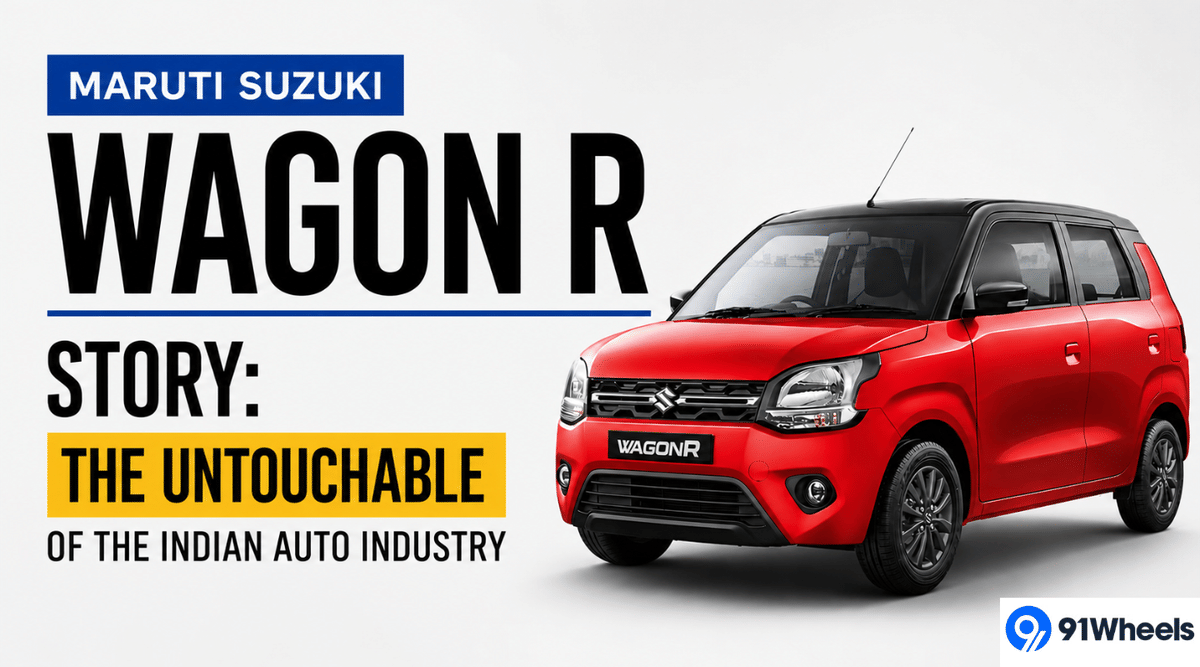
The Maruti Suzuki WagonR is, on paper, an unremarkable car - a bare-bones feature list, engines under 1200cc, and a footprint smaller than most hatchbacks on sale today. And yet, since its launch in 1999, it has seen every walk of Indian life: the first car, the family car, the second car, the daily runabout. Twenty-six years on, it still sits in the top-10 best-selling cars in India, holding its own against a market that has moved on to bigger, flashier, more powerful machines. So what makes the WagonR the untouchable of the auto industry - the one car that refuses to lose its place, no matter what life stage India is in. And why does it show no signs of stopping? Here’s the success story of this legend of a machine.
A Brief History of Maruti Suzuki WagonR
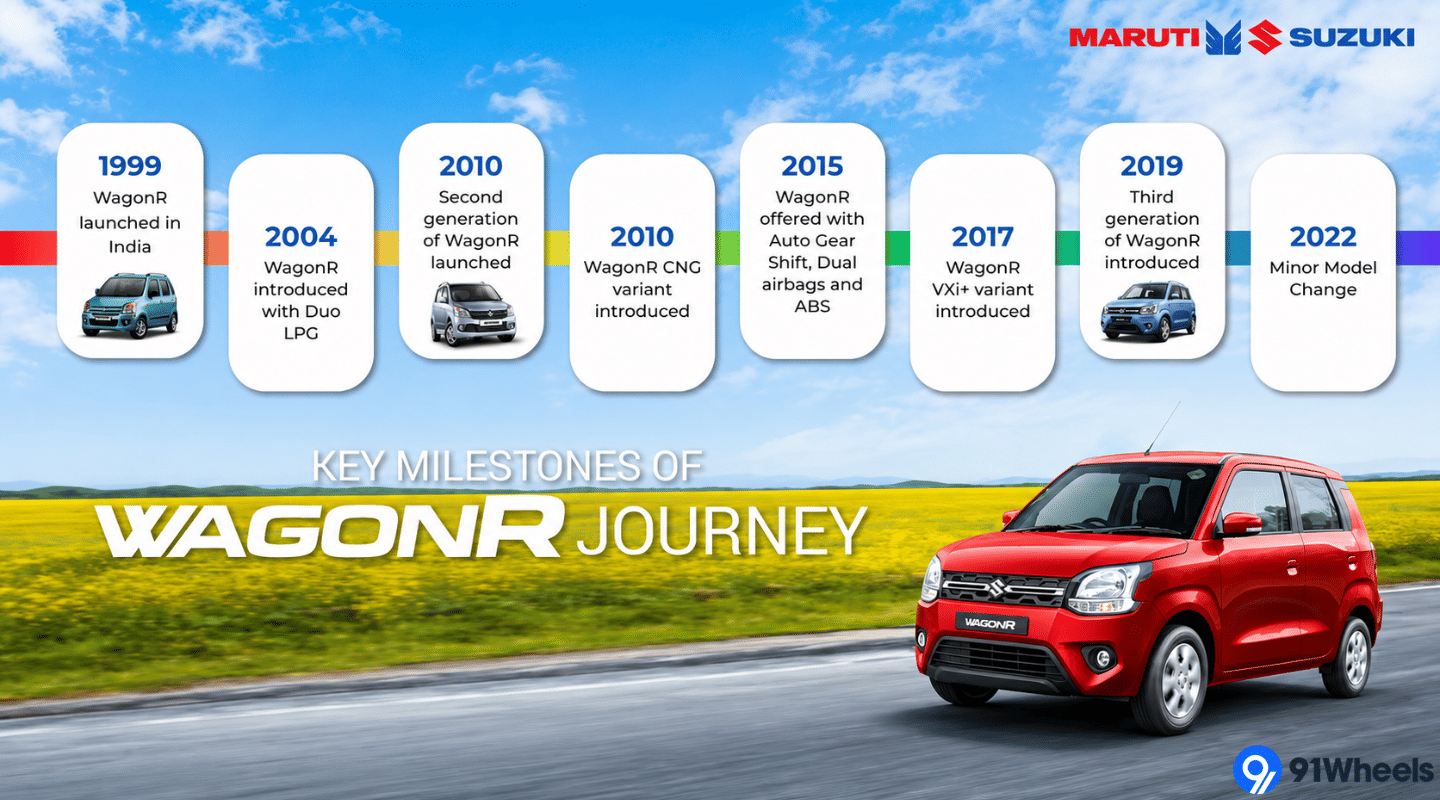
The WagonR was Maruti Suzuki’s seventh car, launched in 1999 as a direct rival to the Hyundai Santro - the car that marked Hyundai’s beginning in India. This car instantly stood apart with its tall-boy design. People of above-average height found this hatchback more suitable than most cars on sale at the time - and the same held true for the Santro. Both vehicles launched around the same time, were embraced wholeheartedly by Indian buyers, and went on to become go-to family cars over the years.
The first generation stayed on sale for a whole decade. Then came the second generation in 2010 - famously nicknamed the “blue-eyed boy” for the blue styling element in its headlights. The third generation arrived in 2019, built on the HEARTECT platform shared with the Ignis, Celerio, Swift, and Baleno. From this point on, interior space grew, and the car received a few updates in 2022 - this generation remains on sale today. Maruti has also launched a flex-fuel version of the WagonR, priced at Rs 7.24 lakh, making it the brand's first car to offer E85 ethanol compatibility.
Lastly, the WagonR's achievement of crossing the 35 lakh production milestone in India is a testament to its enduring popularity and relevance. Even after 26 years on sale, the hatchback continues to resonate with Indian buyers, making it one of the most successful and trusted passenger vehicles in the country's automotive history.
The Secret Behind the Wagon R's Unstoppable Sales Success
Height Matters
Built on the famous Kei car concept, its biggest strength lies in the boxy shape. Despite being just 3,655 mm in length, the hatchback doesn't feel small from the inside - and headroom is the biggest surprise. Even someone with 6'2" height doesn't feel cramped sitting inside.
In the '90s, some auto reviewers attributed part of its early success to this headroom advantage - it was one of the few cars in its segment where tall buyers, including those wearing turbans, didn't have to duck or adjust their posture to get in. That single design choice ranks among the top reasons people still choose it today.
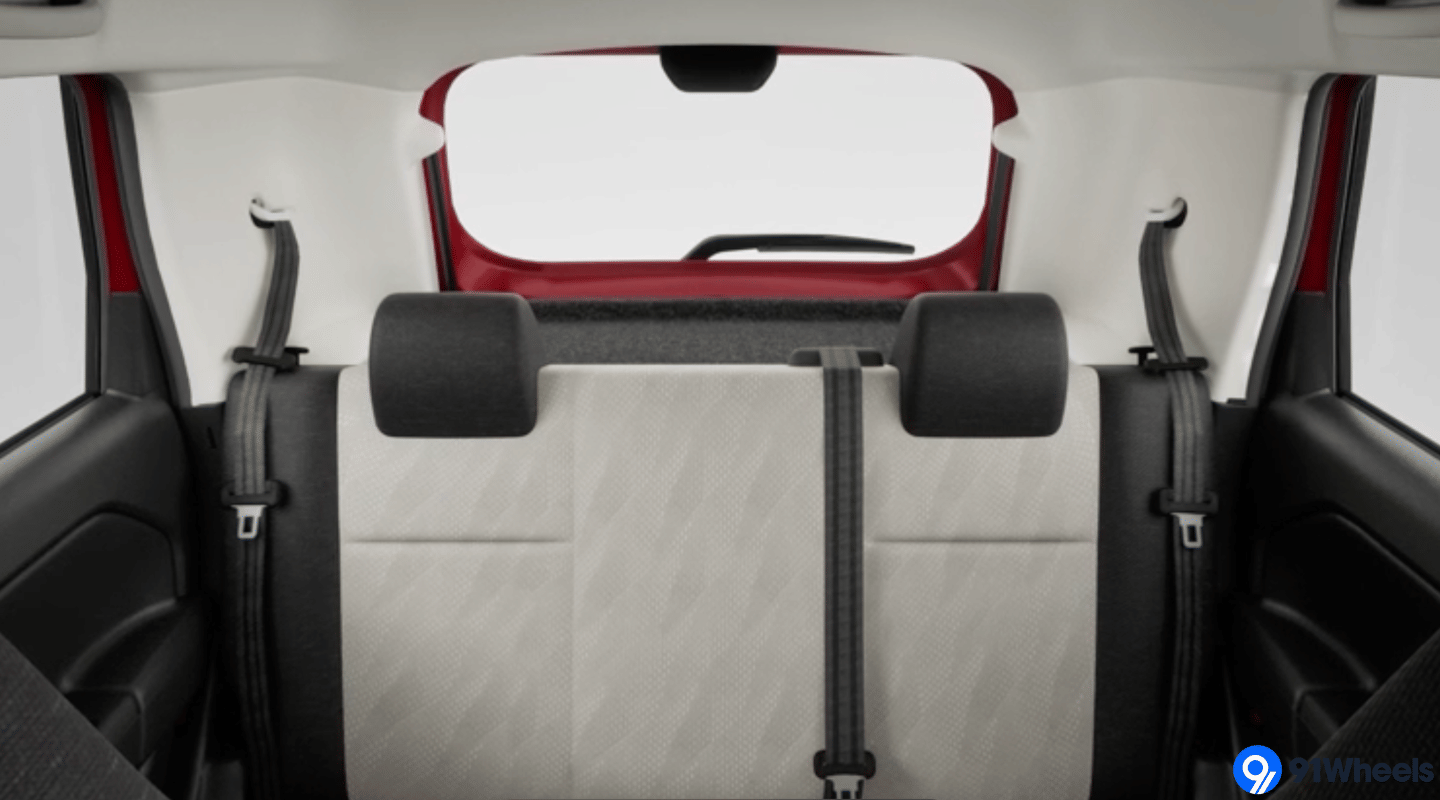
This is also the core reason it became a no-brainer for taxi operators and budget-conscious buyers who wanted maximum space without spending more. Honda's philosophy - "Man Maximum, Machine Minimum” - sums up exactly this idea: more room for people, less space wasted on the machine. It is interesting that Suzuki seems to have nailed this principle best with this car.
Maruti Suzuki Dimensions:
Length | 3,655 mm |
|---|---|
Width | 1,620 mm |
Height | 1,675 mm |
Wheelbase | 2,435 mm |
Chiller AC
Here’s a praise that’s known across the nation: the WagonR’s AC is a “chiller.” I’ve been hearing this term since I was a child, and even people who know nothing about cars are aware of this fact. These kinds of traits aren’t manufactured by marketing teams - they spread purely through word of mouth. In a tropical country like ours, a great AC isn't a luxury, it's essential, and Maruti delivers this even in the lower variants - which is commendable. The compressor itself isn't some high-tech unit, just a simple one, but it does wonders. Search the term ”WagonR AC Performance" on YouTube and you'll find dozens of videos of people reviewing it, all echoing the same verdict.
Superb Fuel Efficiency
The WagonR is available with three powertrain choices. The first is a 1.0L 3-cylinder petrol, paired with either a 5-speed manual or a 5-speed AMT. The second is a CNG variant of the same engine, available only with the manual gearbox. The third is a 1.2L 4-cylinder naturally aspirated petrol, also offered with manual or AMT options.
Pick any of the petrol engines, and you’ll comfortably get 22-plus km/l on a regular basis. Go with CNG, and that number jumps to 35 km/kg. And here's the thing - 95% of buyers in this segment have just one priority: mileage. This hatchback delivers exactly that.
I’ll mention the claimed figures further down, but in real-world conditions, Maruti owners often extract even more on a daily basis. This is exactly why people continue to choose this boxy little car over sleeker, more modern designs - it won't save them on looks, but it will save them at the pump. Most owners recover the price difference within three to four years, depending on usage.
Engine options | 1.0L MT | 1.0L AMT | CNG | 1.2L MT | 1.2L AMT |
|---|---|---|---|---|---|
Claimed Mileage | 24.35 km/l | 25.19 km/l | 33.47 km/kg | 23.56 km/l | 24.43 km/l |
The Maruti Suzuki Factor
This is the mother of all reasons for its success: it’s a Maruti Suzuki. That single fact brings the widest sales network in the country, easy access to affordable spare parts, incredible resale value, and an overall low cost of ownership. Yes, it isn't the most feature-loaded car, nor does it offer the cushiest ride - but for those qualities, other manufacturers exist. The customer base for this hatchback is different. They want practicality and maximum value at an easy-on-the-pocket price. And looking at the sales numbers, we can all agree - this is exactly where the masses are.
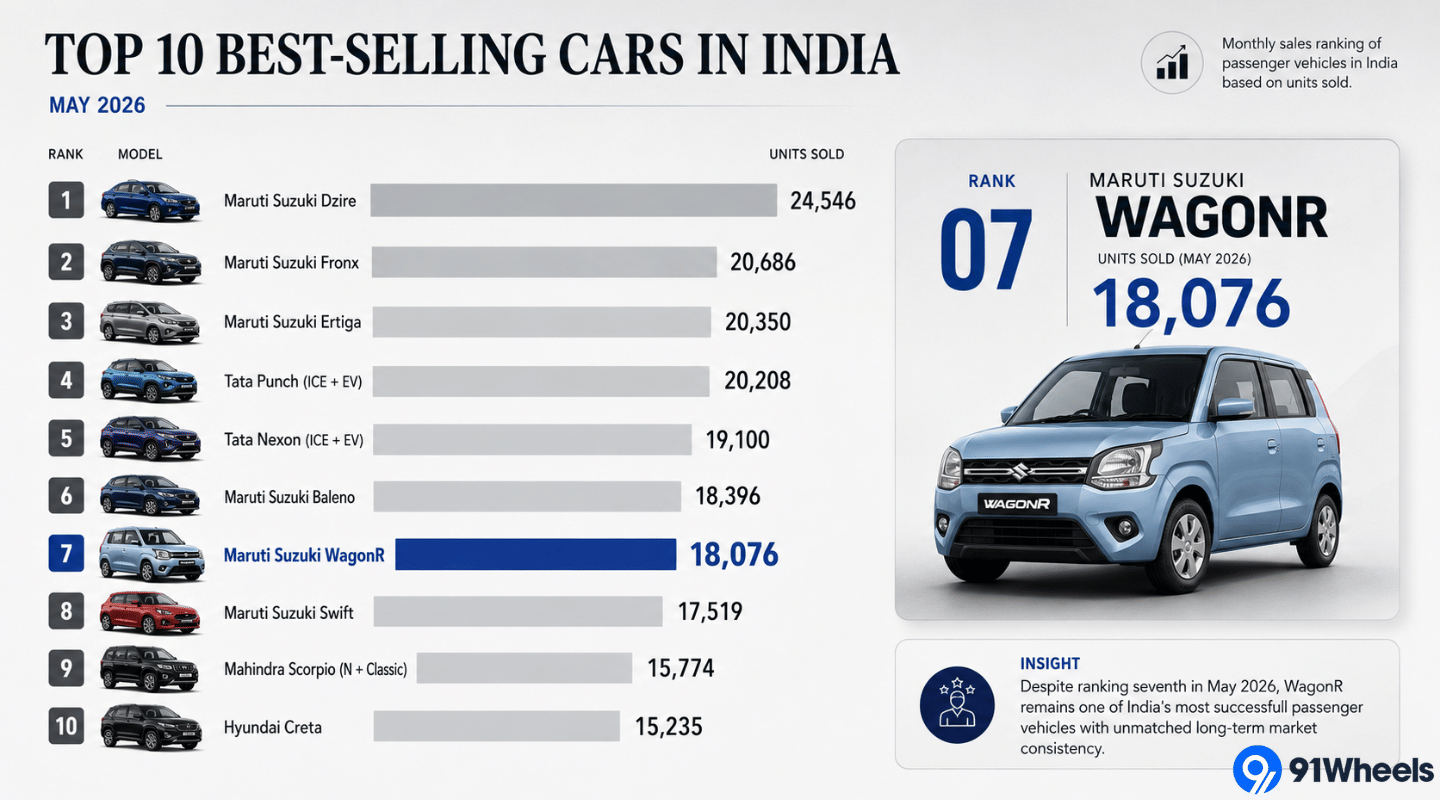
Credit also goes to the brand itself, which has never let this car slide on sales, continuously updating it and keeping it looking modern. Recently, it was updated with 6 airbags as standard - a strong safety suite that gives buyers real assurance about its safety credentials. But at this point, it's gone beyond even Maruti's control. People have made it their own, and now not even the brand can touch or experiment with the formula - the sales charts simply won't allow it. So it's only fair to call it what it truly is: the People’s Car.
Why Rivals Couldn’t Touch It?
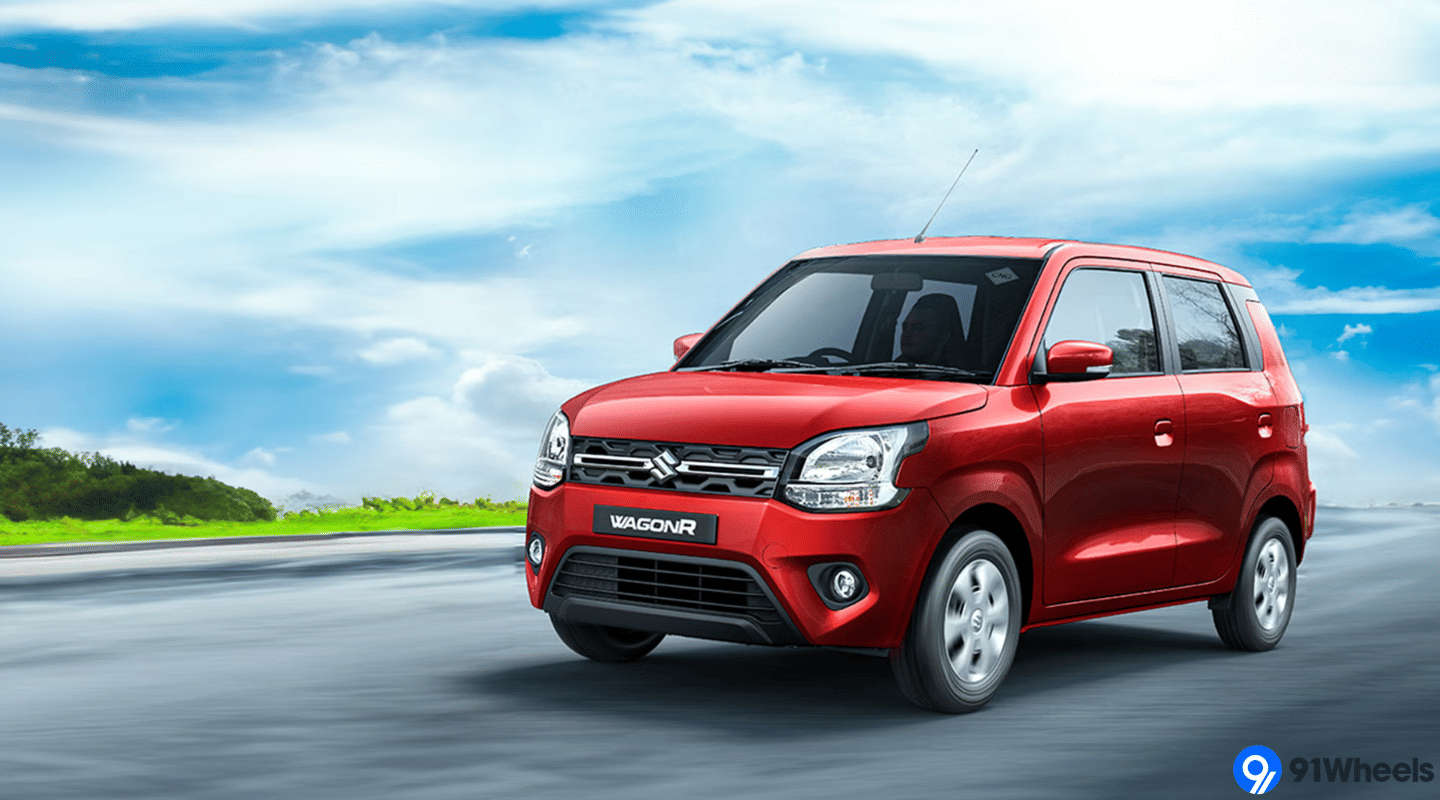
Remember the Hyundai Santro, the car this hatchback was built to fight head-to-head? It didn’t just lose that battle - it disappeared from the market twice. The original Santro was rebadged as the Santro Zing in 2015, then relaunched as an all-new Santro in 2018. Neither version could recapture the magic of the original or meet buyer expectations. Hyundai finally pulled the plug in 2022. The very rival this car was created to fight ended up being defeated by it.
Then came the Hyundai i10, launched in 2007, which held the No. 1 spot in its segment for nearly a decade before the i20 Elite arrived and pulled the spotlight away. It still exists today as the Grand i10 Nios, generating decent numbers for the brand - but nowhere close to what this hatchback manages month after month.
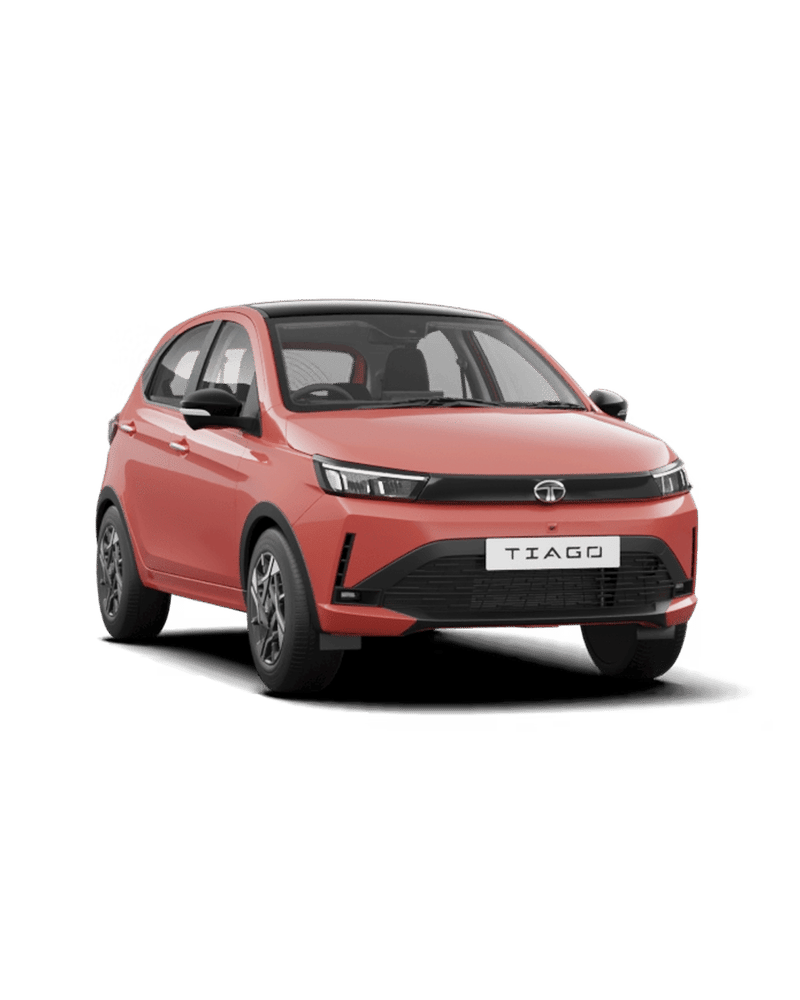
Tata's Tiago deserves real credit here. It's a genuinely impressive small car - solidly built, loaded with features, available in petrol, EV, and CNG, and styled to match what a younger buyer wants. It has won over plenty of first-time buyers. And yet, its sales figures remain a fraction of what this 26-year-old hatchback continues to pull in.
Even Maruti's own lineup, the Alto K10, Celerio, and S-Presso - all built on similar value propositions - can't come close to matching these numbers. So what's the real reason a car this basic keeps beating rivals that are newer, better equipped, and in some cases, better built?
The answer lies in something no spec sheet can capture: becoming the default choice. While rivals tried to win buyers with more power, sharper styling, and longer feature lists, the WagonR succeeded by offering familiarity and peace of mind. Decades of trust, a vast service network, low ownership costs, and strong word-of-mouth recommendations made it the automatic answer to the question, "Which car should I buy?" for millions of Indian families. And once a vehicle becomes the default choice, even better-equipped rivals find it difficult to dislodge.
Months | Maruti WagonR | Hyundai Grand i10 NIOS | Tata Tiago | Maruti Alto K10 | Maruti Celerio |
|---|---|---|---|---|---|
May 2026 | 18,076 | 2,920 | 4,178 | 9,887 | 3,018 |
April 2026 | 18,648 | 4,149 | 5,488 | 10,856 | 2,296 |
March 2026 | 17,025 | 5,032 | 7,119 | 11,515 | 1,353 |
February 2026 | 14,885 | 5,589 | 7,040 | 9,787 | 862 |
January 2026 | 15,118 | 7,710 | 8,349 | 12,314 | 1,501 |
December 2025 | 14,575 | 4,010 | 5,826 | 10,829 | 2,272 |
Total | 98,327 | 29,410 | 38,000 | 65,188 | 11,302 |
Conclusion
Maruti Suzuki WagonR sales unit:
Here's the most telling part: a car with no sunroof, no turbo engine, and no head-turning design has sold nearly a lakh units in just six months. That's not just a statement about the brand - it is a statement about India and what truly matters to its car buyers.
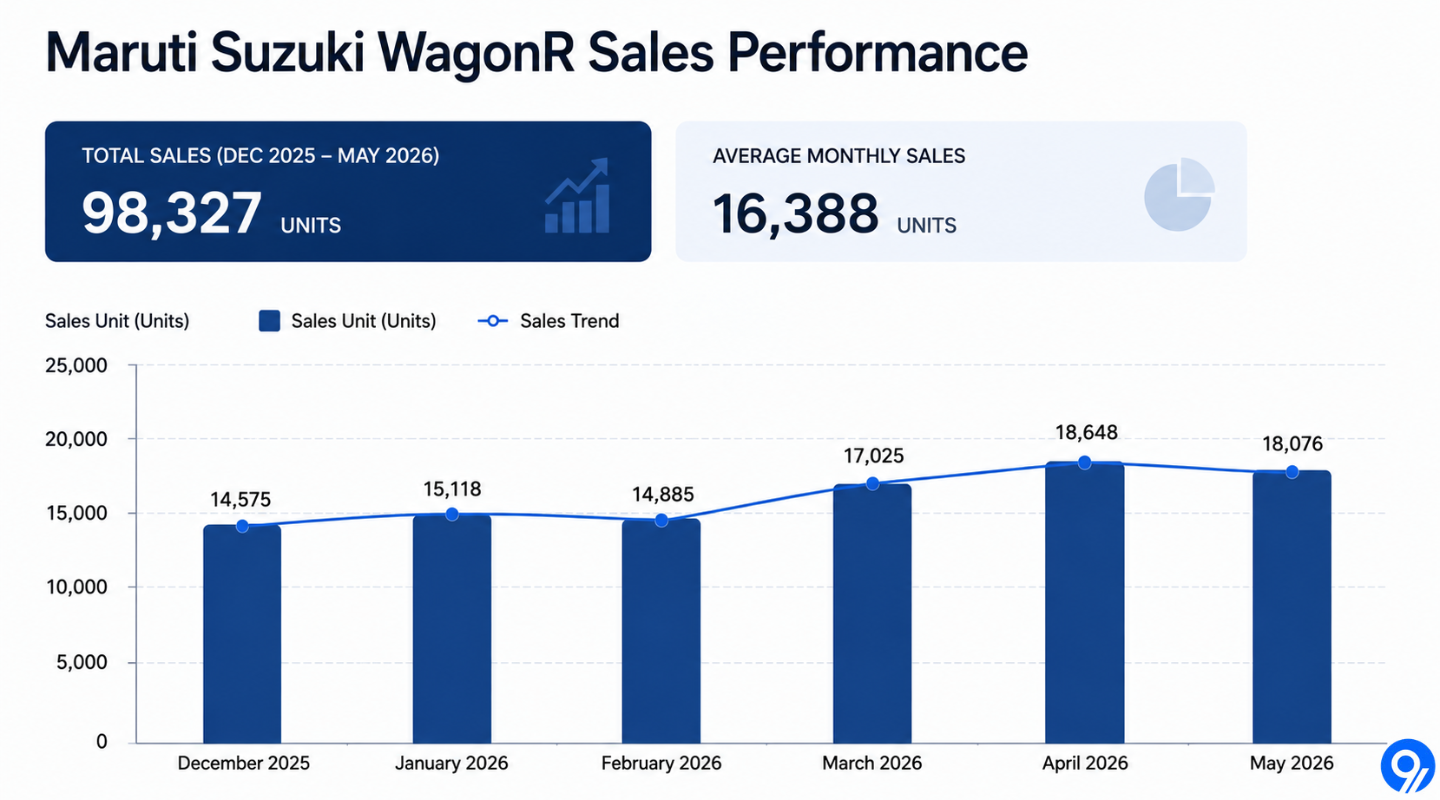
Here's the most telling part: a car with no sunroof, no turbo engine, and no head-turning design still dominated the market. And the proof isn't just in the WagonR's sales - it's in what happened to its closest cousin. The Alto K10, cut from the same cloth, was once a top-seller in its own right. Today, it doesn't even feature in the top 15 best-selling cars in the country. Two products built on the same philosophy - one has faded, the other keeps finding new peaks.
That contrast says everything. It isn't enough to be small, affordable, and practical - you have to keep evolving while staying true to what made you relevant in the first place. That's exactly what this hatchback has done for 26 years, generation after generation, update after update. And that's why, even in an industry built on the next big thing, nobody has managed to touch its spot at the top.
Do you like this article?
Comments
No comments yet. Be the first to comment!