.jpg?w=1200&q=50 "Suzuki e-Access vs Yamaha EC-06: Which Electric Scooter Should You Buy?")
India's electric scooter segment is getting crowded by the day, with multiple options competing head-to-head, each claiming to offer the best features or powertrain in its class. Today, we're looking at the electric offerings from two Japanese giants. Suzuki has launched the e-Access, an electric version of its popular Access, while Yamaha has entered the EV space for the first time with the EC-06, built on the same platform as the River Indie. Both target city commuters, but they take quite different approaches to power, range, and price. Let's dive deep and find out which one is more suited for your daily commute.
Design
.png)
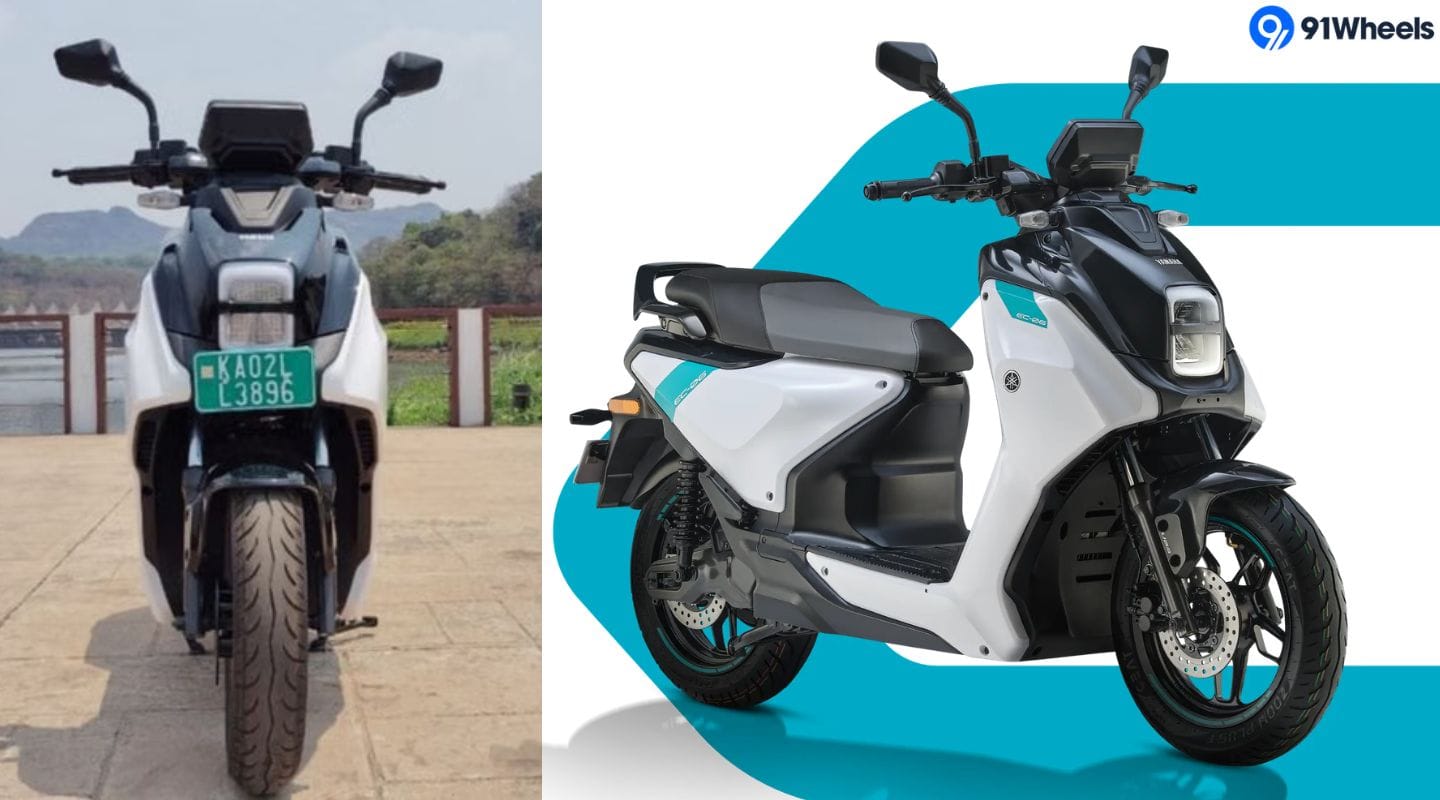
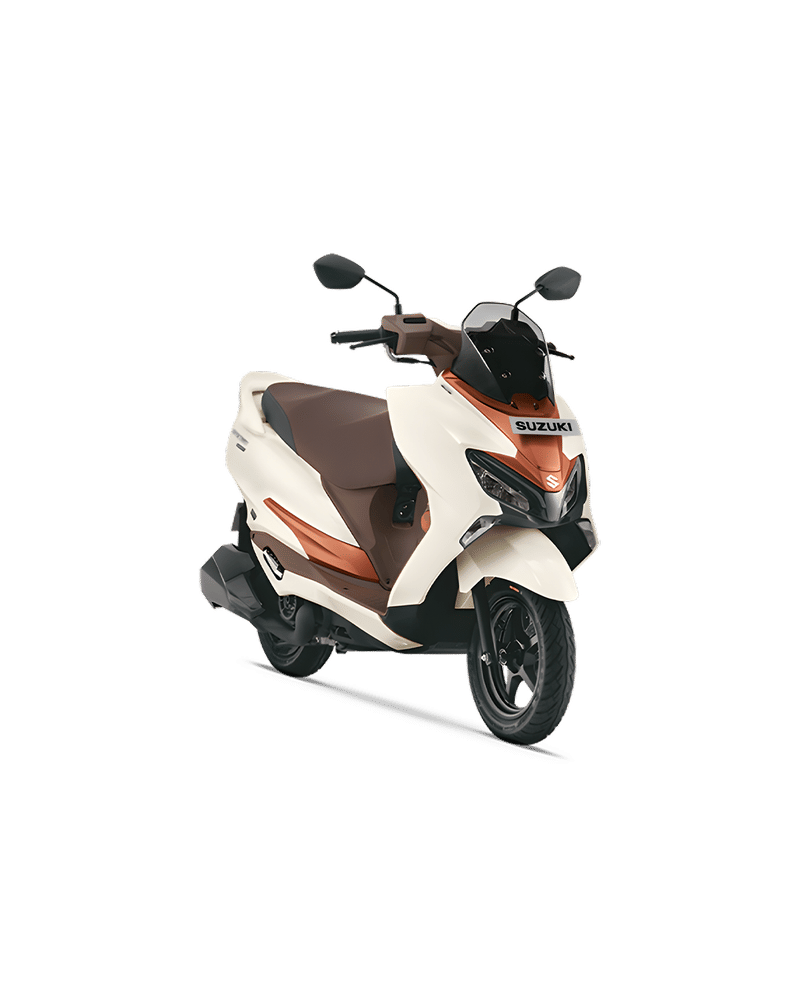
The e-Access leans on familiarity, keeping the practical, family-scooter silhouette of the regular Access, with a flat floorboard, a wide apron, and a comfortable seat. The EC-06 takes the 180 degree opposite approach. It's a distinctive, muscular design with a bold front end, 14-inch alloy wheels, and an imposing road presence that Yamaha has pitched as more premium than a typical commuter scooter. If you want your EV to look like the scooter you are already familiar with, the e-Access fits that brief. If you want something that stands out, the EC-06 does your work.
Power and Performance
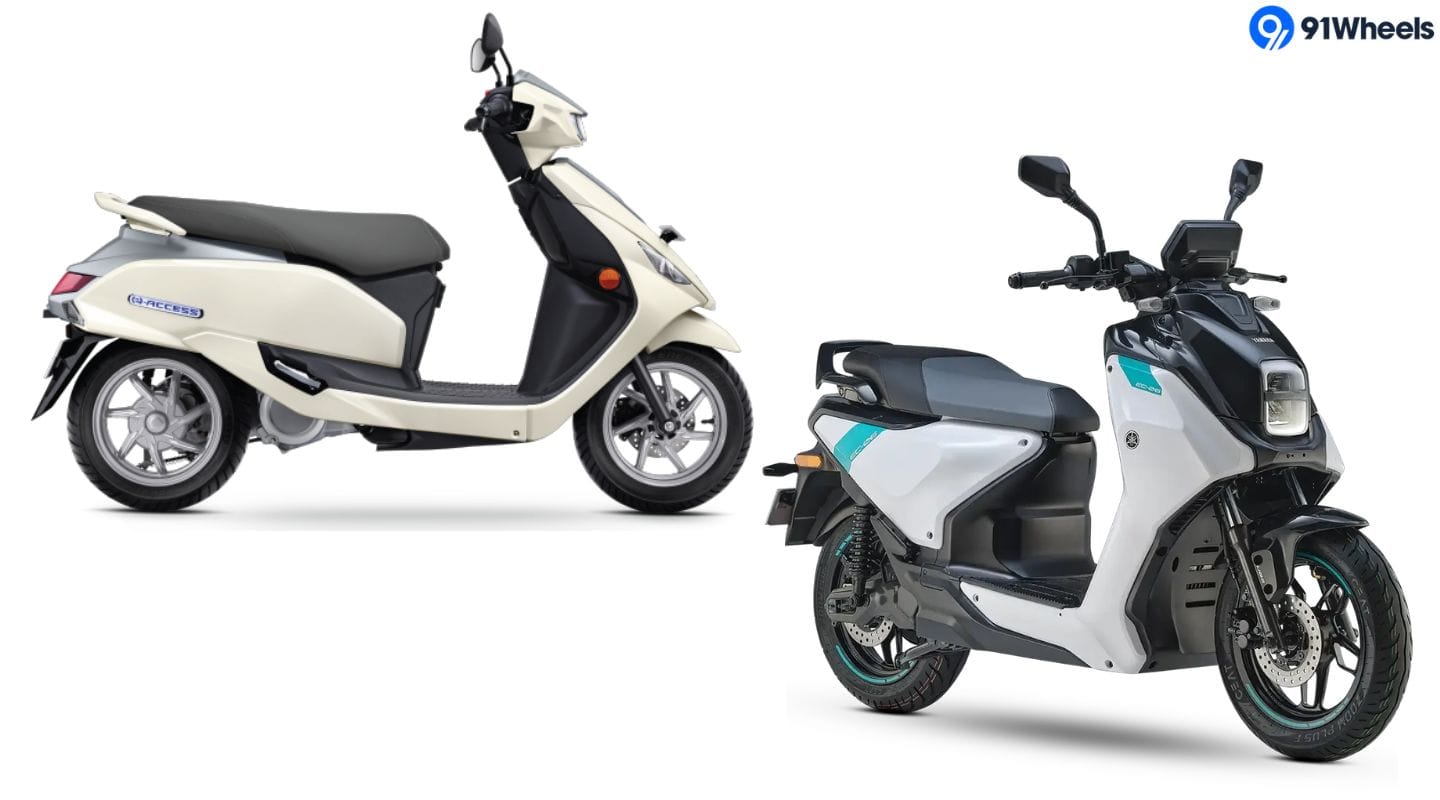
The Suzuki e-Access uses a 4.1 kW motor producing 15 Nm of torque, paired with a fixed 3.07 kWh battery pack. Top speed is rated at 71 kmph but we have seen scooter touching 80kmph in real conditions. The e-Access feels compact and agile on the road, staying flickable through tight traffic. Its neutral riding position keeps you comfortable, making it genuinely easy to manoeuvre during daily city commutes. It also offers reverse mode for easy while taking out from a parking.
The Yamaha EC-06 uses a considerably stronger 6.7 kW motor producing 26 Nm of torque, paired with a fixed 4 kWh battery pack. Top speed is rated at 79 kmph, and it offers three riding modes, Eco, Standard, and Power, plus a reverse assist mode. The EC-06 delivers a balanced, approachable ride with a comfortable, spacious seat. Handling stays predictable, though the front suspension jerks slightly on bumps. Rear suspension absorbs potholes well, and disc brakes offer confident stopping power in Sport mode.
The EC-06 is clearly the more powerful and quicker scooter of the two, with meaningfully higher torque and top speed.
Range and Charging
.jpg)
The e-Access has a claimed range of up to 95 km per charge, with a charging time of around 6 hours 42 minutes on a standard charger, or about 2 hours 12 minutes on a fast charger.
In real-world use, the e-Access has consistently delivered a range of around 82-85 km on a single charge. This is a promising figure, as roughly 1% of battery translates to about 1 km in actual riding conditions. The reason for calling out this specifically because the gap between the claimed and real-world numbers is refreshingly small.
The EC-06 offers a significantly longer claimed range of 169 km, making it one of the longer range options in its segment. However, on real ground the range scooter can deliver is around 110-120 km. The other real drawback of EC is that the charging takes considerably more time, about 8 hours for 0 to 80%, and up to 10 hours for a full charge, with no fast charging support yet.
So the trade off is straightforward. The EC-06 goes much further on a charge but takes longer to refill, while the e-Access has a shorter range but the option of quicker top ups via a fast charger.
Features
The e-Access comes with a 7 inch TFT display offering turn by turn navigation and smartphone connectivity, along with 17 litres of under seat storage. The EC-06 counters with a colour LCD cluster showing speed, battery status, range, and connectivity alerts, paired with the Yamaha Motor Connect R app, full LED lighting, and a generous 24.5 litre under seat storage space, notably larger than most rivals.
When it comes to storage, the EC-06 has a clear edge. Its 24.5 litre space is significantly roomier than the e-Access's 17 litres, giving riders enough room to fit a full-face helmet along with other daily essentials, making it the more practical pick for those who prioritise everyday usability over navigation-focused tech.
Price
Suzuki e-Access | Yamaha EC-06 | |
|---|---|---|
Starting price (ex-showroom) | Rs. 1.88 lakhb(ex-showroom) | Rs. 1.71 lakh (ex-showroom) |
Colour options | 4 | 1 |
Battery type | Fixed, 3.07 kWh | Fixed, 4 kWh |
Motor power | 4.1 kW | 6.7 kW |
Torque | 15 Nm | 26 Nm |
Top speed | 71 kmph | 79 kmph |
Claimed range | 95 km | 169 km |
Real world range | Around 90 to 95 km | Around 110 to 120 km |
Under seat storage | 17 litres | 24.5 litres |
Which Should You Pick
The Yamaha EC-06 comes out ahead on nearly every performance metric. It has a stronger motor, higher torque, better top speed, a longer real world range, and considerably more storage space, all while being priced lower than the e-Access. For riders who want a scooter that can comfortably handle longer commutes and daily essentials without constant charging stops, the EC-06 is the more sensible choice, provided you can live with its longer charging time.
The Suzuki e-Access still holds its ground for riders who value familiarity and quicker top ups. Its fast charging option and compact, flickable nature through traffic make it a genuinely easy scooter to live with in dense city conditions, even if it trails behind on power and storage.
If outright value, range, and practicality matter most to you, the EC-06 is the stronger pick. But if you want a scooter that feels like the Access you already know, with the convenience of fast charging, the e-Access remains a solid option for your daily commute.
Do you like this article?
Comments
No comments yet. Be the first to comment!