Walk into any car dealership in India today, and there's a good chance the salesperson brings up CNG before you even ask. With fuel prices refusing to settle down and more automakers rolling out factory-fitted CNG options, the fuel has quietly become a mainstream choice rather than a budget afterthought. But alongside the excitement about running costs, one question keeps popping up in every buyer's mind: is it actually safe to drive around with a gas cylinder sitting in your boot?
It's a fair question, and honestly, a smart one to ask before signing on the dotted line. Let's break this down properly - not with fear-mongering, and not with blind reassurance either, but with an honest look at how CNG systems work, where the real risks lie, and what you can do to stay safe.
Read more: SIAM Takes Back E20 Fuel Quality Letter as Govt Downplays Contamination Concerns
First, What Exactly Is CNG and How Does It End Up in Your Car?
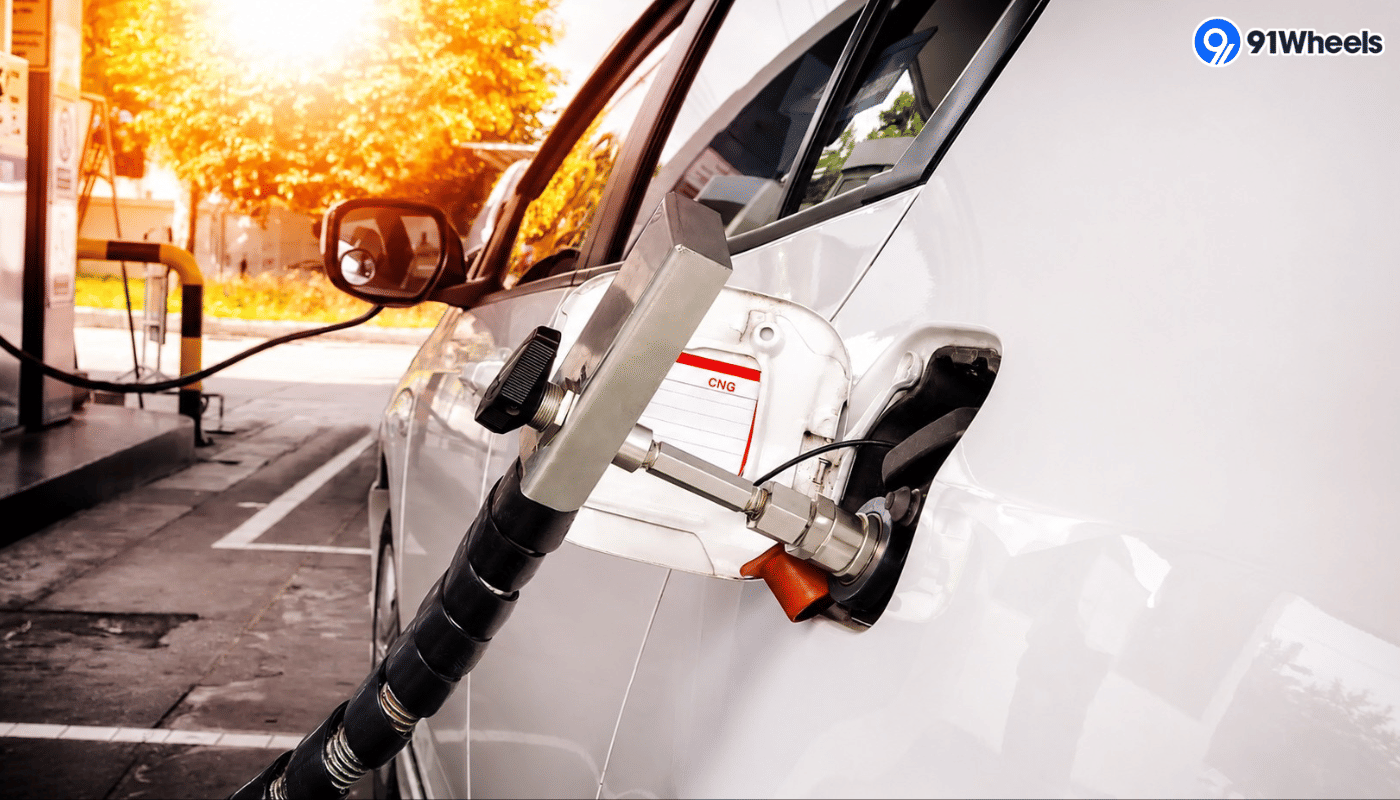
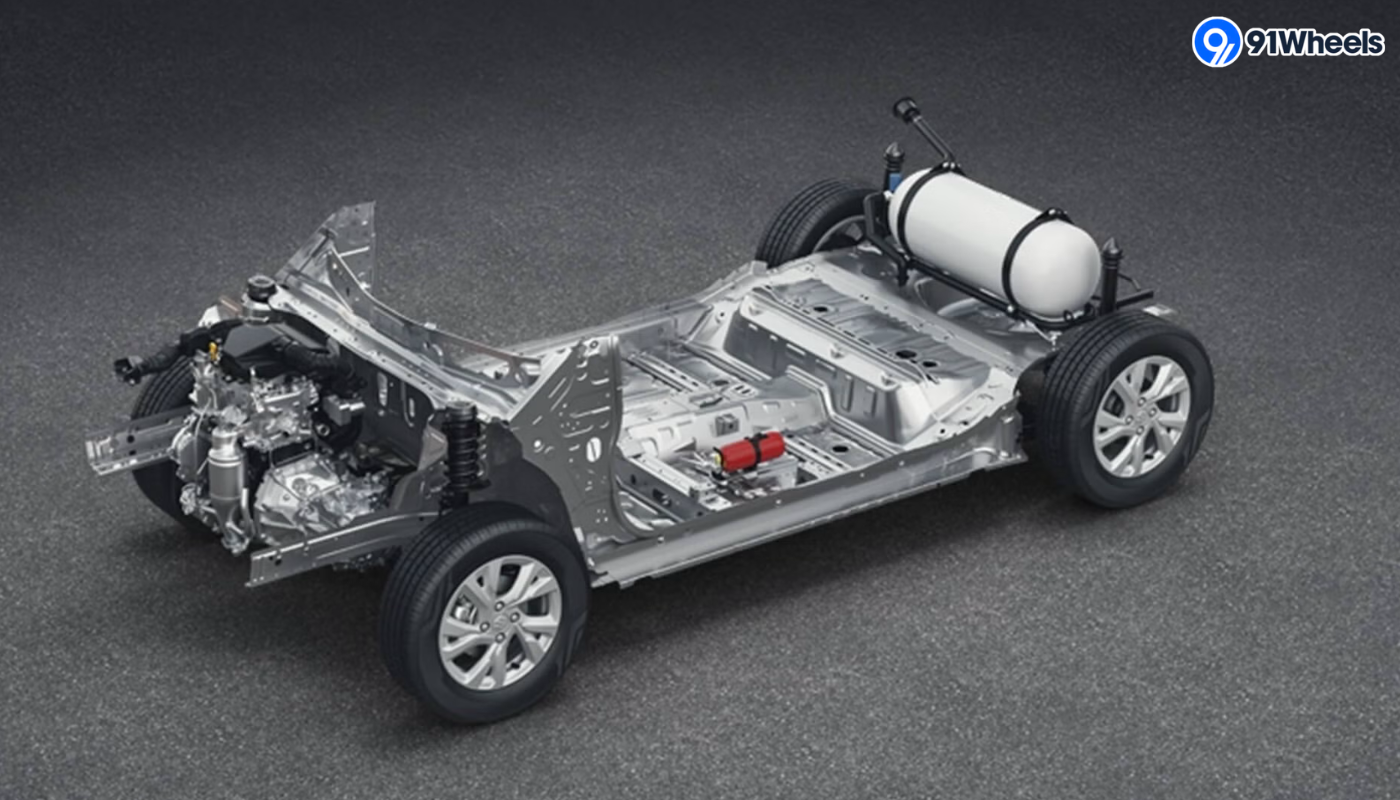
Compressed Natural Gas is primarily methane, squeezed down to about 1% of its normal volume and stored under high pressure - typically in the range of 200 to 250 bar - inside a dedicated cylinder. That cylinder isn't just a metal tank bolted into a corner of your boot; it's a pressure vessel engineered to hold gas at levels far beyond what your car's fuel tank ever has to deal with.
From the cylinder, gas travels through a network of pipes and valves to a pressure regulator, which brings that intense pressure down to something the engine can actually use. From there, it's mixed with air and fed into the combustion chamber, much like petrol vapour would be. The entire journey is monitored by valves designed to shut things down the moment something looks off.
Understanding this basic plumbing matters, because most of the anxiety around CNG safety actually stems from not knowing what's happening under the boot floor.
Why the "CNG Cars Are Dangerous" Perception Even Exists
Let's address the elephant in the room. Most people's mental image of a dangerous CNG car comes from two sources: grainy videos of auto-rickshaws or old taxis going up in flames, and stories about poorly installed aftermarket kits from years ago. Neither of these paints an accurate picture of what a modern, factory-fitted CNG car looks like today.
In the earlier days of CNG adoption in India, a large chunk of installations were retrofitted by local garages, sometimes using components that hadn't gone through rigorous certification. A rushed installation, a poorly sealed joint, or a cylinder that wasn't tested for wear over the years - these are the actual culprits behind most horror stories, not the fuel itself. Natural gas, chemically speaking, is not more combustible than petrol; in several respects, it behaves more predictably in the event of a leak because it's lighter than air and disperses upward rather than pooling on the ground like a petrol spill would.
The perception problem, in other words, is largely a legacy issue - and the industry has moved a long way since then.
What Makes Factory-Fitted CNG Systems Different
This is the part that often gets glossed over. When a car rolls out of a manufacturer's plant with CNG as a factory option, it isn't the same ballgame as a kit fitted at a roadside shop.
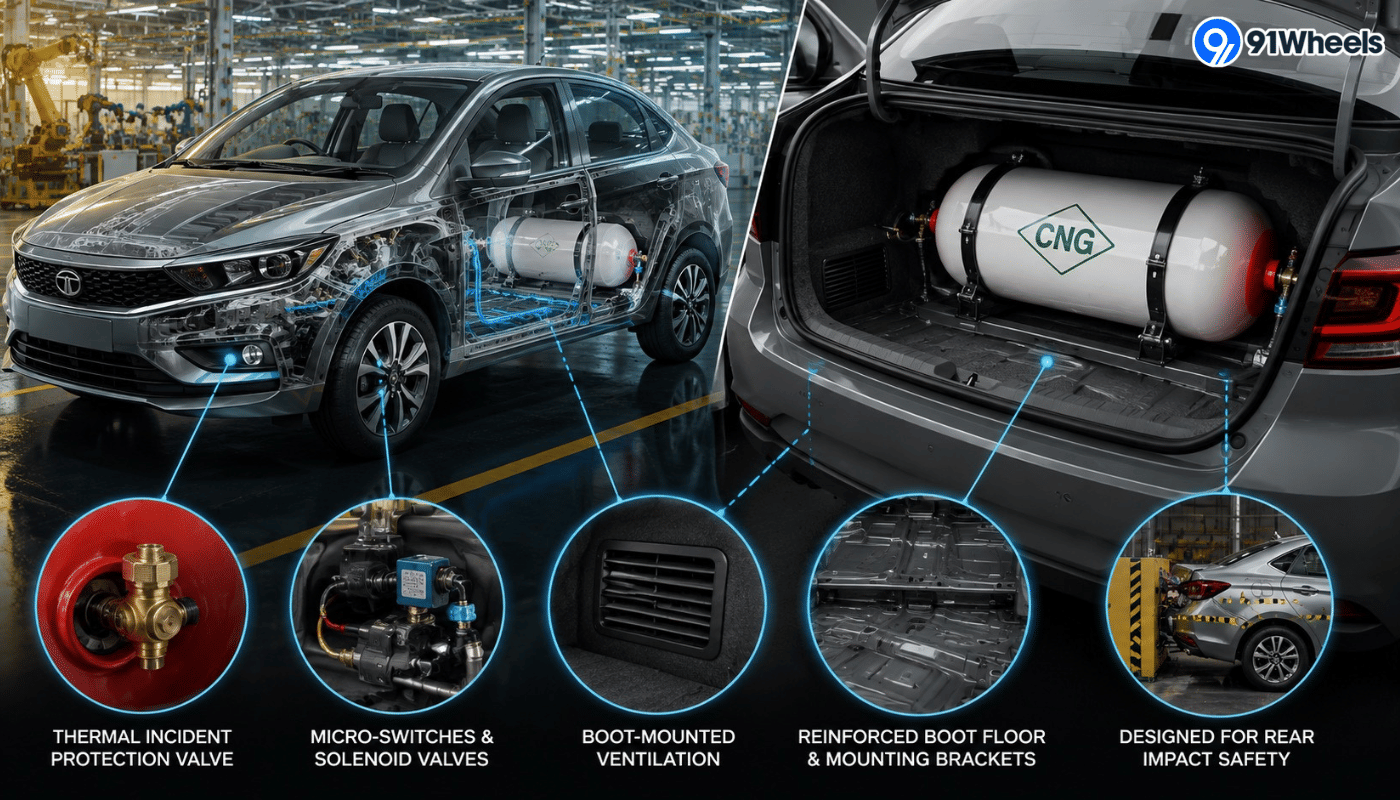
Factory CNG systems go through the same homologation and crash-testing process as the rest of the vehicle. The cylinder itself is typically made of high-grade steel or composite material and is hydro-tested to withstand pressures well beyond its rated capacity before it's ever installed. Automakers also engineer specific safety layers around it:
- A thermal incident protection valve built into the cylinder, which is designed to vent gas in a controlled manner if it senses abnormal heat, rather than letting pressure build to a rupture point.
- Micro-switches and solenoid valves that automatically cut gas supply the moment the engine is switched off or if the system detects a pressure anomaly.
- Boot-mounted ventilation so that any trace leakage escapes outside the cabin instead of accumulating inside.
- Reinforced boot flooring and cylinder mounting brackets designed to keep the tank secure and protected in the event of a rear-end collision.
None of this is optional add-on engineering - it's baked into the car's design from the ground up when CNG comes from the factory.
The Regulatory Backbone Nobody Talks About
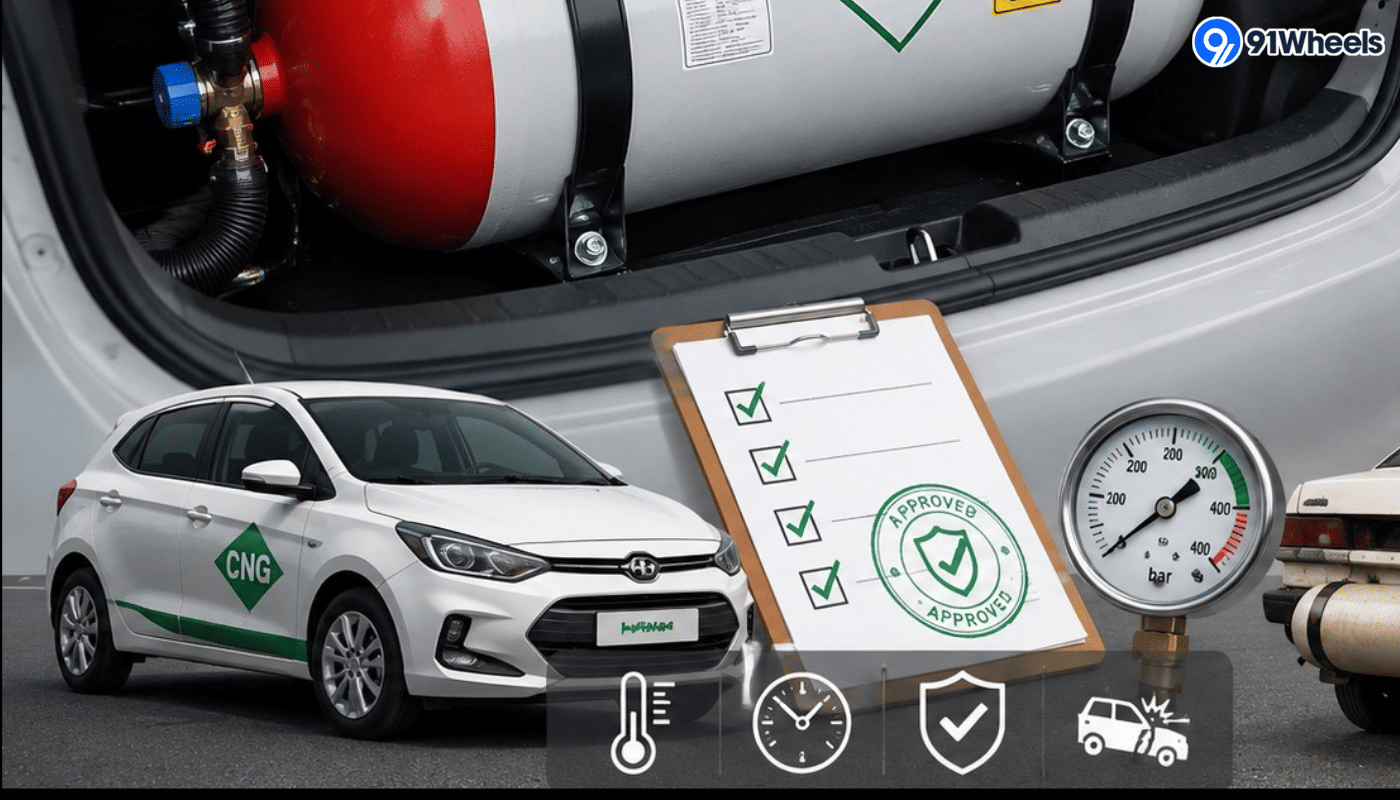
Every CNG cylinder sold for automotive use in India has to meet standards laid down by the Automotive Research Association of India (ARAI) and align with AIS (Automotive Industry Standards) specifications. These cover everything from the material composition of the cylinder to how it performs under extreme temperature and pressure conditions, and even how it holds up in simulated crash scenarios.
There's also a mandatory periodic testing requirement - cylinders typically need to be re-certified every few years (commonly every three years, though this can vary) by an authorised testing centre. This isn't a box-ticking formality; hydro-testing actually checks whether the cylinder has retained its structural integrity over time. A cylinder that fails this test isn't patched up - it's taken out of service.
This layer of oversight is exactly why factory-fitted CNG vehicles from established manufacturers carry a very different risk profile compared to a two-decade-old retrofit job that hasn't seen a testing centre in years.
So, Where Do the Real Risks Come From?
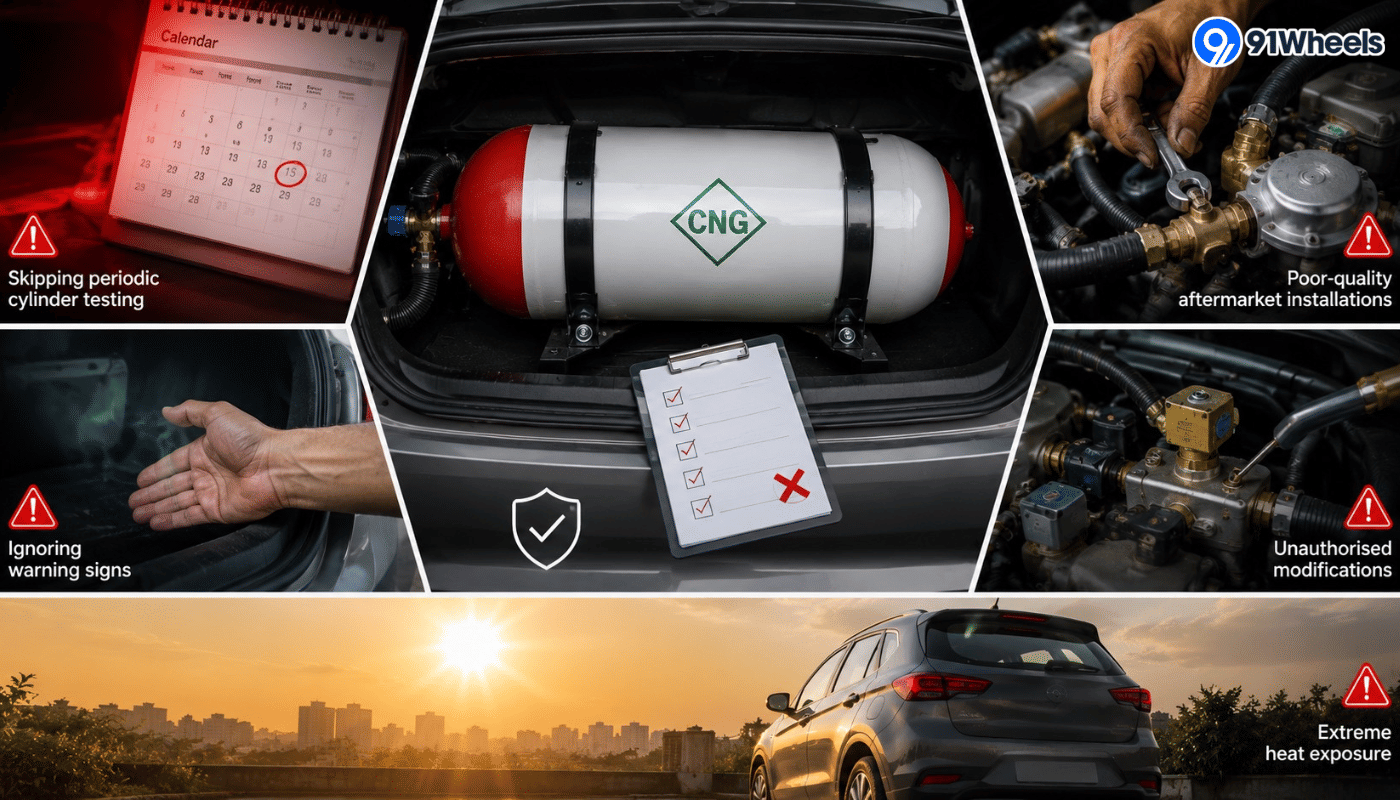
To answer the original question honestly, CNG cars aren't inherently unsafe, but there are specific scenarios where risk genuinely increases:
Skipping periodic cylinder testing. This is probably the single biggest contributor to CNG-related incidents. An owner who ignores the mandated re-testing schedule is essentially gambling on a component that's designed with an expiry logic in mind.
Poor-quality aftermarket installations. Not all retrofit kits are created equal. Choosing an uncertified installer to save a few thousand rupees can mean compromised welding, mismatched components, or valves that don't seal properly.
Ignoring warning signs. A faint gas smell, a hissing sound near the boot, or unusual engine behaviour after a CNG refill are signals that should never be brushed aside. Most incidents don't happen without some warning beforehand.
Unauthorised modifications. Tampering with the regulator, bypassing safety valves, or having non-genuine parts fitted purely to cut costs undoes a lot of the engineering built into the system.
Extreme heat exposure. Parking a CNG car for extended periods in direct, intense heat - especially with any underlying leak adds risk, though thermal relief valves exist precisely to manage this.
Notice that almost none of these are about the fuel itself being dangerous. They're about human choices around maintenance and installation quality.
How CNG Cars Actually Compare to Petrol Cars in a Fire Scenario
This is a genuinely interesting point that often surprises people. Natural gas has a higher auto-ignition temperature than petrol, meaning it requires a hotter source to ignite in the first place. It's also lighter than air, so in an open environment, it tends to rise and disperse rather than accumulate near the ground where an ignition source is more likely to be presentunlike petrol vapour, which tends to hug low surfaces and pool.
This doesn't mean a CNG-related fire can't happen or can't be serious when it does - compressed gas under high pressure has its own particular risks if a serious leak occurs in a confined space. But the flat, blanket idea that "CNG cars explode more easily than petrol cars" doesn't really hold up against how the two fuels behave physically.
Practical Safety Habits Every CNG Car Owner Should Follow

If you already own, or are planning to buy, a CNG car, a few consistent habits go a long way:
- Stick to the testing schedule. Don't wait for a reminder call from the service centre - mark the cylinder's re-certification date and get it done on time, without exceptions.
- Get installations done only from authorised centres, especially if you're retrofitting rather than buying factory-fitted.
- Get your car serviced at recommended intervals, and specifically ask the technician to inspect the CNG lines, joints, and regulator for wear.
- Never ignore a gas smell. If you notice one, don't start the engine - get out, ventilate the area, and have the car inspected before using it again.
- Avoid DIY tinkering with anything related to the gas kit. It's not the place to save money by skipping a professional.
- Be mindful during refuelling: Switch off the engine, don't smoke or keep an open flame nearby, and let the station attendant handle the process rather than doing it yourself if you're unfamiliar with the equipment.
- Watch for cylinder-related warranty and expiry stickers: most cylinders have their manufacturing and test-due dates stamped on them; a quick glance during servicing tells you exactly where you stand.
Read more: Why Carmakers Are Replacing Bigger NA Engines with Smaller Turbo Engines? Here's the Answer
The Bottom Line
CNG cars, when factory-fitted and properly maintained, are engineered with multiple layers of safety redundancy - arguably more deliberate engineering thought than most people realise. The fuel itself isn't the villain it's sometimes made out to be; in several respects, its physical properties make it safer than petrol in specific fire scenarios. What actually determines how safe a CNG car is comes down to three things: the quality of the installation, how strictly the owner follows testing and maintenance schedules, and whether warning signs are taken seriously when they show up.
So if you're eyeing a CNG car for its running costs, the safety question shouldn't be a dealbreaker - it should simply be a checklist. Buy from a manufacturer with proper factory-fitted systems, stay on top of periodic testing, and treat the gas kit with the same seriousness you'd treat your brakes or airbags. Do that, and a CNG car is every bit as safe to live with as its petrol or diesel counterpart.
Do you like this article?
Comments
No comments yet. Be the first to comment!