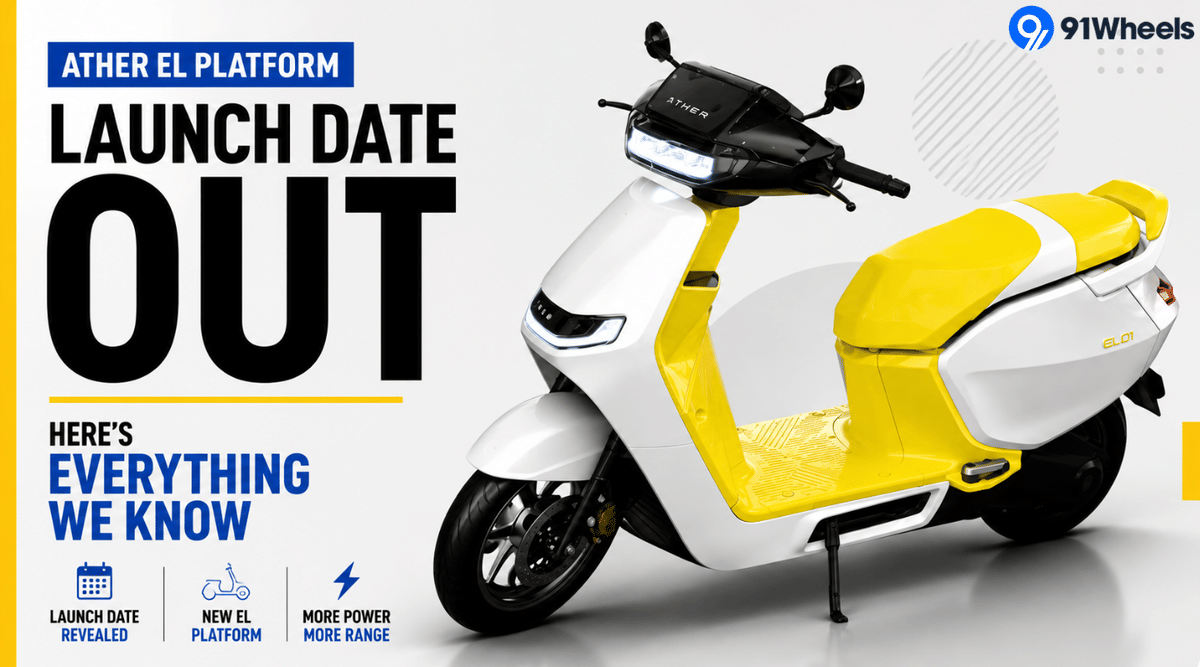
Ather has finally put a date on its most important scooter yet. The brand's new EL platform, first shown in concept form last year, will underpin a mass-market model that launches at Ather Community Day on 29 August 2026. It could turn out to be the most affordable scooter Ather has ever sold, and it comes from a platform built to do a lot more than just power one model.
The Launch Date Is Set
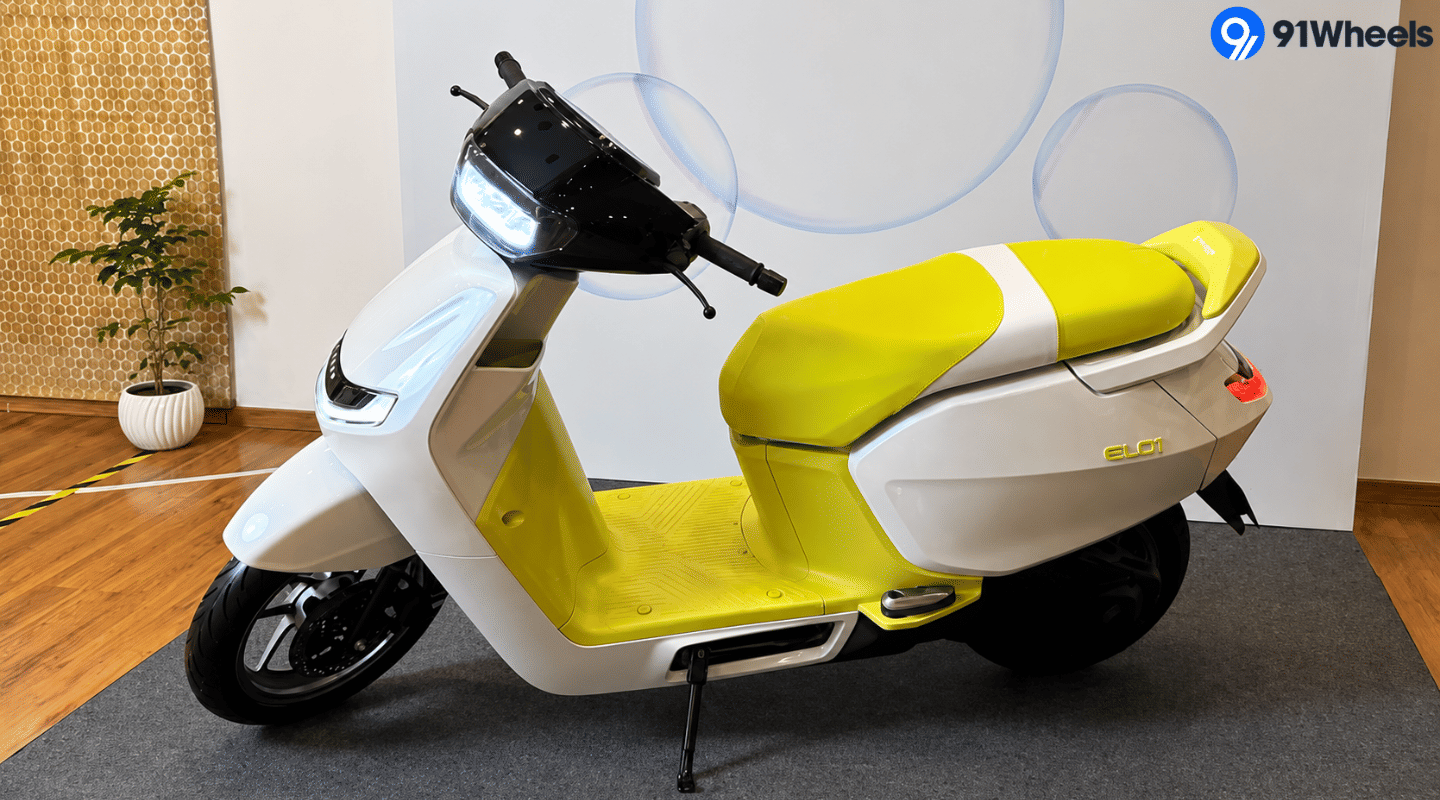
Ather revealed the launch date for its upcoming EL-based scooter, confirming it will debut at 2026. The scooter was previewed as a concept called EL01, and a production-spec version has already been spotted on test. Spy shots and recent patent filings suggest the design stays close to that original concept.
Ather hasn't confirmed powertrain details yet. But the test mule gives a fair idea of the underpinnings. It runs a 14-inch front wheel and a 12-inch rear wheel, both alloys, with a disc brake up front and a drum at the rear.
Expect the production scooter to carry over the concept's 7-inch TFT console with smartphone connectivity. The EL platform is built to support battery packs from 2kWh to 5kWh, so this particular scooter is likely to sit at the smaller end of that range given its mass-market positioning.
Pricing hasn't been announced, but industry estimates put it between Rs. 1 lakh and Rs. 1.25 lakh, ex-showroom. That range could shrink further if Ather brings in a Battery-as-a-Service scheme, similar to what other brands have tried to lower the upfront cost of ownership.
What the EL Platform Actually Is
The EL platform itself was unveiled back in August 2025, and it is far bigger in scope than any single scooter. It's built around a single-tube unibody structure designed to flex into different body styles. Ather has spoken about everything from a maxi-scooter to a sporty commuter to a family-oriented model coming off this same base.
Battery flexibility is the platform's biggest selling point. The battery bay is designed to take packs anywhere from 2.7kWh to 5kWh, and it supports both NMC and LFP chemistries. That gives Ather room to tune each scooter differently, whether the priority is range, cost or long-term durability.
Braking gets a step up too. The EL platform introduces what Ather calls an Advanced Electronic Braking System, which sits somewhere between a standard CBS setup and full ABS. It continuously reads how much braking force is needed and shifts that force between the front and rear wheel in real time, rather than using a fixed split. The idea is shorter stopping distances and more predictable control.
On the chassis side, Ather has kept things adaptable. Wheel sizes can be either 14-inch or 12-inch depending on what the scooter is meant for, and a longer wheelbase is part of the package for stability at higher speeds without losing agility in traffic. The motor sits on the swingarm with a gear-driven setup, which should help with packaging as well as how power gets to the road.
Manufacturing will happen at Ather's Factory 3.0, which the company has built specifically for higher automation and larger production volumes than its existing lines.
Why This Matters for Ather
Ather has built its reputation on premium electric scooters, but that has also meant a gap at the bottom of its lineup. The EL platform is the company's answer to that gap. It isn't just one new scooter, it's a foundation Ather can use to go after multiple segments at once, from budget commuters to performance-focused riders to family buyers, without starting from scratch each time.
The scooter launching on 29 August is the first product off this platform to reach customers. How it's priced, and whether Ather backs it with financing options like Battery-as-a-Service, will say a lot about how serious the brand is about competing outside its usual premium territory.
Do you like this article?
Comments
No comments yet. Be the first to comment!






.png?w=240&q=40 "Best Bikes Under Rs 2 Lakh: 5 Top Picks From Sports to Adventure")