
Opening gallery...

Honda 0 αUpcoming
Honda is gearing up to enter India’s mass-market electric SUV space with the upcoming 0 Alpha, a compact electric SUV scheduled for launch around 2027. Built on a dedicated EV platform, the 0 Alpha is expected to offer strong range, modern styling and advanced tech to compete with rivals like the Hyundai Creta EV and Mahindra’s latest born electric SUVs. With India’s EV market accelerating, the 0 Alpha signals Honda’s serious electrification push and could become a key player in the mid-size electric SUV segment if priced competitively.
Honda 0 α Latest Update
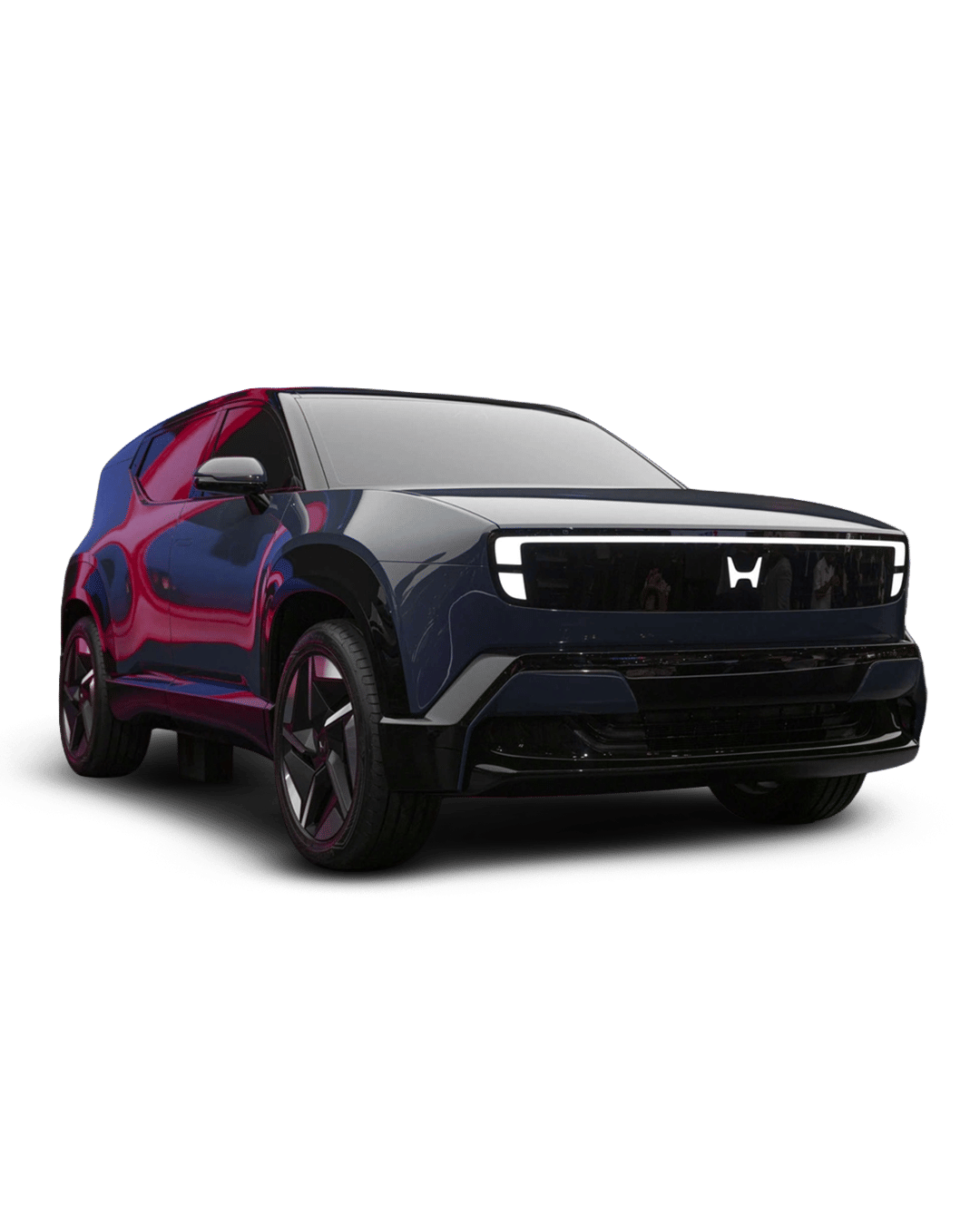
Last Updated On 02nd Mar'26 Design: The Honda 0 Alpha is expected to adopt a clean, contemporary SUV design aligned with Honda’s new global EV identity. Early teasers suggest a smooth, aerodynamic body with sharp lighting signatures and minimalistic surfacing. Expect a closed-off grille area, sleek LED headlamps, and a coupe-inspired rear profile for a modern stance. Short overhangs and a long wheelbase - typical of dedicated EVs - should enhance proportions and cabin space. Overall, the 0 Alpha is likely to balance futuristic styling with mainstream SUV appeal for Indian buyers.
Ergonomics and Comfort: Honda is likely to prioritise cabin space and usability, leveraging the flat-floor advantages of its EV-only architecture. The absence of a transmission tunnel should free up legroom and improve rear passenger comfort. Expect a spacious second row, flexible seating layouts, and practical storage solutions suited to family use. A minimalist dashboard, thin seats, and large glass area could create an airy cabin feel. With EV buyers valuing refinement, Honda will likely focus on low NVH levels and smooth ride comfort for urban and highway driving.
Powertrain: The 0 Alpha will be underpinned by Honda’s dedicated electric platform, designed for efficiency and scalable battery options. While specifications remain unconfirmed, the SUV is expected to deliver competitive range suited to Indian conditions - likely in the 400-500 km bracket per charge. A single-motor front-wheel-drive setup is probable for cost and efficiency, with potential dual-motor AWD variants later. Honda will aim for smooth, linear acceleration and strong city drivability, aligning performance with everyday usability rather than outright sportiness.
Hardware: Honda’s EV-specific architecture should allow optimised weight distribution and a low centre of gravity thanks to the floor-mounted battery pack. Expect a suspension setup tuned for comfort-focused Indian roads, with independent suspension at least at the front and likely at the rear as well. The rigid skateboard platform should enhance structural strength and safety. Regenerative braking with multiple levels, efficient thermal management, and fast-charging capability will be key hardware elements to meet 2027 EV expectations.
Features: The 0 Alpha is expected to offer a modern, tech-centric feature suite to rival segment leaders. Anticipated highlights include a large touchscreen infotainment system with wireless smartphone integration, a fully digital instrument cluster, connected-car tech, and OTA update capability. Advanced driver assistance systems (ADAS), 360-degree camera, wireless charging, and premium audio are likely inclusions. EV-specific functions such as charging management, range prediction, and remote climate control should also be part of the package, positioning the SUV as a connected, future-ready family EV.
Market Availability and Alternatives: Honda has indicated a 2027 arrival timeline for the 0 Alpha in India as part of its broader electrification roadmap. Once launched, it will enter the fast-growing compact electric SUV segment, targeting buyers considering models like the Hyundai Creta E, E-Vitara and Mahindra BE 6. The 0 Alpha will need competitive pricing, strong range, and Honda’s reliability reputation to establish itself in this crowded space. If executed well, it could mark Honda’s true comeback in India’s mainstream SUV market through electrification.
0 α Key Specifications
User Insights at a Glance
Share Your Opinion
Is the price justified?

Honda 0 α Overview
Last Updated On 02nd Mar'26 Design: The Honda 0 Alpha is expected to adopt a clean, contemporary SUV design aligned with Honda’s new global EV identity. Early teasers suggest a smooth, aerodynamic body with sharp lighting signatures and minimalistic surfacing. Expect a closed-off grille area, sleek LED headlamps, and a coupe-inspired rear profile for a modern stance. Short overhangs and a long wheelbase - typical of dedicated EVs - should enhance proportions and cabin space. Overall, the 0 Alpha is likely to balance futuristic styling with mainstream SUV appeal for Indian buyers.
Ergonomics and Comfort: Honda is likely to prioritise cabin space and usability, leveraging the flat-floor advantages of its EV-only architecture. The absence of a transmission tunnel should free up legroom and improve rear passenger comfort. Expect a spacious second row, flexible seating layouts, and practical storage solutions suited to family use. A minimalist dashboard, thin seats, and large glass area could create an airy cabin feel. With EV buyers valuing refinement, Honda will likely focus on low NVH levels and smooth ride comfort for urban and highway driving.
Powertrain: The 0 Alpha will be underpinned by Honda’s dedicated electric platform, designed for efficiency and scalable battery options. While specifications remain unconfirmed, the SUV is expected to deliver competitive range suited to Indian conditions - likely in the 400-500 km bracket per charge. A single-motor front-wheel-drive setup is probable for cost and efficiency, with potential dual-motor AWD variants later. Honda will aim for smooth, linear acceleration and strong city drivability, aligning performance with everyday usability rather than outright sportiness.
Hardware: Honda’s EV-specific architecture should allow optimised weight distribution and a low centre of gravity thanks to the floor-mounted battery pack. Expect a suspension setup tuned for comfort-focused Indian roads, with independent suspension at least at the front and likely at the rear as well. The rigid skateboard platform should enhance structural strength and safety. Regenerative braking with multiple levels, efficient thermal management, and fast-charging capability will be key hardware elements to meet 2027 EV expectations.
Features: The 0 Alpha is expected to offer a modern, tech-centric feature suite to rival segment leaders. Anticipated highlights include a large touchscreen infotainment system with wireless smartphone integration, a fully digital instrument cluster, connected-car tech, and OTA update capability. Advanced driver assistance systems (ADAS), 360-degree camera, wireless charging, and premium audio are likely inclusions. EV-specific functions such as charging management, range prediction, and remote climate control should also be part of the package, positioning the SUV as a connected, future-ready family EV.
Market Availability and Alternatives: Honda has indicated a 2027 arrival timeline for the 0 Alpha in India as part of its broader electrification roadmap. Once launched, it will enter the fast-growing compact electric SUV segment, targeting buyers considering models like the Hyundai Creta E, E-Vitara and Mahindra BE 6. The 0 Alpha will need competitive pricing, strong range, and Honda’s reliability reputation to establish itself in this crowded space. If executed well, it could mark Honda’s true comeback in India’s mainstream SUV market through electrification.
Read MoreRead Less
Last Updated On 02nd Mar'26 Design: The Honda 0 Alpha is expected to adopt a clean, contemporary SUV design aligned with Honda’s new global EV identity. Early teasers suggest a smooth, aerodynamic body with sharp lighting signatures and minimalistic surfacing. Expect a closed-off grille area, sleek LED headlamps, and a coupe-inspired rear profile for a modern stance. Short overhangs and a long wheelbase - typical of dedicated EVs - should enhance proportions and cabin space. Overall, the 0 Alpha is likely to balance futuristic styling with mainstream SUV appeal for Indian buyers.
Ergonomics and Comfort: Honda is likely to prioritise cabin space and usability, leveraging the flat-floor advantages of its EV-only architecture. The absence of a transmission tunnel should free up legroom and improve rear passenger comfort. Expect a spacious second row, flexible seating layouts, and practical storage solutions suited to family use. A minimalist dashboard, thin seats, and large glass area could create an airy cabin feel. With EV buyers valuing refinement, Honda will likely focus on low NVH levels and smooth ride comfort for urban and highway driving.
Powertrain: The 0 Alpha will be underpinned by Honda’s dedicated electric platform, designed for efficiency and scalable battery options. While specifications remain unconfirmed, the SUV is expected to deliver competitive range suited to Indian conditions - likely in the 400-500 km bracket per charge. A single-motor front-wheel-drive setup is probable for cost and efficiency, with potential dual-motor AWD variants later. Honda will aim for smooth, linear acceleration and strong city drivability, aligning performance with everyday usability rather than outright sportiness.
Hardware: Honda’s EV-specific architecture should allow optimised weight distribution and a low centre of gravity thanks to the floor-mounted battery pack. Expect a suspension setup tuned for comfort-focused Indian roads, with independent suspension at least at the front and likely at the rear as well. The rigid skateboard platform should enhance structural strength and safety. Regenerative braking with multiple levels, efficient thermal management, and fast-charging capability will be key hardware elements to meet 2027 EV expectations.
Features: The 0 Alpha is expected to offer a modern, tech-centric feature suite to rival segment leaders. Anticipated highlights include a large touchscreen infotainment system with wireless smartphone integration, a fully digital instrument cluster, connected-car tech, and OTA update capability. Advanced driver assistance systems (ADAS), 360-degree camera, wireless charging, and premium audio are likely inclusions. EV-specific functions such as charging management, range prediction, and remote climate control should also be part of the package, positioning the SUV as a connected, future-ready family EV.
Market Availability and Alternatives: Honda has indicated a 2027 arrival timeline for the 0 Alpha in India as part of its broader electrification roadmap. Once launched, it will enter the fast-growing compact electric SUV segment, targeting buyers considering models like the Hyundai Creta E, E-Vitara and Mahindra BE 6. The 0 Alpha will need competitive pricing, strong range, and Honda’s reliability reputation to establish itself in this crowded space. If executed well, it could mark Honda’s true comeback in India’s mainstream SUV market through electrification.
Opening gallery...
Honda 0 α Competitors
| Models | Battery Capacity | Charging Time | Battery Warranty | Range | Max Power | Ground Clearance |
|---|---|---|---|---|---|---|
| 59.6 kWh | 25 mins (10-70%) | 7 Years/160000 kms | 463 km | 150000 W | 190 mm | |
| 50.3 kWh | 8.5 to 9 Hrs | Vehicle Warranty - 3 Years/Unlimited Kms& Battery Warranty - 8 Years/150000 Kms | 461 km | 129999 W | 177 mm | |
| 39.5 kWh | 50 mins (0-80 %) with 50 kW charger | Vehicle warranty - 3 Years/Unlimited Kms. Battery & Motor Warranty - 8 Years/160000 Kms | 456 km | 11000 W | 200 mm | |
| 55 kWh | 40 mins (10-80%) | Vehicle Warranty - 3 Years/125000 Kms& Battery & Motor Warranty - 8 Years/160000 Kms | 502 km | 123000 W | 186 mm | |
| - | - | 3 Years/Unlimited Kms | - | - | 200 mm | |
| 61 kWh | (10 -80%) 45 Min | - | 543 km | 128000 W | 180 mm | |
| - | - | 3 Years/ Unlimited Kms | - | - | 200 mm | |
| - | - | 3 Years/Unlimited Kms | - | - | 226 mm | |
| - | - | 3 Years/Unlimited Kms | - | - | 187 mm | |
| - | - | 3 Years/150000 Kms | - | - | 233 mm |
Honda Dealers


Top SUV You Should Not Miss