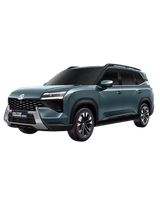
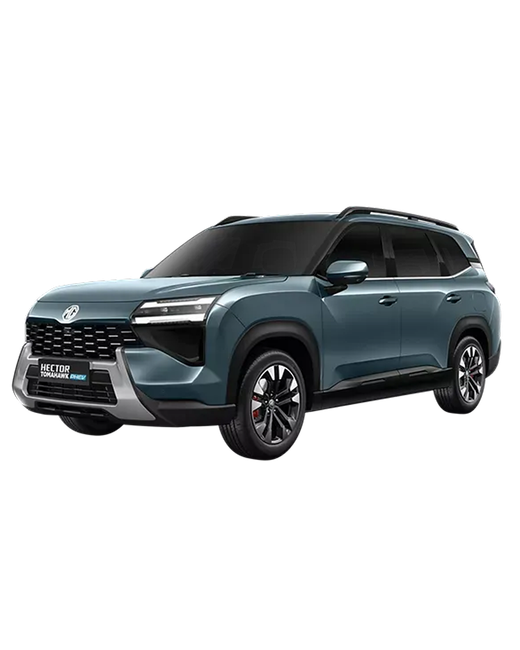
MG Hector Tomahawk PHEV Specifications

20.5 kWh
Battery Capacity
2810 mm
Wheelbase
MG Hector Tomahawk PHEV is a 7 seater SUV with a range of Km/Charge depending upon it's transmission and fuel type. Hector Tomahawk PHEVs 201.224 PS can generate power and 125 Nm @ 4600-5000 rpm torque.
Keep scrolling to explore detailed configuration, features and technical specs of Hector Tomahawk PHEV.
MG Hector Tomahawk PHEV Transmission
Performance of Hector Tomahawk PHEV is backed by a Automatic transmission and FWD configuration.MG Hector Tomahawk PHEV Interior
Hector Tomahawk PHEV is a 7 seater car.MG Hector Tomahawk PHEV Exterior
MG Hector Tomahawk PHEV is a 5 door car which has front Disc brakes, MacPherson Strut suspensions and rear Disc brakes, Multi Link Independent suspensions.MG Hector Tomahawk PHEV Dimensions & Measurements
Hector Tomahawk PHEV has SUV Body Type, 4745 mm Length, 2130 mm Width, 1770 mm Height, 7 Seating Capacity, 5 No. of Doors, 2810 mm Wheelbase, 192 litres Boot Space.MG Hector Tomahawk PHEV Alternatives
Main Competitors of Hector Tomahawk PHEV car are Mahindra XEV 9e, Tata Harrier EV, Mahindra XEV 9S, VinFast VF7, BYD Atto 3, Toyota Urban Cruiser Ebella, Tata Sierra EV, BYD eMAX 7, VinFast VF MPV 7, Hyundai Creta Electric.MG Hector Tomahawk PHEV Latest Price
Hector Tomahawk PHEV is available in India starting from ₹ 25.70 Lakh* with it's least expensive variant being Exclusive. Most expensive variant of Hector Tomahawk PHEV is Essence priced at ₹ 27.80 Lakh*.Keep scrolling to explore detailed configuration, features and technical specs of Hector Tomahawk PHEV.
Variant Wise Comparison
Exclusive
Base Variant₹ 25.70 Lakh*
Essence
Top Variant₹ 27.80 Lakh*
Fuel Type | Electric | Electric |
₹25.70 - ₹27.80 Lakh*
Ex-Showroom Price
Explore MG Hector Tomahawk PHEV
Ad
Loading...
Hector Tomahawk PHEV Question & Answers


Answer by 91Wheels Expert
3 months ago
Currently, 91Wheels doesn't have any information regarding this. We will update this as soon as possible, Thank you for visiting 91Wheels!
Didn't Find Your Question? Ask an Expert

Loading...
Loading...