.png?w=1200&q=50 "TVS iQube vs Bajaj Chetak - Price, Range, Battery, Features And More")
The Indian EV scooter space is continuously expanding, introducing options that aim at every kind of buyer and budget. Somewhere in this crowded space two scooters have managed to stay firmly on top the TVS iQube and the Bajaj Chetak. They are the two names that have carried the electric scooter sales to the top of India's charts, month after month. Which bring these two names against each other, but sales numbers don't tell you which scooter suits your commute better. So, in this article let's find which of these names wins the EV scooter race in terms of design, range and price.
Design and Build
.png)
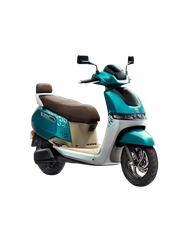
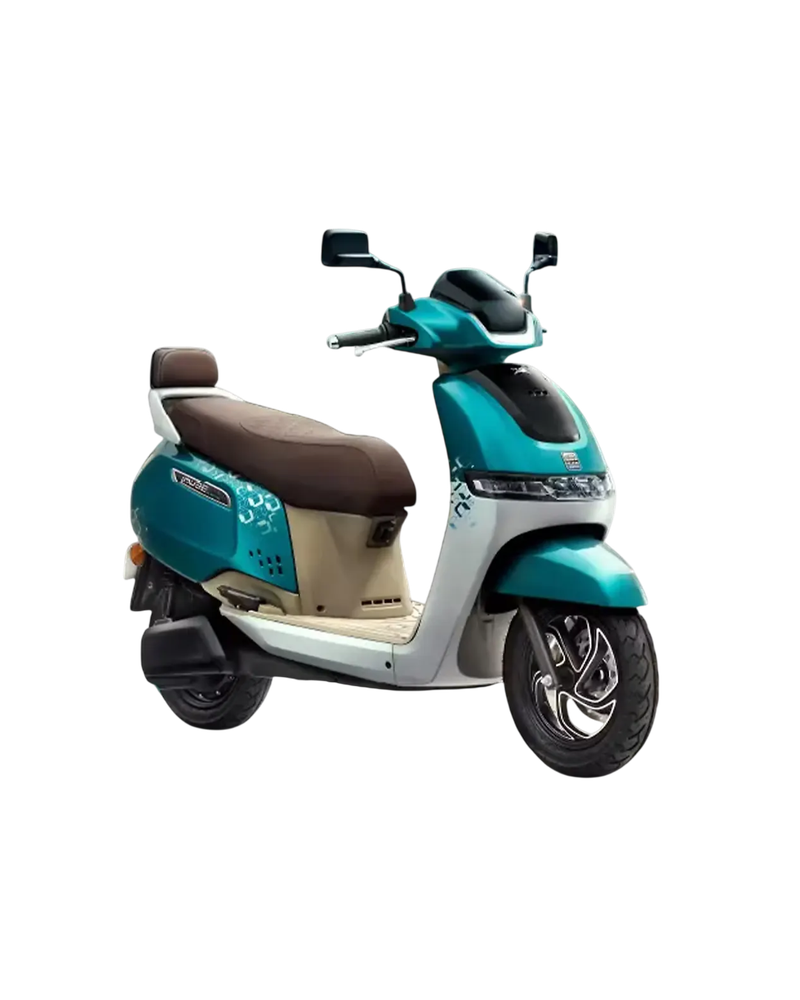
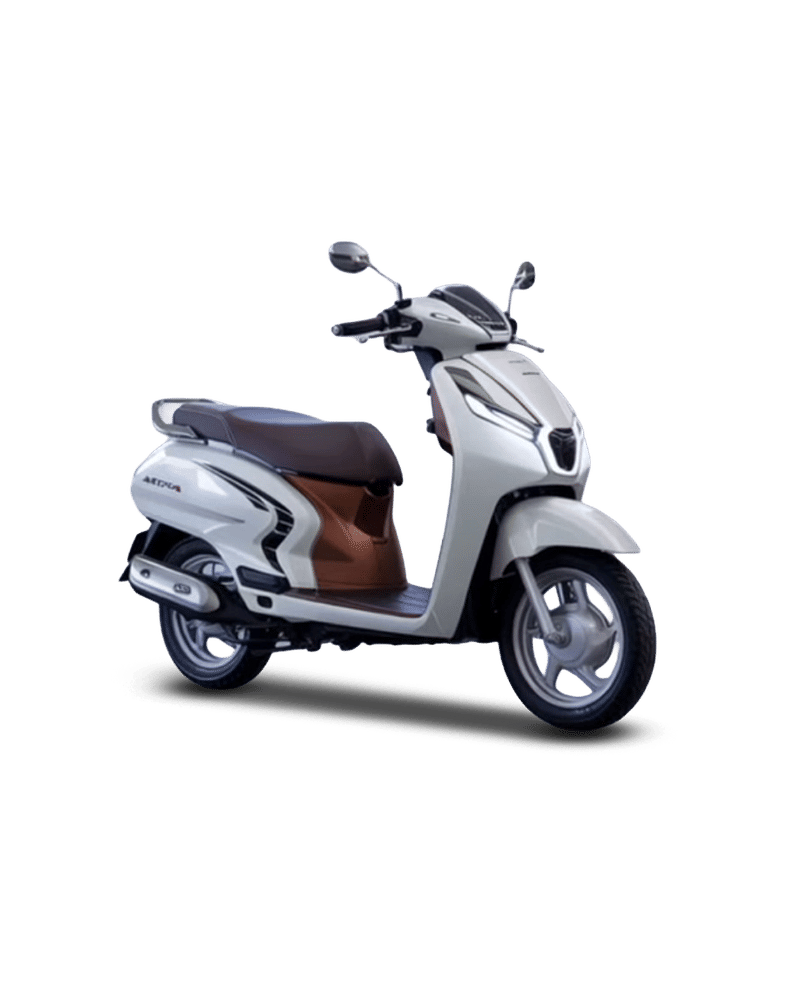
On the design front TVS has played safe with the iQube styling keeping it around conventional ICE scooter proportions and that works in the brand's favour. So, anyone switching from petrol scooter to TVS iQube will not feel like they're getting on to something unfamiliar. It's compact, tidy, and built to blend in rather than stand out.
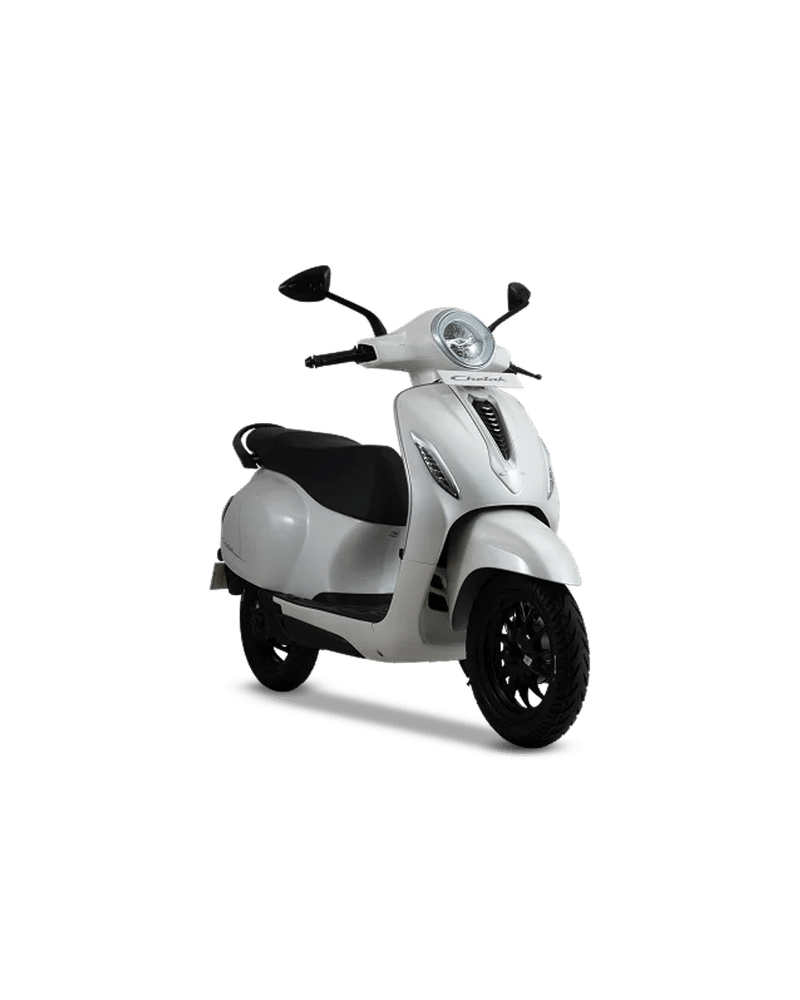
On the other hand, Bajaj takes a different approach, the Chetak features an all-metal body, and that retro-styled, curvy silhouette remains one of its biggest highlights. The scooter has a genuinely premium appeal than most scooters in this price bracket, electric or otherwise. Moreover, the metal body panels also give it a reassuring solidity that plastic-bodied rivals can't quite match.
In terms of design and build Chetak edges ahead on design and build. Its metal body brings genuine solidity and premium feel, while iQube's safe, conventional styling favours familiarity over standout presence. In build quality as well, the chetak has an upper hand with its strong metal body design.
Battery, Range and Charging
This is the point where the TVS iQube and Bajaj Chetak genuinely have different approaches. At one side the TVS offers five battery options on the iQube, starting from a modest 2.2kWh and going all the way up to 5.3kWh. Which means buyers have multiple options to choose depending on their usage rather than being locked into one configuration. As for its range the base trim claims 94km, while the top-spec variant stretches to a segment-leading 212km on a solitary charge.
.png)
Bajaj, on the other hand, keeps the Chetak C35 simpler. It comes with a single 3.5kWh battery across the lineup, offering a certified range of 153km. There's no confusion here, you know exactly what you're getting no matter which variant you pick, but you also don't get any flexibility.
Further, charging time is another common concern for EV buyers, and this is where the gap between these two actually widens. The TVS iQube 3.5kWh takes 4 hours and 30 minutes to charge from 0 to 80%, running on an offboard charger. The Bajaj Chetak C3501, by contrast, uses a 950W onboard charger and takes just 3 hrs to hit the same 0-80% mark. That's a full 90-minute advantage for the Chetak, and it isn't a marginal difference you can hand-wave away, it's the kind of gap that changes how you plan your day around charging.
Parameter | TVS iQube 3.5 kWh | Bajaj Chetak C3501 |
|---|---|---|
Battery Capacity | 3.5 kWh | 3.5 kWh |
Claimed Range | 145 km | 153 km |
Charging Type | Off-board Charger | On-board Charger (950W) |
Charging Time (0-80%) | 4 hrs 30 mins | 3 hrs |
Battery Options Available | 2.2, 3.1, 3.5, 4.7, 5.3 kWh | Single 3.5 kWh Option |
Motor and Performance
.png)
The Bajaj Chetak C3501 features an upgraded hub-mounted motor with a rated power of 4 kW, that belts out about 5.3 bhp, and that translates to a top speed of 80 km/h, the highest in the Chetak lineup. On the other hand, the TVS iQube 3.5kWh uses a BLDC hub-mounted motor with a peak power of 4.4 kW, putting out a peak torque of 140 Nm. With this setup it manages a 0-40 km/h sprint in just 4.2 seconds, though its top speed caps out lower at 78 km/h.
.png)
Parameter | TVS iQube 3.5 kWh | Bajaj Chetak C3501 |
|---|---|---|
Motor Type | BLDC Hub-Mounted Motor | Hub-Mounted Motor |
Peak Power | 4.4 kW | 4.0 kW |
Peak Torque | 140 Nm | - |
Top Speed | 78 kmph | 80 kmph |
0-40 kmph | 4.2 seconds | - |
Ride Modes | Eco, Power | Eco, Sport |
On paper, the iQube's torque numbers look far stronger, and that should show up as quicker, punchier acceleration when you're pulling away from traffic lights or navigating through city traffic. The Chetak, meanwhile, wins on outright top speed and handles inclines with more composure, its direct hub-drive avoids the power loss belt-driven systems often face on hilly stretches.
Features and Price
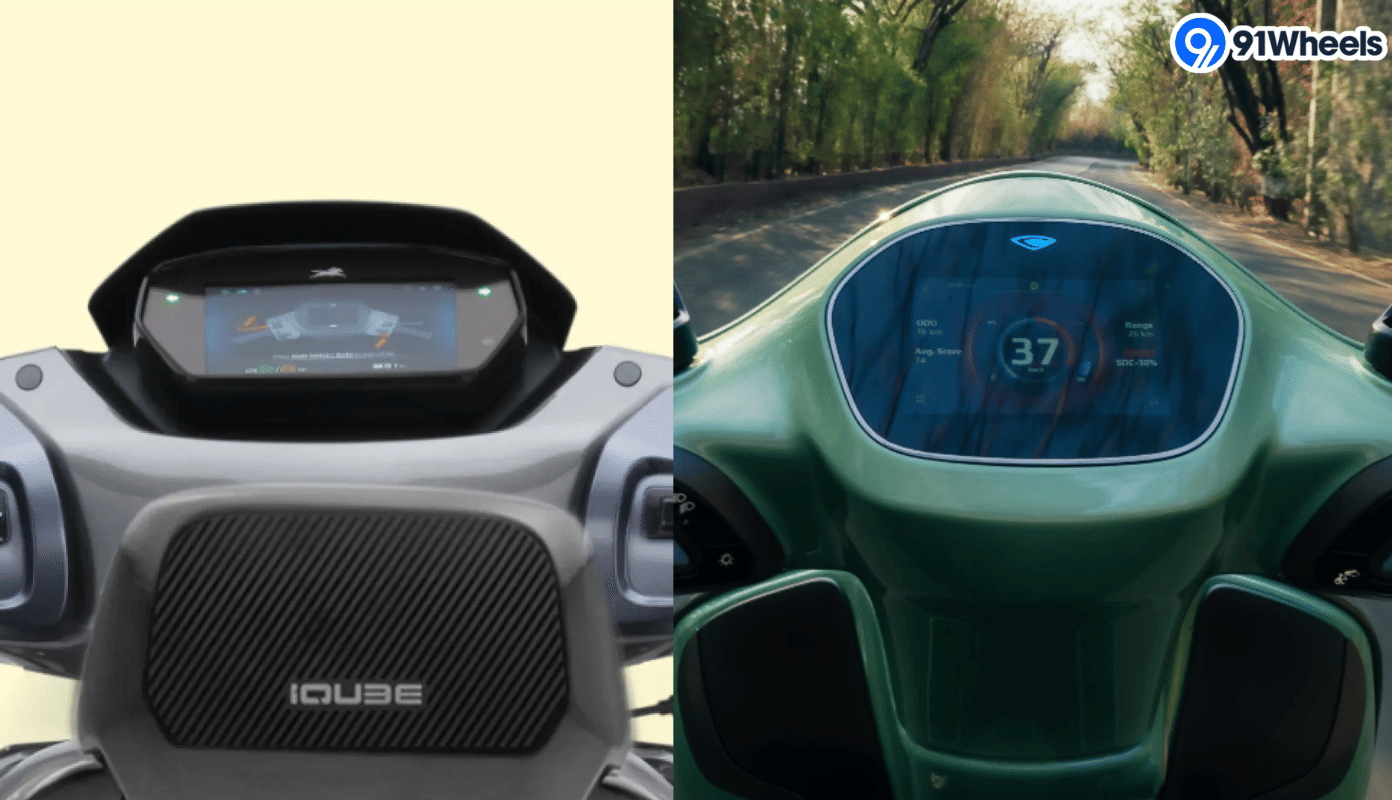
TVS iQube comes equipped with a 5-inch digital instrument cluster that support connected tech and inbuilt navigation. For riding modes, it offers 2 modes, Eco and Power, with Eco capping the top speed at 47 km/h while Power unlocks full performance that can be controlled via handlebar button without needing to stop. The scooter comes equipped with a Combined Braking System (CBS) and regenerative braking, although ABS is not offered
On the other hand, Bajaj Chetak C3501 gets a 5-inch TFT touchscreen display, with front disc and rear drum brakes. It offers with two ride modes Eco and Sport that one can switch as per the need. Moreover, it doesn't get ABS either but gets Combined Braking System (CBS), activating both brakes simultaneously when either lever is applied.
Check price for TVS iQube and Bajaj Chetak
Scooter | Price Range |
|---|---|
TVS iQube | Rs 1.36- Lakh (ex-showroom) |
Bajaj Chetak | Rs 1.52- Lakh (ex-showroom) |
Our Verdict
Between the two, the Chetak C3501 pulls ahead where it counts daily, faster charging, longer range, and a sturdier metal build that feels genuinely premium. The iQube fights back with punchier torque and a wider battery lineup, making it the more flexible buy on paper. But for someone who just wants a reliable daily commuter without overthinking specs, the Chetak feels like the more complete package and for someone who want a familiar design, reliable name and a good brand backing should got for TVS iQube.
Do you like this article?
Comments
No comments yet. Be the first to comment!