Opening gallery...

Hyundai BayonUpcoming
Hyundai Bayon Latest Update
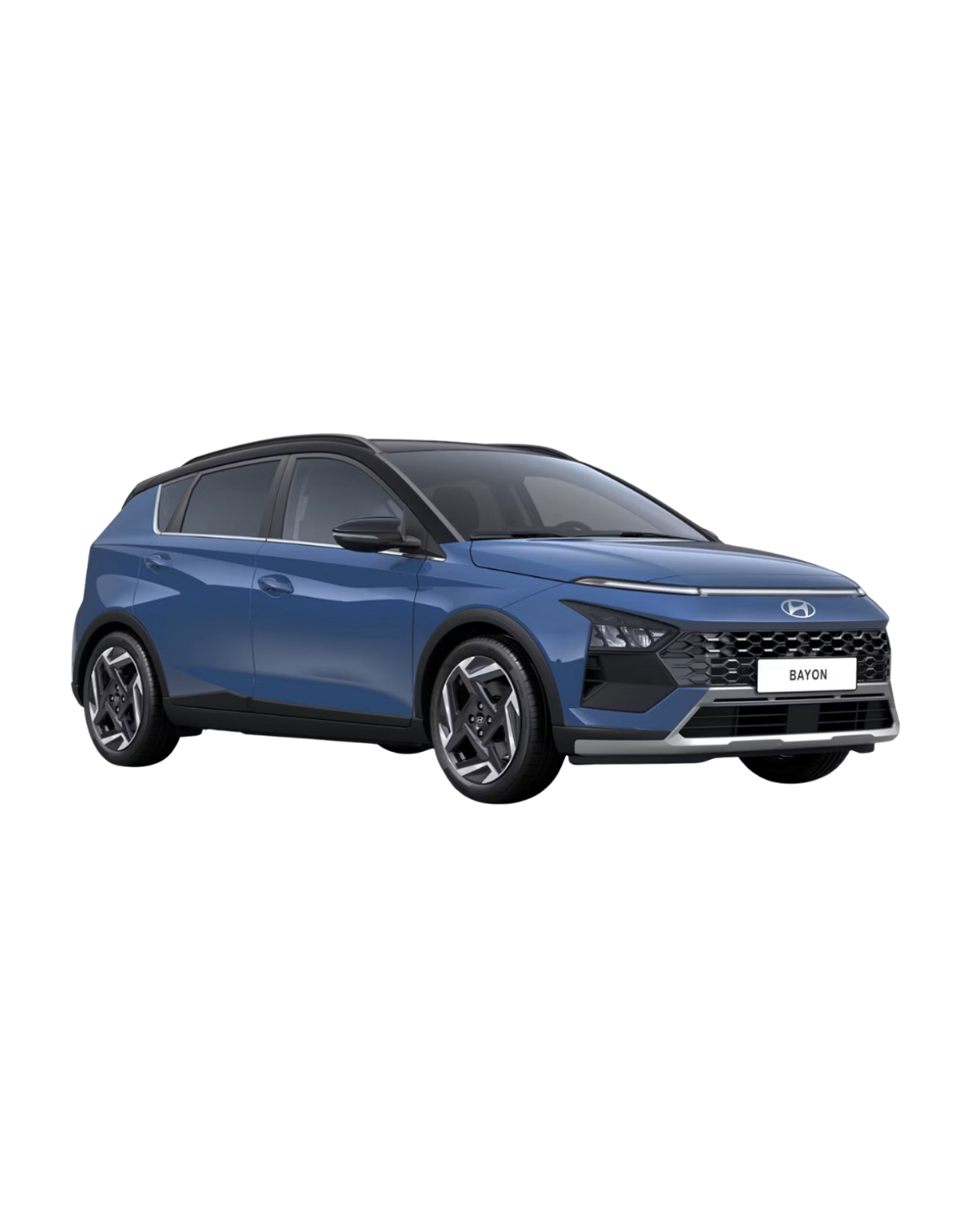
Hyundai has officially confirmed the Bayon as its upcoming SUV for the Indian market. Positioned between the Venue and Creta, the Bayon will measure around 4.2 metres in length and is expected to offer a more spacious alternative to sub-four-metre SUVs without stepping directly into Creta territory. Hyundai is expected to reveal more details about the SUV in the coming weeks, with the launch likely to take place next month.
Design: The India-spec Bayon is expected to feature a more SUV-oriented design than the international model. Previous test mules have revealed a relatively upright stance, a flat roofline, prominent roof rails, squared-off wheel arches, and conventional door handles. The overall silhouette is expected to retain the core Bayon identity, while India-specific changes could include revised lighting elements.
At the front, the test vehicle appears to feature a wide lighting signature positioned closer to the bonnet, with the primary lighting units placed lower on the fascia. The rear gets a horizontal lighting element, an upright windscreen, and a roof-mounted spoiler. The squared wheel arches further add to its SUV-like appearance.
Interior: The Bayon is expected to get a modern, dual-tone cabin with a driver-focused dashboard layout. Spy shots have revealed a new Hyundai steering wheel with the brand's four-dot signature, along with a curved dual-screen setup integrating the digital instrument cluster and infotainment display.
Based on Hyundai's Brazil-spec i20, the dual-screen layout could feature two 12.3-inch displays. Other expected equipment includes a 360-degree camera, sunroof, and connected-car technology. However, the India-spec Bayon is not expected to feature Hyundai's Pleos Connect infotainment system.
Powertrain: Hyundai has not revealed the engine or gearbox specifications of the India-spec Bayon yet. However, the SUV could borrow the 1.5-litre naturally aspirated petrol engine from the Creta. In its existing application, this engine produces around 113bhp and 143.8 Nm, which would help Hyundai maintain a clear power gap between the Bayon and the Venue/Venue N Line.
A factory-fitted CNG powertrain is also expected to be part of the India-specific package, although Hyundai has yet to confirm the same. Final engine, transmission, and variant details are expected to be announced closer to the launch.
ADAS: The international-spec Bayon is equipped with a range of advanced driver assistance systems, including lead vehicle departure alert, rear parking collision avoidance assist, rear occupant alert, driver monitoring, and cruise control. Similar technology is expected to make its way to the India-spec SUV, although the availability will likely vary depending on the variant.
Given its positioning below the Creta, Hyundai could offer ADAS on a wider range of variants, making the technology more accessible to buyers moving up from the Venue and other compact SUVs.
Positioning: The Bayon will occupy an important space in Hyundai's SUV portfolio, sitting between the Venue and Creta. With the Creta growing in size and moving further towards the premium end of the segment, the Bayon could effectively cater to buyers looking for a larger SUV without spending on the higher variants of the Creta.
The SUV is also expected to overlap with higher variants of the Venue and Venue N Line, creating a broader range of choices within Hyundai's SUV line-up.
Expected Price: Hyundai has not announced the pricing of the Bayon yet. However, considering its positioning between the Venue and Creta, the SUV could be priced in the range of Rs 10 lakh to Rs 16 lakh (ex-showroom). The final price will depend on the engine, transmission, and variant combinations offered at launch.
Hyundai Bayon Key Specifications
User Insights at a Glance
Share Your Opinion
Is the price justified?
What mileage do you expect?
What will be the model's main selling point?
Would you consider buying it?

Hyundai Bayon Overview
Hyundai has officially confirmed the Bayon as its upcoming SUV for the Indian market. Positioned between the Venue and Creta, the Bayon will measure around 4.2 metres in length and is expected to offer a more spacious alternative to sub-four-metre SUVs without stepping directly into Creta territory. Hyundai is expected to reveal more details about the SUV in the coming weeks, with the launch likely to take place next month.
Design: The India-spec Bayon is expected to feature a more SUV-oriented design than the international model. Previous test mules have revealed a relatively upright stance, a flat roofline, prominent roof rails, squared-off wheel arches, and conventional door handles. The overall silhouette is expected to retain the core Bayon identity, while India-specific changes could include revised lighting elements.
At the front, the test vehicle appears to feature a wide lighting signature positioned closer to the bonnet, with the primary lighting units placed lower on the fascia. The rear gets a horizontal lighting element, an upright windscreen, and a roof-mounted spoiler. The squared wheel arches further add to its SUV-like appearance.
Interior: The Bayon is expected to get a modern, dual-tone cabin with a driver-focused dashboard layout. Spy shots have revealed a new Hyundai steering wheel with the brand's four-dot signature, along with a curved dual-screen setup integrating the digital instrument cluster and infotainment display.
Based on Hyundai's Brazil-spec i20, the dual-screen layout could feature two 12.3-inch displays. Other expected equipment includes a 360-degree camera, sunroof, and connected-car technology. However, the India-spec Bayon is not expected to feature Hyundai's Pleos Connect infotainment system.
Powertrain: Hyundai has not revealed the engine or gearbox specifications of the India-spec Bayon yet. However, the SUV could borrow the 1.5-litre naturally aspirated petrol engine from the Creta. In its existing application, this engine produces around 113bhp and 143.8 Nm, which would help Hyundai maintain a clear power gap between the Bayon and the Venue/Venue N Line.
A factory-fitted CNG powertrain is also expected to be part of the India-specific package, although Hyundai has yet to confirm the same. Final engine, transmission, and variant details are expected to be announced closer to the launch.
ADAS: The international-spec Bayon is equipped with a range of advanced driver assistance systems, including lead vehicle departure alert, rear parking collision avoidance assist, rear occupant alert, driver monitoring, and cruise control. Similar technology is expected to make its way to the India-spec SUV, although the availability will likely vary depending on the variant.
Given its positioning below the Creta, Hyundai could offer ADAS on a wider range of variants, making the technology more accessible to buyers moving up from the Venue and other compact SUVs.
Positioning: The Bayon will occupy an important space in Hyundai's SUV portfolio, sitting between the Venue and Creta. With the Creta growing in size and moving further towards the premium end of the segment, the Bayon could effectively cater to buyers looking for a larger SUV without spending on the higher variants of the Creta.
The SUV is also expected to overlap with higher variants of the Venue and Venue N Line, creating a broader range of choices within Hyundai's SUV line-up.
Expected Price: Hyundai has not announced the pricing of the Bayon yet. However, considering its positioning between the Venue and Creta, the SUV could be priced in the range of Rs 10 lakh to Rs 16 lakh (ex-showroom). The final price will depend on the engine, transmission, and variant combinations offered at launch.
Read MoreRead Less
Hyundai has officially confirmed the Bayon as its upcoming SUV for the Indian market. Positioned between the Venue and Creta, the Bayon will measure around 4.2 metres in length and is expected to offer a more spacious alternative to sub-four-metre SUVs without stepping directly into Creta territory. Hyundai is expected to reveal more details about the SUV in the coming weeks, with the launch likely to take place next month.
Design: The India-spec Bayon is expected to feature a more SUV-oriented design than the international model. Previous test mules have revealed a relatively upright stance, a flat roofline, prominent roof rails, squared-off wheel arches, and conventional door handles. The overall silhouette is expected to retain the core Bayon identity, while India-specific changes could include revised lighting elements.
At the front, the test vehicle appears to feature a wide lighting signature positioned closer to the bonnet, with the primary lighting units placed lower on the fascia. The rear gets a horizontal lighting element, an upright windscreen, and a roof-mounted spoiler. The squared wheel arches further add to its SUV-like appearance.
Interior: The Bayon is expected to get a modern, dual-tone cabin with a driver-focused dashboard layout. Spy shots have revealed a new Hyundai steering wheel with the brand's four-dot signature, along with a curved dual-screen setup integrating the digital instrument cluster and infotainment display.
Based on Hyundai's Brazil-spec i20, the dual-screen layout could feature two 12.3-inch displays. Other expected equipment includes a 360-degree camera, sunroof, and connected-car technology. However, the India-spec Bayon is not expected to feature Hyundai's Pleos Connect infotainment system.
Powertrain: Hyundai has not revealed the engine or gearbox specifications of the India-spec Bayon yet. However, the SUV could borrow the 1.5-litre naturally aspirated petrol engine from the Creta. In its existing application, this engine produces around 113bhp and 143.8 Nm, which would help Hyundai maintain a clear power gap between the Bayon and the Venue/Venue N Line.
A factory-fitted CNG powertrain is also expected to be part of the India-specific package, although Hyundai has yet to confirm the same. Final engine, transmission, and variant details are expected to be announced closer to the launch.
ADAS: The international-spec Bayon is equipped with a range of advanced driver assistance systems, including lead vehicle departure alert, rear parking collision avoidance assist, rear occupant alert, driver monitoring, and cruise control. Similar technology is expected to make its way to the India-spec SUV, although the availability will likely vary depending on the variant.
Given its positioning below the Creta, Hyundai could offer ADAS on a wider range of variants, making the technology more accessible to buyers moving up from the Venue and other compact SUVs.
Positioning: The Bayon will occupy an important space in Hyundai's SUV portfolio, sitting between the Venue and Creta. With the Creta growing in size and moving further towards the premium end of the segment, the Bayon could effectively cater to buyers looking for a larger SUV without spending on the higher variants of the Creta.
The SUV is also expected to overlap with higher variants of the Venue and Venue N Line, creating a broader range of choices within Hyundai's SUV line-up.
Expected Price: Hyundai has not announced the pricing of the Bayon yet. However, considering its positioning between the Venue and Creta, the SUV could be priced in the range of Rs 10 lakh to Rs 16 lakh (ex-showroom). The final price will depend on the engine, transmission, and variant combinations offered at launch.

Hyundai Bayon Competitors
| Models | Fuel Type | Engine | Mileage | Seating Capacity |
|---|---|---|---|---|
| Petrol, Diesel | 998-1493 cc | - | 5 | |
| Petrol, Diesel | 998-1493 cc | 17.68-20.75 kmpl | 5 | |
| Diesel | 2184 cc | 14 kmpl | 9 | |
| Petrol | 1199 cc | 18.5 kmpl | 5 | |
| Petrol, Diesel | 1197-1497 cc | 17.96-21.2 kmpl | 5 | |
| Petrol | 1498 cc | 14.82-15.43 kmpl | 5 | |
| Petrol | 1199 cc | 18-19.5 kmpl | 5 | |
| Petrol, Diesel | 1199-1497 cc | 17-24.08 kmpl | 5 | |
| Petrol, Diesel | 998-1493 cc | 17.9-20.7 kmpl | 5 | |
| CNG | 1199 cc | 17.44 km/kg | 5 |
Locate Your Nearest Dealership
Top SUV Cars You Should Not Miss