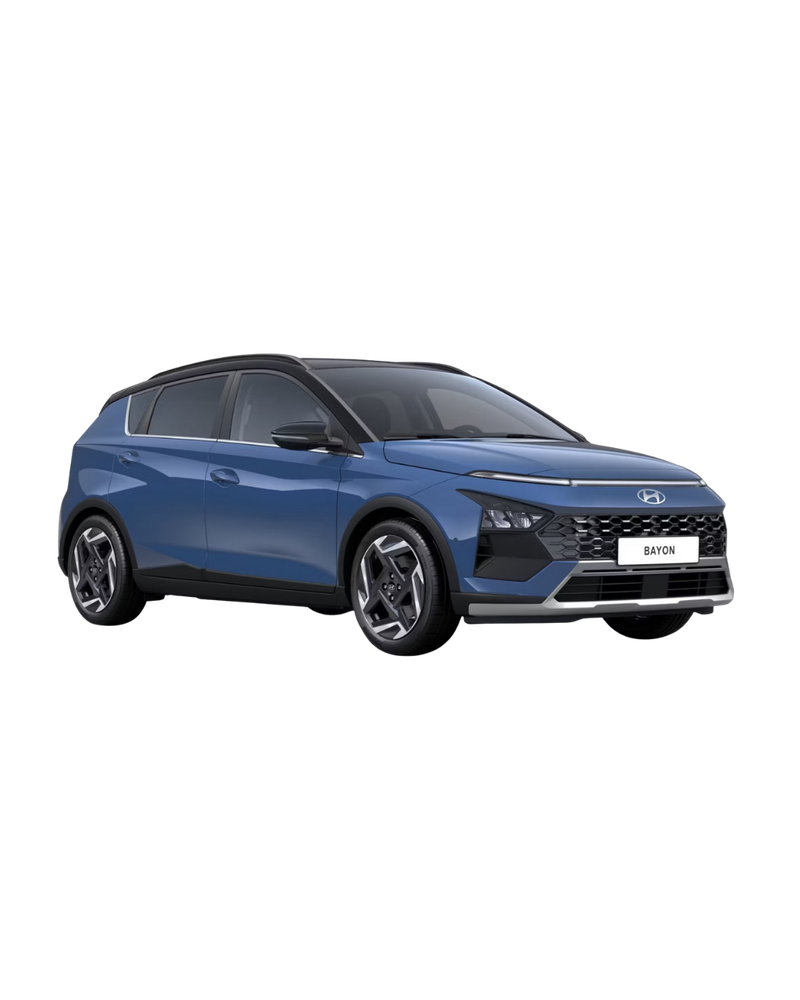
Hyundai India has fully revealed their upcoming SUV, the Hyundai Bayon, ahead of the October 26 launch yesterday. Earlier, the brand was releasing teasers, giving sneak peeks of both the exterior and the interior. Now we have a clear picture of what the Bayon will look like, which will be positioned between Venue and Creta. It is built on the Hyundai's latest 'Art of Steel' design language, which makes it a one-of-a-kind-looking car in the entire lineup of this South Korean brand. In this article, we'll talk about its design, interior, powertrain, and expected price for a better understanding of the vehicle. Also, pre-bookings started on 23rd September.
Hyundai Bayon Exterior
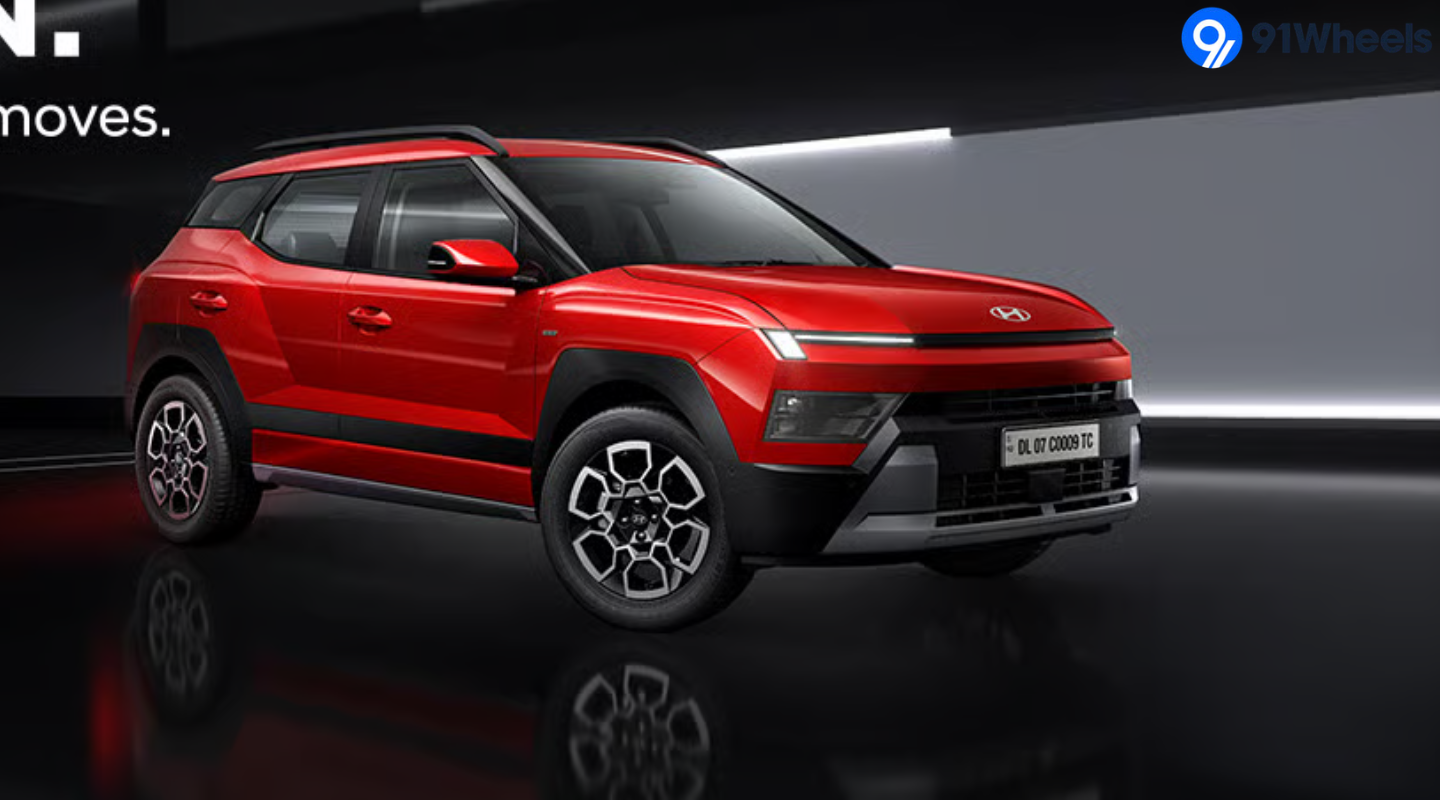
The Hyundai Bayon, in pictures, appears like a toned-down version of the Hyundai Tucson, which is sold in international markets. It has a proper crossover silhouette with plenty of cladding, beefed-up wheel arches, and an off-road-like bumper design. From certain angles, it gives the impression of a crossover version of the Hyundai i20 with a new design. The front fascia features inverted L-shaped LED DRLs, while the bumper houses the LED headlights. We also noticed a radar sensor for Level 2 ADAS and front parking sensors that extend towards both sides of the bumper.
The side profile is another interesting section of the Hyundai Bayon, as we see thick cladding with inflated wheel arches and another thick strip of cladding connecting both wheel arches. This leads us to the diamond-cut alloy wheels, which look fantastic with their six-petal design. We also spotted an 'Auto' badge, denoting its automatic gearbox. Moreover, it doesn't have flush door handles; instead, it gets conventional pull-type handles, along with dual-tone ORVMs, blacked-out A-pillars, and a small quarter-glass area.
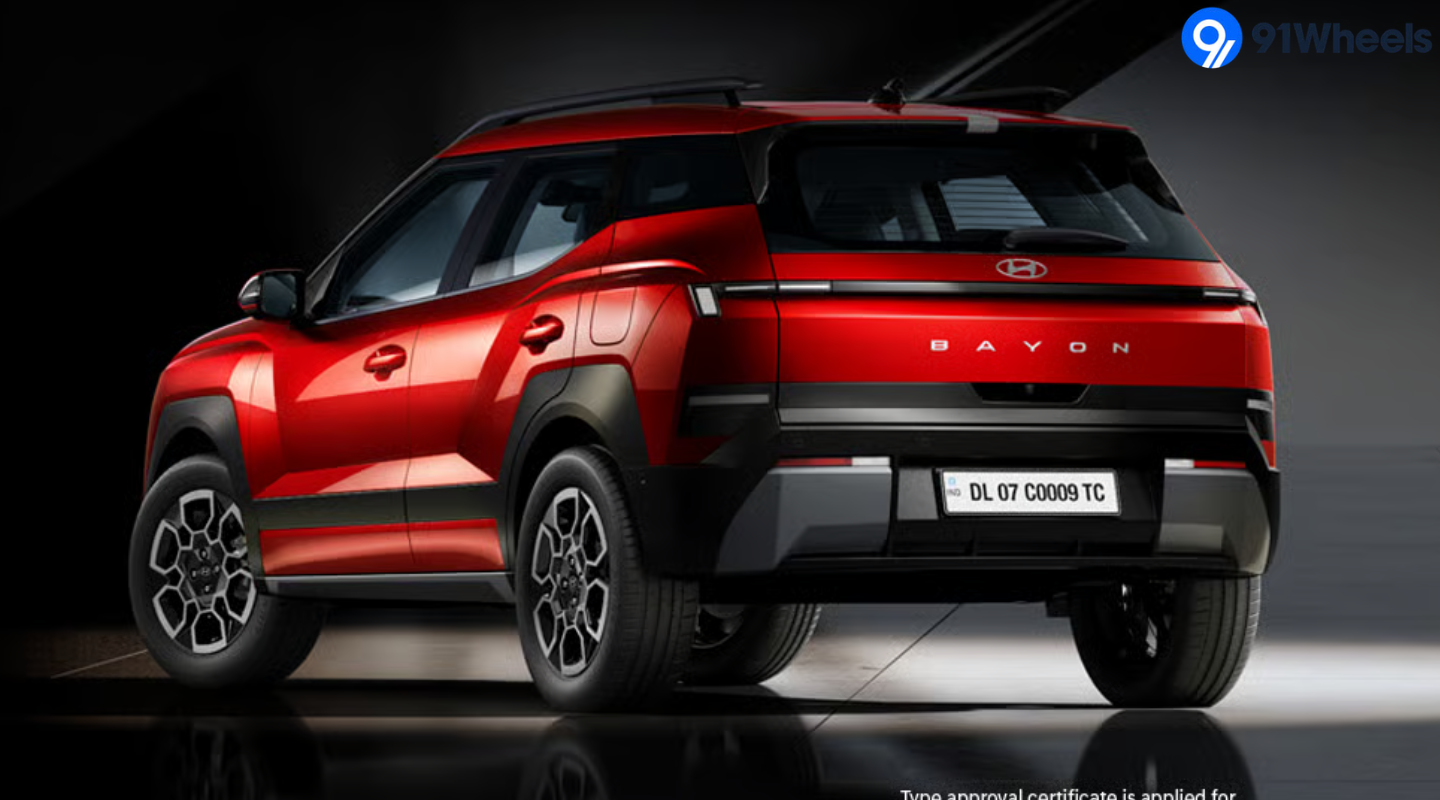
Moving to the rear, we see thin LED tail-lights, a small boot, and a busy bumper featuring a silver skid plate, reverse light, and reflectors. There is also a thick piano-black strip running across the tail-lights. In the middle, we see the Bayon lettering. Interestingly, the spoiler features a brake light, which we believe will look cool once illuminated.
Overall, the design is quite busy, with too many things going on to make it appear like an big SUV, but the fact is this is going to be a just another crossover.
Hyundai Bayon Interior
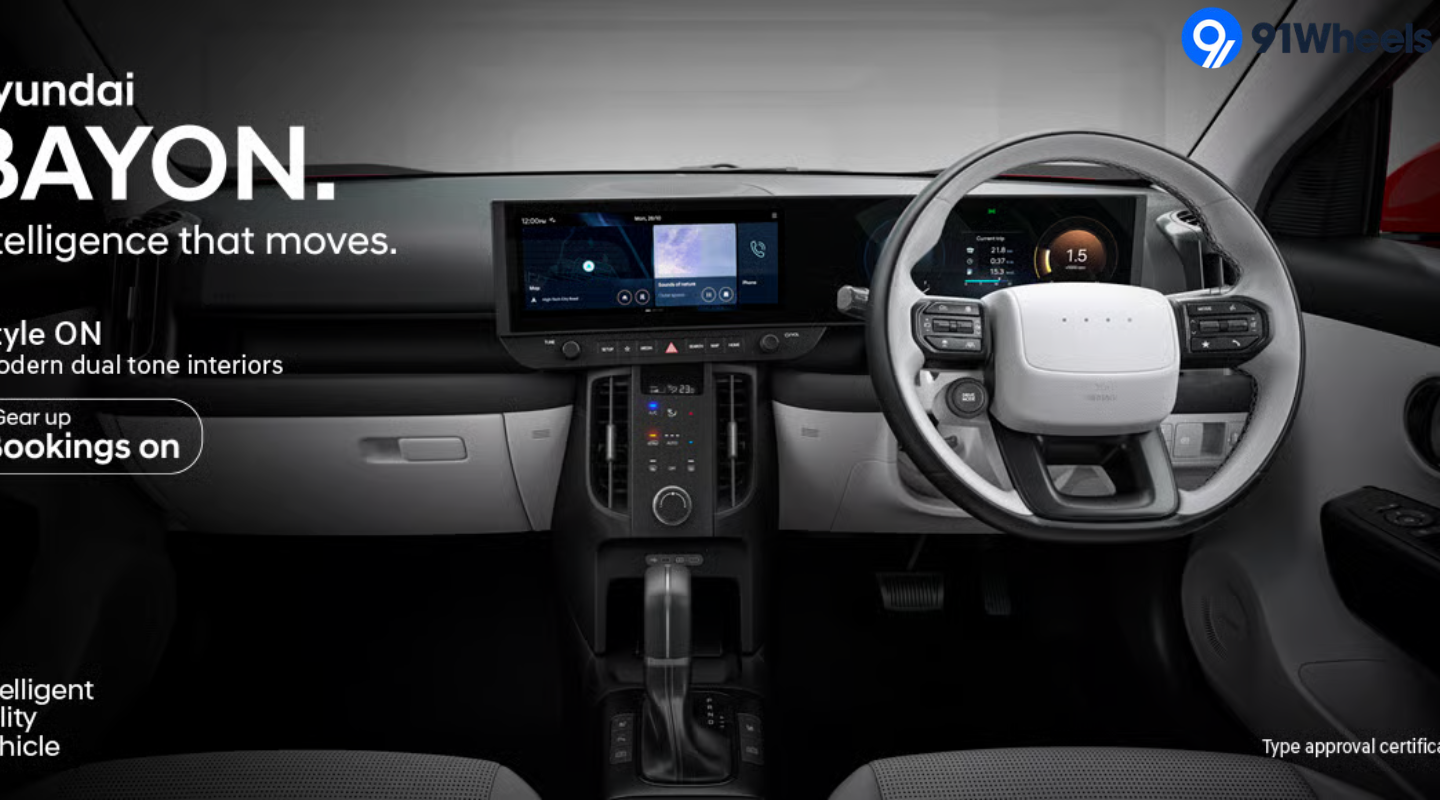
The interior of the Hyundai Bayon resembles that of the latest-generation Hyundai i20, which is currently on sale in Brazil. It gets dual 12.3-inch screens, with the infotainment screen tilted slightly towards the driver with physical buttons at bottom of it. The steering wheel is the same as the one seen on the new Venue and Verna, featuring four dots instead of the Hyundai logo. It has control switches on both sides, along with a rotary-style drive mode selector.
That said, the most unique design elements are the AC vents and controls, which are positioned at an angle. Below them, there is space for a wireless charging pad, followed by two USB-C ports. Further down, we see the automatic gear selector, with switches for ventilated seats, auto hold, a 360-degree parking view, and more positioned alongside it.
We see white leatherette seats, two cupholders, and Bose speakers, with around eight speakers in total.
Hyundai Bayon Engine
As the Hyundai Bayon is over 4 metres long, it is unlikely to feature the 1.2L naturally aspirated petrol engine. Instead, it could get a larger 1.5L petrol engine producing 115PS and 144Nm of torque, paired with either a 6-speed manual or a CVT gearbox. There could also be a 1.5L diesel engine producing 115PS and 250Nm of torque, with 6-speed manual and 6-speed torque converter automatic gearbox options.
Moreover, the Bayon might also come with a CNG setup, as it will compete directly with the Maruti Suzuki Victoris. If this happens, the Bayon could become the first mid-size SUV to offer a factory-fitted CNG option, as even the Hyundai Venue does not get one.
Hyundai Bayon Price
As per 91Wheels, the upcoming Hyundai Bayon is expected to launch at a starting price of Rs 9.20 lakh (ex-showroom), with prices going up to Rs 18.50 lakh. Positioned between the Venue and Creta, the Bayon is expected to offer 1.5L petrol, diesel, and CNG powertrain options at these price points.
Do you like this article?
Comments
No comments yet. Be the first to comment!