KEY HIGHLIGHTS
- Hyundai i20 fourth generation photos leaked in Brazil
- New leaks showcase the upcoming Hyundai i20 inside and out
- India launch expected in 2027
- Interior features a massive screen panel
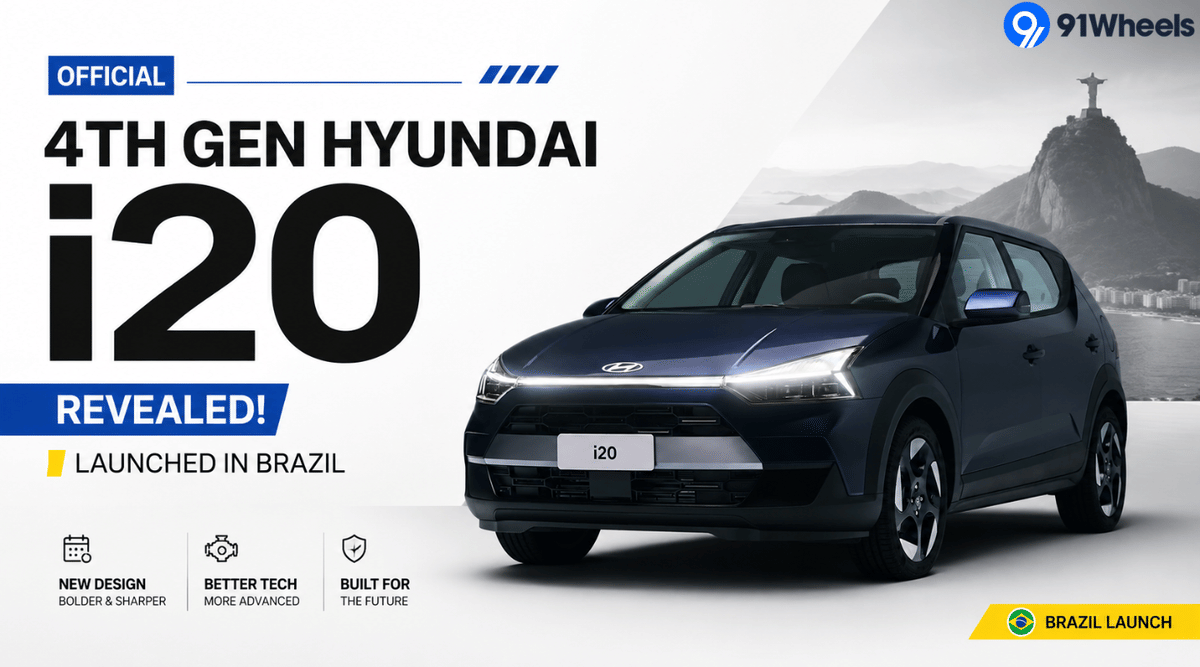
The fourth-generation Hyundai i20 has made its debut in Brazil, with a fresh set of images revealing the hatchback's complete exterior and interior design. The latest visuals leave little to the imagination, showcasing the car from virtually every angle.
In this article, we take a closer look at the new i20's design and highlight the key changes Hyundai has made for its latest-generation premium hatchback. Before we begin, don't forget to join the 91Wheels Whatsapp Channel to stay updated with the latest automotive news, reviews, and industry developments.
Also Read: Skoda Kodiaq RS Bookings To Start On June 22; Launch Expected Soon
Hyundai i20

The official images offer a comprehensive look at the fourth-generation Hyundai i20 from virtually every angle. The hatchback adopts a noticeably more rugged, SUV-inspired design than its predecessor, thanks in part to the pronounced wheel arches finished in black cladding rather than body-coloured panels. The new model also appears wider and taller, while its increased ground clearance lends it a stronger crossover-like presence on the road.
Front Profile

The fourth-generation i20 shares little resemblance with the model it replaces. Up front, the hatchback adopts an EV-inspired design language, featuring a clean fascia without a conventional grille. Instead, the air intakes are neatly integrated into the dual-tone front bumper. The wide headlamps incorporate an inverted Y-shaped LED signature, drawing similarities to the latest Hyundai Elantra, while a full-width LED light bar further accentuates the modern look. Overall, Hyundai has opted for a clean and uncluttered design approach, giving the new i20 a more premium and sophisticated road presence.
Side Profile

The side profile introduces one of the i20's most distinctive design elements - a notably upright A-pillar, a trait commonly seen on SUVs and crossovers. Combined with a larger windshield, it gives the hatchback a more commanding stance and potentially improves outward visibility.
The A and C-pillars have been completely redesigned, with the latter ending in a sharp triangular element that adds a stylish touch. Black wheel-arch cladding further enhances the crossover-inspired look, while conventional pull-type door handles have been retained. Completing the profile are new dual-tone alloy wheels, which appear to be 17-inch units.
Rear Profile

The rear is arguably the most polarising angle of the new i20. It carries a strong EV-inspired look, with slim, inverted-triangle tail-lamps connected by a full-width LED light bar. The upright tailgate design also gives it a van-like appearance from certain angles.
Adding some contrast is the dual-tone bumper, which features a silver skid-plate element that helps break the visual monotony. The bumper also houses the reflectors and reverse lamps. Overall, this is the most radical part of the design, and it's likely to divide opinions among buyers
Interior

The images also offer a look at the cabin, which appears significantly more modern than before. Taking centre stage is a panoramic display setup comprising a 10.25-inch infotainment screen and a 10.25-inch digital instrument cluster, similar to the layout seen on the new-generation Hyundai Venue.
The dashboard looks cleaner and more premium, with lower-mounted AC vents and fewer physical buttons. The steering wheel appears to be a new unit featuring Hyundai's four-dot design theme, while redesigned oval-shaped door handles and dual-tone upholstery further elevate the cabin's appeal. Lastly, the boot space is of 346 litres.
India Bound?
The new-generation i20 is expected to make its debut in Brazil before reaching markets such as Europe and South Korea. Hyundai could then introduce the hatchback in other regions, including India, where the i20 has been a key part of the brand's portfolio since its launch in 2008.
As for the powertrain, major changes are unlikely. The existing 1.2-litre Kappa petrol engine remains a refined and well-suited option for a car of this size. Hyundai could also consider offering the 1.0-litre turbo-petrol engine currently seen in the i20 N Line and Venue, depending on market requirements.
While Hyundai has not confirmed a timeline yet, the new-generation i20 is expected to arrive sometime in 2027.
Do you like this article?
Comments
No comments yet. Be the first to comment!