2020 Honda Hornet 2.0 BS6 vs TVS Apache RTR 180 vs Bajaj Pulsar 180F - Spec Comparison

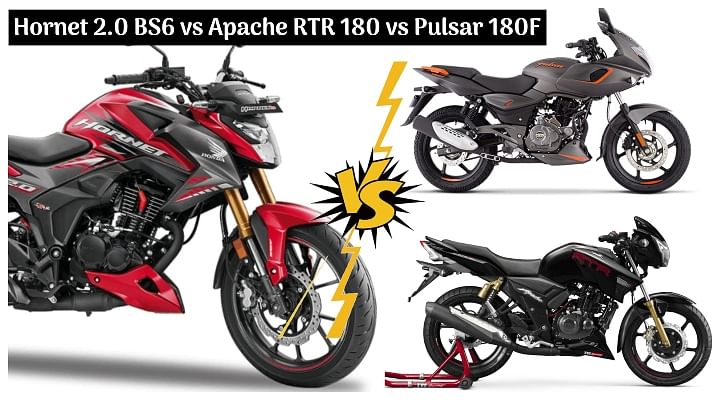
Honda Two-wheelers has today finally launched the highly-anticipated BS6-compliant Hornet in India. The BS4 Hornet was a 160cc premium commuter but now Honda has positioned it a segment above. The new Hornet 2.0 BS6 has been launched as a sub-200 motorcycle in India and it draws its power from an all-new 184cc engine. So, instead of comparing it with the 200cc motorcycles with which it competes indirectly, we thought of comparing it with its direct 180cc rivals. Here we have for you a detailed specification-based comparison of the new 2020 Honda Hornet 2.0 BS6 vs TVS Apache RTR 180 vs Bajaj Pulsar 180F.
Hornet 2.0 BS6 vs Apache RTR 180 vs Pulsar 180F: Looks and Colour Options
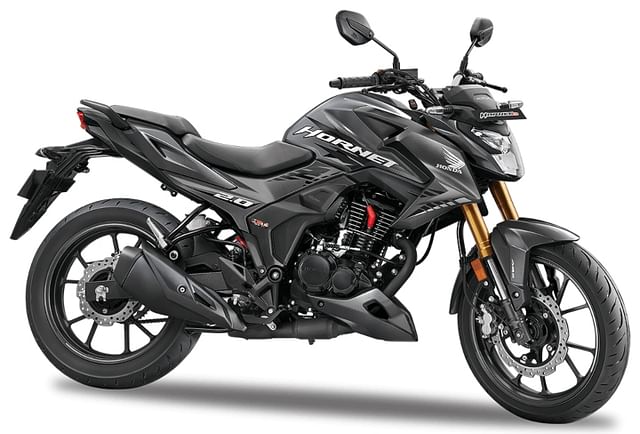
The Honda Hornet 2.0 is the newest motorcycle of the lot and it looks damn attractive. This naked motorcycle has a sleek profile and at the front, it gets an all-LED headlamp. From the side, the motorcycle looks very sharp as it has bold cuts and creases, tank extensions, a stubby exhaust and a belly-pan that gives it an even sportier appeal. At the rear, it gets split grab rails, LED taillamps and it gets LED turn indicators too. The new Hornet is available in four stunning colour options. They are Pearl Igneous Black, Matte Sangria Red Metallic, Matte Axis Grey Metallic and Matte Marvel Blue Metallic.
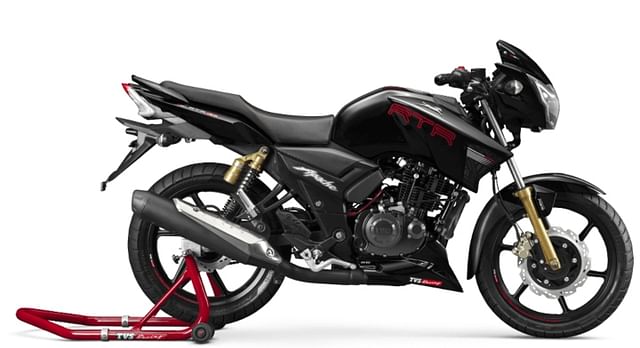
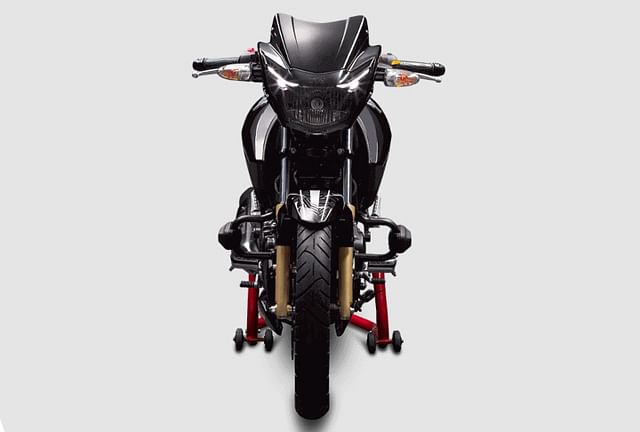
The TVS Apache RTR 180 is a premium 180cc commuter motorcycle. Though it is an old motorcycle, it still looks very sporty. At the front, it gets a sharp-looking headlamp with aggressive LED DRLs. The sporty character of the motorcycle can be seen on the side profile too. It gets sharp tank extensions and a belly pan to enhance the look and also to protect the engine. It also gets some golden elements and chrome inserts on the exhaust. At the rear, it gets LED taillamps and split grab rails. It is also available in four colour options - Pearl White, Matte Blue, Gloss Black and T Grey.
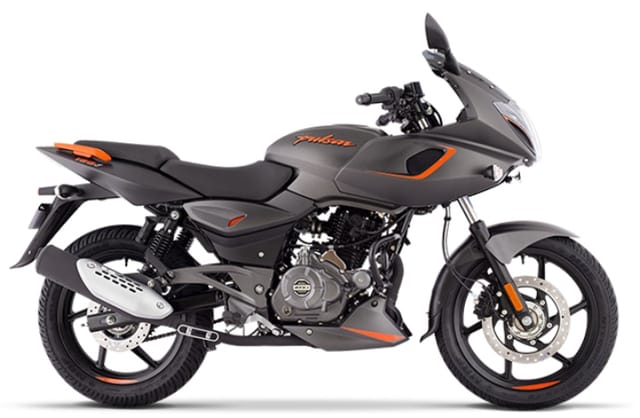
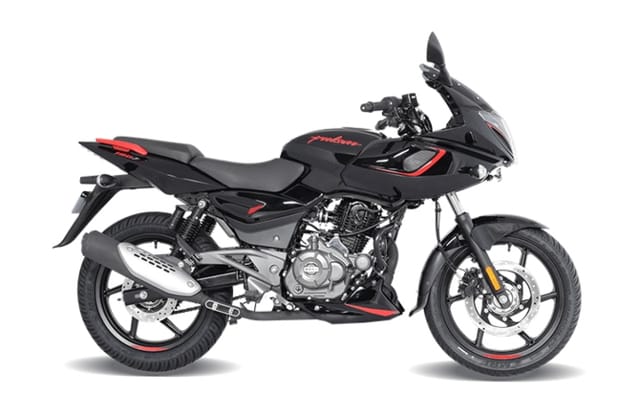
Unlike other motorcycles in our comparo, the Pulsar 180F is a semi-faired motorcycle. In terms of looks, the Pulsar 180F is completely identical to the legendary Pulsar 220F and so it has a great road presence. At the front, it gets a projector headlamp and the rear-view mirrors are positioned on the body panels. Being a semi-faired motorcycle, it looks very bulky from the side and has a macho appeal with healthy proportions. At the rear, it gets signature Pulsar LED taillight. The Pulsar 180F is available in three colour options - Neon Orange, Black Red and Black Silver.
Hornet 2.0 BS6 vs Apache RTR 180 vs Pulsar 180F: Engine, Transmission and Mileage
| Specification | Hornet 2.0 | Apache RTR 180 | Pulsar 180F |
| Engine | 184.4cc, single-cylinder, fuel-injected | 177.4cc, single-cylinder, fuel-injected | 178.6cc, single-cylinder, fuel-injected |
| Maximum Power | 17.2 PS at 8500 RPM | 16.8 PS at 8500 RPM | 17.02 PS at 8500 RPM |
| Maximum Torque | 16.1 Nm at 6000 RPM | 15.5 Nm at 7000 RPM | 14.5 Nm at 6500 RPM |
| Cooling System | air-cooled | oil-cooled | air-cooled |
| Transmission | 5-speed | 5-speed | 5-speed |
| Mileage | 40-45 kmpl | 40-45 kmpl | 40-45 kmpl |
| Emission Norm | BS6 | BS6 | BS6 |
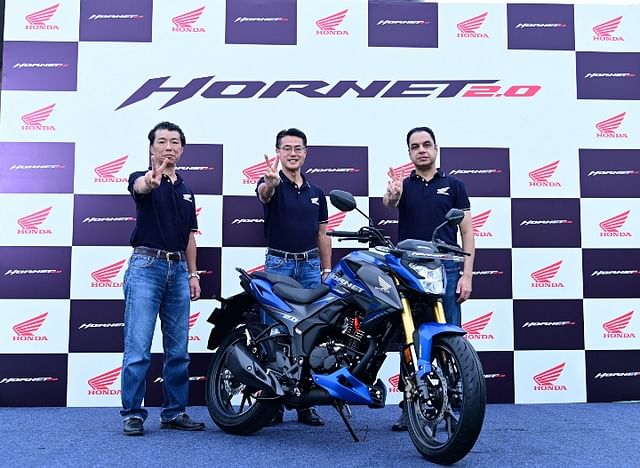
The new Hornet 2.0 is powered by a BS6-compliant 184.4cc, single-cylinder, air-cooled, fuel-injected engine. This motor churns out 17.2 PS of power at 8500 RPM and 16.1 Nm of torque at 6000 RPM. The Apache RTR 180 gets a BS6-compliant 177.4cc, single-cylinder, oil-cooled, fuel-injected engine. This motor churns out 16.8 PS of power at 8500 RPM and 15.5 Nm of torque at 7000 RPM. The Pulsar 180F draws power from a BS6-compliant 178.6cc, single-cylinder, air-cooled, fuel-injected, DTS-i engine. This motor develops 17.02 PS of maximum power at 8500 RPM and 14.5 Nm of peak torque at 6500 RPM. All these motorcycles come mated to a 5-speed manual gearbox and will deliver almost similar fuel-efficiency in real-world conditions.
Hornet 2.0 BS6 vs Apache RTR 180 vs Pulsar 180F: Chassis and Suspension
| Specification | Hornet 2.0 | Apache RTR 180 | Pulsar 180F |
| Chassis | Diamond Type | Double Cradle Synchro STIFF | NA |
| Front Suspension | USD Forks | Telescopic Forks | Telescopic Forks |
| Rear Suspension | Mono-shock | Dual MIG shocks | Dual Nitrox shocks |
The Pulsar 180F and the Apache RTR 180 gets telescopic forks at the front and gas-charged dual-shock absorbers at the rear. But, the Honda Hornet 2.0 gets segment-first upside-down (USD) front forks and a mono-shock absorber at the rear.
Hornet 2.0 BS6 vs Apache RTR 180 vs Pulsar 180F: Tyres and Brakes
| Specification | Hornet 2.0 | Apache RTR 180 | Pulsar 180F |
| Tyre Size | 110/70-17 (front) 140/70-17 (rear) | 90/90-17 (front) 110/80-17 (rear) | 90/90-17 (front) 120/80-17 (rear) |
| Tyre Type | tubeless | tubeless | tubeless |
| Front Brake | 276 mm (disc) | 270 mm (disc) | 280 mm (disc) |
| Rear Brake | 220 mm (disc) | 200 mm (disc) | 230 mm (disc) |
| ABS | single-channel | single-channel | single-channel |
All these motorcycles run on 17-inch tubeless tyres. However, they are shod in tyres of different size (section) and the exact size of the tyres of these motorcycles are mentioned in the table above. Also, for braking duties, all these motorcycles get disc brakes at either end. However, the Hornet and the Apache gets petal discs while the Pulsar gets normal disc brakes. Also, they are equipped with a single-channel ABS as an additional safety aid.
Also Read: 2020 Hero Xtreme 160R BS6 Vs TVS Apache RTR 160 4V BS6 - Which One Should You Buy And Why?
Hornet 2.0 BS6 vs Apache RTR 180 vs Pulsar 180F: Dimensions and Capacity
| Specification | Hornet 2.0 | Apache RTR 180 | Pulsar 180F |
| Length | 2047 mm | 2085 mm | 2035 mm |
| Width | 783 mm | 730 mm | 750 mm |
| Height | 1064 mm | 1105 mm | 1165 mm |
| Seat Height | NA | 790 mm | NA |
| Wheelbase | 1355 mm | 1300 mm | 1350 mm |
| Ground Clearance | 167 mm | 170 mm | 165 mm |
| Fuel Tank Capacity | 12L | 12L | 15L |
| Weight | 142 kgs | 141 kgs | 156 kgs |
Honda Hornet 2.0 BS6 vs Apache RTR 180 vs Pulsar 180F: Features
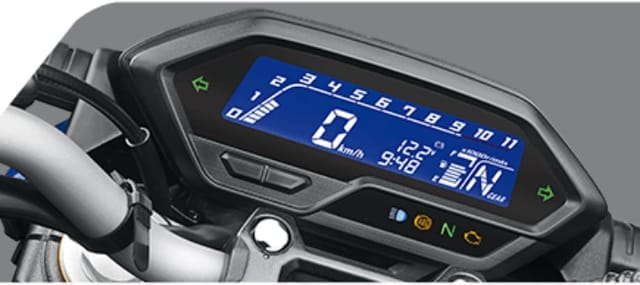
Among these three motorcycles, Honda Hornet is the most feature-loaded offering. It gets an all-digital instrument cluster and it is loaded with a ton of information including gear-position indicator. The Hornet also gets an engine kill button, hazard light switch, etc. The Apache and the Pulsar get a semi-analogue semi-digital instrument cluster, in which the tachometer is analogue while all other information is displayed digitally. The Apache RTR 180 also gets GTT or Glide Through Technology which is a boon in traffic.
Honda Hornet 2.0 BS6 vs Apache RTR 180 vs Pulsar 180F: Price and Verdict
| Model | Hornet 2.0 | Apache RTR 180 | Pulsar 180F |
| Price (Ex-showroom Delhi) | Rs. 1.27 lakhs | Rs. 1.05 lakhs | Rs. 1.11 lakhs |
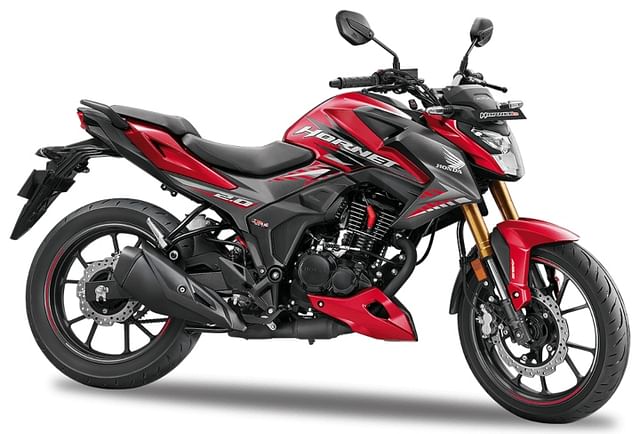
The new 2020 Honda Hornet 2.0 BS6 is priced at Rs. 1.27 lakhs, the TVS Apache RTR 180 is priced at Rs. 1.05 lakhs while the Bajaj Pulsar 180F is priced at Rs. 1.11 lakhs. All prices stick to Ex-showroom Delhi. Finally, talking about the verdict, so if you want a decent comfortable motorcycle with good performance in the budget, then you should get the Apache RTR 180. If you want to enjoy a big-bike feel in the budget, then you should get the Pulsar 180F. But, if you do not have any budget constraints and want a stylish, power-packed and feature-loaded naked motorcycle, then you should definitely get the new Honda Hornet 2.0 BS6.
Also Read: MG Hector Plus Accessories Price - Genuine Exterior, Interior And Essential MG Accessories With Price List
This was our detailed spec-comparison of the new 2020 Honda Hornet 2.0 BS6 vs TVS Apache RTR 180 vs Bajaj Pulsar 180F. Which among these will be your pick? Tell us in the comments below. You can also join our 91Wheels Two-wheelers group (click via mobile to join) curated exclusively for the fans, enthusiasts and the owners. Also, subscribe to our YouTube channel for more such amazing motoring updates.
Do you like this article?
Comments
No comments yet. Be the first to comment!