Tata Motors has recently launched the Aeris, a rebranded Tigor in a new avatar. Prices start at Rs 6.29 lakh and go up to Rs 9.74 lakh, ex-showroom. Its direct rivals are the Maruti Dzire, Hyundai Aura and Honda Amaze. However, anyone planning to buy a Tiago CNG with an AMT should consider the Aeris as well.
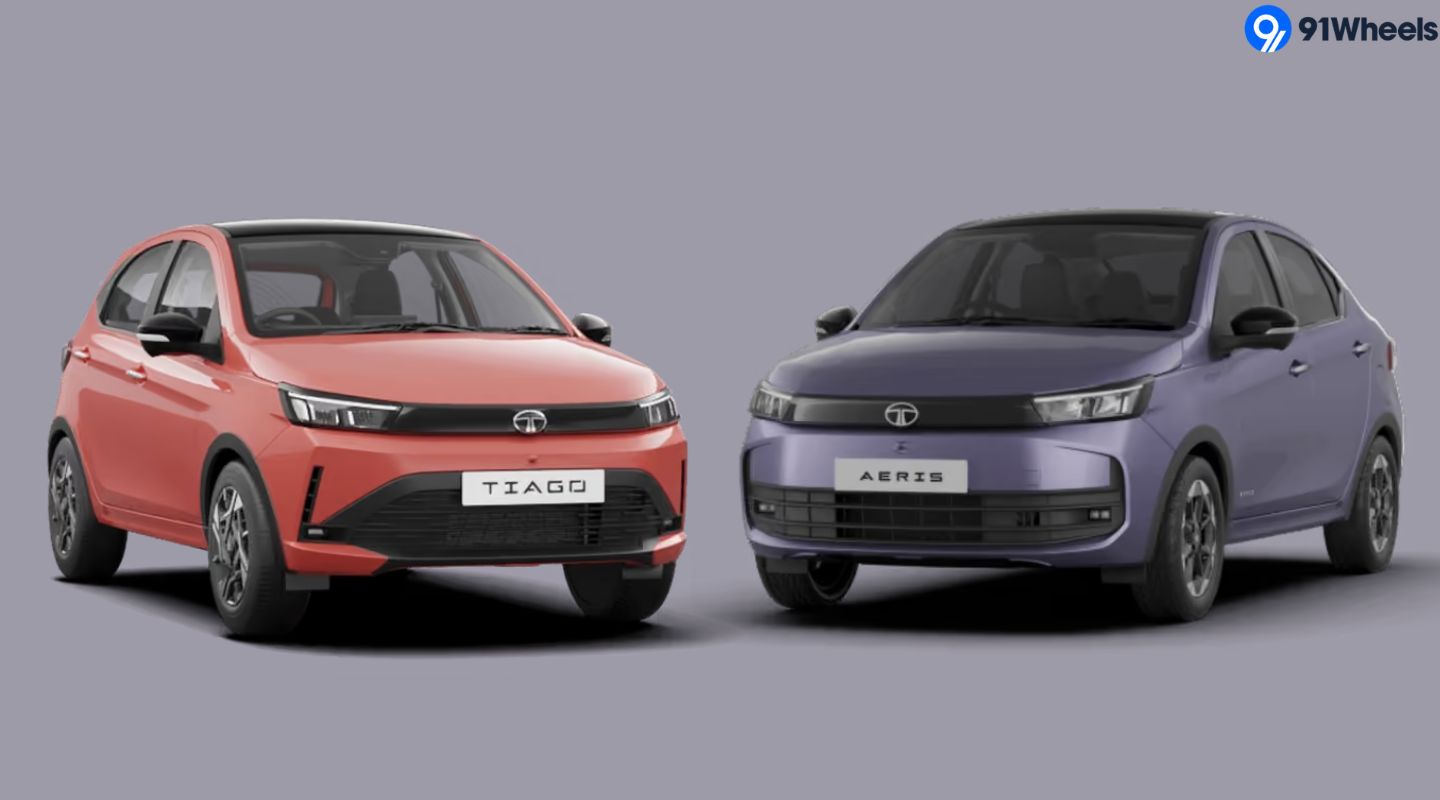
Tata is known for its focus on safety and new technology. It's the brand that introduced twin-cylinder CNG technology, which helps create usable boot space, and it was also the first to offer a CNG car with an AMT gearbox. On top of that, Tata introduced the direct CNG start feature. But what happens when all this same technology is offered in two different cars with different body styles? The Tata Tiago CNG and the Tata Aeris CNG share the same engine, the same CNG tech, and almost identical features. Let's find out the difference between the Tata Tiago CNG and the Tata Aeris CNG in this comparison.
Dimensions
Dimension | Tata Tiago iCNG | Tata Aeris iCNG |
|---|---|---|
Length | 3,813 mm | 3,995 mm |
Width | 1,684 mm | 1,684 mm |
Height | 1,535 mm | 1,532 mm |
Wheelbase | 2,400 mm | 2,450 mm |
Ground clearance | 170 mm | 170 mm |
Tata Aeris is 182 mm longer compared to Tata Tiago. It also offers more legroom with a 50 mm more wheelbase on offer. Aeris being a sedan offers a more dedicated boot space compared to Tiago. However, the width, height and ground clearance are almost identical.
Interior
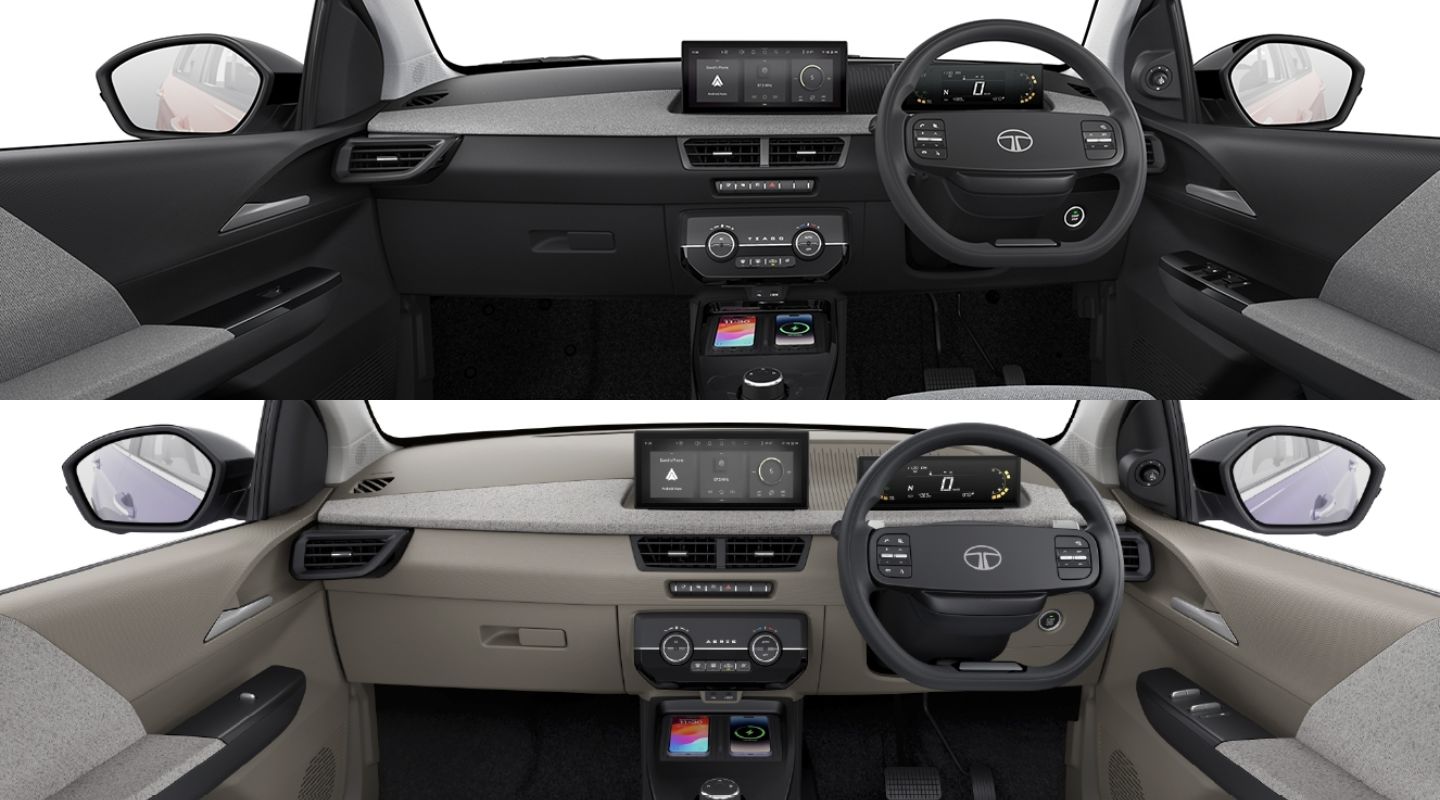
Both the CNG cars have almost identical interiors. The Aeris comes with a beige-colored interior, which looks more open, whereas the Tiago comes with a black interior, which looks a bit claustrophobic. They both come with the same screens for infotainment and driver display.
Engine and Performance
Spec | Tata Tiago iCNG | Tata Aeris iCNG |
|---|---|---|
Engine | 1.2L Revotron, 3-cyl | 1.2L Revotron, 3-cyl |
Displacement | 1,199cc | 1,199cc |
Power (CNG mode) | 75.5 PS @ 6,000rpm | 75.5 PS @ 6,000rpm |
Torque (CNG mode) | 96.5 Nm @ 3,500rpm | 96.5 Nm @ 3,500rpm |
Transmission | 5-speed MT or 5-speed AMT | 5-speed MT or 5-speed AMT |
CNG tank capacity | 70 litres (twin-cylinder) | 70 litres (twin-cylinder) |
Both the cars are mechanically identical under the hood with the same engine, power output and torque. They both have the same twin-cylinder CNG setup with the same capacity. Even the transmission option on offer is the same in both, manual and automatic.
Features
Both cars have direct CNG start, thermal incident protection and gas leak detection, paddle shifters with AMT, and six airbags as standard. The major difference is that the Aeris CNG gets a 360-degree camera along with a dashcam. The Tiago only gets a 360-degree parking camera.
On the convenience front, the Aeris CNG offers ventilated seats and a cooled glove box. Indian summers are very harsh, so these features, for a small push in budget, can make your drive easier for years to come.
Price and Variants
MT Comparison
Tata Tiago iCNG Variant | Tiago MT Price | Difference | Aeris MT Price | Tata Aeris iCNG Variant |
|---|---|---|---|---|
Smart | Rs 5.79 lakh | Rs 50,000 | Rs 6.29 lakh | Smart |
Pure | Rs 6.49 lakh | Rs 65,000 | Rs 7.14 lakh | Pure |
Pure+ | Rs 6.99 lakh | Rs 75,000 | Rs 7.74 lakh | Pure Plus |
Pure+ A | Rs 7.49 lakh | Rs 1.00 lakh | Rs 8.49 lakh | Creative |
Creative | Rs 7.99 lakh | Rs 1.20 lakh | Rs 9.19 lakh | Accomplished |
AMT Comparison
Tata Tiago iCNG Variant | Tiago AMT Price | Difference | Aeris AMT Price | Tata Aeris iCNG Variant |
|---|---|---|---|---|
Smart | – | – | – | Smart |
Pure | Rs 7.05 lakh | Rs 64,000 | Rs 7.69 lakh | Pure |
Pure+ | Rs 7.55 lakh | Rs 74,000 | Rs 8.29 lakh | Pure Plus |
Pure+ A | Rs 8.01 lakh | Rs 1.03 lakh | Rs 9.04 lakh | Creative |
Creative | Rs 8.55 lakh | Rs 1.19 lakh | Rs 9.74 lakh | Accomplished |
The Tiago undercuts the Aeris at every trim, with a gap of nearly Rs 50,000 to Rs 75,000. However, with this extra premium, buyers get a few more features, like ventilated seats, more legroom and a more practical boot. The Aeris also makes more sense as a sedan, since sedans are more aerodynamic than hatchbacks, which helps with fuel efficiency. This amount looks like a bigger upfront cost but can be recovered in the long run.
Do you like this article?
Comments
No comments yet. Be the first to comment!