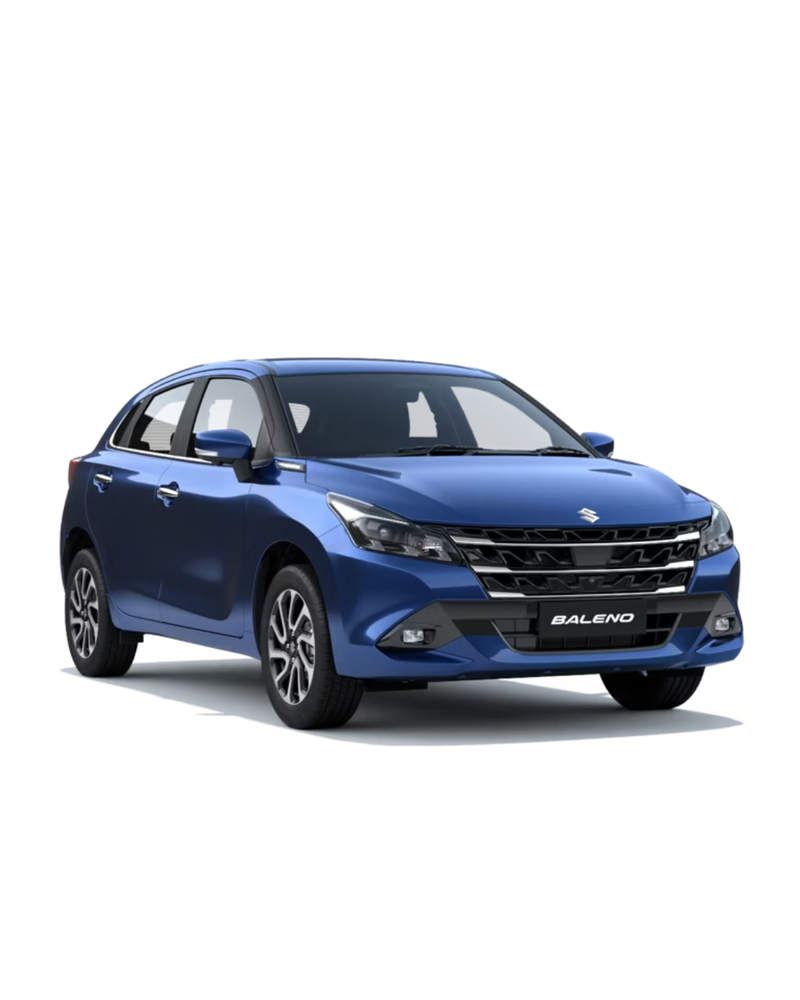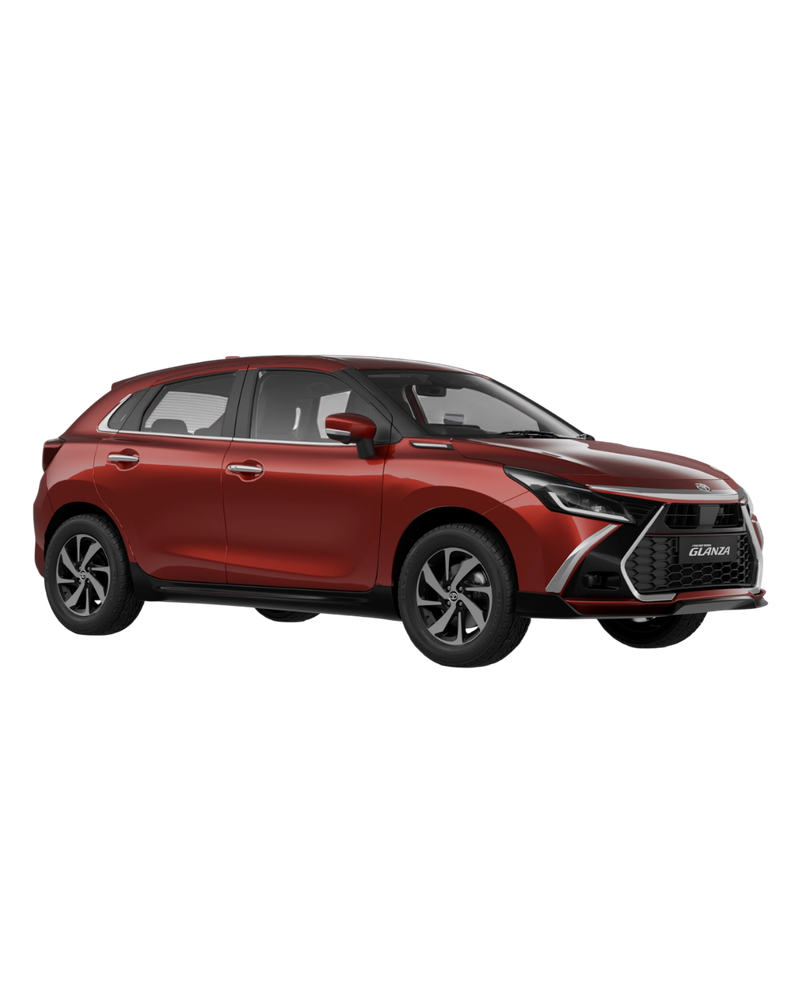
Maruti Suzuki has a habit of competing with itself. The Baleno and the Fronx are the clearest example. Both sit on the same HEARTECT platform. Both share engines, cabin switchgear, and a fair chunk of their safety kit. And yet buyers walk into Nexa showrooms every day, stare at these two, and leave more confused than when they arrived.
The price gap doesn't help settle the argument either. The Fronx costs roughly Rs 86,000 more than the Baleno at the base variant. That's not a small number for a first-time car buyer. So the real question isn't "which is the better car" in isolation. It's "which one earns that extra Rs 86,000 out of your pocket."
Quick Verdict, For Those Short On Time
If you want a straightforward, no-fuss hatchback with the best-in-class boot space and the lowest running cost, the Baleno wins on value alone. If you want SUV-like road presence, a punchier turbo-petrol option, and slightly better ground clearance for Indian roads, the Fronx justifies its premium.
Neither is a wrong choice. But they're built for two different kinds of buyers, and that's the part most comparisons gloss over.
Price and Variants: Where That Rs 86,000 Actually Goes
The Baleno's range starts at Rs 5.99 lakh and tops out around Rs 9.47 lakh (ex-showroom, Delhi). The Fronx starts at Rs 6.85 lakh and stretches up to Rs 11.98 lakh, because it also offers the 1.0-litre turbo-petrol engine that the Baleno doesn't get.
At the base Sigma trim, the difference is exactly Rs 86,000. For that money, the Fronx gives you a crossover-styled body, a larger 16-inch wheel option further up the range, and eventually access to the turbo engine and a 6-speed torque converter automatic. The Baleno, in comparison, tops out with the 1.2-litre naturally aspirated engine paired to a 5-speed AMT.
If your budget stops at the entry or mid variants, the Baleno gives you more equipment per rupee. If you're eyeing the top trims, the Fronx's price gap narrows in relative terms because you're also unlocking a genuinely different engine.
Design: Hatchback Versus Crossover
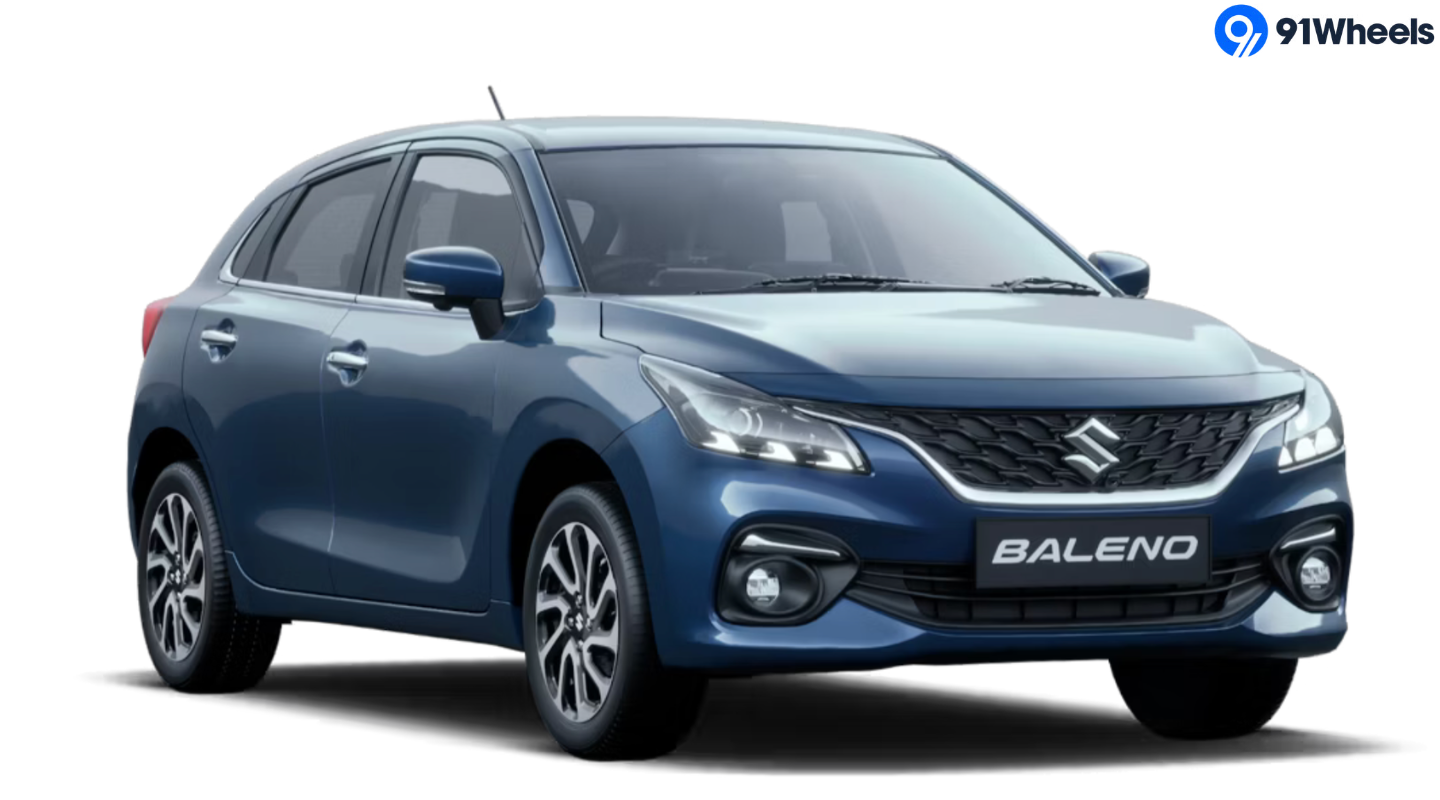
This is the easiest way to tell them apart, and honestly, the biggest reason most buyers pick one over the other before even checking a spec sheet.
The Baleno keeps Maruti's premium hatchback silhouette. Sculpted flanks, a sloping roofline, and dimensions that feel city- friendly: 3,990mm long, 1,745mm wide, 1,500mm tall.
The Fronx borrows the crossover formula. It's marginally longer at 3,995mm and noticeably wider at 1,765mm, but the real difference is height and stance. At 1,550mm tall with 190mm of ground clearance against the Baleno's 170mm, the Fronx sits higher and looks tougher. Add the SUV-style cladding and a more upright grille, and it reads as a completely different product line, even though the underpinnings are identical.
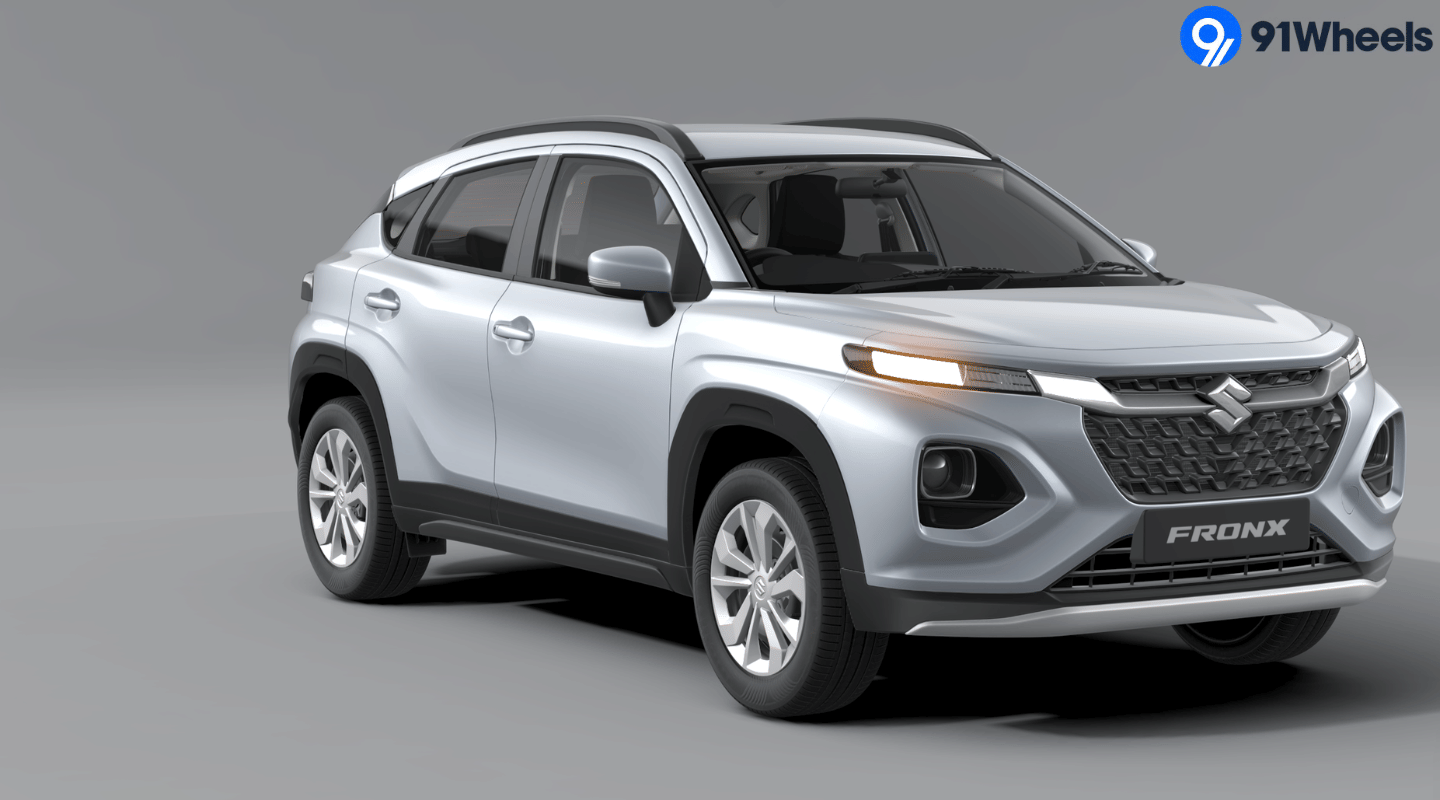
Both share the same 2,520mm wheelbase, which tells you the cabin footprint is closer than the exterior styling suggests.
Engine and Performance: Not As Similar As You'd Expect
Here's where the twins actually diverge.
The Baleno offers only the 1.2-litre K-series petrol engine, producing 89 PS at 6,000rpm and 113Nm of torque at 4,400rpm. You get it with a 5-speed manual or a 5-speed AMT. It's smooth, refined for its segment, and predictable, but it isn't quick.
The Fronx offers that same 1.2-litre engine at the lower variants, but higher up the range, it switches to a 1.0-litre Turbo Boosterjet unit. This one makes 100 PS at 5,500rpm and 147.6Nm of torque between 2,000 and 4,500rpm, a meaningful jump in both power and, more importantly, low-end pull. It also gets a mild-hybrid system and can be had with a proper 6-speed torque converter automatic instead of an AMT, which changes how the car feels in daily traffic.
If performance matters to you at all, even a little, the Fronx's turbo variant is the one to test drive before deciding anything.
Mileage and Running Costs
Fuel efficiency slightly favours the Baleno. Its 1.2-litre engine returns a claimed 22.35 to 22.94 kmpl depending on the transmission. The Fronx's naturally aspirated variant is close behind at around 21.79 kmpl. The turbo-petrol trades some of that efficiency for extra performance, but not by much. It still returns 21.5 kmpl with the manual gearbox and 20.01 kmpl with the automatic, a strong figure for a turbocharged engine of this output.
Both are available with a CNG option too, which is worth considering if your monthly running is high. Maruti's CNG tune on this 1.2-litre unit is one of the more refined ones in the segment, and it applies equally to both cars since they share the engine.
Servicing costs run close to each other given the shared parts bin, though the Baleno's simpler mechanical layout on base variants tends to keep long-term ownership costs marginally lower.
Space and Practicality
Boot space is one area where the "hatchback loses to SUV" assumption doesn't hold. The Baleno actually offers 318 litres of boot space, more than the Fronx's 308 litres. If luggage capacity is a priority, the numbers favour the car that looks smaller.
Cabin space is close between the two, given the identical wheelbase. Where the Fronx pulls ahead is entry and exit ease, thanks to its higher seating position and larger door apertures, which matter more if you regularly carry elderly passengers or small children.
Features and Technology
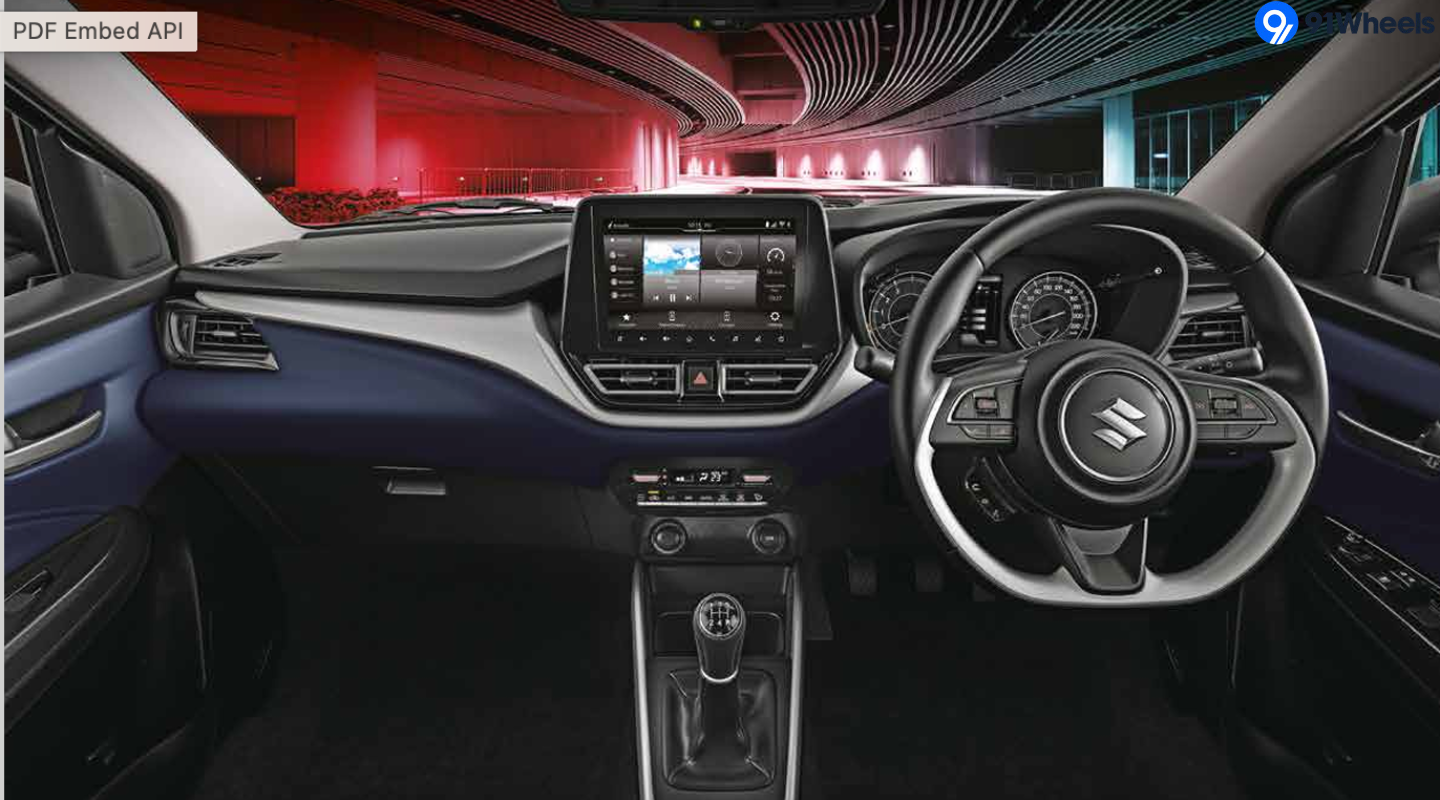
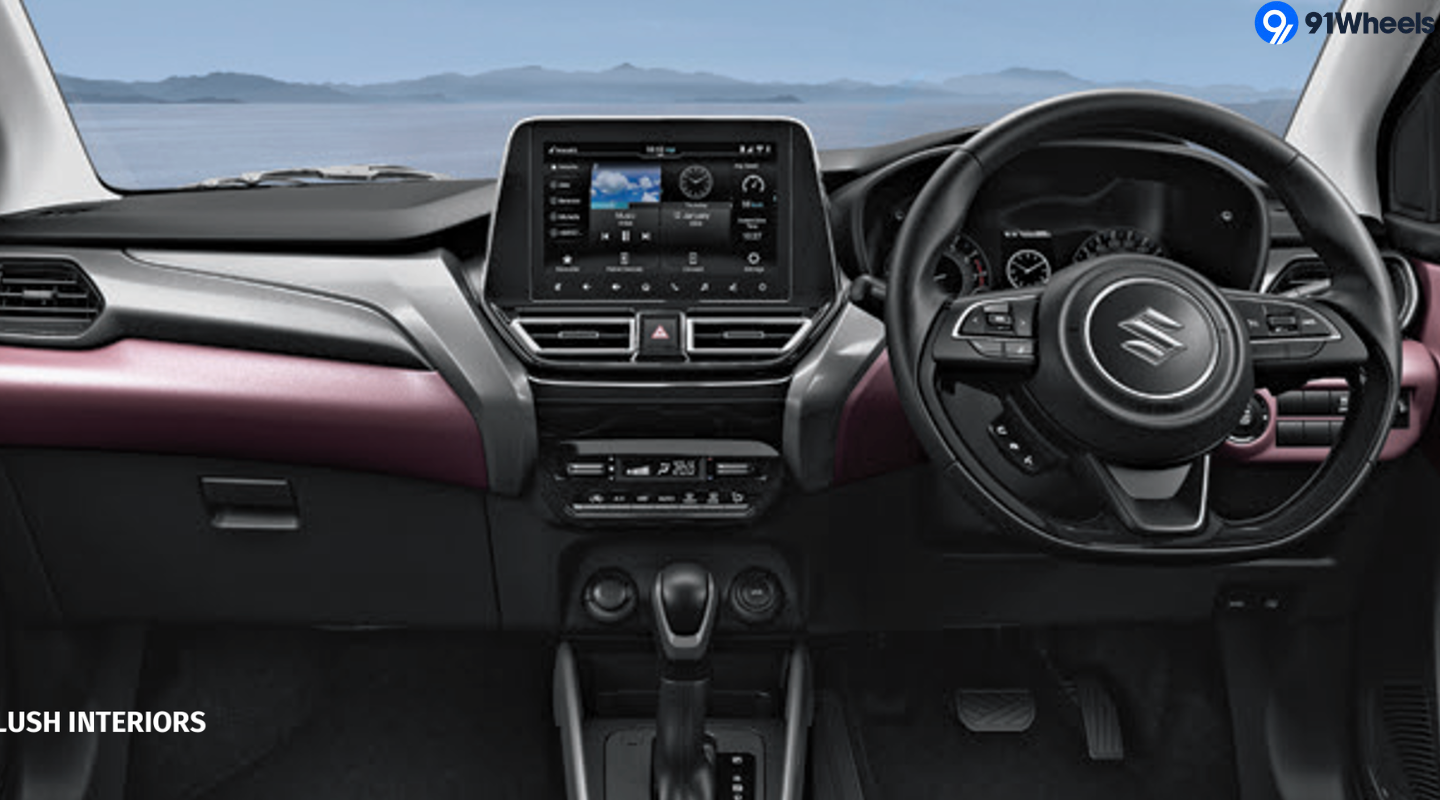
Because both cars are built off the same platform and largely the same parts bin, the shared feature list is long: head-up display, an Arkamys-tuned sound system, wireless phone charging, automatic climate control, rear AC vents, push-button start, keyless entry, and steering-mounted controls all show up on both, depending on variant.
Neither offers a sunroof, which surprises some buyers given how common the feature has become in this price bracket. If a sunroof is a dealbreaker, you'll need to look outside this pair entirely, at something like the Tata Punch or Nexon.
Both get up to 6 airbags across their range, and safety equipment tracks closely between the two once you're comparing equivalent trims.
Ride, Handling and Real-World Driving
The Baleno's lower centre of gravity and hatchback proportions make it feel more planted at 100-120 kmph and slightly more agile through city traffic. It's the car that disappears under you in a good way, doing exactly what you expect without drama.
The Fronx's added ground clearance makes it noticeably more comfortable over broken roads, speed breakers, and the kind of potholed stretches that are unavoidable in most Indian cities and towns. The trade-off is a touch more body roll in corners compared to the Baleno, though it's far from unsettling.
If your daily drive involves rough roads, unpaved stretches, or frequent highway trips where a turbo engine's extra torque helps with overtaking, the Fronx has the edge. If you're mostly driving on well-maintained city roads, the Baleno's composure works just as well for less money.
Who Should Buy The Baleno
Buy the Baleno if you want the most practical, most efficient, and most affordable version of this platform. It suits buyers who prioritise fuel economy, boot space, and a lower on-road price over outright road presence. It's also the sensible pick if you don't see yourself ever wanting the turbo engine.
Who Should Buy The Fronx
Buy the Fronx if SUV styling genuinely matters to you, if you want the option of the turbo-petrol engine down the line, or if you regularly deal with bad roads where extra ground clearance makes a real difference. It's the better pick for buyers who want their hatchback-based car to not look or feel like a hatchback.
Frequently Asked Questions
Is the Fronx just a rebadged Baleno? No. They share the HEARTECT platform, wheelbase, and base engine, but the Fronx has different body panels, a higher ground clearance, and access to a turbo-petrol engine the Baleno doesn't offer.
Is Rs 86,000 extra for the Fronx worth it? Only if you value the SUV styling, higher ground clearance, or plan to eventually pick the turbo-petrol variant. For the base naturally aspirated engine and similar features, the Baleno delivers comparable value for less money.
Which has better mileage, Baleno or Fronx? The Baleno's naturally aspirated engine is marginally more efficient, claiming up to 22.94 kmpl against the Fronx's 21.79 kmpl for the equivalent engine.
Does the Fronx have more boot space than the Baleno? No. The Baleno actually offers more boot space at 318 litres compared to the Fronx's 308 litres, despite being the smaller-looking car.
Can I get the Baleno with a turbo engine? No. The turbo-petrol 1.0-litre Boosterjet engine is exclusive to the Fronx and isn't offered on the Baleno.
The Final Word
Strip away the styling and this comparison comes down to a simple trade-off: pay more for SUV looks, extra ground clearance, and a turbo engine option, or save that Rs 86,000 and get a more efficient, more practical hatchback with a bigger boot. Neither car is objectively better than the other. They're built for different priorities on the exact same mechanical foundation, and that's precisely why Maruti sells both, and sells them well.
Do you like this article?
Comments
No comments yet. Be the first to comment!