KEY HIGHLIGHTS
- RON 95 to become the new standard from April
- Regular petrol to have octane rating of 97-98 RON
- Standardisation will happen under Bureau of Indian Standards (BIS)
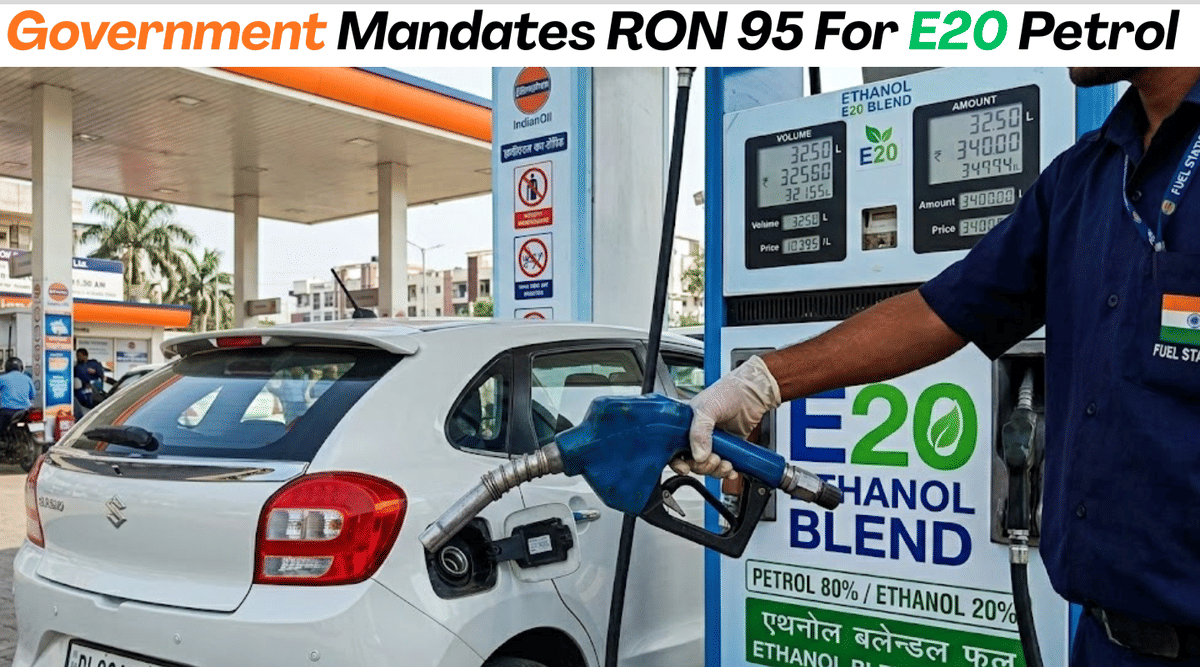
On the completion of one year since E20 fuel was standardised, the Government of India has mandated that ethanol-blended petrol will have a minimum octane rating of 95, starting from April 1, 2026. This marks the next step in the government's efforts to reduce oil imports and increase the use of ethanol in fuel. Let's understand what this means in detail. In the meantime, do join our 91Wheels Whatsapp Channel to never miss out on the latest automotive updates.
Also Read: Mahindra XEV 9S Recieves A New 'Custom' Drive Mode - Here's Why
What is Octane Rating 95?

First, an overview of what minimum octane rating means. RON (Research Octane Number) indicates a fuel's ability to resist knocking, with higher RON fuels offering better performance, efficiency, and engine protection. This is why performance-oriented cars and vehicles equipped with turbocharged engines require higher RON fuel for optimal performance and reliability.
Ethanol, which is blended with petrol, naturally has a high octane rating of around 108 RON. When 20 percent ethanol is mixed with 80 percent petrol (E20 fuel), the overall octane rating increases to around 91-92 RON. With the new government mandate of a minimum 95 RON for ethanol-blended petrol, the effective octane rating of regular fuel is expected to rise further, potentially reaching around 97-98 RON. This will help improve engine efficiency, combustion quality, and overall performance across modern vehicles.

BIC In The Picture
This time, the standardisation will happen under Bureau of Indian Standards (BIS) norms, which means the quality, blending ratio, and transportation will happen under strict check, which also leads the ethanol fuel being less-contaminated, that is the biggest reason why fuel-injectors fail at rapid pace. So, with BIS in the scene, it is expected to have a better overall quality.
Now, since the term E20 has become widely discussed among car owners, many automobile companies have introduced E20 compatibility kits for older cars, including vehicles manufactured before 2023. These kits help protect components such as the gaskets, fuel pump, and other parts of the fuel system.
Also Read: JSW Motors Teases First SUV For India, Based On Jetour T2
Verdict
The move to standardise ethanol-blended petrol with a higher minimum 95 RON is a positive step, as it will improve fuel quality, enhance engine performance, and ensure better consistency across the country. It also supports India's broader goal of reducing oil imports and promoting cleaner, locally sourced fuels. However, concerns remain for older vehicles that were not originally designed for higher ethanol content, as long-term effects on fuel system components could still be a factor despite compatibility kits. Overall, while this is a progressive move for modern engines, owners of older cars should remain mindful and ensure their vehicles are E20-compatible.
Do you like this article?
Comments
No comments yet. Be the first to comment!