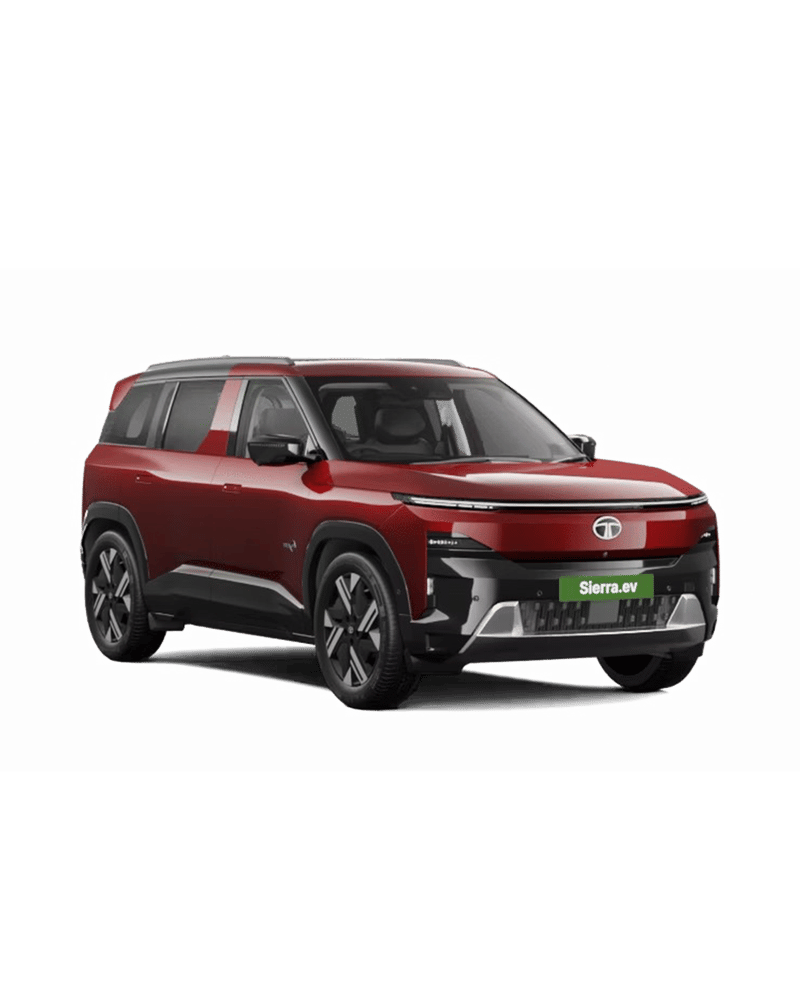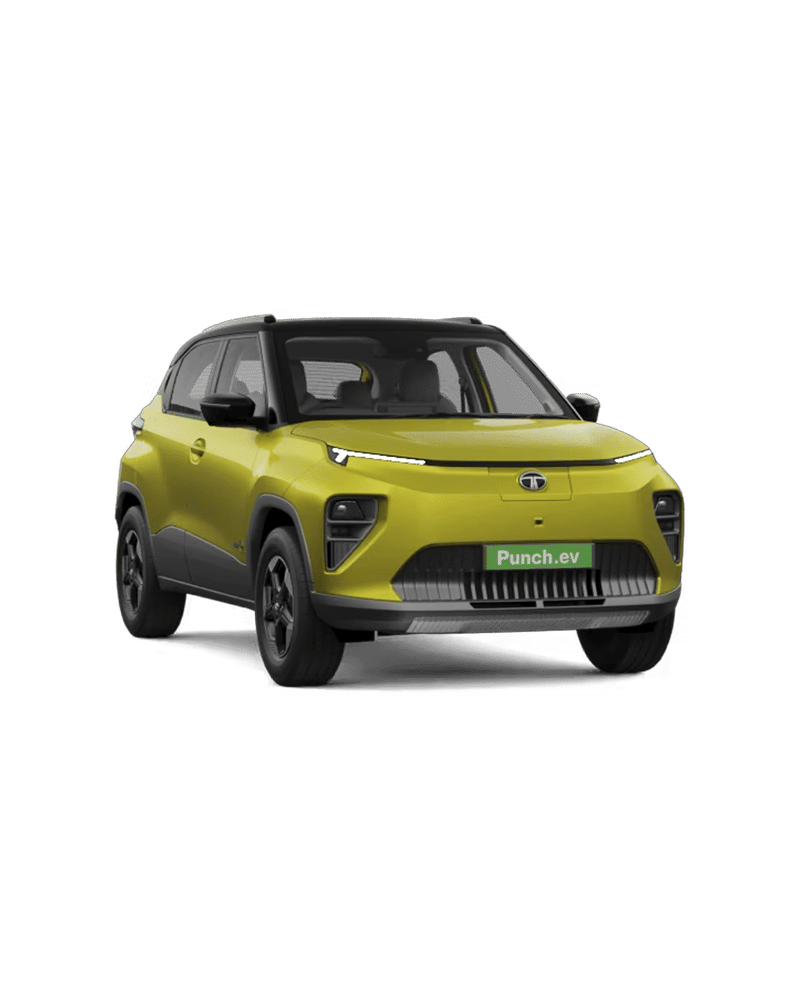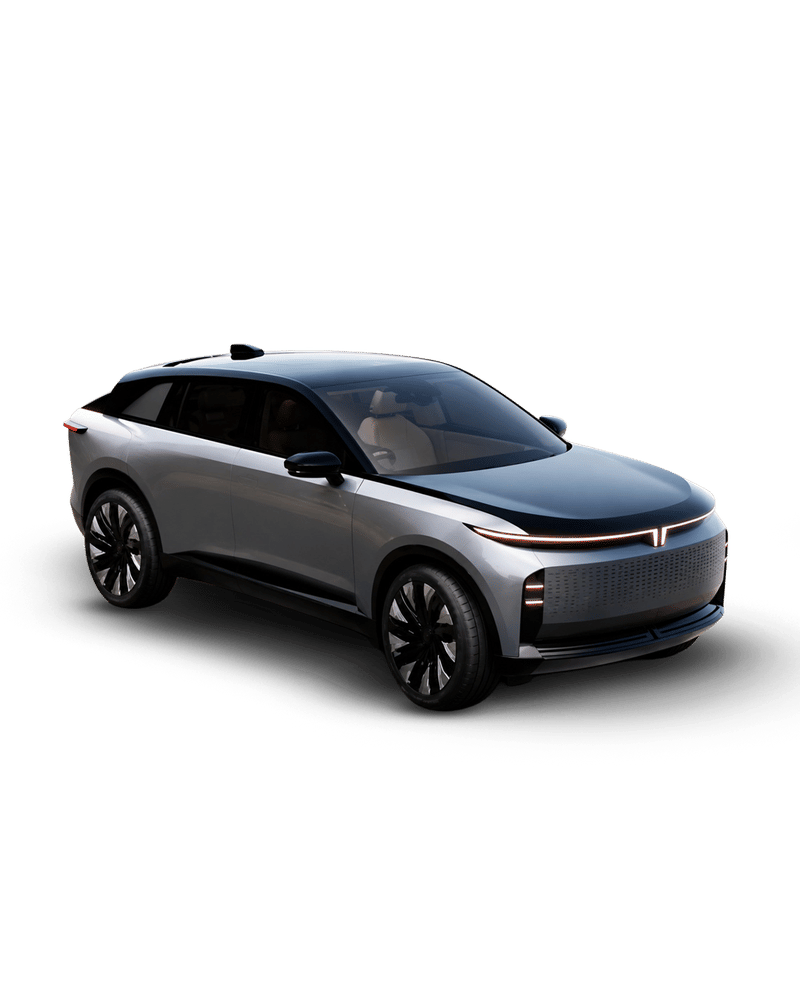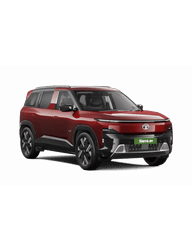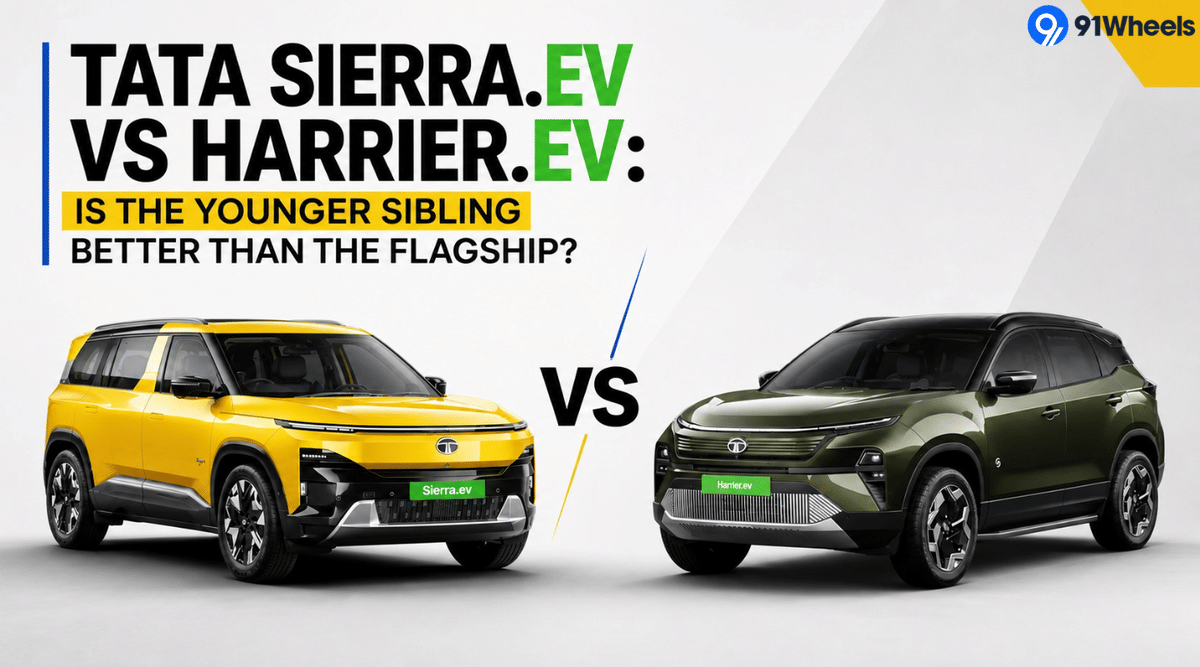
Tata Motors has finally launched the electric iteration of the Sierra after a hiatus of almost seven months. Positioned between the Curvv.ev and Harrier.ev, the Sierra EV is a significant step up from the Curvv.ev. It is larger in size, comes with a bigger 75 kWh battery pack, and features QWD technology, all of which were first introduced with the Harrier.ev. This brings us to the real question from a customer's perspective: which of these two SUVs makes more sense? Let’s dissect both vehicles to find out.
Tata Sierra.ev vs Harrier.ev - Dimensions
Dimensions | Sierra.ev | Harriev.ev |
|---|---|---|
Length | 4340 mm | 4607 mm |
Width | 1841 mm | 1922 mm |
Height | 1715 mm | 1740 mm |
Wheelbase | 2730 mm | 2741 mm |
Boot Space | 622 Litres | 502 Litres |
Frunk | 55 Litres | Upto 67 Litres |
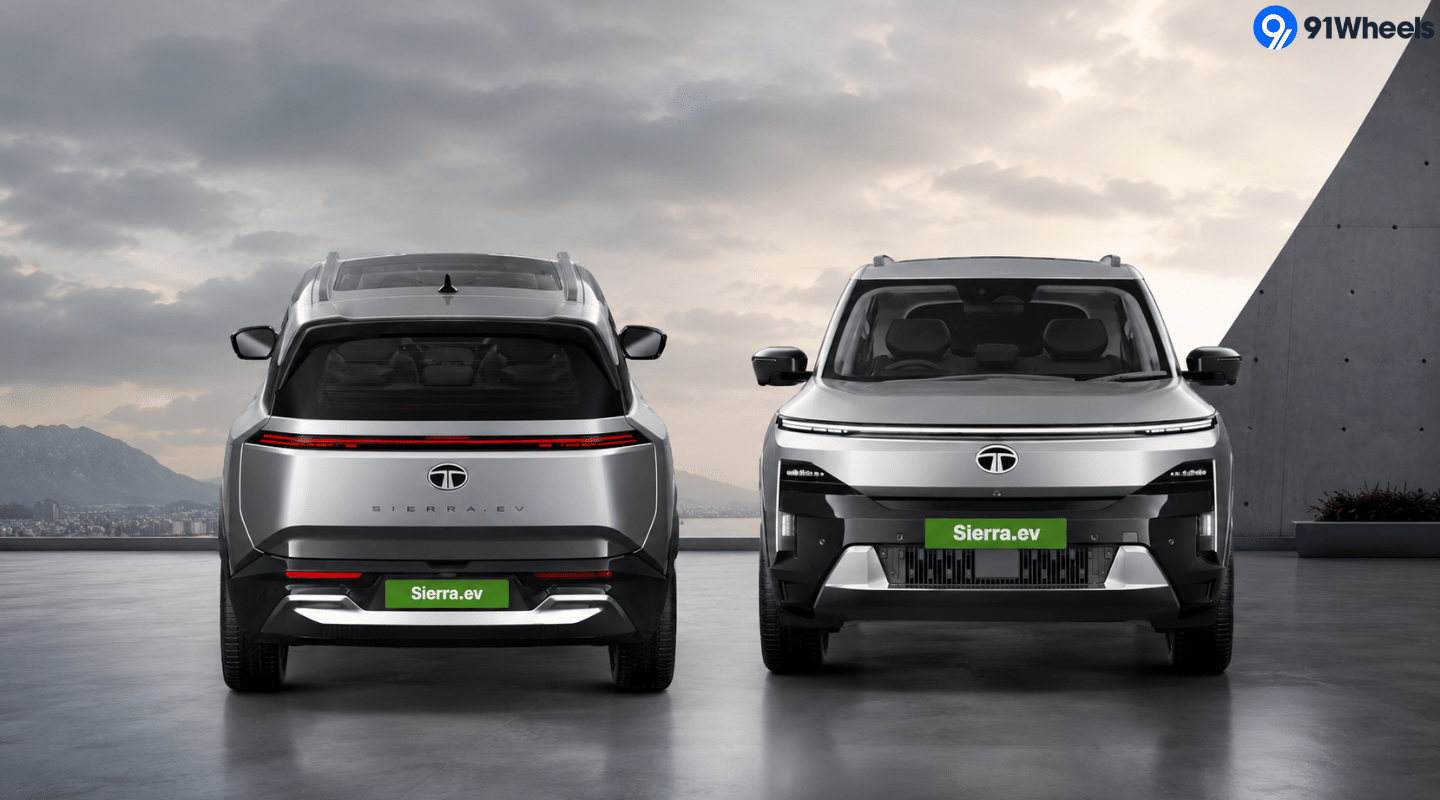
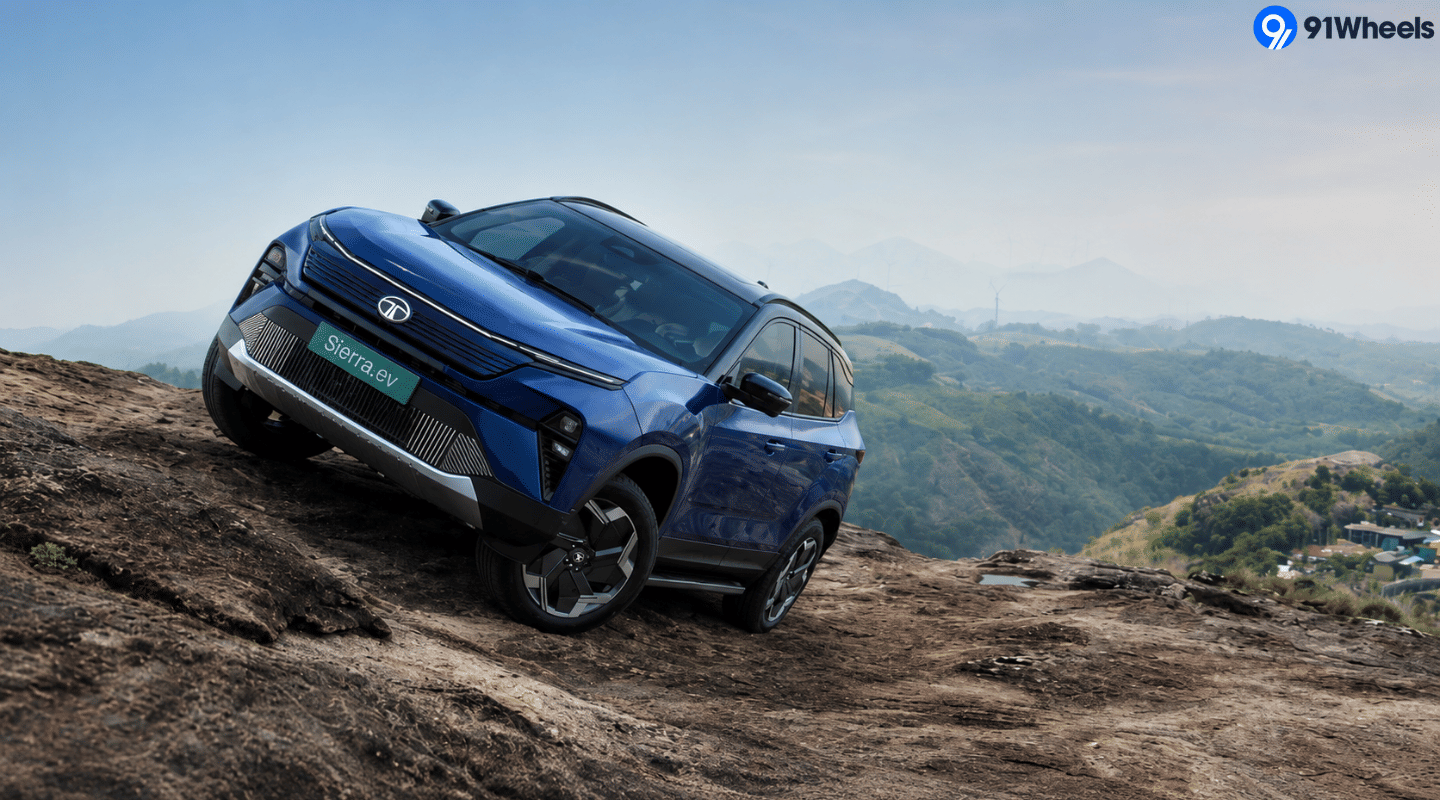
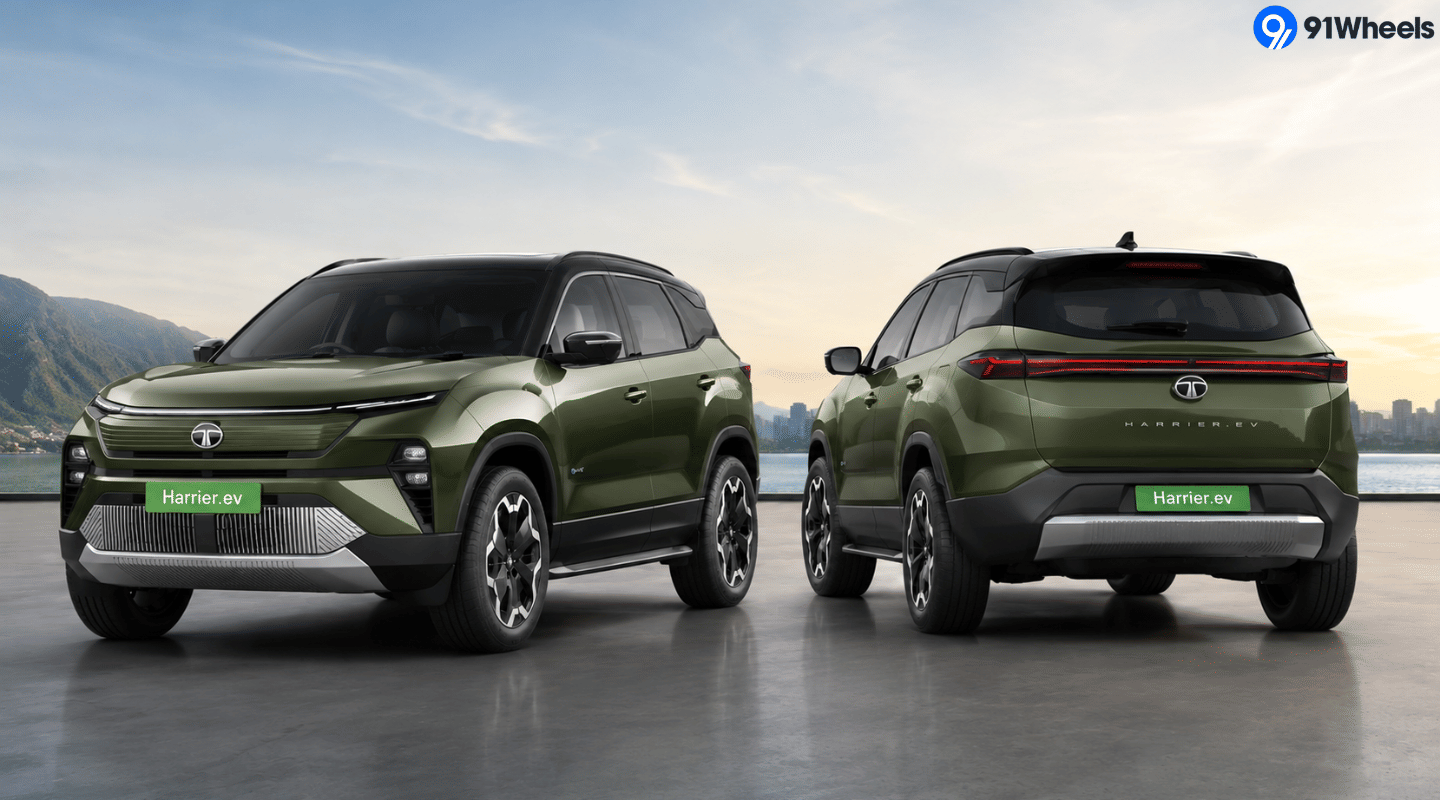
At first glance, both SUVs look near-identical to their ICE counterparts. Look closer, though, and the EV-specific touches stand out at the front: a body-colour grille and a silver skid plate mark them apart. The rear stays largely unchanged, save for the QWD badge sitting below the C-pillar on both cars.
Both are five-seaters, but they sit in different segments: the Sierra.ev sits in the mid-size space and the Harrier.ev a notch above in the D-segment. That size difference shows up in everyday use, with more road presence, more cabin space, and a more planted feel from the Harrier's longer wheelbase. That said, both EVs share the same suspension setup, an independent MacPherson strut at the front and independent multi-link at the rear with frequency-dependent damping, which makes a strong case for either car on mechanical terms since the underlying hardware is largely the same. Now, onto the battery specifications, which add another layer to the comparison.
Battery specification & Range
Spec | Sierra.ev 63 | Sierra.ev 75 | Sierra.ev 75 QWD Dual Motor | Harrier.ev 65 | Harrier.ev 75 | Harrier.ev QWD |
|---|---|---|---|---|---|---|
Battery Pack | 63 kWh | 75 kWh | 75 kWh | 65 kWh | 75 kWh | 75 kWh |
Drive Type | RWD | RWD | QWD (AWD) | RWD | RWD | QWD (AWD) |
Rear Motor Power | 238 PS | 209 PS | 209 PS | 238 PS | 238 PS | 238 PS |
Front Motor Power | 140 PS | - | - | 158 PS | ||
Cumulative Torque | 315 Nm | 315 Nm | 504 Nm | 315 Nm | 315 Nm | 504 Nm |
MIDC Range | 535 Km | 665 Km | 624 Km | 538 Km | 627 Km | 622 Km |
Real World Range | 440-460 Km | 510-530 Km | 480-500 Km | 480-500 Km | 420-445 Km | 460-490 km |
DC Fast-Charge (20%-80%) | 25 min (Above 110 kW) | 26 min (Above 120 kW) | 26 min (Above 120 kW) | 25 min (With 100 kW) | 25 min (With 120 kW) | 25 min (With 120 kW) |
AC Fast-Charge (10%-100%) from 7.2 KW | 8.9 hrs | 10.5 hrs | 10.5 hrs | 9.3 hrs | 10.7 hrs | 10.7 hrs |
Turning Radius | 5.32 m | 5.32 m | 5.32 m | 5.75 m | 5.75 m | 5.75 m |
Both SUVs share the same underlying tech, but how it’s tuned differs. The Sierra.ev comes in three versions: a 63 kWh base, a 75 kWh variant, and a 75 kWh QWD (all-wheel drive) version. The Harrier.ev skips the smaller battery and starts at 65 kWh, going up to the same 75 kWh and 75 kWh QWD options.
Power is where things get interesting. On the rear-wheel-drive versions with the 75 kWh battery, the Harrier.ev actually makes more power than the Sierra.ev, 238 PS against 209 PS, despite both using the same size battery. The same gap shows up on the QWD versions too. Yet the Sierra.ev still manages a slightly higher official range and a notably stronger climbing ability on paper. The most likely reason isn't a smarter motor, it's simply that the Sierra.ev is the smaller and lighter of the two, so it doesn't need to work as hard to go the same distance.
In short: if outright power matters more to you, the Harrier.ev has the edge. If range and efficiency matter more, the Sierra.ev holds its own despite the lower output.
Charging
There's barely anything to separate them here. Both charge from 20 to 80 percent in roughly 25 minutes on a fast charger, and on a home AC charger, full charging takes somewhere between 9 and 11 hours depending on the variant. Whichever you pick, your charging routine won't really change.
Everyday Usability
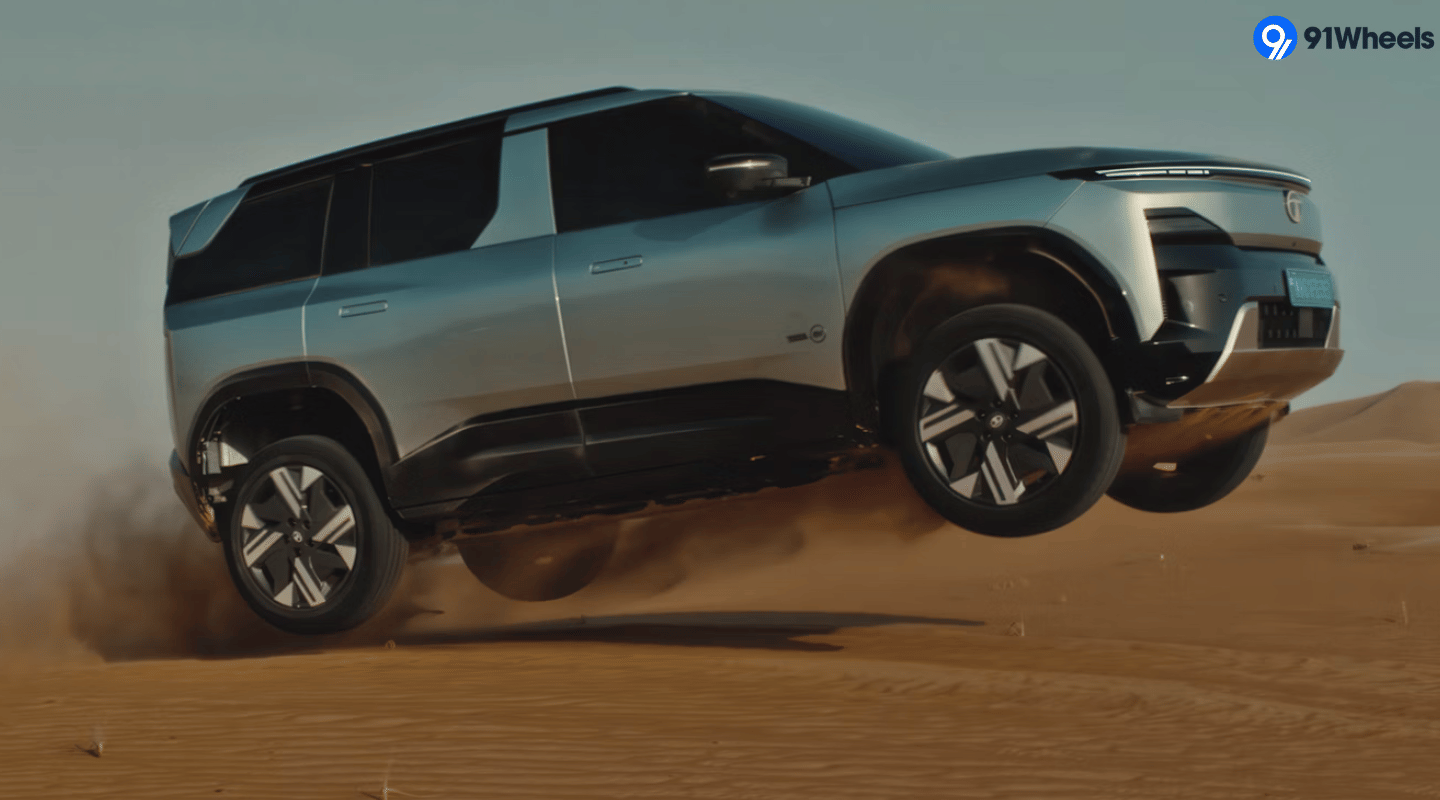
The Sierra.ev has a noticeably shorter turning circle (5.32 metres against the Harrier.ev’s 5.75 metres), which translates to easier U-turns and simpler parking, a genuinely useful advantage in city driving. Both SUVs use the same suspension setup and braking tech, so the actual ride and handling feel should be closer than the spec sheets suggest.
Warranty
Both SUVs come with the same coverage. Motor: 8 years or 1,60,000 km. Vehicle: 3 years or 1,25,000 km. The battery warranty is marketed as "lifetime" with no kilometre limit, but that only applies to the first owner. If you sell the car, the new owner's battery cover drops to 10 years or 2 lakh km. So there's no difference between the two cars here. The only catch worth telling readers about: that "lifetime" battery promise isn't really lifetime once the car changes hands.
Common & Unique Features
Feature | Available on Sierra.ev & Harrier.ev |
|---|---|
Suspension | MacPherson strut front suspension, independent multi-link rear with Frequency Dependent Damping |
Brakes | All-wheel disc brakes with i-VBAC |
Drive Assist | Hill Descent Control, Hill Hold Control, Traction Control, Torque Vectoring by Brake |
Parking Brake | Electric Parking Brake with Auto Hold |
Regenerative Braking | 4-level regenerative braking with paddle shifters |
Single Pedal Drive | Customisable Single Pedal Drive |
Charging Standard | CCS2 charging standard |
Bidirectional Charging | V2L (Vehicle-to-Load) and V2V (Vehicle-to-Vehicle) charging |
Smartphone Connectivity | Wireless Android Auto & Apple CarPlay |
Connected Car Tech | iRA.ev connected car platform with OTA updates |
Digital Key | Digi Access digital key (UWB + NFC + BLE) |
Audio System | Dolby Atmos audio (top variants) |
Sunroof | Voice-assisted panoramic sunroof |
Camera | 540-degree camera system combining 360 surround view with 180-degree transparent mode |
Parking Assistance | Auto Park Assist with Remote Summon and Remote Crank |
Blind Spot Monitor | Blind Spot View Monitor |
ADAS | Level 2 ADAS with 22 features (top QWD variants), including Adaptive Cruise Control, Lane Keep Assist, Lane Departure Warning, Forward Collision Warning, Autonomous Emergency Braking, and Traffic Sign Recognition |
Terrain Modes | 6 Terrain Modes (top QWD variants): Normal, Snow/Grass, Mud-Ruts, Sand, Rock Crawl, and Custom |
Wireless Charging | Wireless smartphone charger |
Seats | Ventilated front seats (top variants) |
Powered Tailgate | Gesture-activated powered tailgate |
Air Purifier | Yes |
Ambient Lighting | Yes |
TPMS | Tire Pressure Monitoring System |
Airbags | 6 airbags (standard) |
Battery & Motor Protection | IP67-rated motor and battery |
Unique To Sierra.ev
Features |
|---|
|
|
|
|
|
|
Unique To Harrier.ev
Features |
|---|
|
|
|
|
|
|
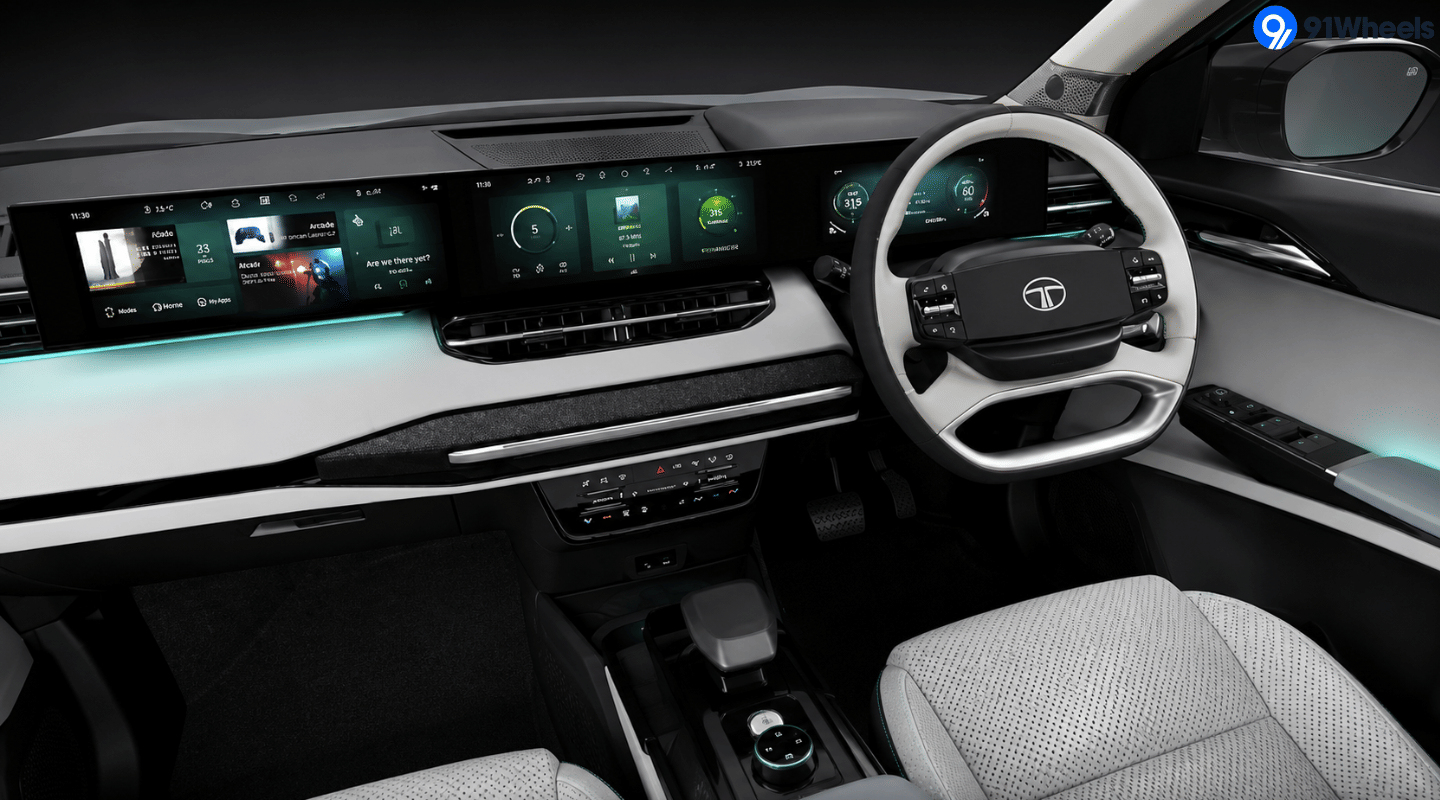
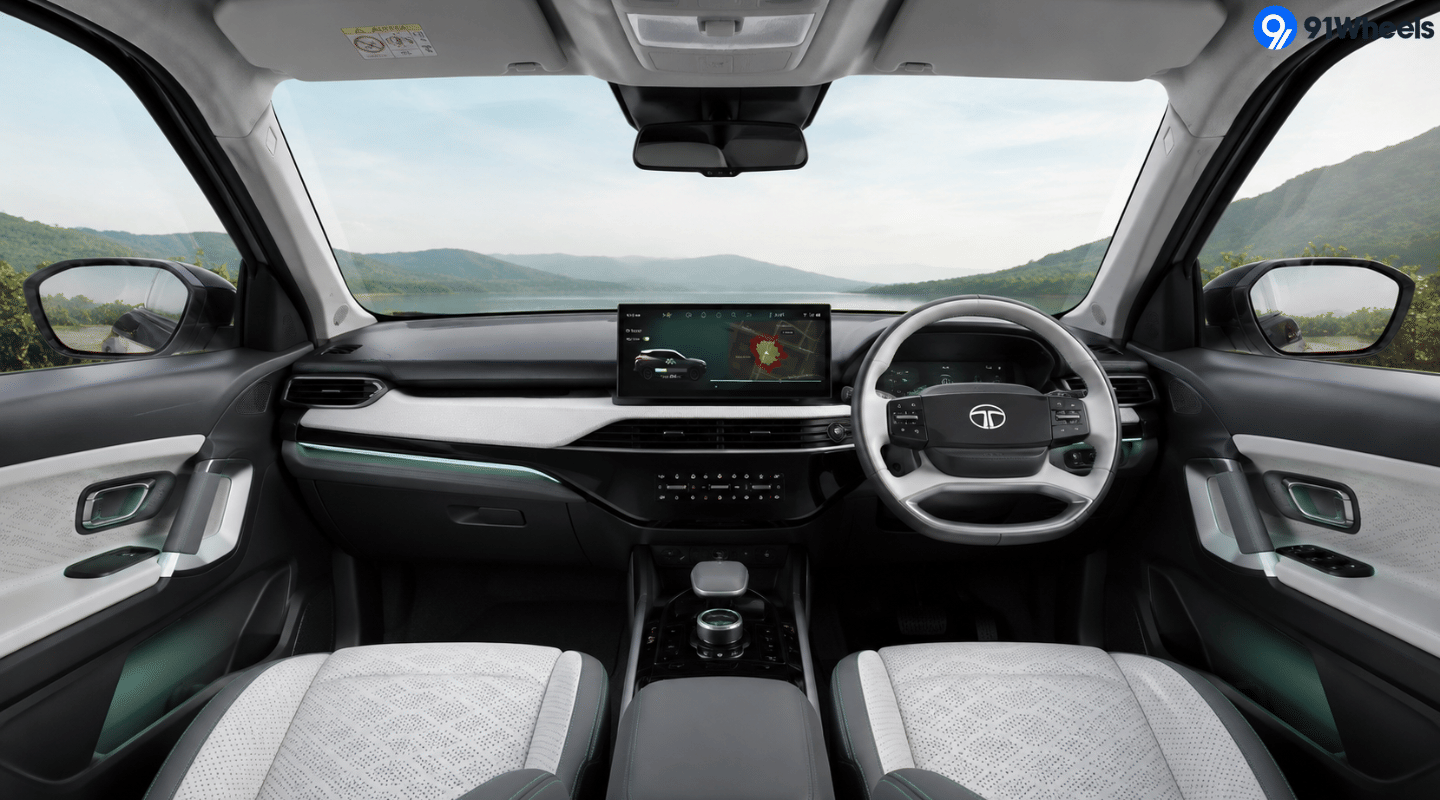
Strip away the badges and brand talk, and both SUVs are built on largely the same hardware, suspension, brakes, charging tech, warranty terms, ADAS, and parking assist are all shared. The real difference shows up inside the cabin. The Sierra.ev goes all in on screen time with its triple-screen Theater Pro setup, AirConsole gaming, and the HypAR head-up display, while the Harrier.ev keeps it simpler with a single large display and a few practical extras like a knee airbag and memory driver's seat. So it isn't really a case of one car offering more, it comes down to which cabin experience suits you better day to day. Worth double-checking a couple of the Harrier-only bits though, since the Sierra.ev list is pulled from its launch press release and not the full spec sheet.
Price Difference
This is where buyers will likely split. The Sierra.ev starts at Rs 18.79 lakh (ex-showroom), while the Harrier.ev starts at Rs 21.49 lakh, and for a moment, let's set aside the top-end variant pricing because this base difference alone is significant. With a gap like that, a large share of buyers, easily 90 percent of the audience, will lean toward the Sierra.ev simply because the entry price is more accessible. And that's not a car going light on features either; it comes loaded, and the truth is both SUVs are more or less the same car underneath, just packaged differently.
In the end, it comes down to styling. Buyers who want a boxy, solid stance will gravitate toward the Sierra.ev, while those who prefer a heavier, more macho road presence will pick the Harrier.ev. The bigger car undeniably commands more road presence, but the new car here carries a styling identity that's entirely its own.
Price of Tata Sierra.ev (ex-showroom)
Trim | 63kWh RWD | 75kWh RWD | 75kWh AWD |
|---|---|---|---|
Pure | 18.79 lakh | - | - |
Pure S | 19.99 lakh | - | - |
Adventure | 20.99 lakh | 22.19 lakh | - |
Empowered | 22.79 lakh | 23.79 lakh | - |
Empowered A | - | 24.79 lakh | - |
Empowered A QWD | - | - | 25.99 lakh |
Price of Tata Harrier.ev (ex-showroom)
Trim | 63kWh RWD | 75kWh RWD | 75kWh AWD |
|---|---|---|---|
Adventure | 21.49 lakh | ||
Adventure S | 21.99 lakh | ||
Fearless Plus | 23.99 lakh | 24.99 lakh | 26.49 lakh |
Empowered | 27.49 lakh | 28.99 lakh | |
Empowered Stealth Edition | 28.24 lakh | 29.74 lakh |
Final Word
In the end, the Tata Sierra.ev feels like the more evolved package on paper: more range, the same feature set, and a lower starting price than the Harrier.ev. What's left to separate them is purely design, and that's as subjective as it gets. No design is universally better or worse, it's just a matter of what appeals to you. But for the buyer, it's a win-win either way, because at a technology and feature level, both cars are genuinely top-notch and there's no wrong choice here.
Do you like this article?
Comments
No comments yet. Be the first to comment!