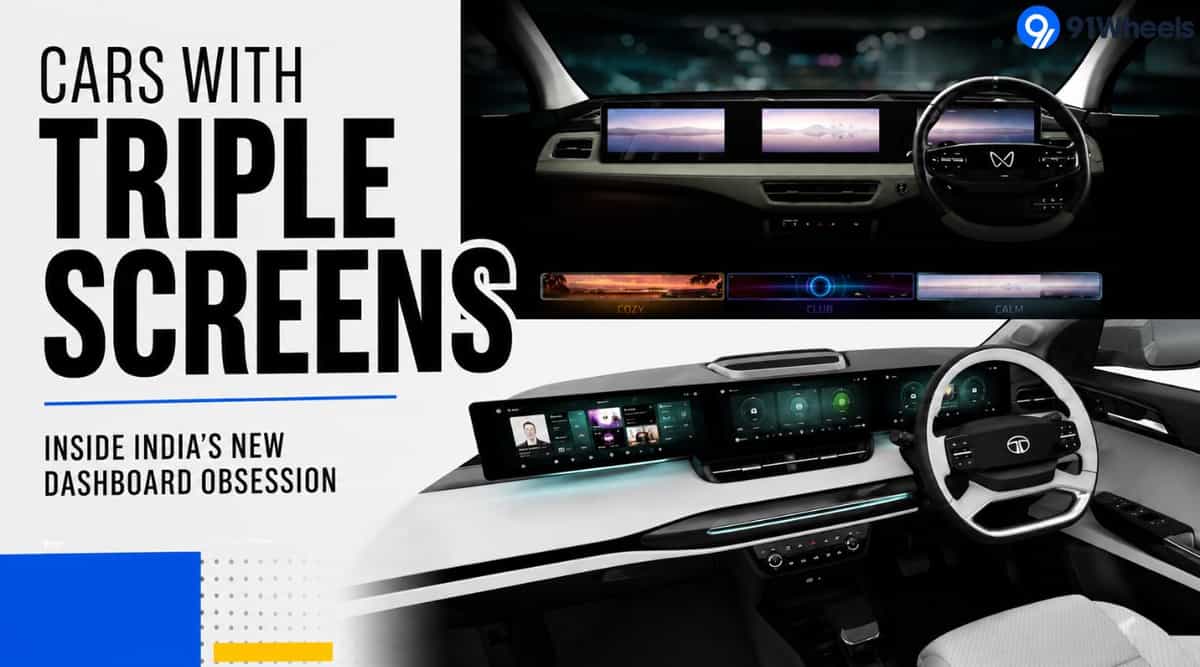
There was a time when a single touchscreen was enough to impress a car buyer. That time is over. Walk into a Tata or Mahindra showroom today and you'll be greeted by dashboards that look more like command centers than instrument panels. Three screens span the width of the cabin, each serving a different purpose while working seamlessly together.
This is the triple-screen era, and it has arrived quickly. Tata's Sierra, in both EV and ICE avatars, and Mahindra's XEV 9e, XEV 9S, and XUV 7X0 are leading the charge. Each is betting that a wraparound digital cockpit is exactly what today's SUV buyer wants.
Why Three Screens, Suddenly?
.jpg)
The logic is simple: split the workload and give everyone in the front row their own interface. A typical triple-screen layout features a digital instrument cluster in front of the driver, a central infotainment touchscreen, and a third display for the front passenger. The result is a dashboard that feels less like a single unit and more like a connected ecosystem, where the driver, the passenger, and the vehicle each have their own dedicated interface.
It is also a strong visual statement. A continuous panel of glass stretching across the dashboard instantly conveys a premium feel, much like panoramic sunroofs once did. Manufacturers know this. For brands like Mahindra and Tata, competing in an increasingly design-driven market, triple screens have become a symbol of technological sophistication.
The Mahindra Approach: XEV 9e and XEV 9S
.jpg)
XEV 9e & XEV 9S
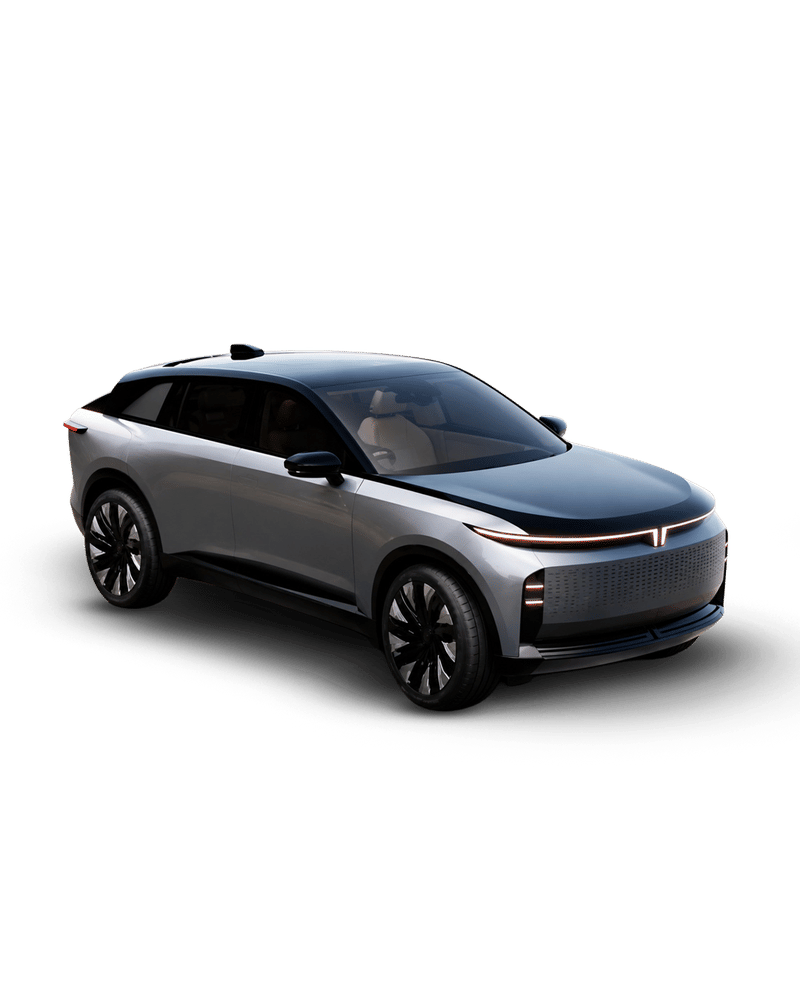
Mahindra has fully embraced the triple-screen concept with its INGLO-platform electric SUVs. The XEV 9e, styled as a coupe SUV, and the XEV 9S, its more practical seven-seat sibling, both feature three 12.3-inch displays powered by the Snapdragon 8155 chipset and Mahindra's MAIA software platform.
The XEV 9S, in particular, focuses on enhancing the passenger experience. The passenger-side display is more than just a mirror of the central infotainment system. It allows the co-driver to browse media, adjust vehicle settings, and access navigation independently without interfering with the driver's screen. Paired with the powered "Boss Mode" rear seat, the cabin is designed to make every occupant feel equally important.
The specifications match the premium positioning. The XEV 9e is available with 59 kWh and 79 kWh battery packs, producing between 231 PS and 286 PS. It offers an ARAI/MIDC-certified range of up to 656 km and accelerates from 0 to 100 kmph in 6.8 seconds. The XEV 9S offers the same power outputs across 59 kWh, 70 kWh, and 79 kWh battery options, with a maximum claimed range of 679 km. It also features a 150-litre front trunk, made possible by its dedicated EV architecture.
The XUV 7X0: Triple Screens Go Petrol and Diesel
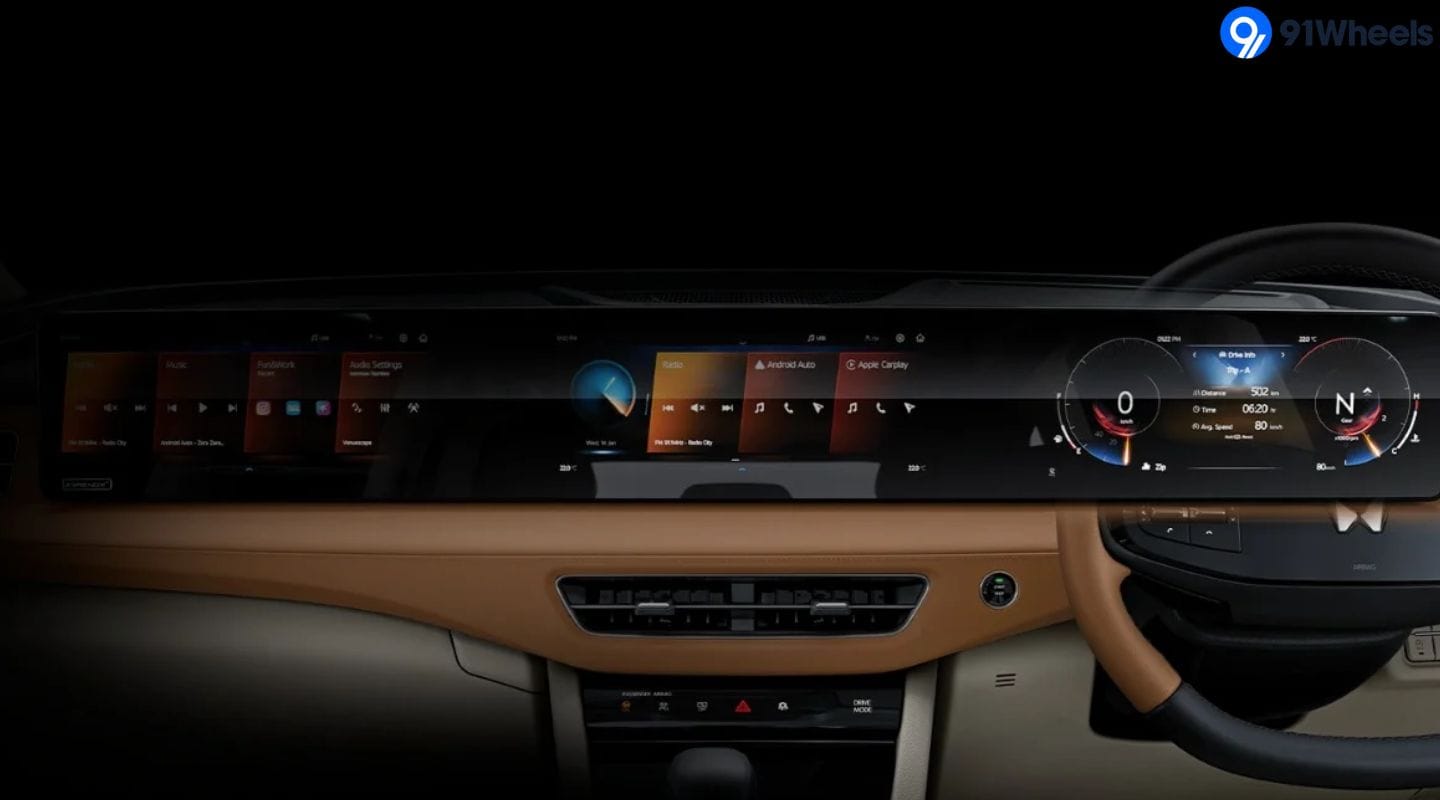
Mahindra has also introduced the triple-screen layout in its combustion-engine lineup with the XUV 7X0. The seven-seat SUV is powered by either a 2.0-litre turbo-petrol engine producing 200 PS or a 2.2-litre turbo-diesel engine producing 182 PS, available with both FWD and AWD configurations.
It carries forward the same "Boss Mode" rear seat concept found in the XEV 9S, along with a 16-speaker Harman Kardon audio system with Dolby Atmos and a 540-degree camera system. It is clear that Mahindra no longer sees the triple-screen experience as something exclusive to electric vehicles.
Tata's Answer: The Sierra, Reborn Twice
.jpg)
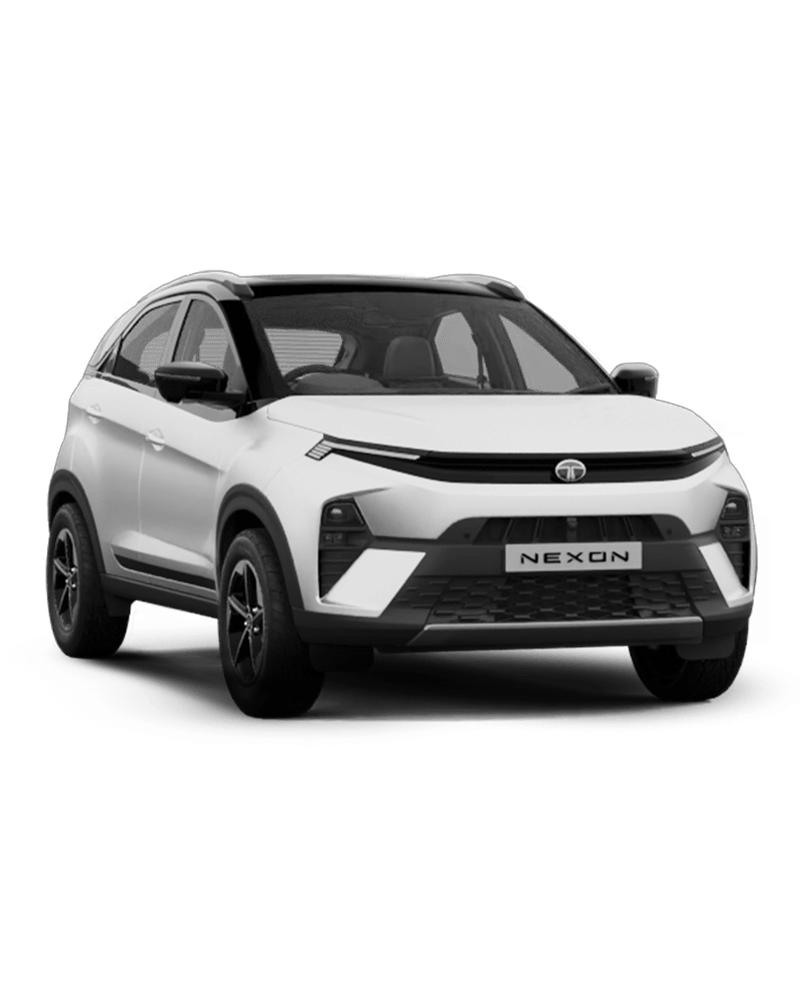
Tata's revival of the Sierra nameplate is one of the most significant automotive comebacks in recent years. The iconic SUV first returns as an EV before also making a comeback with conventional petrol and diesel powertrains.
The Sierra EV is built on Tata's dedicated electric platform and is offered with 63 kWh and 75 kWh battery packs in rear-wheel-drive and dual-motor AWD (QWD) configurations. The AWD version produces up to 238 PS and 504 Nm of torque, accelerates from 0 to 100 kmph in 5.8 seconds, and delivers a claimed MIDC range of up to 665 km. Inside, it features a 12.3-inch infotainment touchscreen, a 10.25-inch digital instrument cluster, an AR-based head-up display, and supports both Vehicle-to-Load (V2L) and Vehicle-to-Vehicle (V2V) charging.
The Sierra ICE retains the same 4,340 mm body and panoramic glass roof while replacing the EV powertrain with a 1.5-litre turbo-petrol engine producing 160 PS or a 1.5-litre diesel engine producing 116 PS. It also introduces a segment-first AR head-up display for a combustion SUV, along with lounge-style rear seating and 65W USB-C fast charging. Tata is clearly treating the connected cockpit as a key selling point, regardless of the powertrain.
How They Stack Up
Model | Screens/Chipset | Seating | Standout Cabin Feature |
|---|---|---|---|
Tata Sierra EV | 12.3-inch touchscreen + 10.25-inch digital cluster + AR head-up display | 5 | AR-based head-up display |
Tata Sierra ICE | Same setup as EV | 5 | Segment-first AR head-up display for an ICE SUV |
Mahindra XEV 9e | Triple 12.3-inch displays (Snapdragon 8155/MAIA) | 5 | Coupe SUV styling with tri-screen cockpit |
Mahindra XEV 9S | Triple 12.3-inch displays (Snapdragon 8155/MAIA) | 7 | Powered Boss Mode rear seat and 150-litre frunk |
Mahindra XUV 7X0 | Triple-screen dashboard | 7 | Boss Mode rear seat and Dolby Atmos audio |
On pricing, the electric pair, Sierra EV (Rs. 18.79 lakh to Rs. 26.48 lakh) and the XEV 9e/9S (Rs. 21.90 lakh to Rs. 30.50 lakh and Rs.19.95 lakh to Rs. 29.45 lakh), occupy a similar premium EV space and are natural rivals. The combustion pair, Sierra ICE (Rs. 11.49 lakh to Rs. 21.29 lakh) and XUV 7X0 (Rs. 13.66 lakh to Rs. 24.92 lakh), compete more directly in the mainstream mid-size SUV segment.
Safety Hasn't Taken a Back Seat
Despite the growing emphasis on digital technology, safety has remained a priority. The XEV 9e has achieved a full 32/32 adult occupant protection score in Bharat NCAP, earning a 5-star safety rating. Both the Sierra EV and Sierra ICE also received 5-star crash ratings based on their shared platform.
Across the lineup, Level 2+ ADAS, six to seven airbags, 360-degree cameras, and electronic stability control are increasingly becoming standard equipment rather than features reserved for top-spec variants. It is another sign that the segment is evolving beyond just larger screens.
The Bigger Picture
What is happening here is more than just a feature race. It represents a shift in how manufacturers view the dashboard itself. A single screen assumes one person controls the cabin's digital experience. Three screens recognize that the cabin is a shared space, where the driver, front passenger, and vehicle systems each deserve their own dedicated interface.
Whether triple-screen dashboards become the industry standard or simply define the mid-2020s remains to be seen. For now, however, Tata and Mahindra are making the same bet from opposite ends of the powertrain spectrum, giving Indian buyers a genuinely new kind of in-car experience.
Do you like this article?
Comments
No comments yet. Be the first to comment!
.jpg?w=240&q=40 "Kia India Unveils the Syros EV, Available with BaaS; Pre-Bookings Open")


-1.png?w=240&q=40 "Kia Syros EV Key Features Explained: Level 2 ADAS, 360 Degree Camera and Ventilated Seats: Check Here")